It’s 7:40 a.m. My toddler is still in her pajamas, teeth unbrushed, melting down because I gave her vanilla yogurt instead of strawberry, and there is no way I will get her to daycare on time. Now it’s 9:30 p.m., and after an hour of trying to get her to wind down and get in bed, I doze off on her bedroom floor. And the whole thing is going to repeat itself tomorrow.
Every parent has been here. Kids thrive on routines, but sticking to them can feel impossible. For decades, the go-to fix has been low tech. You taped a chore chart to the fridge, and gave your kid a sticker for every task completed. But what if the chart could respond—and get a kid excited to use it?
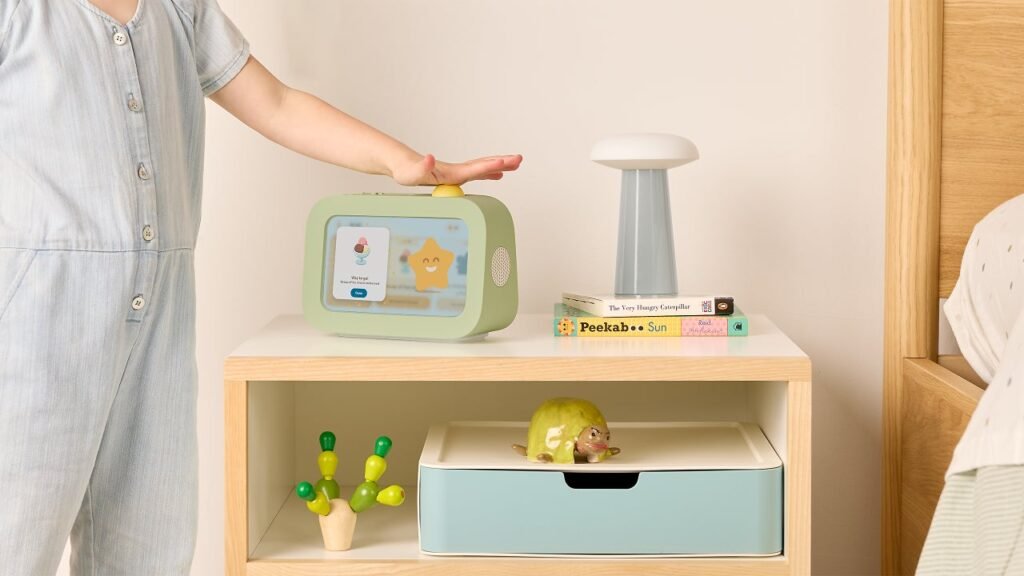
That’s the idea behind Skylight Buddy, a palm-sized touchscreen device that effectively gamifies children’s routines, easing the challenge of getting out the door or going to bed. Buddy treads a delicate line with technology. It uses a few simple animations—a character who encourages the child to keep going and a celebratory shower of stars—to motivate kids to complete tasks, helping them develop important executive functioning skills and making family life go smoother. But it also leaves out any of the addictive qualities that get kids hooked to devices. When I tested Buddy with Lily, my 4-year-old, she was eager to earn her stars, but when she was done, she happily moved past the screen back to her busy little life.
It’s a winning formula. Skylight Buddy launched June 1 at $139 (or $119 with a subscription), and its first run sold out instantly. The company is restocking today.
Design for children and parents
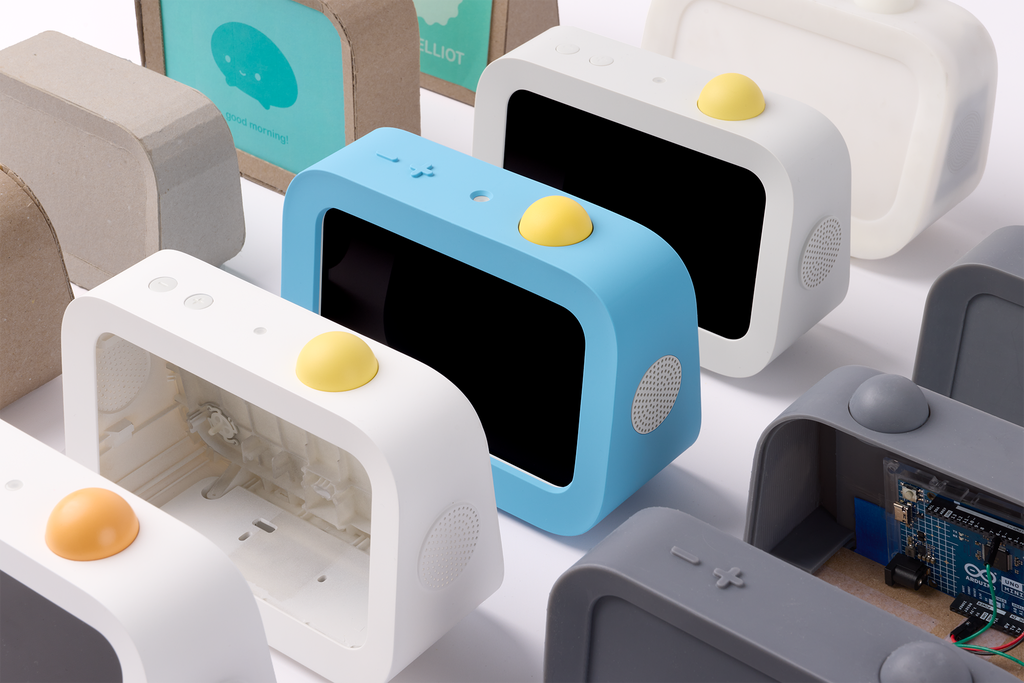
Buddy sits on a child’s nightstand and walks them through their routines. At first it looks like a simple, squarish digital clock, complete with a round yellow button on top to switch off the alarm. Parents customize their daily tasks, the child bonks the button when they have completed each one, and they receive fun animations when they have finished the full routine.
Getting to that design was an iterative process. Skylight’s first product, launched after a Kickstarter campaign, was a digital, connected photo frame. The founder, Michael Segal, came up with the idea as a way to share pictures with family scattered across the country. But as customers began interacting with the frame, Segal began to realize that there were many ways a family could use a shared digital screen. That led to Skylight’s family calendar, which makes it easy to see everybody’s schedule for the day. Based on customer feedback, the team added chore charts for kids.
According to Nichole Rouillac, founder of the San Francisco industrial design studio Level, whom the company hired to design Buddy, the calendar never quite spoke to kids the way Skylight hoped. Its interface was too complicated for younger children and it didn’t have kid-friendly animation that would motivate them to complete tasks. “They wanted a dedicated device that can help parents with the chaos of those morning and nighttime routines that we’re all too familiar with,” she says.
Skylight tapped the woman-led design firm because they knew its team intimately understood parents’ struggles. With Buddy, Rouillac essentially built the device she wished she’d had when her eldest daughter—who is now 13—was little and really struggled with transitions. Rouillac remembers dealing with massive meltdowns getting out the door right when she needed to get to work. “Buddy is a reflection of the struggles I had with her,” she says. “There were mornings when I was almost in tears.”
Rewarding interactions
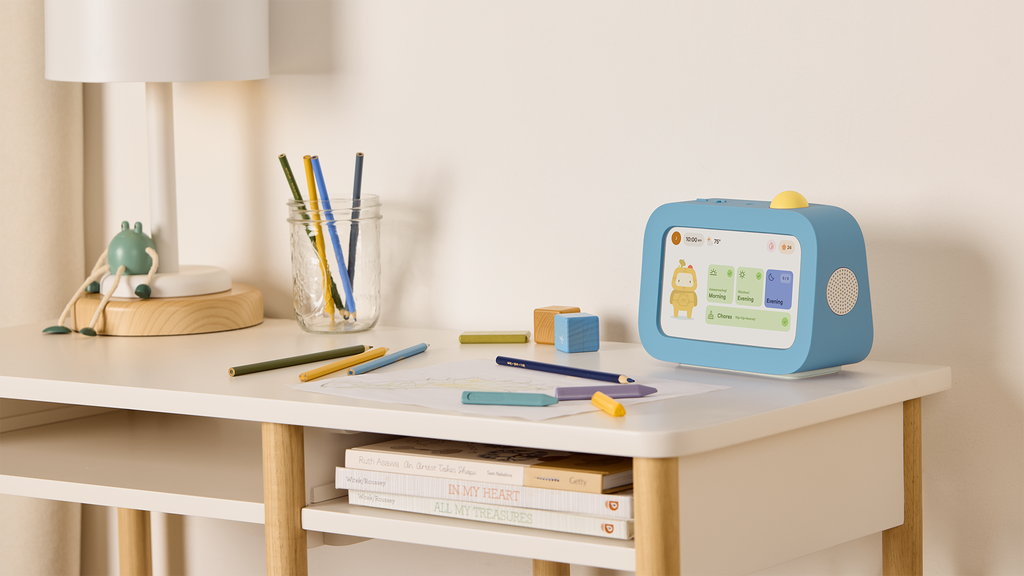
In many ways, Buddy is a very simple device. A child sees their routine laid out step by step on the screen—read story, brush teeth, get into bed—and bops a physical button on top after finishing each one. When the child completes an individual task, they get a star. When they complete the full routine, they get a celebratory shower of stars, which feels very exciting to a small child. In fact, sometimes, Buddy gives them a shower of flamingos, or cats, which makes the experience even more fun.
The interactions reflect proven behavioral psychology. Rewards are a well-established motivator in child development, and Skylight built in flexibility for different ages. Older kids can trade accumulated stars for a prize or a privilege, like getting to pick the family’s dessert at the grocery store. Younger ones tend to be satisfied by the stars themselves.
“My 4-year-old doesn’t even understand that she can exchange the stars for anything,” Rouillac says. “She’s just happy to get her stars.”
The device mixes digital and analog tools. Roulliac fought hard to include the big yellow button. Skylight’s team, more software-minded, initially wanted everything handled on the touchscreen. But Rouillac pointed out how kids gravitate toward tactile controls, like the oversized horn buttons on toddler bikes. She designed the button to be large enough for small children who are still working on their fine motor skills, and created enough resistance that it feels satisfying to push down on. And kids immediately feel the joy of simple cause and effect.
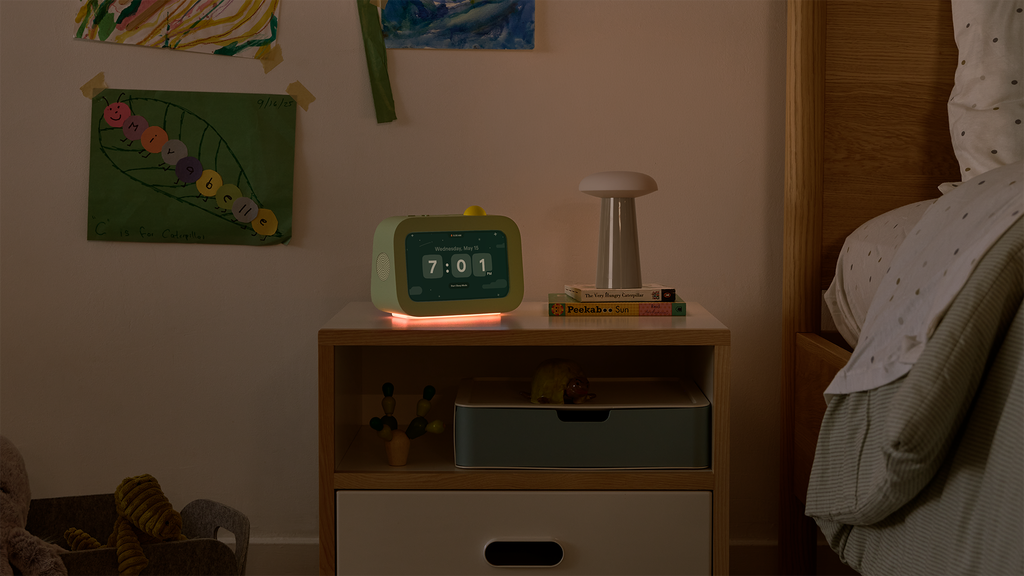
The device is also meant to replace the many other tools parents now use to help their kids go to sleep. When not being used as a chore chart, it defaults to being a clock. At night, it turns into a gentle nightlight and a sound machine. And in the morning, you can either use it as an alarm clock to actively wake your child up, or have the screen turn green so the child knows they’re allowed to leave their room.
Rouillac was also very focused on the silicone case, which comes in different colors and neatly covers the device. With two kids at home, she’s very familiar with the ugly rubber bumpers that cover many tablets and devices for kids. The cover fits tidily on the device, but is made from a material that will protect the screen in case it is hurled across the room. “You never know what’s going to happen,” she says of life with kids and hardware.
Less tech, but better
Buddy arrives as many parents are trying to claw back their kids’ screen time. The social psychologist Jonathan Haidt, whose book The Anxious Generation became a rallying point for the movement, has pointed to average screen time among kids reaching eight to 10 hours a day, not including school. But the reason parents are so wary of technology is that many platforms—like TikTok, Instagram, YouTube, and Netflix—are engineered to keep users on the screen because this is how they maximize advertising revenue.
Rouillac, who works in the tech industry, believes it is possible to create tech tools that are helpful to children but deliberately designed not to keep them glued to it. Buddy is designed to give the child a little endorphin rush when they finish their routine and receive their stars, but after that, there is nothing else to look at on the screen. “The graphics are really simple and low fidelity,” she says. “There’s nothing flashy, no crazy animations, there’s nothing that’s just really trying to suck their attention.”
Buddy fits into a small but growing category of devices for children carefully designed to do less, not more. Audio players like Yoto and Toniebox skip screens altogether; they have very simple controls and allow the child to focus on hearing stories.
As a hardware designer, Rouillac says many companies are now coming to her in search of lower-tech solutions. “We are seeing this huge trend of technology becoming a little bit quieter and calming for children,” she says, “and I think it’s going to shift even bigger, based on what we’re seeing coming through the studio these days.”