On an average day in December 2022, the Pasadena-based surrealist classicist painter John Griswold got an Instagram DM from musician Phoebe Bridgers.
“I remember she said ‘big fan,’” Griswold told Hyperallergic, “and I thought that was pretty funny, given the fact that, to quote a common epithet of hers, she’s ‘Phoebe Fucking Bridgers.’”
The indie darling went on to ask Griswold if he had ever painted on a guitar, and from there a collaborative artistic relationship was born. Griswold, known for his intimate tableaux and animated collages that evoke Renaissance and Baroque iconographies, has now painted multiple instruments for Bridgers, including another guitar she has been taking on tour as well as a lyric book, a vinyl cover, and a secret puzzle for her much-anticipated third solo album, Lost Weekend.
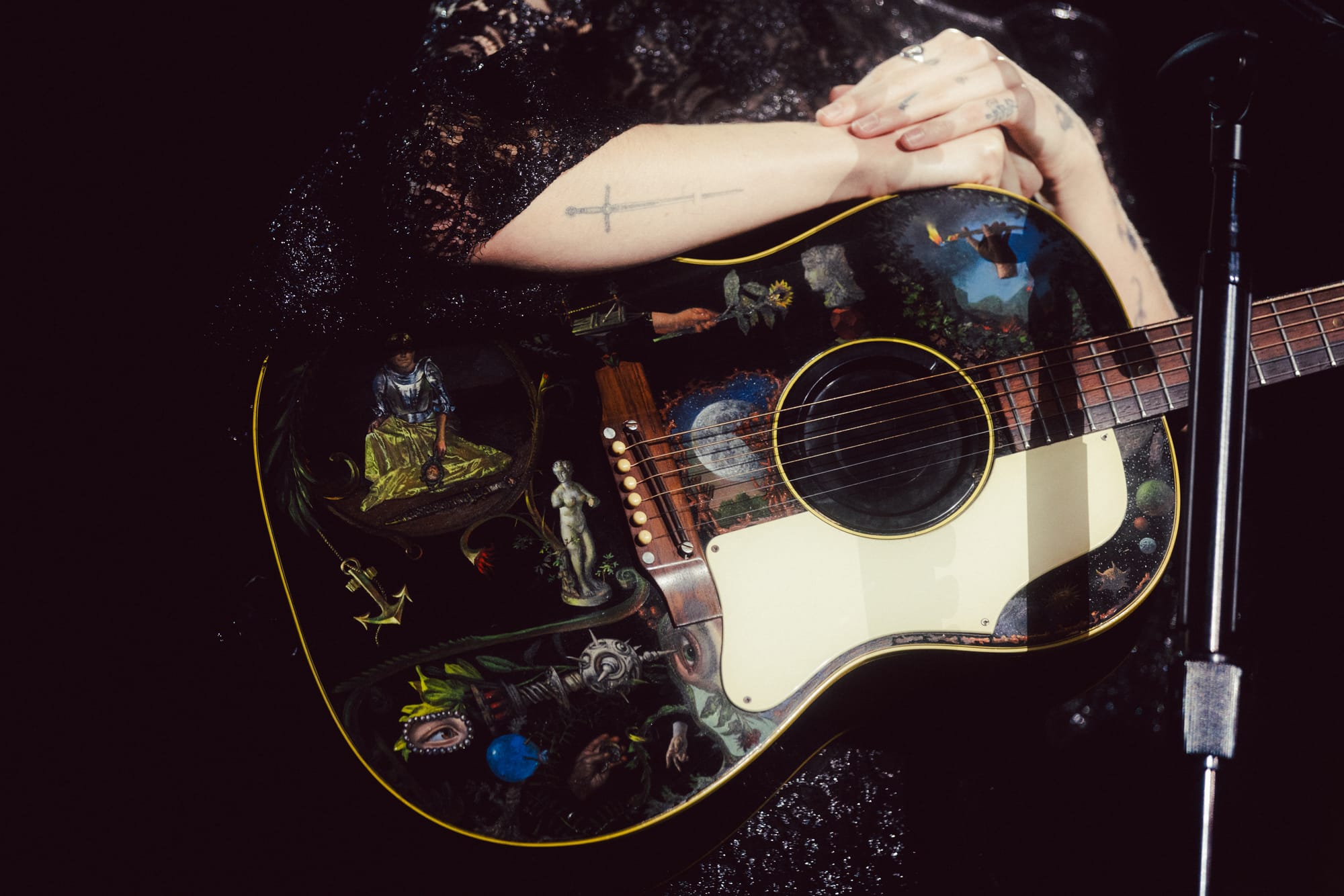
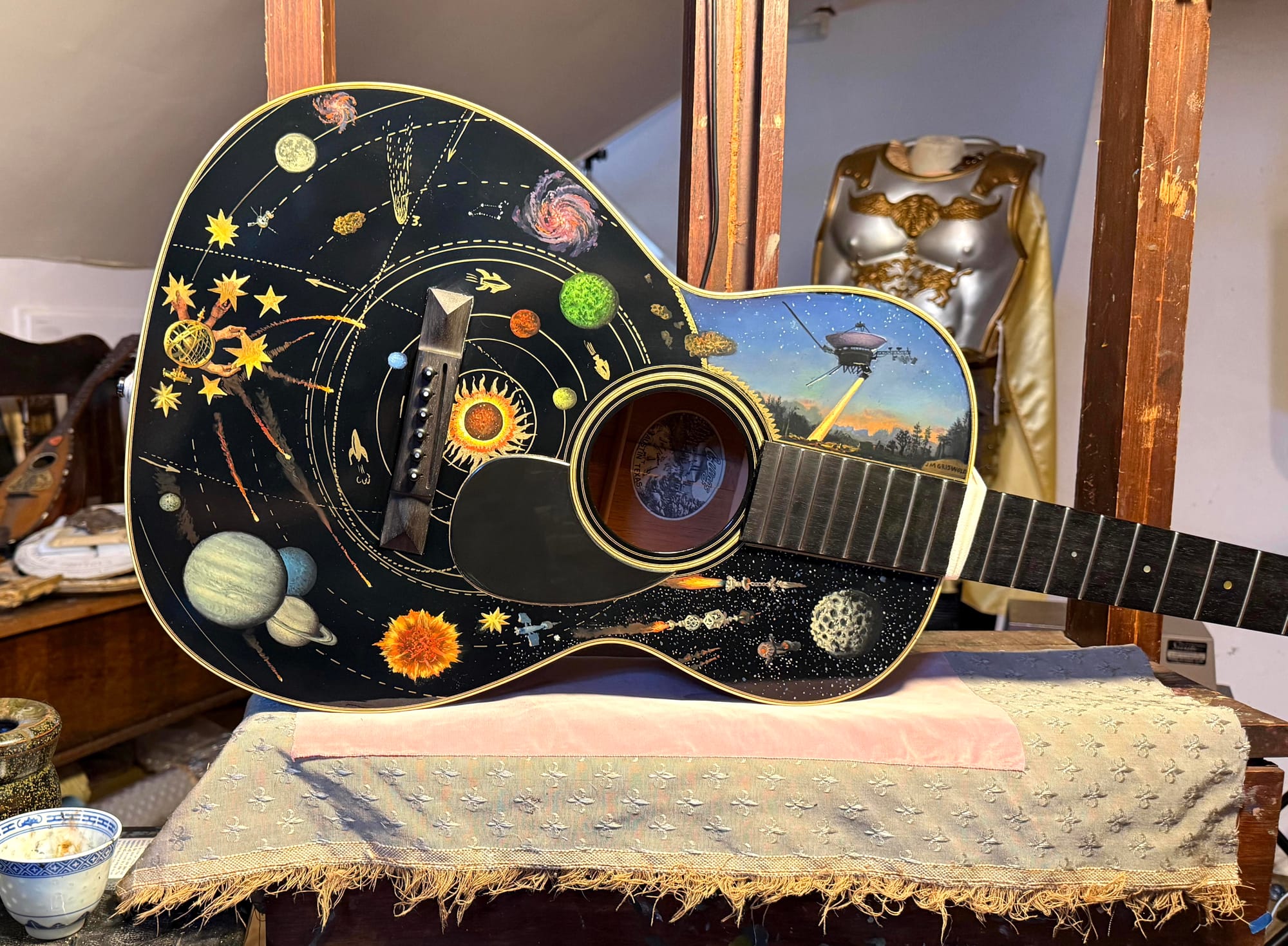
The world saw Griswold’s most personal commission for Bridgers, a custom-painted vintage Gibson guitar, for the first time when the singer performed on The Tonight Show Starring Jimmy Fallon earlier this year. The small oil paintings jump off the aged black surface, echoing Bridgers’s ice-blonde hair sparkling against her black wardrobe.
The two artists, though fluent in different mediums, spoke the same creative language and worked hand in hand over the course of four years to finalize a vision for the guitar. Neither artist wanted to change the instrument’s surface or alter its visible wear. Griswold used oil paints mixed with an alkyd medium to create the images, and the final product is a guitar that is completely personal to Bridgers.
“The surface had aged, and there was already a crack network in the clear coat of the black, and areas of wear from it having been used and strummed,” Griswold explained. “I’m attracted to this as a found object and wanted to celebrate all these surfaces, and she agreed 100 percent.”
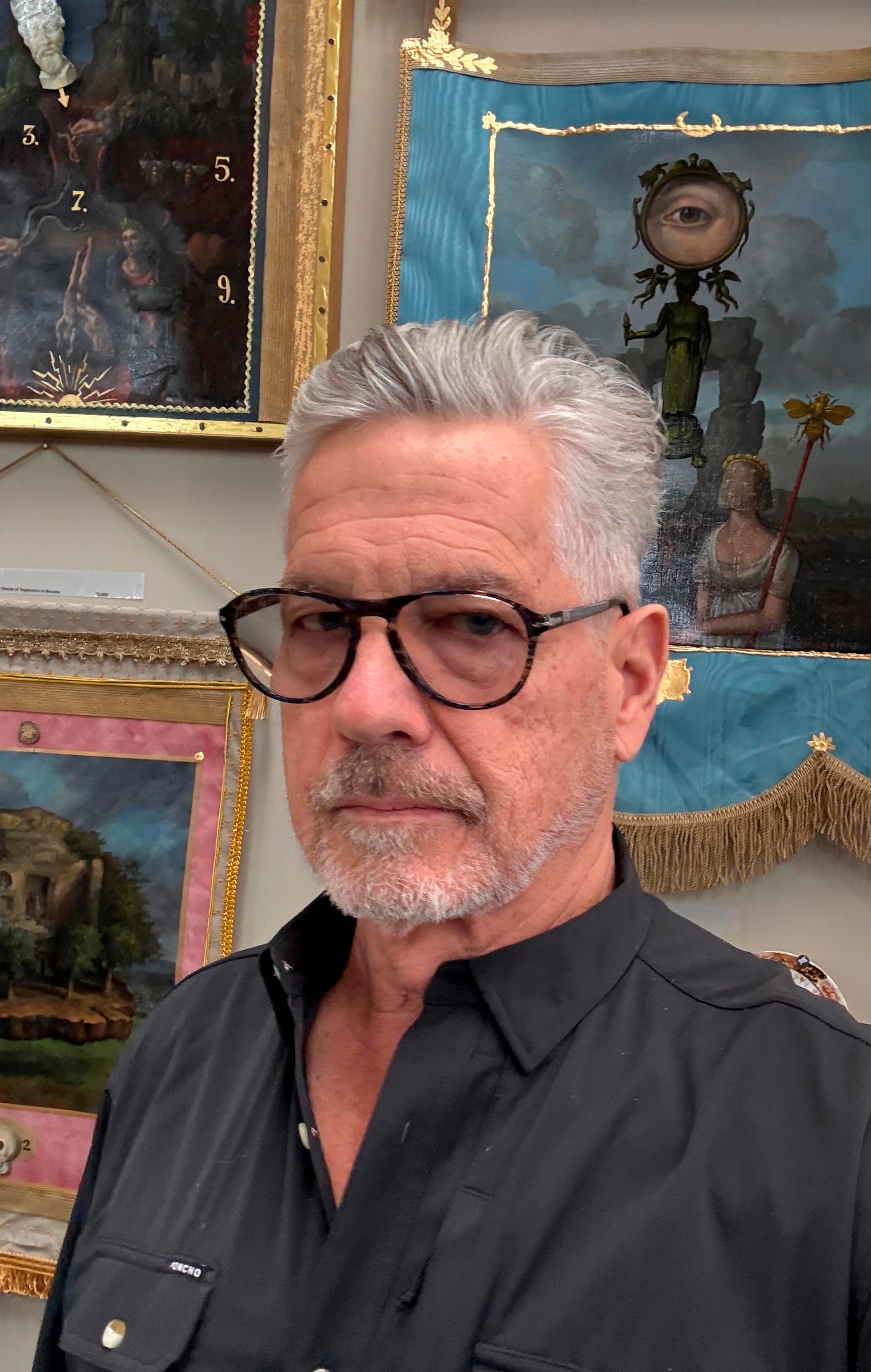
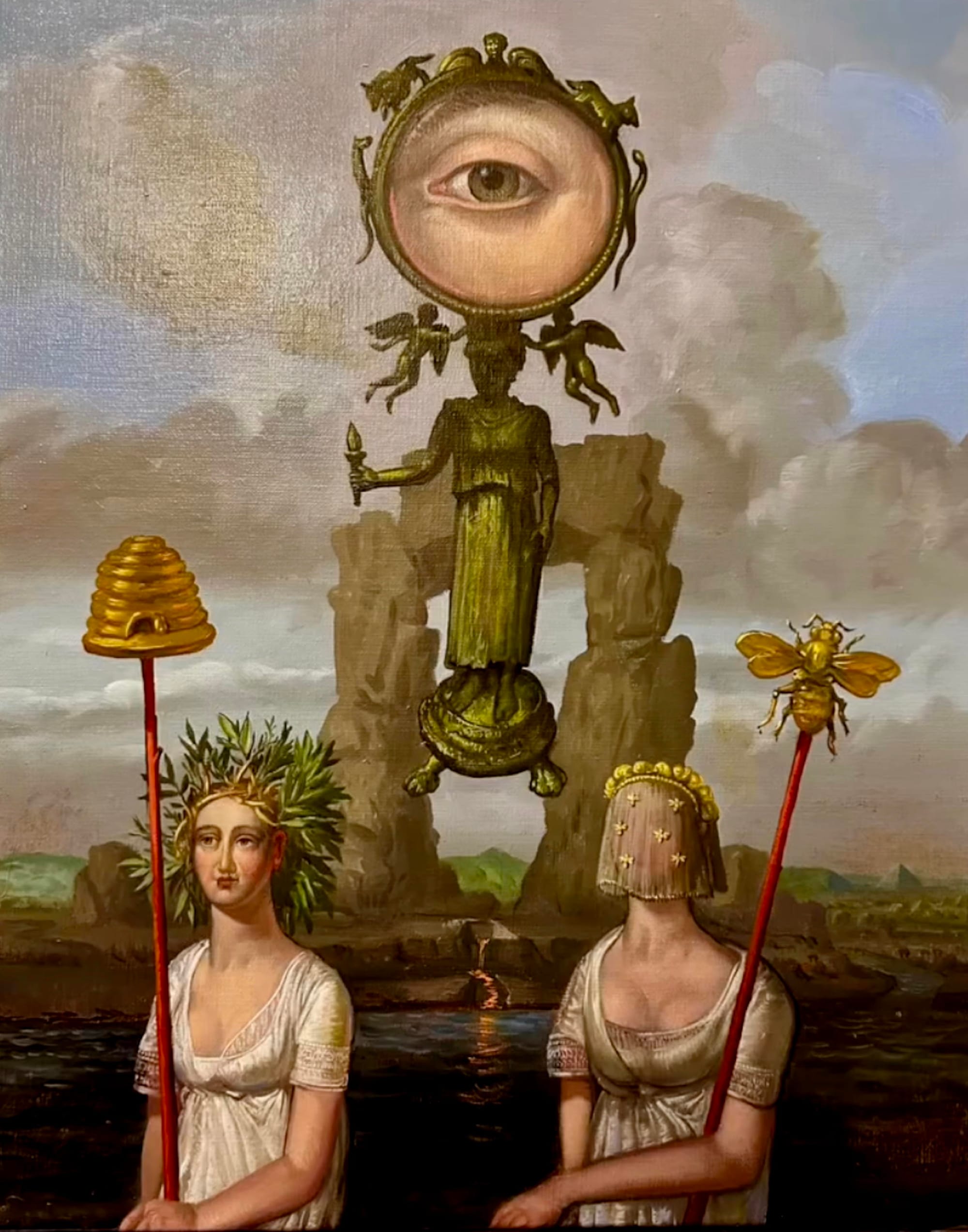
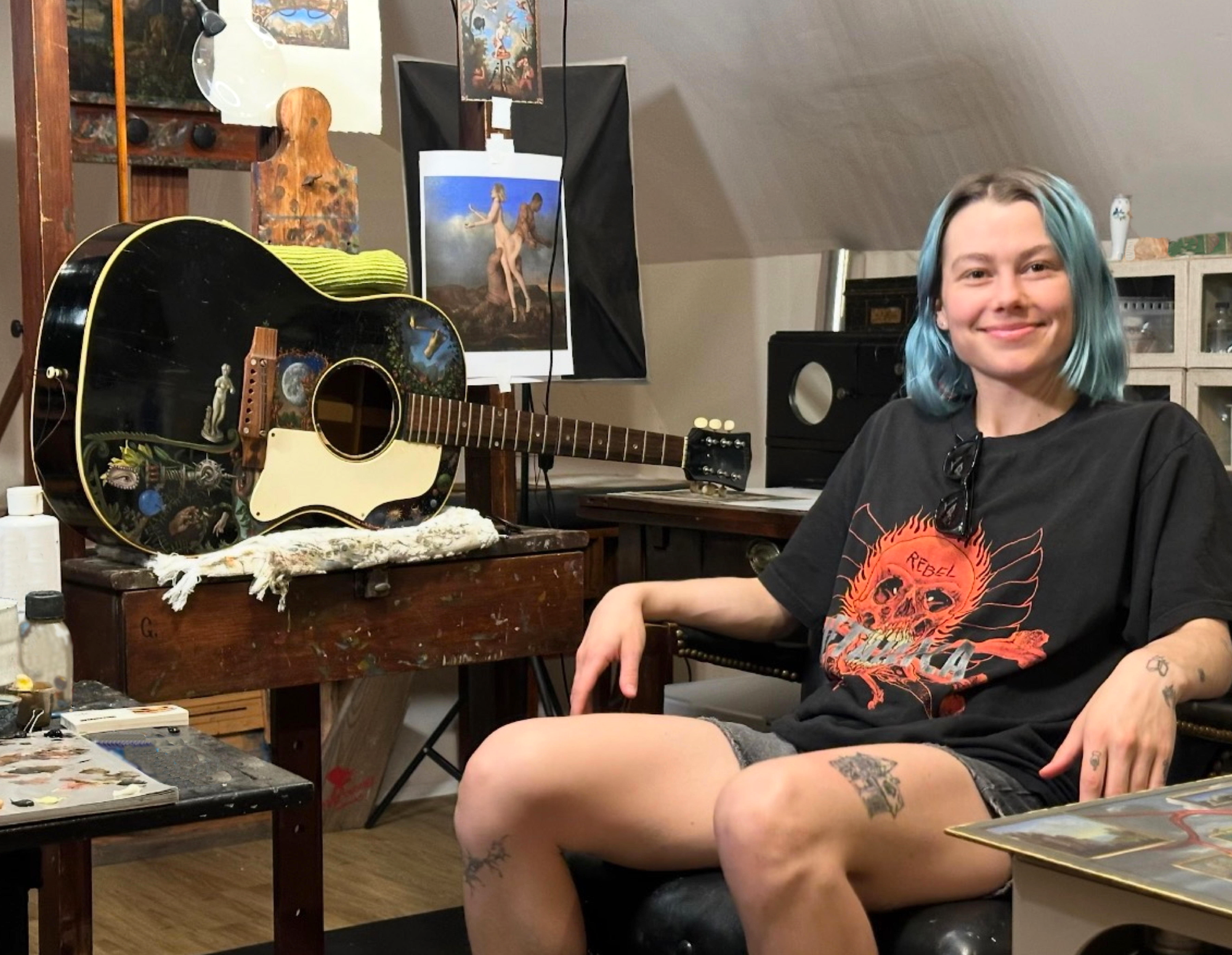
John Griswold (left); his painting “Untitled (divination game table with tokens)” (2024) (right) (images courtesy the artist)
The images grow out of and connect to one another, a theme in Griswold’s work. An anchor weighs down a rope that is wrapped around the vignette of a boy in a dress and armor; the same rope connects to a pulley device that appears to grow from the cherry-wood bridge, where the guitar’s real strings gather in tension. A disembodied hand holds out a sunflower. Two Victorian-style “lovers’ eye” portraits float in space, one of them about to be pierced by a Medieval-esque weapon, seemingly propelled by the gaze of the other.
The largest image painted on the instrument — the boy in the yellow satin dress and armor — was inspired by Griswold’s reverence for the Dutch Golden Age masters. As a kid, he would visit the Los Angeles County Museum of Art with his grandmother and stare in awe at “The Card Players” (c. 1659) by Gerard ter Borch, dreaming of one day recreating its sumptuous textures.
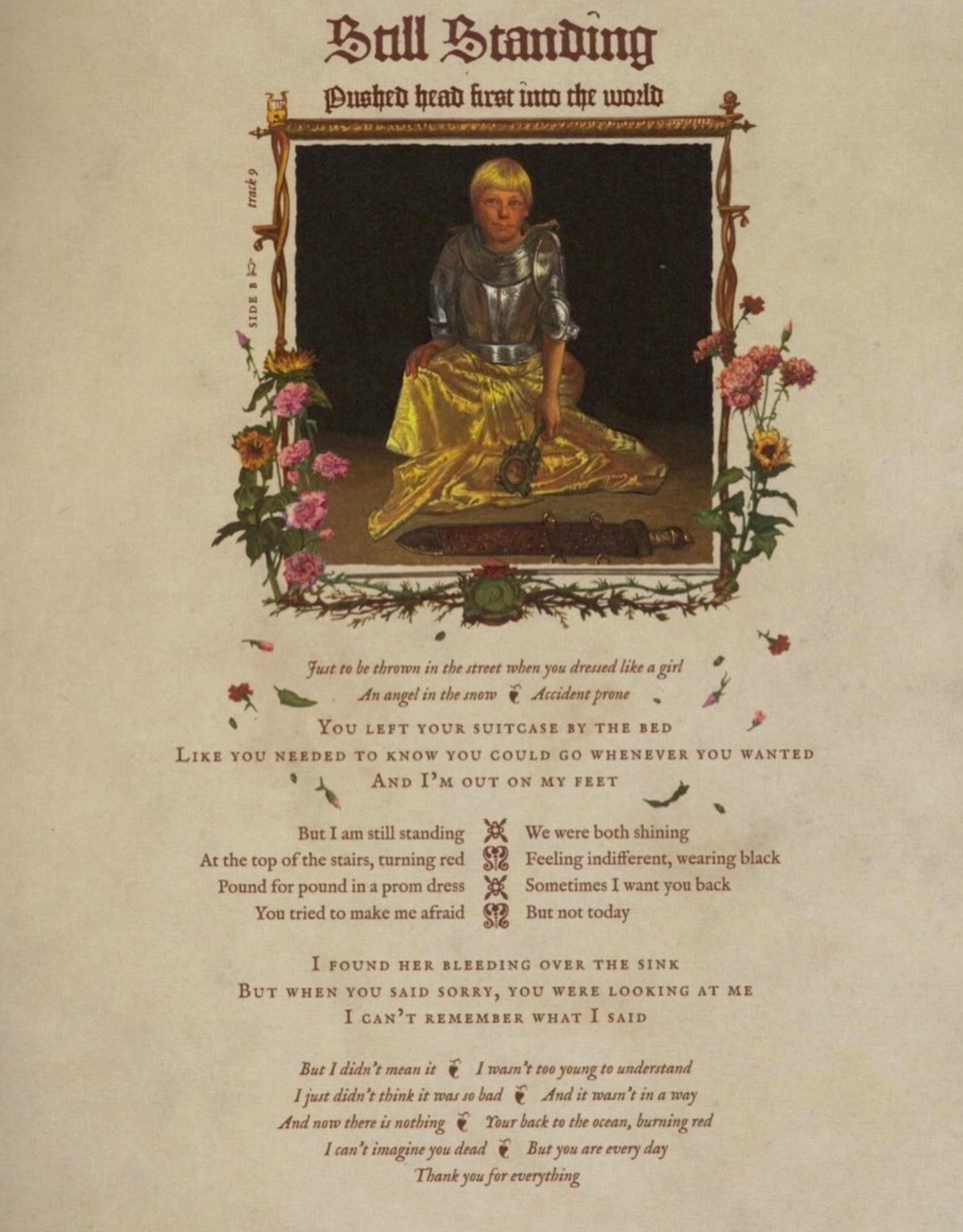
In Griswold’s rendering, a boy sits before a sheathed sword wearing a glistening gown to match his blonde hair. His face is based on photos Bridgers gave Griswold of her late father as a child, and he holds a small hand mirror with the face of a Classical Greek goddess figure reflected on its surface. The painting is the main image anchoring the guitar to Bridgers’s album, which is largely about the death of her father. The image appears in the lyric book, also done by Griswold, for the song “Still Standing.”
Not every Phoebe Bridgers fan will look at the guitar and see art history, but to Griswold, that’s less important. There are “so many ways in” to the work, he said, and the “dreamlike juxtapositions” will have an impact regardless of the viewer’s knowledge.
“I’ve always battled the idea that you have to have a program or a map to understand all the iconography of a painting,” he said. “I think the key to that is not knowing, and bringing to it your own fears and wonder and theories.”
The world Bridgers creates with her music is filled with icons and motifs, especially on Lost Weekend. Her large fan base parses over her every word, coming up with hypotheses about her life and the significance of her songs. By incorporating Griswold’s paintings, Bridgers is adding another allegorical layer and daring her fans to make their own meaning out of her vocabulary.
Griswold said his work for Bridgers made him feel like a small part of an “amazing, huge, magical machine.”
“Part of the point of it is people are going to make so much of it,” he said. “Certainly, the music and aspects of Phoebe and her life, and her interests, and her friends, and her imagery, and what she’s embracing, and all of that — they’re going to make that their own.”