Sustainability Efforts
Carbon neutrality has been a buzzword for many automakers over the past couple of years. While it’s looking unlikely that we’ll all be driving EVs by 2035, car companies are pursuing other green initiatives outside of the powertrain department.
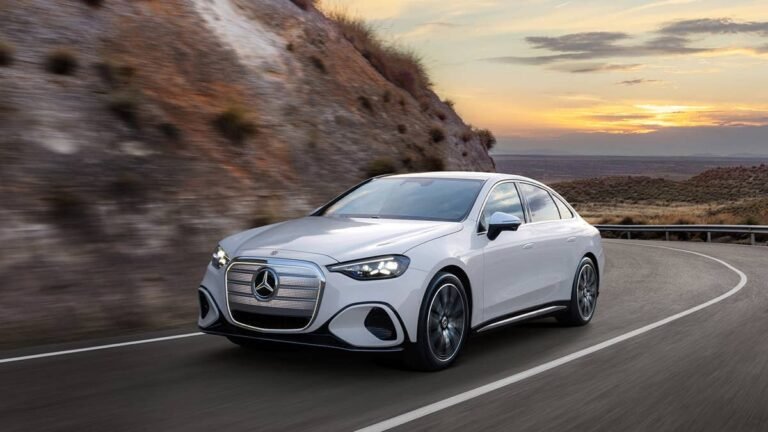
Building a car in the first place already requires a lot of energy, from sourcing materials to the production of vehicles. Mercedes-Benz isn’t exactly shy about its sustainability efforts, so it’s proud to tell everyone how ‘clean’ the all-new electric C-Class is to build.
Mercedes-Benz
More Recycled Materials
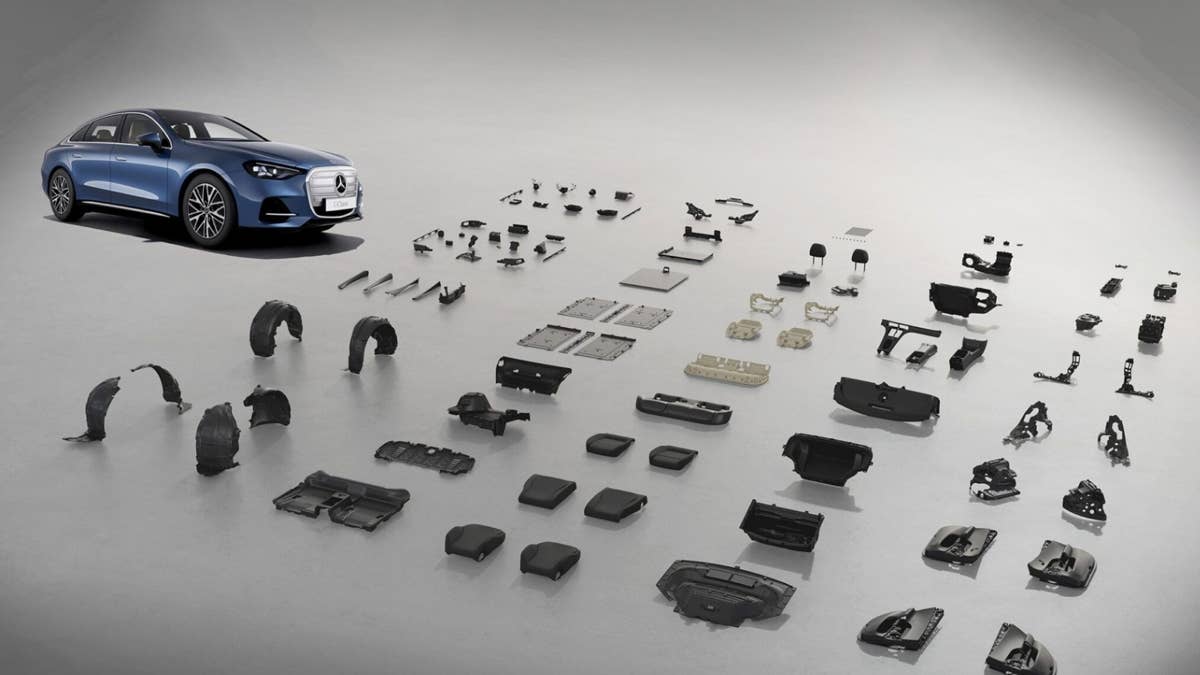
Cars use a fair bit of recycled materials these days. The C-Class EV, however, gets more of it in the form of secondary materials. By the company’s own reckoning, about 108 lbs of thermoplastic recycled plastic are used on the vehicle.
For instance, the frunk tub, wheelarch liners, and other parts such as the jacking points and bumper carriers are made from recycled plastics. The same goes for some of the seat fabrics and the yarn used in the cabin. The company also says there are four times more secondary thermoplastic materials in the electric C-Class over the combustion-powered models.
Recycled aluminum is also used on the car. While Mercedes didn’t say what exact parts use it, the company bundles it with what it calls its CO2-reduced aluminum. That also refers to how these parts were made and not just the recycled content percentage.
Mercedes-Benz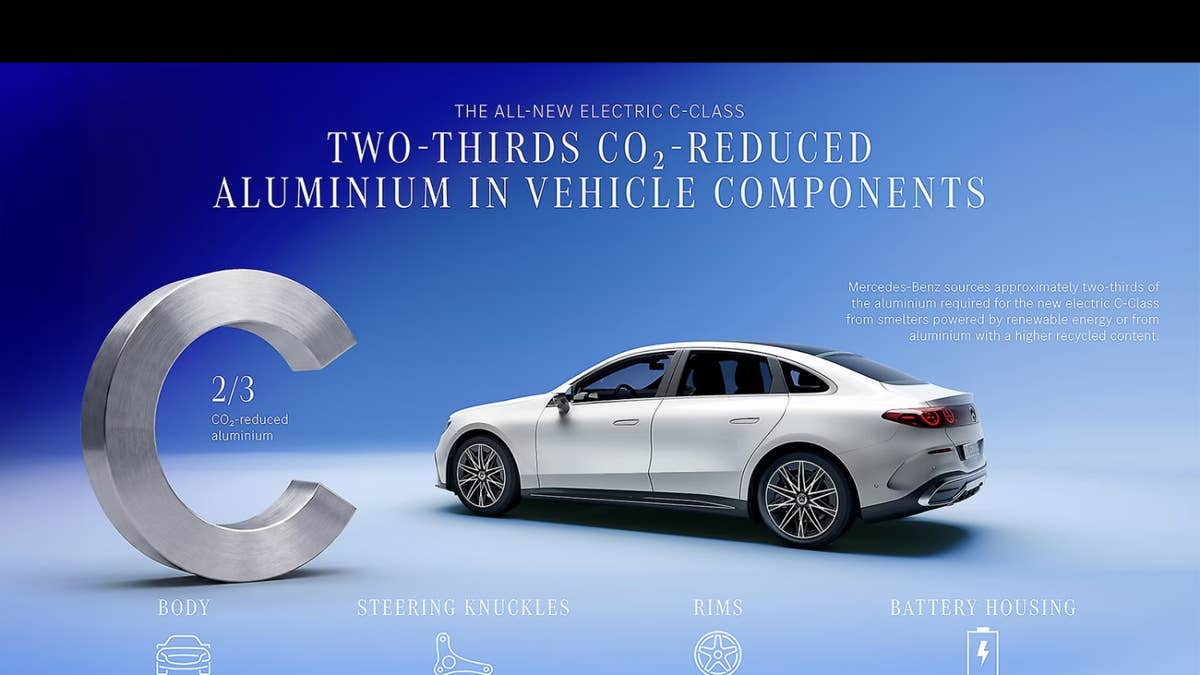
A Cleaner Build
While we’re on the subject of CO2-reduced materials, the building of parts is done with renewable energy in a bid to reduce environmental impact and emissions. It’s not just for aluminum, either, as the same applies for the steel parts on the vehicle. Mercedes says two-thirds of the C-Class EV uses carbon-reduced aluminum, including the body, steering knuckles, wheels, and battery tray.
The Kecskemet assembly plant that builds the battery-powered C-Class also uses renewable and sustainable energy to minimize environmental impact. Solar energy powers a good chunk of the plant so it doesn’t fully rely on the country’s grid to keep going. Less water is then used in the paint booths to reduce waste and improve conservation.
As for other initiatives, Mercedes is leaning more into responsible sourcing, not just in the gathering of resources, but also how a supplier operates and treats its people. The company is also looking into more ways to reduce carbon in sourcing materials, as well as the decarbonization of its supply chains.
Mercedes-Benz