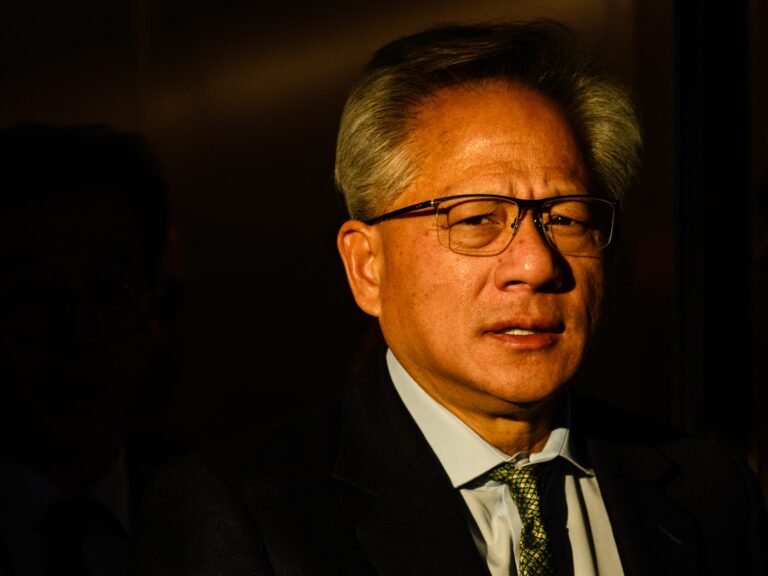
ANTHONY WALLACE / AFP via Getty Images
- This post originally appeared in the Business Insider Today newsletter.
- You can sign up for Business Insider’s daily newsletter here.
It’s technically 2026 AD, but the tech industry is now in 1 AJ (After Jensen).
Nvidia CEO Jensen Huang’s resignation Thursday closed a chaotic chapter for the chip giant. Huang turned gaming chips into the engine of the AI boom, building an empire in the process. In the end, Nvidia’s biggest risk was its founder himself.
But the saga isn’t over. His unique org structure and lack of succession planning mean there’s still a lot of mess to clean up.
(Speaking of messes, Huang’s resignation was followed by a report of yet another “intimate relationship” with an Nvidia employee.)
BI’s Sarah E. Needleman and Tim Paradis have more on why flat organizations built around powerful founders are great … until they’re not.
Now it’s the job of Colette Kress, Nvidia’s longtime CFO and interim CEO, to calm nerves and steady the $4 trillion ship. She’ll have the help of veteran tech investor Harvey Jones, an Nvidia board member since 1993, who was named the company’s first chairman. Read the memos they sent to employees after the shakeup.
In a bit of an eerie twist, Huang talked about succession plans just a few weeks ago. But his comments offered little in the way of concrete plans.
“Just as I can be fired, the next CEO has to be hired,” Huang said.
Nvidia’s biggest challenge could be maintaining stability as major changes still loom.
Kress’ interim tag means she’s a temporary solution to Nvidia’s leadership problem. According to prediction markets, longtime hardware executive Ian Buck could land the permanent gig.
Buck’s claim to fame is a big one: creating CUDA. The platform bridges the gap between GPUs and AI models, serving as a key technological moat for Nvidia.
The company could also look outside its ranks. President Donald Trump, who had a close relationship with Huang, already suggested one name: Tim Apple Cook. Trump also said he spoke to Huang the day before the resignation and that Huang was “going through hell.”
Meanwhile, no clear succession plan and a placeholder CEO could create an opportunity for customers looking to renegotiate deals on better terms.
I raised this point to Alistair Barr, author of the AI Insider newsletter, on BI’s live Q&A yesterday. He highlighted Huang’s reputation as a “brutal” negotiator.
“He had a stack of customers, and if they did anything wrong, you go down the list, and you have to wait longer,” Barr said.
But a new face on the other side of the table negotiating a deal changes the equation. Especially one who might not be in that position for long.
Granted, tech companies’ appetite for GPUs isn’t going anywhere. Nvidia still holds an incredible amount of power and leverage in the AI trade. But thinking something will simply last forever is a recipe for disaster.
Just ask Jensen Huang.