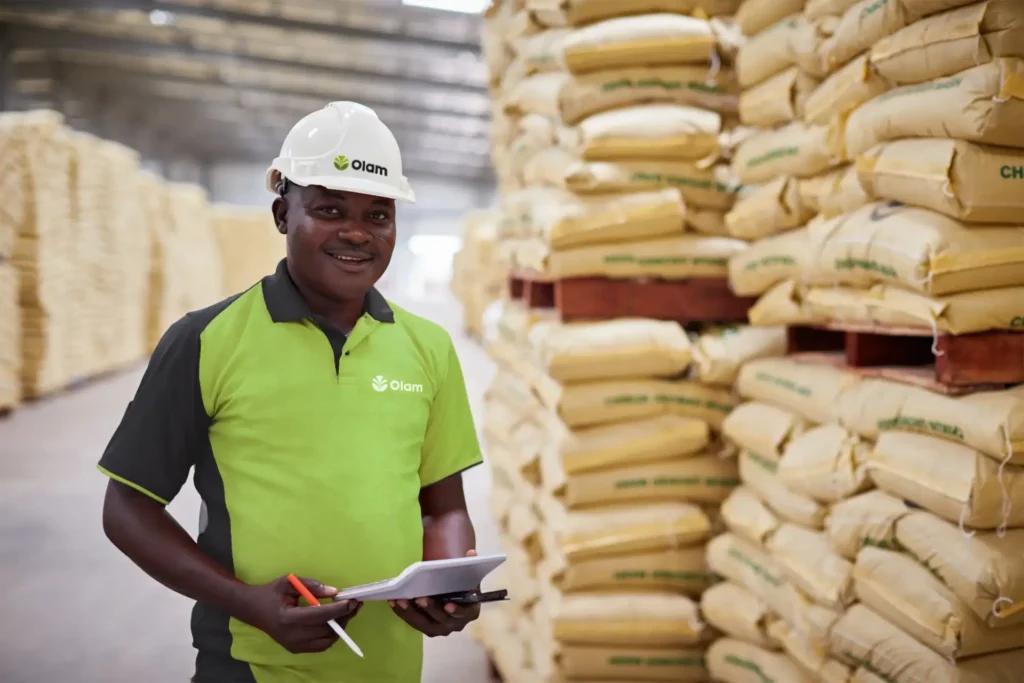
Africa has long been a part of the heritage and growth strategy for global agribusiness giant Olam Agri, which has operated on the continent for more than 35 years and played an instrumental role in the transformation of food, feed, and fiber systems.
For Singapore-headquartered Olam Agri, strengthening domestic value chains and supporting food security through local processing and manufacturing are among its biggest achievements. The impact has helped reduce import dependence for a continent that still spends an estimated $50 billion to $70 billion annually.
One of the main challenges African farmers face is the lack of markets. Olam Agri helps tackle this by connecting more than 300,000 growers to domestic and global markets. Alongside the local systems, Olam Agri facilitates the importation and distribution of key commodities that help stabilize supply and improve food availability.
In the long term, the firm understands that for Africa to be food secure, making agriculture sustainable is the ultimate solution. For this reason, Olam Agri invests in strengthening agricultural resilience with initiatives like climate-smart and regenerative agriculture, drought-resistant seed varieties, and sustainable forest management.
As the firm deepens its presence in Africa, AgFunderNews (AFN) caught up with Anil Nair (AN), Olam Agri country head – Nigeria to understand its growth strategy.
AFN: What is Olam Agri doing to strengthen food security in Africa?
Anil Nair (AN): Africa has enormous agricultural potential supported by abundant natural resources, a growing population and rising demand for food. However, structural gaps across infrastructure, logistics and processing capacity are major constraints. Unlocking this potential requires stronger domestic production capabilities and greater investment in local value addition.
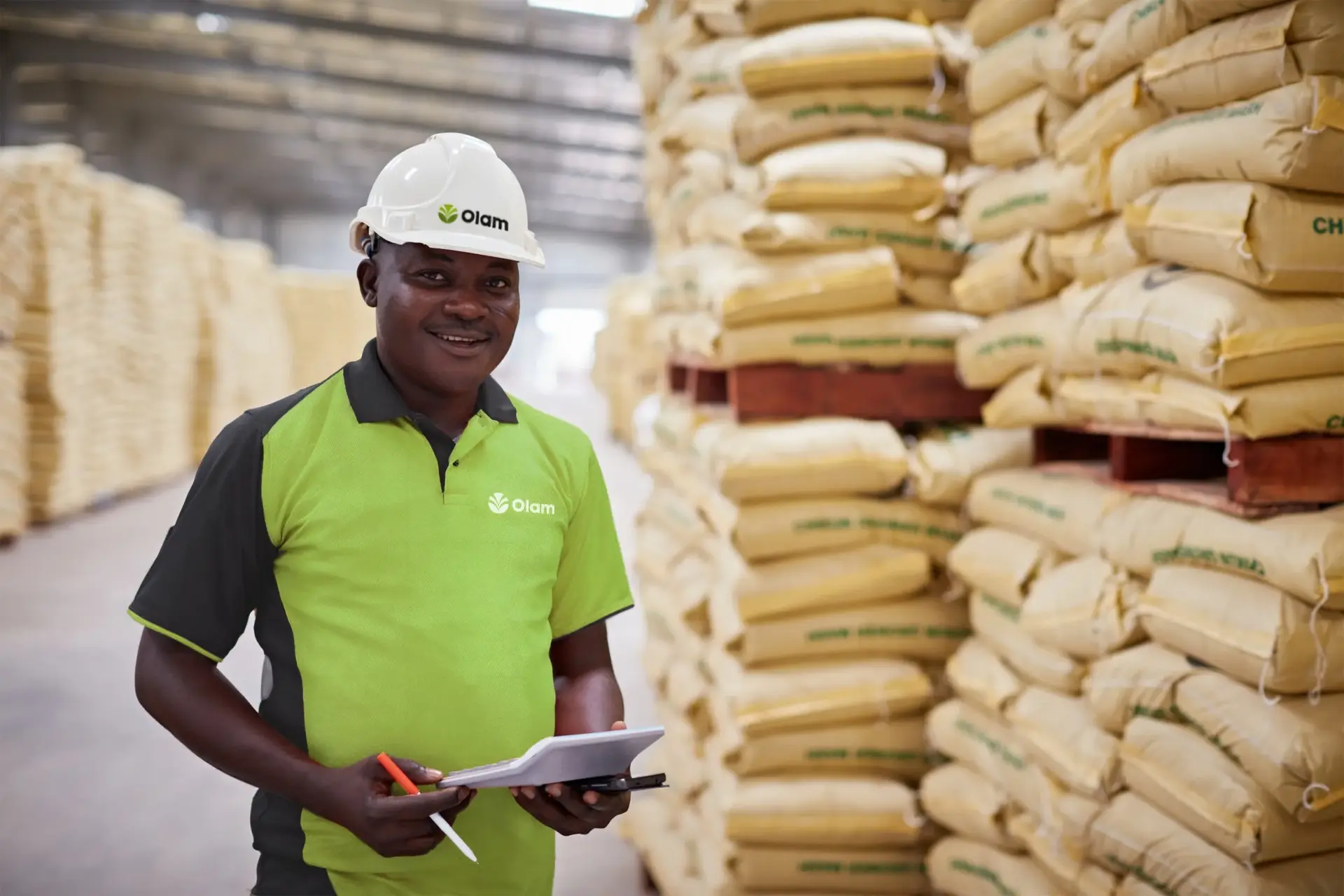
At Olam Agri, we are focused on building domestic value chains that connect farmers, processors, manufacturers and consumers. This includes investing in local processing and manufacturing capacity, supporting market access and strengthening supply chains that can move food more efficiently from production areas to consumers.
Our approach is centered on creating more value within African markets. By producing food closer to where it is consumed and strengthening local industries, we can improve food availability, support livelihoods and contribute to more resilient food systems.
AFN: How is Olam Agri helping Africa realize the Agenda 2063 goal of ending hunger?
AN: Agenda 2063 is ambitious, but it is achievable if Africa continues to invest across the entire food system. Food security depends not only on agricultural production, but also on storage, logistics, processing, manufacturing and distribution, alongside policies that support long-term agricultural development and private sector investment.
Achieving this goal will require strong collaboration between governments, farmers, agribusinesses, investors and development partners. No single organization can address food security alone.
Olam Agri contributes by investing in domestic value chains, supporting farmers, strengthening local processing and manufacturing, and working with governments and partners to help build food systems that are competitive, scalable and sustainable.
AFN: Olam Agri is undertaking investments in Africa. What is the inspiration?
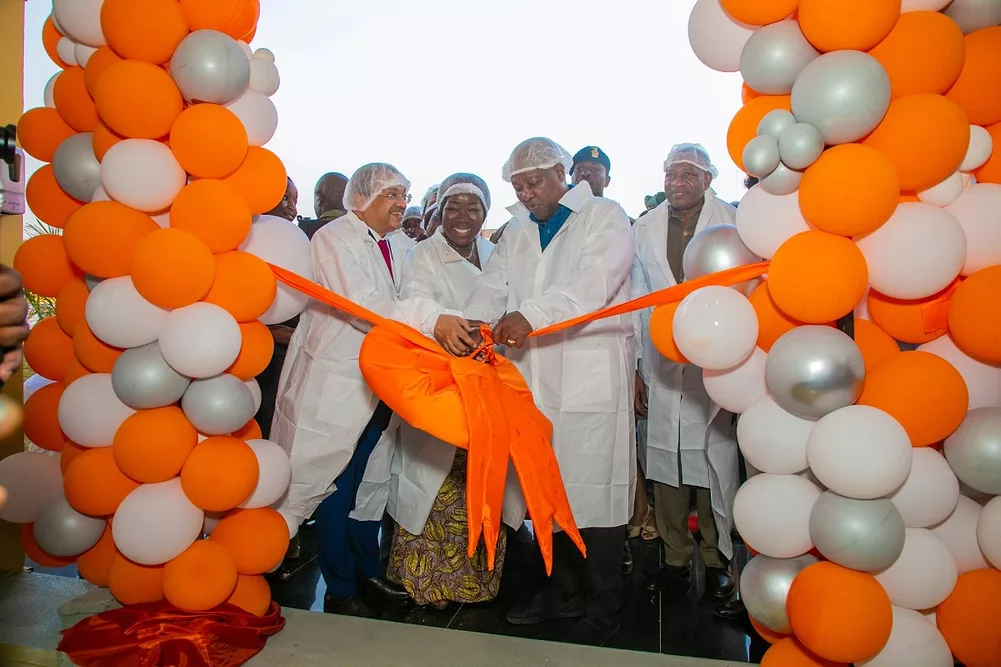
AN: The investment thesis is clear: food should be produced closer to where it is consumed, and African economies should retain more value across food, feed and fibre systems. In Ghana, we have invested $40 million in the country’s first state-of-the-art pasta manufacturing facility. The aim is to strengthen domestic food manufacturing capacity, expand access to affordable fortified pasta, and support industrial skills development.
In Nigeria, we have expanded wheat milling capacity and established a soybean crushing facility that supports locally refined edible oils and creates a more integrated supply chain. In Senegal, we strengthened our animal feed and protein footprint through the acquisition of Avisen, reinforcing domestic poultry and livestock value chains.
These investments are underpinned by a long-term commitment to food security, industrialization and local value creation. By strengthening linkages, we can create employment opportunities, support livelihoods and enable more value to be created within Africa.
AFN: What is Olam Agri doing to incorporate local players into its investments?
AN: Local processing and manufacturing are very crucial because they create stronger connections between agricultural production and end markets. This improves availability and affordability, while reducing exposure to global supply disruptions and price volatility.
Local participation is essential to building self-reliant food systems. Therefore, our efforts and investments are designed to create linkages across the value chain, from farmers and aggregators to transporters, distributors, processors and retailers. For example, our soybean crushing facility in Nigeria sources locally produced soybeans, creating demand for domestic production while supporting both the feed and edible oil industries.
AFN: What is Olam Agri doing to help farmers mitigate climate change?
AN: Smallholder farmers are central to Africa’s food security and must be fundamental to any climate resilience strategy. As climate change affects yields, rainfall patterns and farm economics, the priority is to ensure farmers have access to the right seeds, knowledge, tools and markets to remain productive and profitable.
In Nigeria, through our Seeds for the Future initiative, we work with partners to develop heat- and drought-tolerant wheat varieties suited to local conditions. One example is the Crown durum wheat variety, which matures early, performs well under heat stress and helps farmers improve productivity.
Beyond seed development, we support farmers with training on improved agronomic practices, soil health, resource efficiency and post-harvest handling. We also see market access as critical to resilience: when farmers are connected to reliable demand and supported with practical, scalable solutions, climate-smart agriculture can strengthen livelihoods while mitigating climate change risks.
AFN: How is regenerative and climate-smart agriculture helping transform agriculture in Africa?
AN: Regenerative and climate-smart agriculture are becoming increasingly important as the agricultural sector faces the dual challenge of feeding a growing population while responding to climate change. For us, the objective is to produce more food in a way that protects natural resources, strengthens resilience, and supports farmer livelihoods over the long term.
We view regenerative agriculture as a viable pathway towards building more sustainable and resilient supply chains. This includes promoting practices that improve soil health, strengthen biodiversity, optimize resource use, and help farmers adapt to changing climatic conditions. Importantly, these approaches must also deliver economic value for farmers if they are to be adopted and sustained at scale.

AFN: How is Olam Agri deploying technology to drive sustainable agriculture in Africa?
AN: As agricultural value chains become increasingly complex, technology is helping improve efficiency, strengthen traceability, and support better decision-making. We deploy technology in supporting climate-resilient crop development and improved agronomic practices at farm level to modernizing processing, manufacturing and supply chain operations. By leveraging digital tools and data, we improve traceability, transparency and operational efficiency.
However, technology delivers the greatest impact when it is combined with farmer training, investment and market access. Our focus is therefore on adopting new technologies while ensuring they translate into tangible benefits for farmers.
AFN: What should Africa do to attract more private sector investments in the agricultural sector?
AN: The private sector can bring capital, operational expertise, technology and market access, but large-scale investment must be commercially viable over the long term. Governments play a critical role in creating enabling conditions for private sector investment. This includes predictable policy frameworks, reliable infrastructure, efficient logistics, strong food safety systems, and incentives that support local processing and manufacturing.
AFN: What should Africa expect from Olam Agri in the medium-term future?
AN: Africa will remain central to Olam Agri’s growth strategy. We will continue to strengthen domestic value chains through investments in processing, manufacturing and distribution, while expanding access to affordable and nutritious food products.
At the same time, we recognise that the future of African agriculture will depend on the resilience and success of its farmers. We will continue to work alongside farming communities, governments, development partners, research institutions, and industry stakeholders to improve productivity, strengthen climate resilience and support the adoption of more sustainable farming practices. This includes investing in farmer training, knowledge-sharing and innovation that help farmers adapt to evolving environmental and market conditions.
Our goal is to continue building “Made in Africa, for Africa” value chains that create opportunities across the agricultural ecosystem, from farmers and SMEs to processors and consumers. Achieving this requires collaboration across the public and private sectors, and we believe partnerships will continue to play a critical role in scaling impact.
The post Olam Agri on what it takes to build self-reliant food systems across Africa appeared first on AgFunderNews.