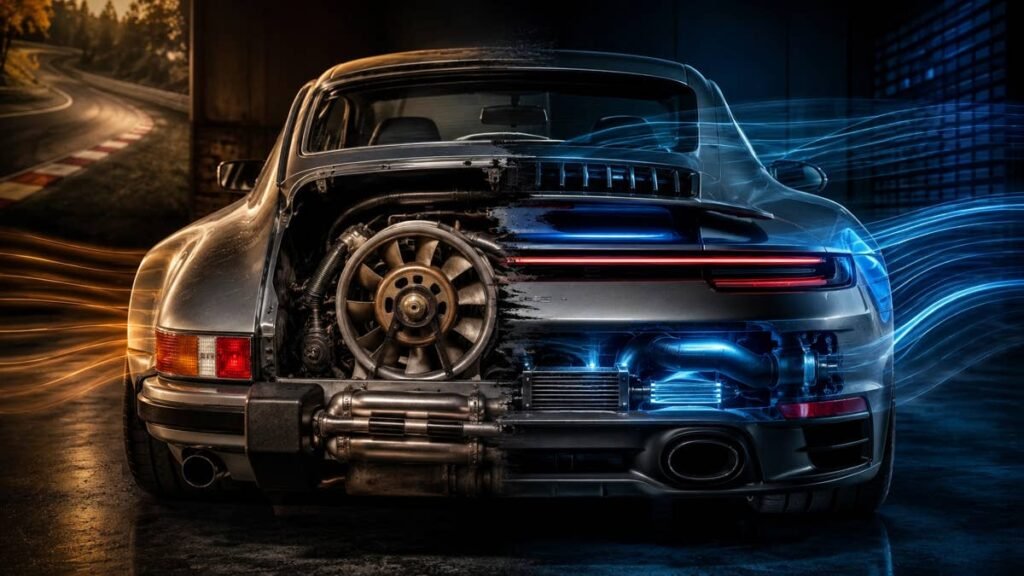
Porsche may revisit one of the most beloved chapters in its history. A recently uncovered patent reveals a new engine cooling concept that takes inspiration from the air-cooled era of the 911, before water-cooled engines took over in the late 1990s. Albeit not entirely air-cooled, it combines the old-school design with a dash of modern engineering in a way only Porsche really can.
Reviving The Spirit Of The Air-Cooled 911
Cars and Bids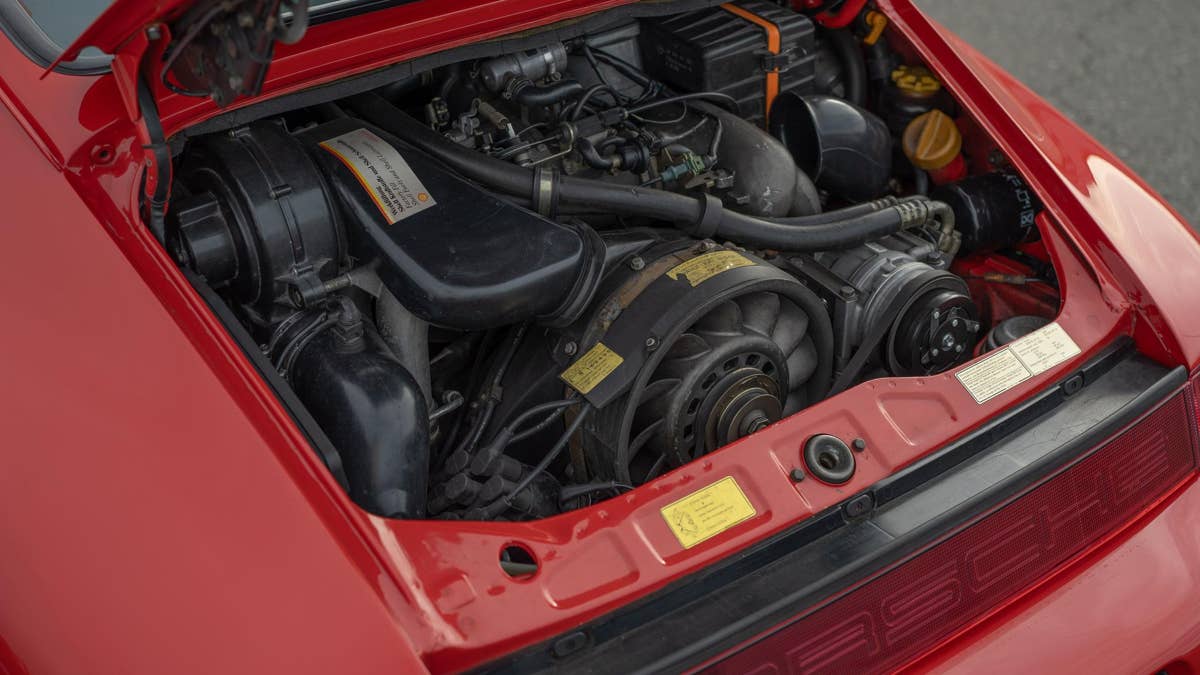
For decades, air-cooled engines defined the identity of the 911. The 993 was the final 911 generation to use an air-cooled flat-six before the water-cooled 996 arrived in 1997. Although the switch upset many enthusiasts at the time, it ultimately allowed Porsche to meet stricter emissions and noise regulations while dramatically improving performance. Without that transition, modern performance icons like the 701-hp 992 Turbo S would never have existed.
According to the patent, Porsche’s new setup surrounds the engine with a dedicated airflow housing while a large fan pulls air across cooling fins mounted to the engine. The system still uses liquid cooling, but far less extensively than today’s engines. Porsche also intends to cool components like the exhaust system and turbochargers using airflow, potentially allowing for smaller radiators and reduced drag, improving aerodynamics.
Refining The Formula Instead Of Reinventing It
German Patent and Trademark Office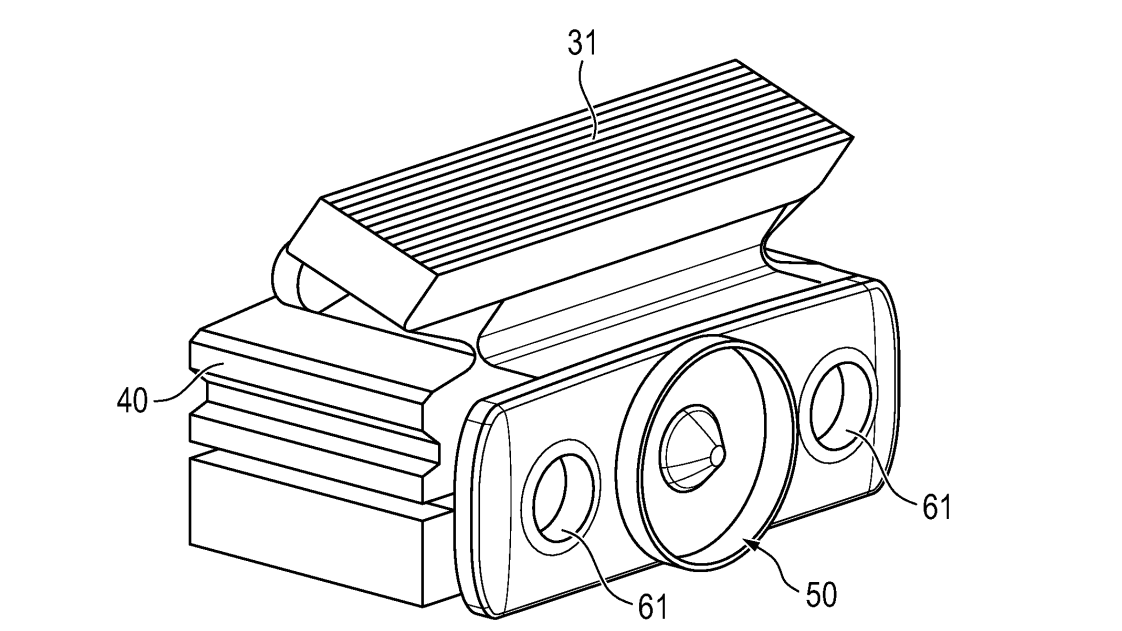
At first glance, it may look as if the 911 hasn’t evolved much from the original car launched 63 years ago, but Porsche has always focused on refining the details instead of overhauling everything. Recent examples include the brand’s new electrically assisted turbocharger technology found in the 911 GTS T-Hybrid. This patent feels like another extension of that same philosophy.
Beyond nostalgia, the design could bring genuine advantages, apart from catering to Porsche purists. Smaller cooling systems would reduce the need for large front-mounted radiators while improving airflow management. The patent drawings also show the setup working with both rear and mid-engine layouts, making the 911 and a potential ICE-powered 718 successor likely candidates if the technology ever reaches production.
Porsche’s ICE and EV Future
Porsche
After selling its share in Bugatti and cutting more than 500 jobs, Porsche is rethinking its strategy. The German carmaker is putting renewed focus on its own lineup of ICE-powered products. That said, Porsche is still giving EVs a serious chance despite softer demand in some markets. The upcoming Cayenne Electric remains an important model, and the Taycan Turbo GT recently claimed a new Nurburgring production EV lap record. Whether this cooling system reaches production or not, the patent shows Porsche is still searching for ways to preserve its heritage while adapting to modern performance and efficiency demands.