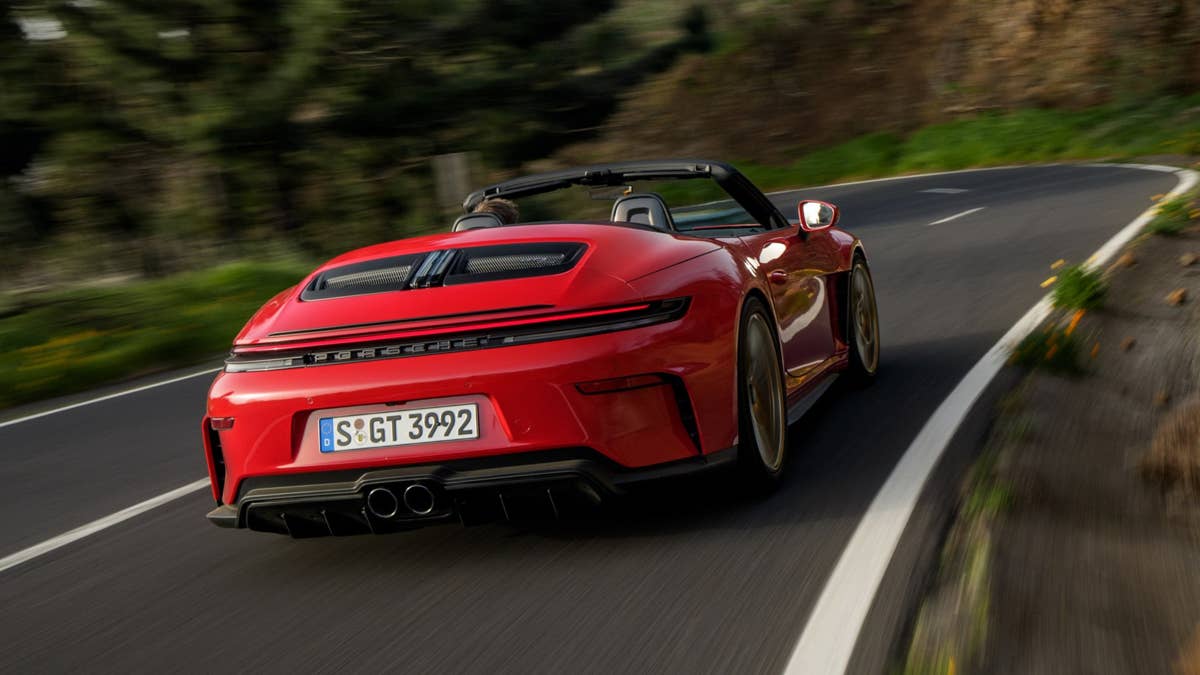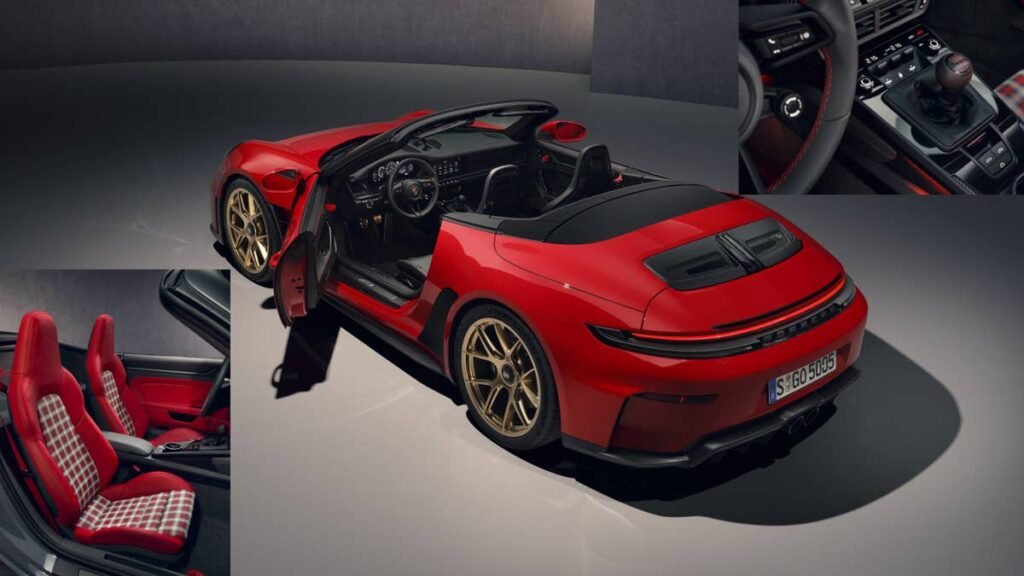
It’s finally happened: Porsche has created a convertible version of the sublime 911 GT3, and as the first of its kind, Porsche has endowed it with several upgrades from the limited-edition 911 S/T. It’s called the 911 GT3 S/C, or Sport Cabriolet, and it’s not quite as hardcore as the S/T, nor will it be as rare. The engine is the same as that of the 992.2 GT3, meaning it gets the camshafts of the 992.1 GT3 RS, resulting in 503 horsepower and 331 lb-ft of torque—15 less than the S/T. 0-60 takes just 3.7 seconds, and the top speed is 194 mph.
Porsche produced only 1,963 examples of the S/T, making it an instant collectible, but this new S/C won’t be a limited-production model, which should encourage owners to drive it more often. Also helping that aim is that Porsche has made no mention of the special single-mass flywheel of the S/T, which means the close-ratio six-speed manual in this Sport Cabrio should be easier to operate, as befits a drop-top. Pricing is steep, and we’ll get to that soon enough, but Porsche hasn’t charged extra for many of the upgrades. In a nutshell, this may be the best way to enjoy a 9,000 rpm engine on a winding road.
Lightweight 2027 Porsche 911 GT3 S/C Is Carbon-Infused
Porsche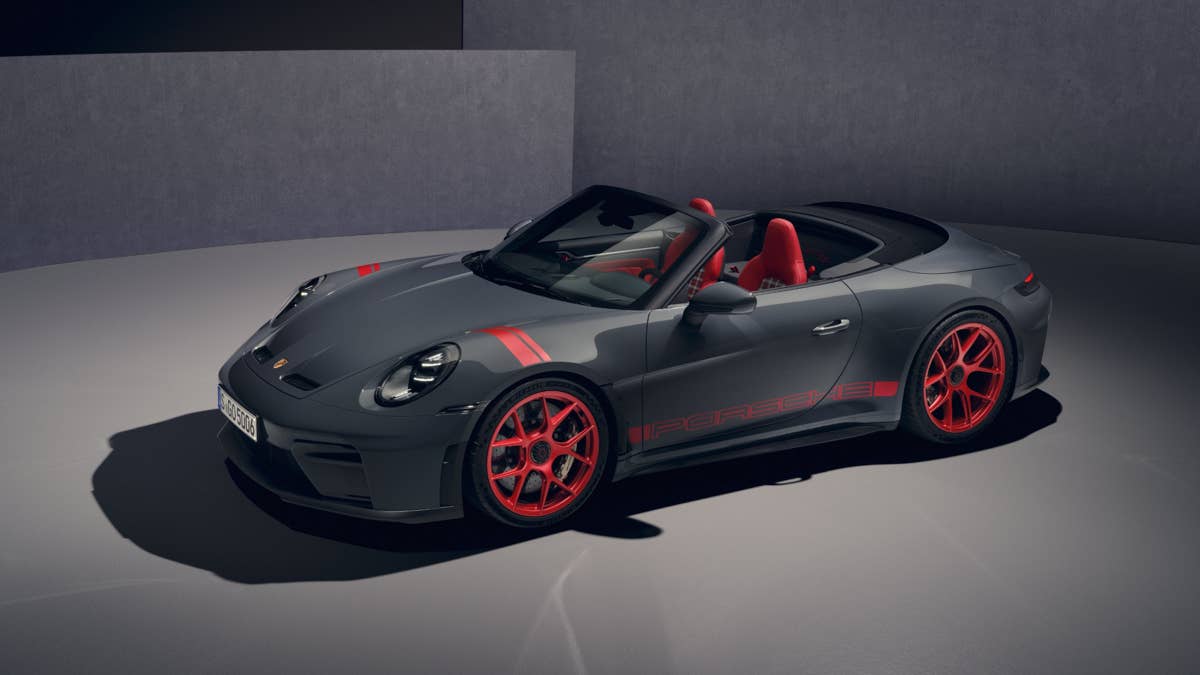
At 3,322 lbs, the GT3 S/C is 203 lbs lighter than a 911 Carrera Cabriolet and only 266 lbs heavier than the hard-top S/T, despite its hydraulically operated folding roof. This was achieved, in part, by using magnesium in the drop top and fitting the carbon fiber-reinforced plastic (CFRP) hood, fenders, and doors of the S/T, as well as a carbon fiber rear anti-roll bar, carbon connecting links, and carbon underbody panel. Behind the 20-inch front and 21-inch rear center-locking magnesium wheels (also from the S/T, saving 19 lbs) is the Porsche Ceramic Composite Brake system, shaving another 44 lbs over cast iron rotors. The wheels are wrapped in the same rubber as other GT3 variants—255/35 at the front and 315/30 at the back.
Porsche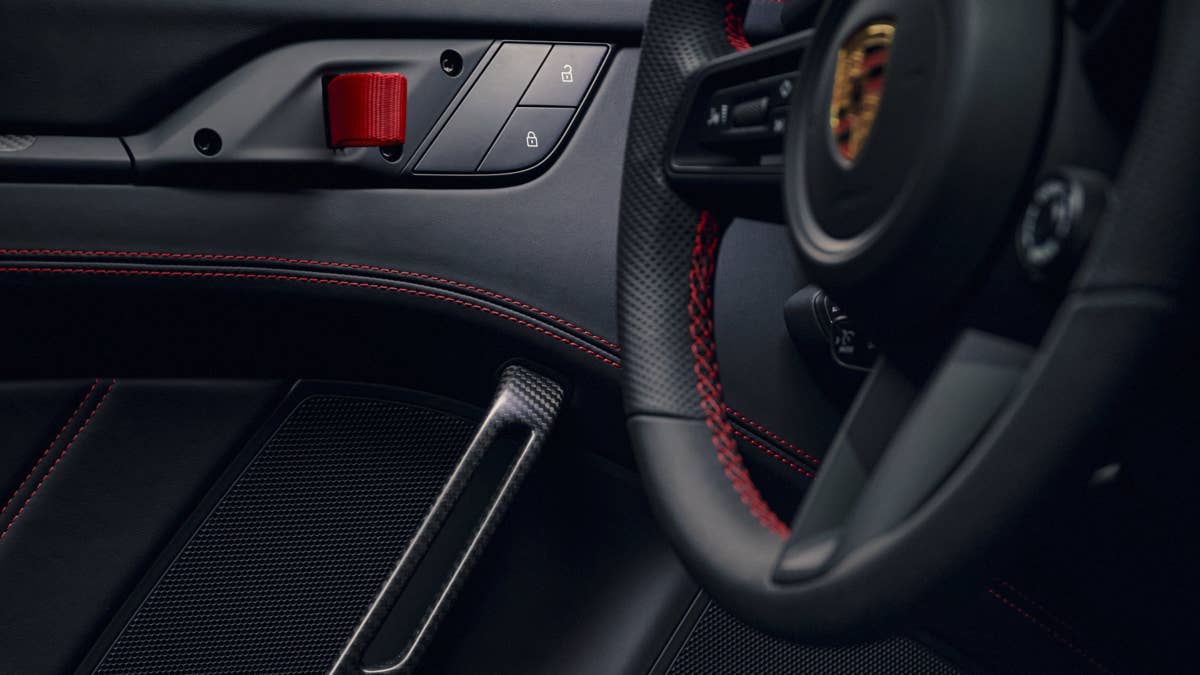
It’s a similar story inside, where the S/T’s lightweight carpets and lightweight door panels with fabric door pulls appear. Further contributing to low mass is the deletion of the rear seats, while those in front can choose from a four-way Sport Seats Plus setup as standard or folding buckets with CFRP shells. Both options are heated, encouraging more top-down driving. Taking this feature away and not trimming the sun visors and A-pillars in leather, but this leans more into luxury than lunacy. Still, there are GT3 cues everywhere, including the Track Screen display that allows the redline to move to the 12 o’clock position and the fact that there’s an ignition switch rather than a button.
911 GT3 S/C Is An Elegant Cabriolet
Porsche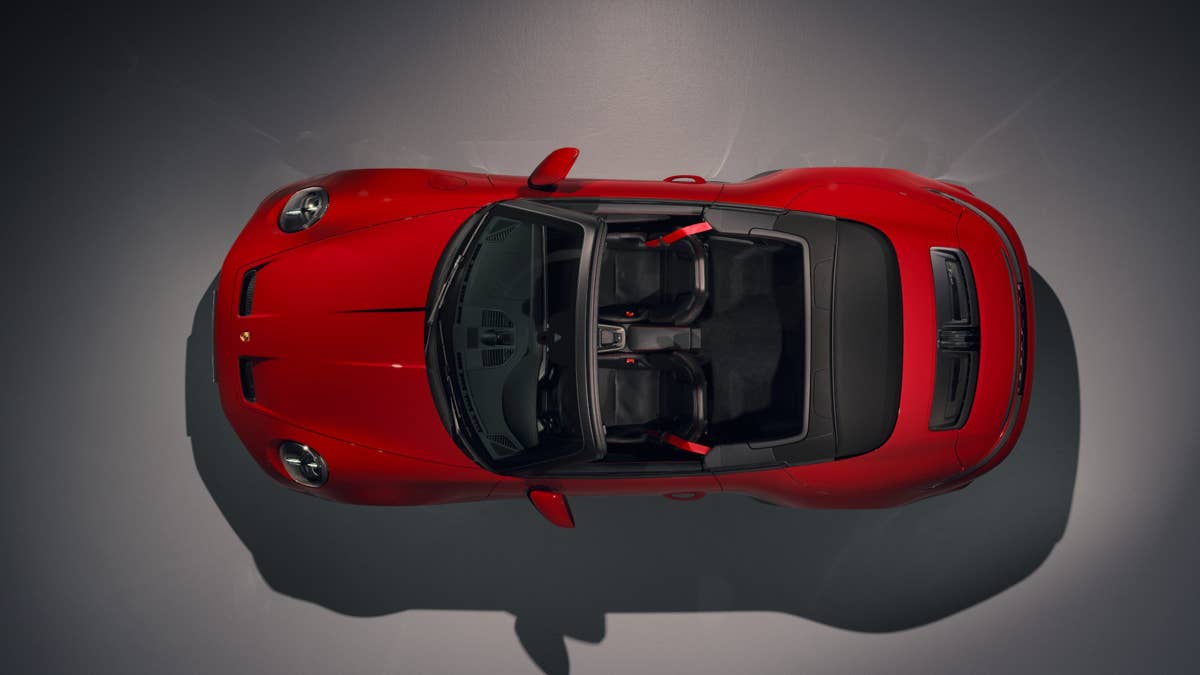
While the deletion of rear seats calls to mind the 911 Speedster, Porsche wanted the S/C to look cleaner, so it focused on the form intensely, avoiding the double-bubble design of the Speedster’s rear end and ensuring the roof has no bows under the fabric, improving both aesthetics and aerodynamics. This opens or closes in about 12 seconds, while the wind deflector opens in two. Also making the car look sleeker is that the magnesium windshield frame is black as standard, matching the roof, though it can be had in body color as an option. Another neat touch is the integration of daytime running lights into the Matrix Design LED headlights, allowing for wider front-end intakes above the GT3 chin spoiler, and at the rear, there’s a retractable spoiler like the S/T and the GT3 Touring, along with a GT3 diffuser. One thing no other GT3 has is a leather-trimmed storage box behind the rear seats, available at no extra cost. This weighs 22 lbs and offers 2.8 cubic feet of volume, and it can be made to match the Street Style Package. What is that, you ask?
Porsche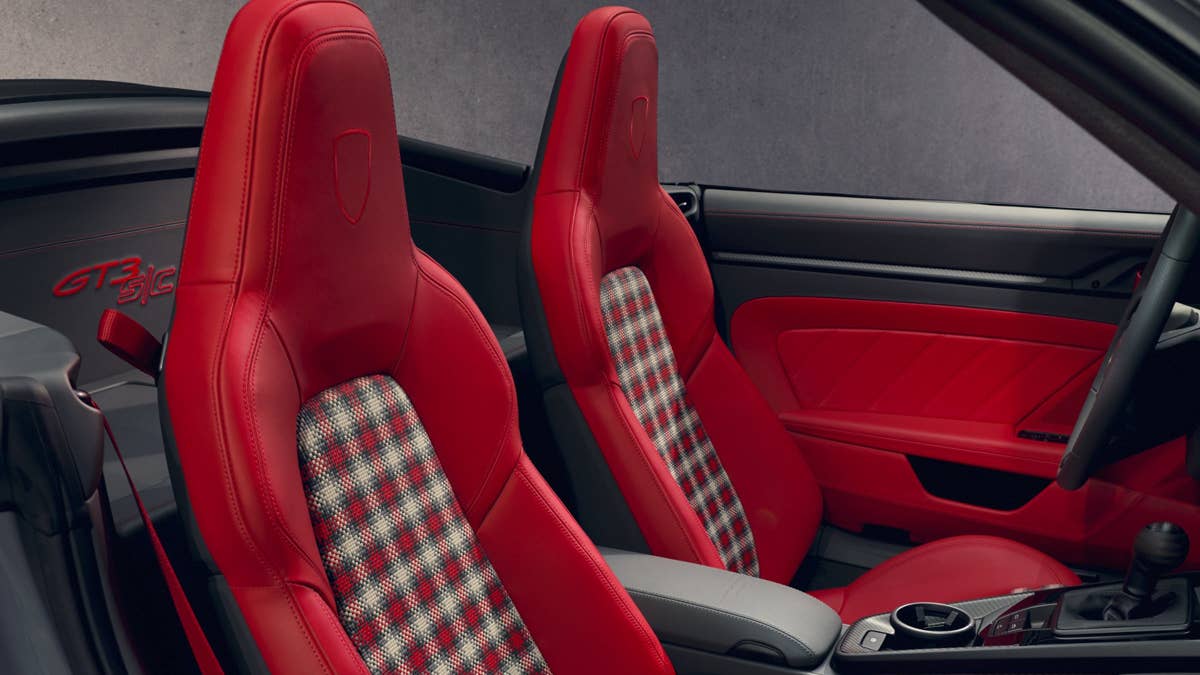
From the Porsche design studio, this optional package includes Pyro Red graphics, Slate Grey Neo wheels with Puro Red wheel barrel accents, Victory Gold brake calipers with black Porsche lettering, and a newly designed Porsche coat of arms outline on the center caps. Black headlight housings and body color airblades are joined by a coat of arms embroidered on each headrest, as well as four-color braided leather upholstery. Two-tone leather in Slate Grey and Guards Red appears throughout the interior, and the steering column, seat consoles, door sill trim, and fuse box cover are also made of leather. Even the slats and surrounds of the air vents and the piping of the floor mats are trimmed in the material. The package also adds an open-pore walnut shift lever with a Pyro Red shift pattern, a color which also appears on the 911 and GT3 S/C badges. As always, the options don’t stop there, and buyers can get a chronograph that matches the spec of their car.
GT3 S/C Pricing Is High, But Not Obscene
Porsche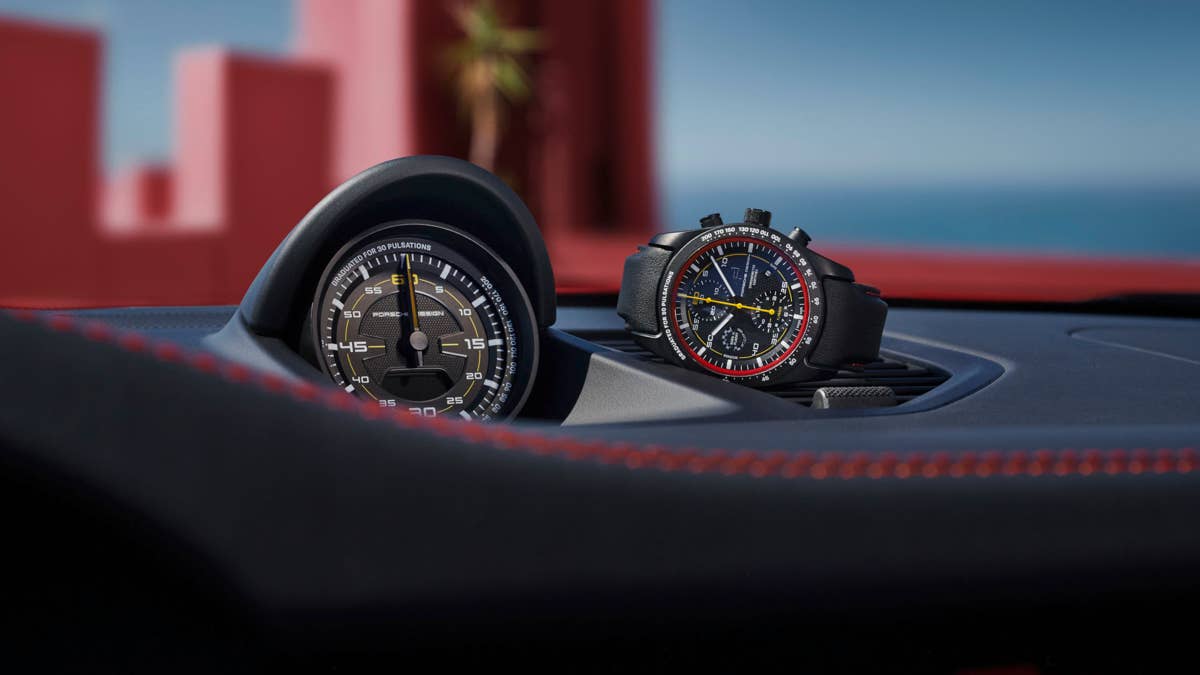
The 2027 Porsche 911 GT3 S/C starts at $273,000, which excludes a $2.350 delivery fee. Yes, that’s a huge chunk of change, but there’s plenty that a normal GT3 would charge extra for. The Lightweight package would be another $20,350, the magnesium wheels another $17,840, and the PCCB brakes $10,370. A leather interior would add $5,020, and these add-ons would bring the total beyond $306,000. Also, a cabriolet is normally $14,000 pricier than the equivalent 911 coupe, and the S/T’s CFRP bits can’t be optioned and therefore not priced. As a result, Porsche says the $273k base MSRP “represents a discount of roughly 11 percent” compared to a GT3 coupe with the same upgrades and without S/T doors, fenders, and hood. While we suspect dealers will still make ordering one of these difficult, hopefully, Porsche will produce the S/C for long enough that flippers don’t ruin the secondhand market. The S/C arrives at North American dealers in the fall.
Porsche