Hilary Brueck/BI
- This post originally appeared in the Business Insider Today newsletter.
- You can sign up for Business Insider’s daily newsletter here.
Americans pursuing longevity just got another toy to try.
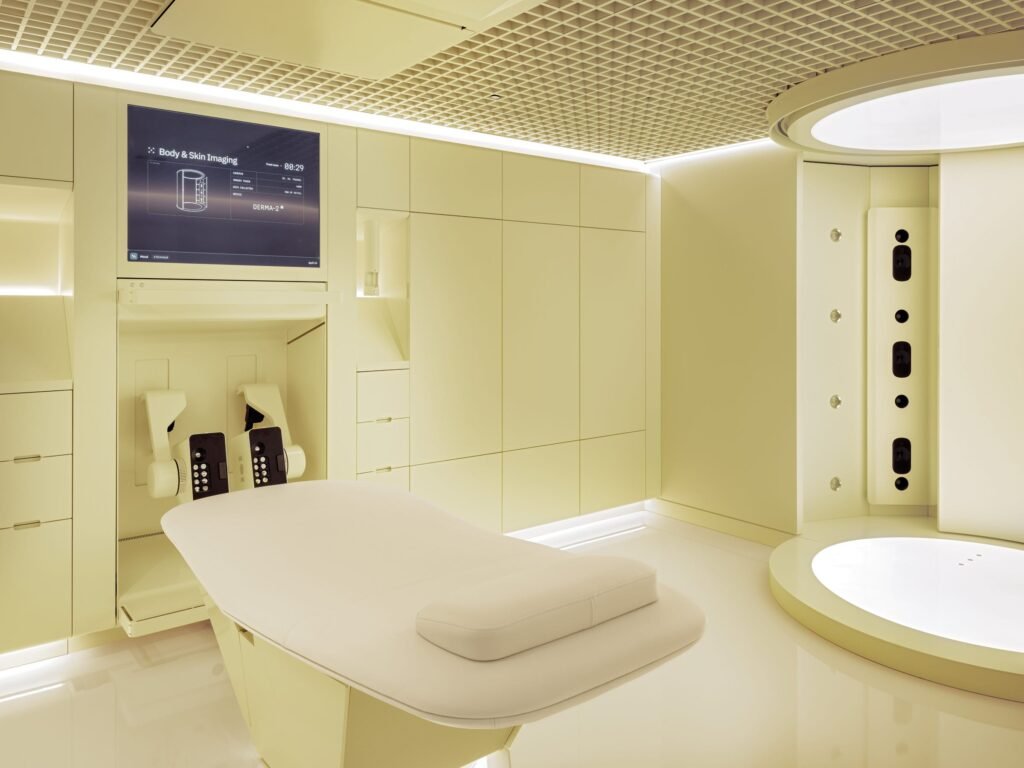
Neko Health, a tech-forward way to quickly check on your heart, skin, and body shape, has arrived stateside. After making waves in Stockholm and London, the startup created by Spotify cofounder Daniel Ek is planting its flag in the US in NYC’s SoHo neighborhood.
The pitch is simple: a sleek, modern way to scan your entire body to spot cancer and heart disease signs, done in under an hour for the out-of-pocket cost of $499. (Insurance need not apply.)
But if you’re interested, be patient. There are already 25,000 people on the waitlist. A second location is opening in Miami this fall.
So, is it worth it? Lucky for you, my colleague Hilary Brueck tried it out. While the scan definitely has its benefits, she said it’s also not that differentiated from what you typically get at your annual physical.
Hilary is an expert at trying out new health tech trends. A blood test that says it tests for 50 cancers? Hilary tried it. Longevity guru Bryan Johnson’s brain helmet? Hilary tried it. A popular blood test that the Rock and Zac Efron have touted? Hilary tried it.
And it’s not just cutting-edge tech. Hilary also ran through exercises experts say can help slow aging. (She even showed you how to do them.)
Neko Health is an example of out-of-pocket health services gaining traction.
“Cash pay care is one of the biggest trends coming in American healthcare over the next decade,” Zen Chu, the faculty director of MIT’s healthcare ventures course, told Hilary.
Perhaps the best example of this is the full-body MRIs that scan your entire body to uncover hidden diseases.
Insurance won’t cover it. But can you really put a price on peace of mind? (You can. It costs up to $2,500.)
There are plenty of success stories of MRIs sniffing out something nefarious, but there are also a lot of false alarms.
That might seem innocent enough — isn’t it a good thing if it turns out everything is fine? — but you can burn a lot of time, money, and stress getting that answer.
On a much smaller scale, fitness trackers can take a similar toll. Your sleep score drops or your monthly VO2 Max dips and the next thing you know you’re down a rabbit hole of Reddit threads chasing answers. (I’m definitely not speaking from experience.)
With so much information at our fingertips, choosing to not collect every data point about your health can be difficult. But if the goal is feeling better, and chasing scores and measurements does the opposite, what’s the point?