
From the Cool Cat Teacher Blog by Vicki Davis
Subscribe to the 10 Minute Teacher Podcast and Cool Cat Teacher Talk anywhere you listen to podcasts.
This is #4 in the Top 10 of the First 1,000 — the countdown of the ten most-downloaded episodes in the history of the 10 Minute Teacher. Ranked on total downloads including re-airs, this conversation has been heard 26,813 times.
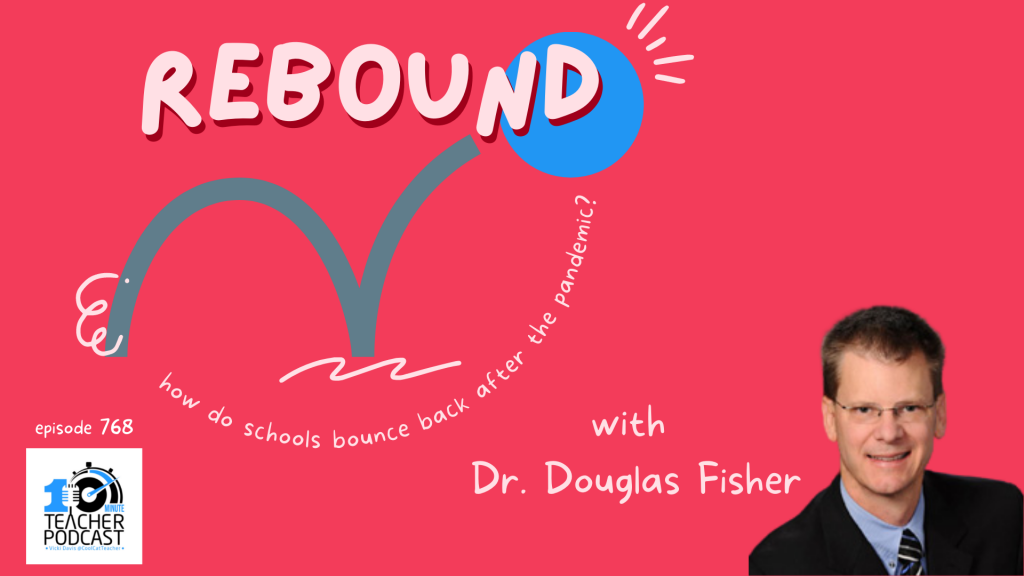
It originally aired in December 2021 under the title “Rebound: How Do Schools Bounce Back after the Pandemic?” — episode 768. I have retitled the re-air, because the research on acceleration outlived the moment that prompted it.
The instinct when students are behind is to go back and reteach. Dr. Douglas Fisher makes the case from acceleration research that you do the opposite — you move forward, and you build in what they need on the way. Any teacher looking at a class working below grade level has this problem, whatever caused it.
Current information is showing that, in fact, most schools haven’t rebounded perhaps compounded by the AI issues we’re all experiencing as we adjust pedagogical practices for the new reality of AI. I do think, however, it is helpful to look at past research again as we may have an additional “rebound” we need to help students who perhaps have not learned what their grades say they have in the past few years. These are challenging times and we need to wrestle with the research and combine it with the practical realities of today’s classroom. Kids aren’t disposable. They have one precious life. We have to work together to figure this out.
Listen to the Show
Resources from This Episode
- Rebound, Grades K-12: A Playbook for Rebuilding Agency, Accelerating Learning Recovery, and Rethinking Schools by Douglas Fisher, Nancy Frey, Dominique Smith, and John Hattie — the book behind this conversation.
- Fisher and Frey — Doug and Nancy Frey’s site, where the frameworks and free resources live.
- The Fisher and Frey YouTube channel — short explanations of the practices, useful for a staff meeting.
About Dr. Douglas Fisher

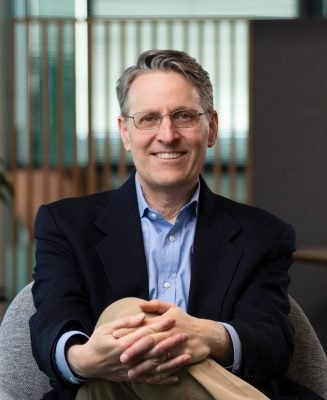
Doug Fisher is professor of educational leadership at San Diego State University and a teacher leader at Health Sciences High in San Diego, CA. He is the co-author of The Distance Learning Playbook, along with several other books.
Connect with Doug: FisherAndFrey.com | @DFISHERSDSU | YouTube
Episode Transcript
Episode Transcript
This transcript was generated using AI and has been reviewed by humans for accuracy. Minor errors or artifacts may remain but I worked my best to find any issues with the transcript as I reviewed the show. – Vicki
Read the full transcript — Rebound: How Schools Accelerate Learning Recovery (e991)
Announcer (00:00)
This is the 10 Minute Teacher Podcast with your host, Vicki Davis.
Vicki Davis (00:04)
We’re counting down our top 10 episodes for the 10 Minute Teacher of all time as we prepare for our thousandth episode. This episode was aired in 2021 and received 26,813 downloads, and it was with Dr. Douglas Fisher. He talked about Rebound — how do schools bounce back after the pandemic? And we’re still struggling with this one. But he’s going to talk about the research on how you accelerate learning, something that still applies today.
Vicki Davis (00:36)
Today we are revisiting with one of our most popular guests from 2020, Dr. Douglas Fisher. Last year in 2020, we had a show called The Four-Part Distance Learning Instructional Framework That Works. Currently, Dr. Fisher — or Doug, as we’ll call him in the episode today — has co-authored a bestselling book, Rebound, Grades K–12: A Playbook for Rebuilding Agency, Accelerating Learning Recovery, and Rethinking Schools. Doug, this is such a relevant topic for right now. Are most schools talking about how they’re going to rebound and rethink what they’re doing?
Douglas Fisher (01:17)
I think so. And I’m happy that they’re having these conversations and getting ready for increased in-person learning — using some of the tools that we all learned during remote learning, and not forgetting those lessons learned from that extended remote, hybrid, HyFlex, simultaneous learning period — but really making schools better as a result of everything we endured for the last 15 months.
Vicki Davis (01:41)
Now Doug, I hear some teachers talking on Twitter saying, did we learn any lessons? Do you think that most schools learned lessons, or do you think most schools survived?
Douglas Fisher (01:49)
We learned lessons. When I ask people — students, adults — about their unexpected learning in the last year, it floods the chat with things like technology. I mean, look at all of us. We’re Zoomers now. We know how to do all this stuff on Zoom. We know how to Padlet and EdPuzzle and PlayPosit. We have new tools that we can use. We also learned a lot about social-emotional learning, and I think we forget that.
And some of us even learned about personal care, and that unexpected learning we shouldn’t forget. Let’s use that technology. Let’s take care of ourselves. Let’s recognize the value of social-emotional learning for us and for our students.
Vicki Davis (02:30)
Do you think all schools are ready to rebound, or are some schools still in survival mode? Because it kind of seems like there’s a lot of different places where schools are right now.
Douglas Fisher (02:39)
I totally agree with you. I think some of us are rusty. Some of our students are rusty. We haven’t been in person for a while, and maybe we haven’t had 30, whatever, 40 students in our rooms. So yeah, there’s a little rustiness. But we’ve been in school for several weeks again — full in-person learning — and the routines are starting, the procedures are in place, the students are getting into the routine, the teachers are getting into routine. Tolerance, respect, all that stuff. So we’re ready to rebound.
And I think schools are in different places, as you were saying, but we have to get to the place where we rebound. We cannot keep being stretched forever like a rubber band. At some point, we have to rebound. And then we have to take what we learned and say, you know what? Let’s look at student agency as an example. Let’s look at how students see the connection between their effort and the impact of what they do. And maybe there are students that we have to help rebuild their agency. We have to let them know that you put forth effort, and there were great things you learned, you did, you accomplished. And reattribute — reconnect that.
I do think this learning loss narrative, this COVID slide, is really dangerous. That’s what’s killing my morale right now. What is demotivational to me is I keep hearing learning loss all over the news and the politicians. I recognize there’s unfinished learning. I totally get that. But I’m not convinced that the ninth graders all of a sudden started reading like fourth graders, or that everybody forgot how to multiply. We don’t see huge regressions, but there is unfinished learning — and that’s our superpower as teachers, to know where kids are and teach them the things they need to know.
Vicki Davis (04:15)
I think the challenging thing that I’ve seen is that when students have parents that move and they are tested to go into a new school, these schools somehow are holding students accountable for pre-pandemic levels in terms of grade placement. And so I know of parents who’ve been told their children would have to go back two and three and four grade levels, because there is that disparity there. So what do you say to that? What’s that answer there?
Douglas Fisher (04:43)
I think it’s about having some honest conversations about where we are in our learning journeys, where we need to be going next. I think we shouldn’t shame people for what happened in the last year. Some kids learned a lot. Some kids thrived. Some did not. There’s a young person with a disability who talked to me privately on a chat and said, “It’s my best year ever. No one bullied me. I got to participate. I learned a lot.”
And then other kids didn’t do so well. So I think we need a little bit of hold harmless, and we need to respect — this is where you are. And my role is to figure that out and have you learn, have you start to accelerate. I think we need to get rid of this remediation language, you know, slow things down and focus on isolated skills. I think we need to start having an acceleration conversation. How can I accelerate the learning that you’re doing based on where you are right now?
Vicki Davis (05:33)
How do we rebound?
Douglas Fisher (05:34)
You know, the acceleration research is really interesting. I have never read this research before. It’s not my area of knowledge. By the way, most of it comes from students identified as gifted and talented. And there’s some lessons learned here.
Number one, you’ve got to know where kids are. And what we recognize is that on average, 40% of instructional minutes are spent on things students already know. And when you look at the research for students identified as gifted and talented, they spend a lot of time being retaught stuff they already know and they get really bored. So that’s why I think that applies to everybody. Know where they are and what they still need to learn.
I think we need to increase the relevance. We need to make learning really relevant. Why are we learning this? How does it connect to the things that are important for you? I think we also have to be building some confidence with learners. I think there are learners whose confidence was compromised. They aren’t sure that their learning strategies are working. I think that’s important.
I think we need to keep the pace up. In remediation, we tend to slow down, and the acceleration research talks about how you can have a rapid pace — active, fast pace — but you still have some wait time to build in there as well.
And if we can build knowledge in advance of instruction — quasi-flipped classroom — if we could do some knowledge building in advance, our lessons live with students can go faster. For example, what if you made a one-and-a-half-minute video where you introduced students to a couple of concepts and a couple of vocabulary words? And if they went on their LMS and they watched that video, and then all of a sudden they know some stuff for the time they are synchronous with you, in person with you — what a great investment.
And if we could rethink that asynchronous learning and think of it as preview and review: what do I need you to preview so that we’d make the most of the time we are together? And then what do I need you to review asynchronously? So I do think we learned some things. I mean, how many of us were using “synchronous” and “asynchronous” a year and a half ago? That’s now common vocabulary that we all say. So we did learn.
Vicki Davis (07:28)
I’m fascinated with this acceleration research, because I think you’re the first guest I recall even mentioning it in over 760 episodes now. So there is a body of research on how to accelerate learning.
Douglas Fisher (07:41)
It is. And because it almost exclusively comes from students identified as gifted and talented, you don’t see it referenced very much. Nancy and I read all the studies. We downloaded them all last summer, and we started to think about — we thought we were going to rebound earlier than we actually did. Last summer, we were super hopeful, but it took longer than that. But we started reading these studies, and the trends are really obvious. Don’t teach students things they already know. Keep the pace brisk. Keep them going. Make sure they see relevance. Make sure they’re not being — you know, because the students are comparing themselves to others and saying, “I’m not worthy, I’m not good enough.” Make sure you attend to the confidence issues of learning. These are all things that have been around this research base for a long time that I think apply to all of us. They apply to all of us.
And then some students, despite our best acceleration efforts, they’re going to need additional support. They’re going to need some tutoring. And so let’s make the tutoring super effective and super efficient. Let’s not just teach the gaps. We talk about, oh, I identified a gap and I’m going to have you tutoring. I think that part of the tutoring session should include how to learn, not just what to learn. Because if we only cover up the gaps and address those little areas of need, and the student goes back to regular — you know, let’s say you have a 30-minute tutoring session after school, and then you address some of the needs of unfinished learning. Well, the next day, they still don’t know how to learn. There’s a reason why they are in the place they are.
So what if part of our tutoring was to address how you learn? For example, when we’re learning today, we’re going to take some notes. We’re going to practice taking notes. Or when we’re learning today, we’re going to reread, or we’re going to summarize. We’re going to ask ourselves some questions. Focusing on some of those how-we-learn approaches, not just what we need to cover.
Vicki Davis (09:21)
It sounds like also you’ve really got a strong case for formative assessment.
Douglas Fisher (09:26)
Yeah, I think we need to use our data. We use assessment. We need to interpret those assessments and then take action on them. Nancy and I wrote an article years ago that starts off with “water, water everywhere” — The Rime of the Ancient Mariner, applied to data. There are servers all over that store student data. The question is, are we actually using it or not?
That’s what I want to think about. So we have all this assessment data. We have checks for understanding. We have benchmark assessments. We have summative tools. But are we actually using the information to make decisions? Because it takes time to interpret.
Vicki Davis (10:01)
So Doug, besides picking up the book — and the book is Rebound: A Playbook for Rebuilding Agency, Accelerating Learning Recovery, and Rethinking Schools — where you have teachers and administrators getting ready to sit down or having these conversations right now, or they’ve been having these conversations, where do they start?
Douglas Fisher (10:17)
I think there’s some usefulness in looking at what happened last year and recognizing that all was not lost. I think that’s part of the healing process, is to recognize that, yes, this was awful. It’s been awful. There are colleagues who are gone. They’re no longer with us. They’ve retired. They’ve left the profession, or maybe they’ve passed away. There are students we can’t find. You know, we have to have a little bit of mourning time.
And then we have to say, we did learn some things, and we need to think through what we want school to look like next. How do we honor the kids that are in front of us? How do we support our colleagues in ways that maybe we didn’t do as much in the past, but we learned how to do in the pandemic? I mean, I’ve heard stories of teachers taking meals to a single teacher who had three kids and couldn’t find time to do some cooking, and colleagues were putting together food parties. I mean, we took care of each other in very profound ways.
And then I think we have to say, you know, where is there curriculum changes we need? Are there instructional changes that we need? Do we need to change our assessments? Where do we need to go based on what we learned, to make school that much better for students?
Vicki Davis (11:22)
Well, educators, it is time to move forward. This whole concept of acceleration research is fascinating. The best place to find all of this research? Get the book Rebound. Thank you, Doug.
Douglas Fisher (11:34)
All right. It was great to talk to you again. And thank you all for listening. And thank you for the invitation.
Announcer (11:39)
Thank you for tuning in to the 10 Minute Teacher Podcast. Join us here every weekday and subscribe to the Classroom Matters newsletter. See you later, educator.
The Top 10 of the First 1,000
As the 10 Minute Teacher approaches its 1,000th episode, I went back through the download numbers for every show and pulled the ten that teachers listened to most. I took a bit of a break last week but am back with these four. We’re getting close to episode 1000 and I’m excited to celebrate that milestone!
#4 — you are here. Friday from September 11th- #5, Thomas Arnett on blended learning. Tomorrow: number three. I took a break for a few days last week as I was coming back in town from a trip and needed a moment to get back on this time zone! I hope you’re week is awesome as we reflect back on the things that have been resonating.
Listen and Subscribe
If this one gave you something to try this week, share it with the teacher across the hall.
Disclosure of Material Connection: This post includes affiliate links to books, which means that if you choose to buy I will be paid a commission at no additional cost to you. I am disclosing this in accordance with the Federal Trade Commission’s 16 CFR, Part 255: “Guides Concerning the Use of Endorsements and Testimonials in Advertising.”
The post Rebound: How Schools Accelerate Learning Recovery appeared first on Cool Cat Teacher Blog by Vicki Davis @coolcatteacher helping educators be excellent every day. Meow!
If you’re seeing this on another site, they are “scraping” my feed and taking my content to present it to you so be aware of this.