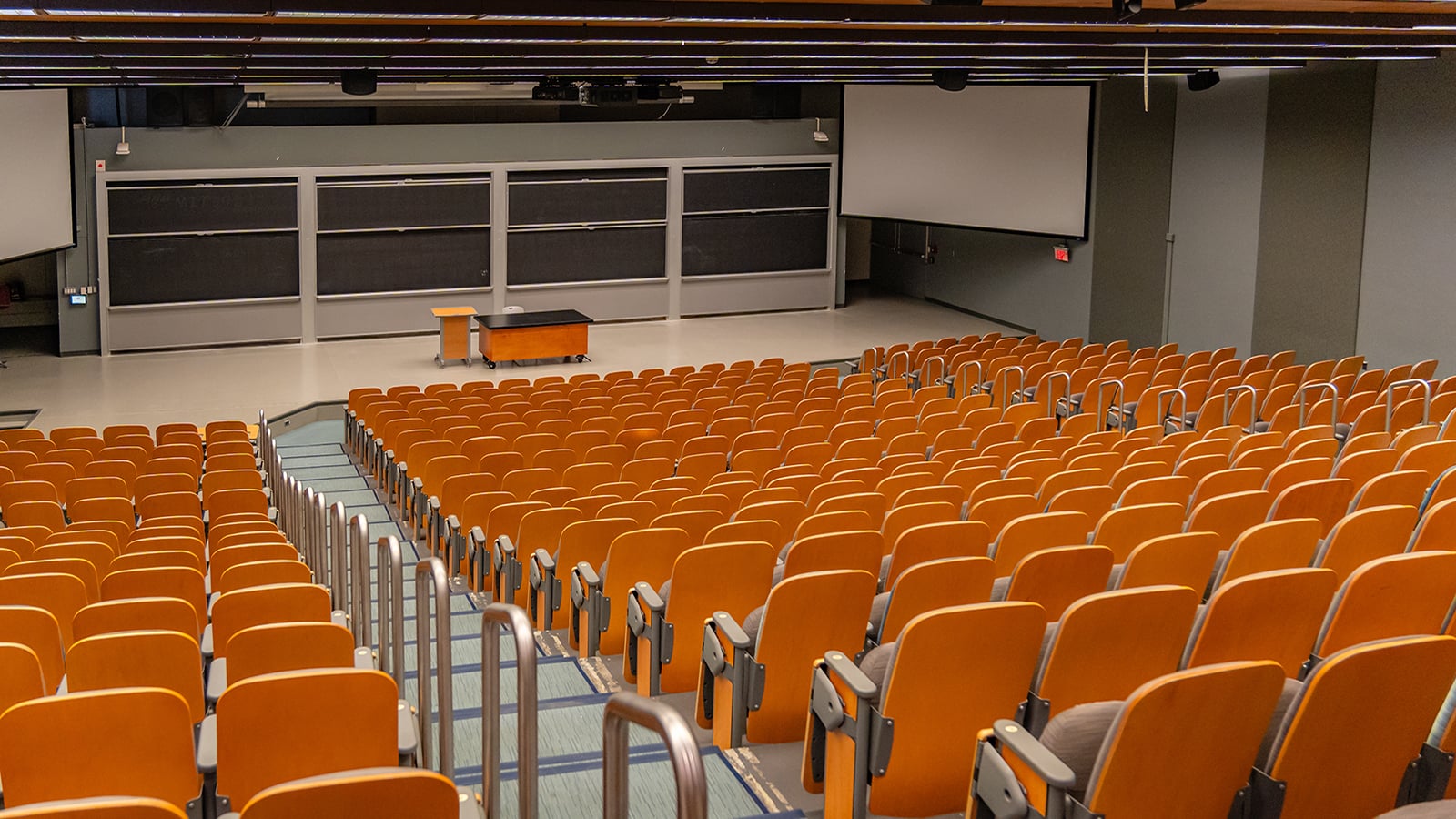
According to JLL, universities and colleges continue to face rising expenses due to shifting enrollment, rising operating costs, and budget tightening. Furthermore, the physical campus itself often underperforms due to a limited understanding of how the space is, or should be, used.
JLL’s inaugural 2025 Higher Education Portfolio Benchmarking Survey reported the following:
- Higher education campuses are a massive, but underperforming asset, averaging approximately $4.9 billion in value per institution.
- Unused capacity is significant, with a 33% gap between planned (75%) and actual (42%)classroom utilization.
- A high percentage of institutions (81%) don’t have key performance indicators for space management.
- Only 50% of participants said they track occupancy data; space decisions are made based on anecdotes versus evidence.
- Governance doesn’t seem to offer much help with space management due to a lack of authority and financial accountability.
The survey also noted that systematic space management implementation could yield annual cost savings of $2 million to $4 million. This led the JLL analysts to note that while “corporations treat space as a measurable, optimizable asset, higher education continues to manage its largest capital investment largely through estimation and historical precedent.”
The write-up offered the following phased solutions for higher education institutions to get a better handle on space management:
- Phase #1—Deploy sensors and tracking throughout high-value areas to obtain visibility and understanding about space usage patterns.
- Phase #2—Establish KPIs that include utilization rates, cost per square foot and space allocation efficiencies.
- Phase #3—Integrate space performance data into decision-making processes involving academic program development, capital planning and others.
The survey also suggested that leadership lead the way through stronger capital planning, enhanced research agility and by addressing underutilized faculty and administrative space.
JLL analysts explained that under-performing real estate assets “represent the single largest untapped source of funding for achieving institutional excellence.”
As such, it’s up to these institutions to position themselves to take advantage of comprehensive space management systems to establish competitive differentiation in areas such as financial efficiency, research infrastructure capabilities, capital planning sophistication and operational resilience.
The post Recovering Value from Underutilized Campus Space appeared first on Connect CRE.