- A surge in sales helped Tesla secure a 55 percent market share in July.
- The Tesla Model Y alone accounts for 37 percent of all EVs sold in the US in July.
- Through the second quarter, Chevy had a 6 percent share, followed by Hyundai.
Tesla remains far and away the biggest seller of electric cars in the United States, and despite rivals’ efforts, very little progress has been made in eroding the EV leader’s commanding market share.
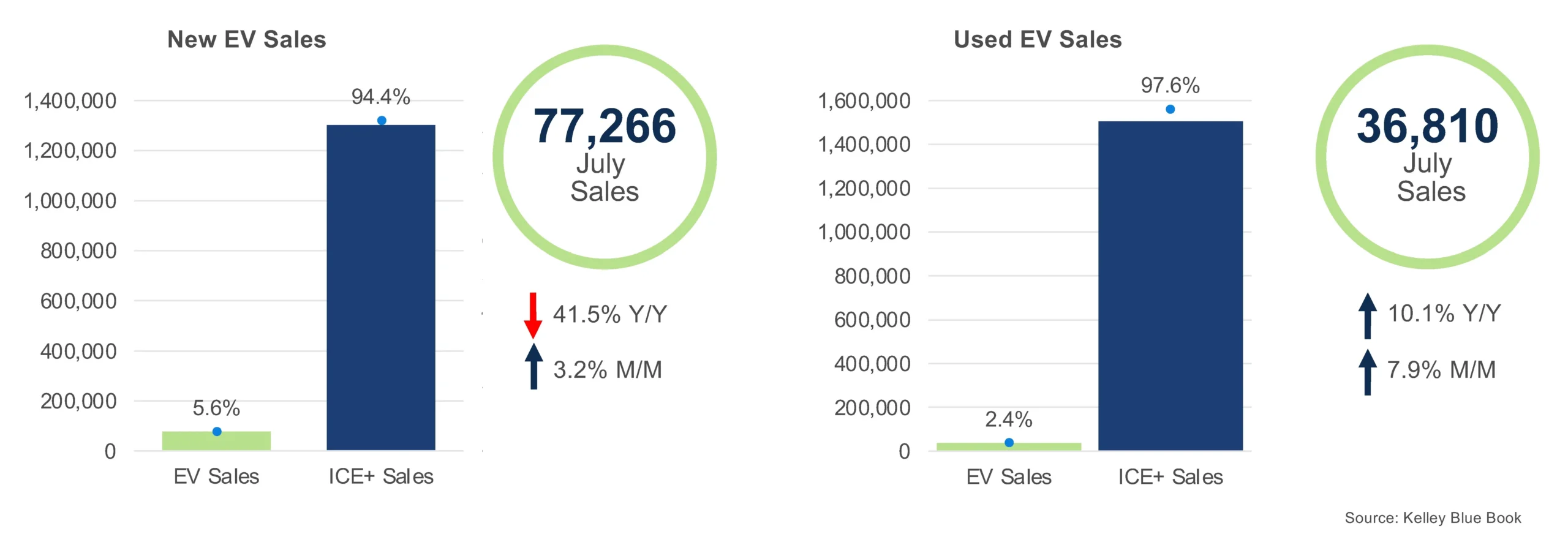
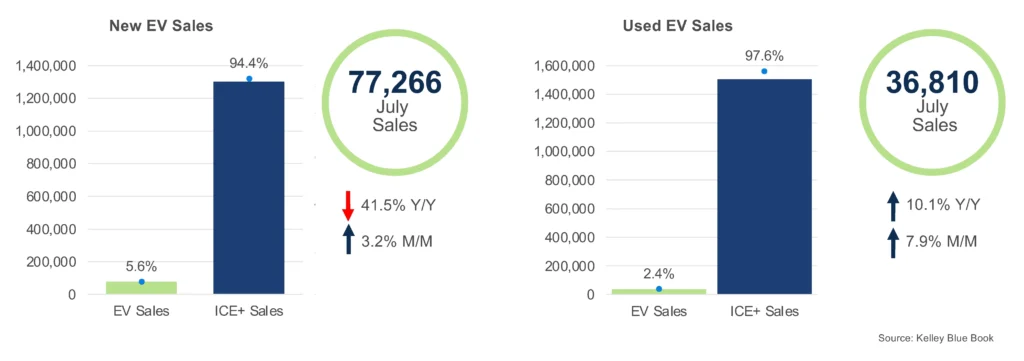
July brought 77,266 new EV sales, up 3.2 percent from June and down 41.5 percent from the same month last year. Electric models made up 5.6 percent of all new-vehicle sales. The year-over-year drop has a simple explanation. In July 2025, the federal EV tax credit was still alive, and buyers rushed to cash it in before the Trump administration killed the incentive in September.
Read: Tesla Delivered More Cars Than Any Q2 Ever, And Its Stock Had The Worst Day Ever
Of last month’s electric cars, 42,435 were Teslas, according to Cox Automotive, good for 55 percent of the market. Tesla’s volume climbed 4.9 percent from June. The Model Y did the heavy lifting, as it always does, accounting for 37 percent of every new EV sold in the country. Basically, the nameplate outsold every rival automaker’s entire electric portfolio.
Tesla’s share throughout the entire second quarter was slightly lower at 50.5 percent, with the company selling a total of 124,800 EVs in the US during this period, down 13.1 percent from last year, when 143,535 were sold. In Q2, the brand with the next-largest slice of the EV pie was Chevrolet at 6 percent, followed by Hyundai at 5.8 percent, Cadillac at 4.9 percent, Toyota at 4.8 percent, and Rivian at 4.6 percent. Ford’s share remains a disappointing 3.9 percent, although its July sales were up 18.9 percent from June.
Hyundai posted the strongest month-over-month gain among the major brands in July, up 36 percent. Kia also moved higher, largely on the strength of the EV9.
Sales Surge Pinches Supply
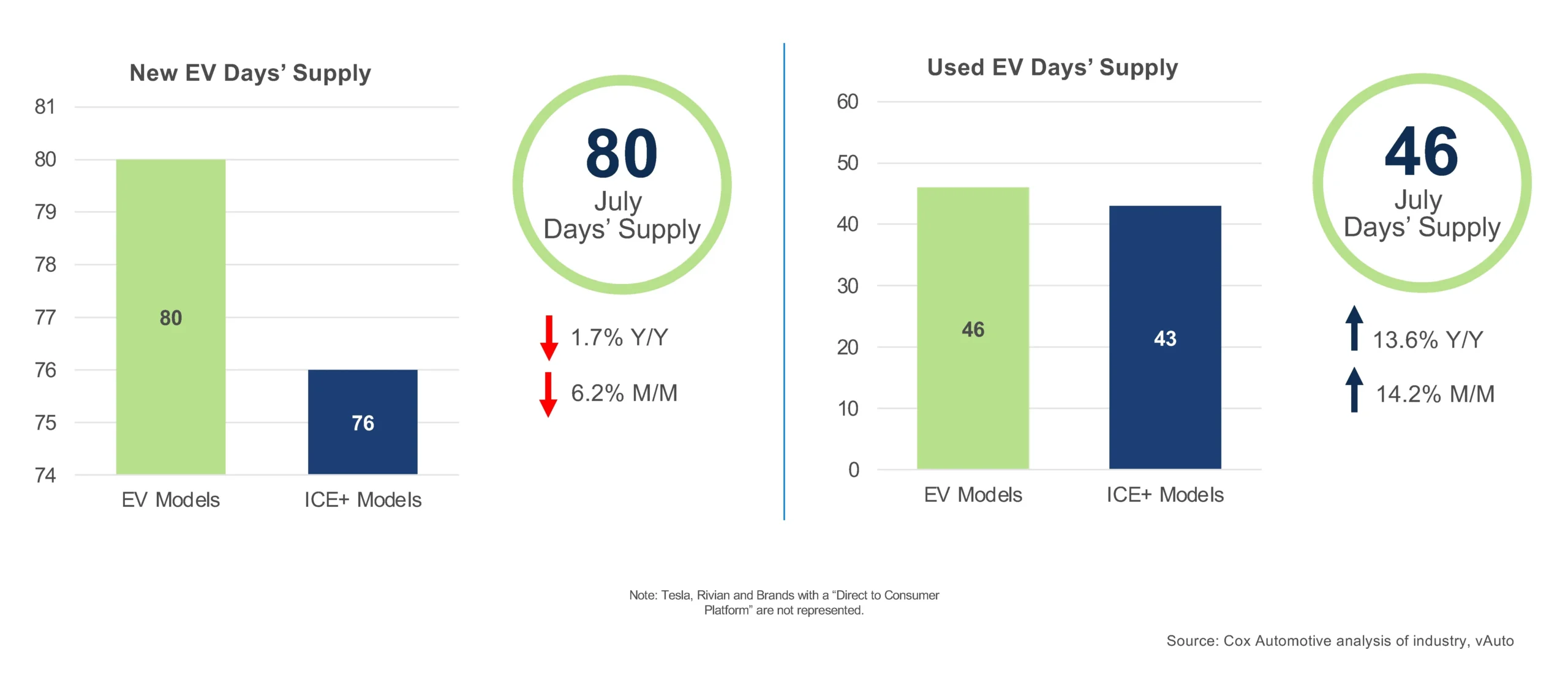
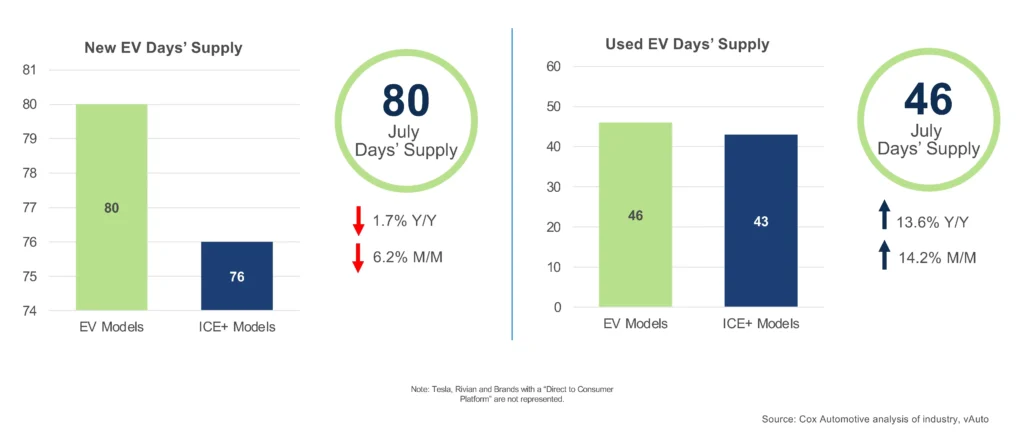
As EV sales climbed in July, the average days’ supply of new EVs fell 6.2 percent month over month to 80 days, and 1.7 percent below where it sat a year earlier. Electric inventory now runs four days above ICE models, down from a nine-day gap in June. Volkswagen carried the heaviest load at 147 days, with Porsche at 138 and Nissan at 133. Subaru ran leanest at 46 days, then Hyundai at 52, and Lexus at 58. Used EVs moved the other way, rising 14.2 percent from June to 46 days, above ICE models for the first time since February 2026.
Used EV sales rose 7.9 percent month over month to 36,810 in July, 10.1 percent better than a year ago. Secondhand electrics took 2.4 percent of the market.
The Price Gap Hasn’t Closed
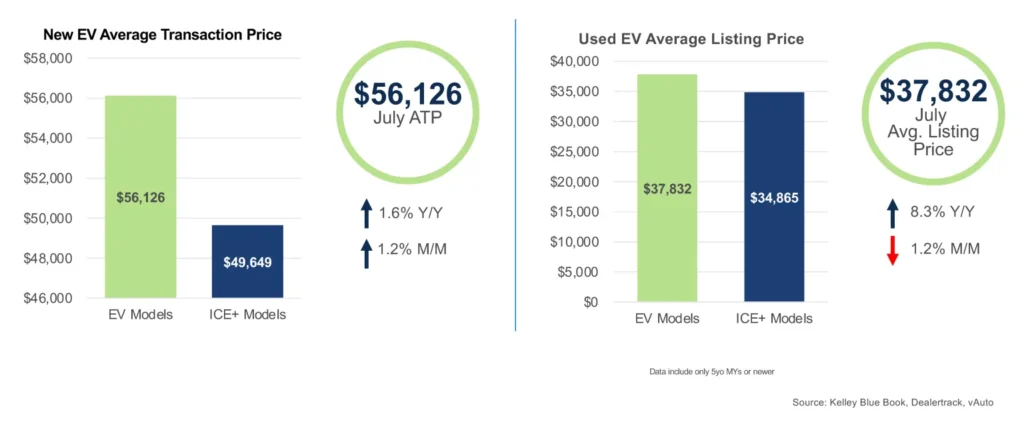
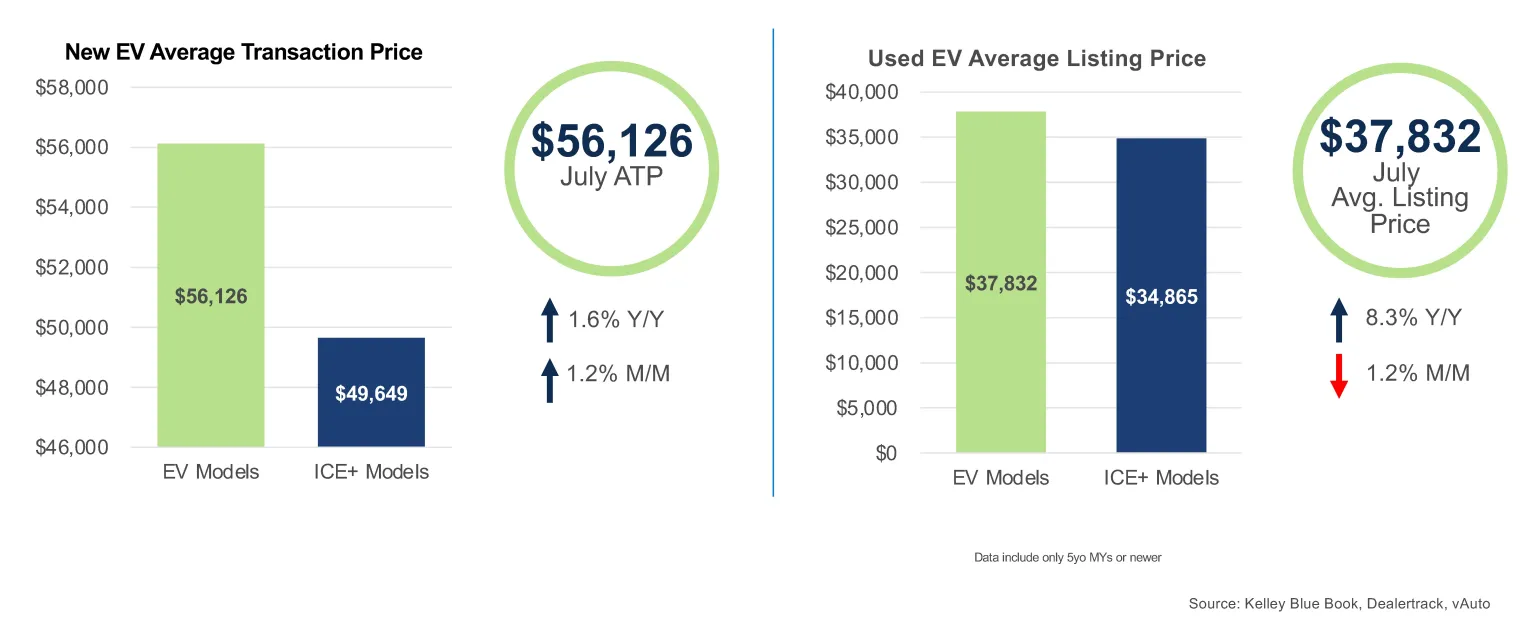
Electric cars remain the more expensive choice on both the new and used side. Average transaction prices for new EVs rose 1.2 percent in July to $56,126, against $49,649 for the average combustion model, and 1.6 percent higher than a year earlier. Incentives shrank over the same stretch, from 13.1 percent of ATP, or $7,290 per vehicle, in June to 11.8 percent, or roughly $6,626, in July. Used electrics average $37,832 against $34,865 for gas equivalents. Those prices slipped 1.2 percent from June but hold 8.3 percent above where they were a year ago.