This article is part of Hyperallergic’s 2026 Pride Month series, featuring interviews with queer and trans elder artists throughout June.
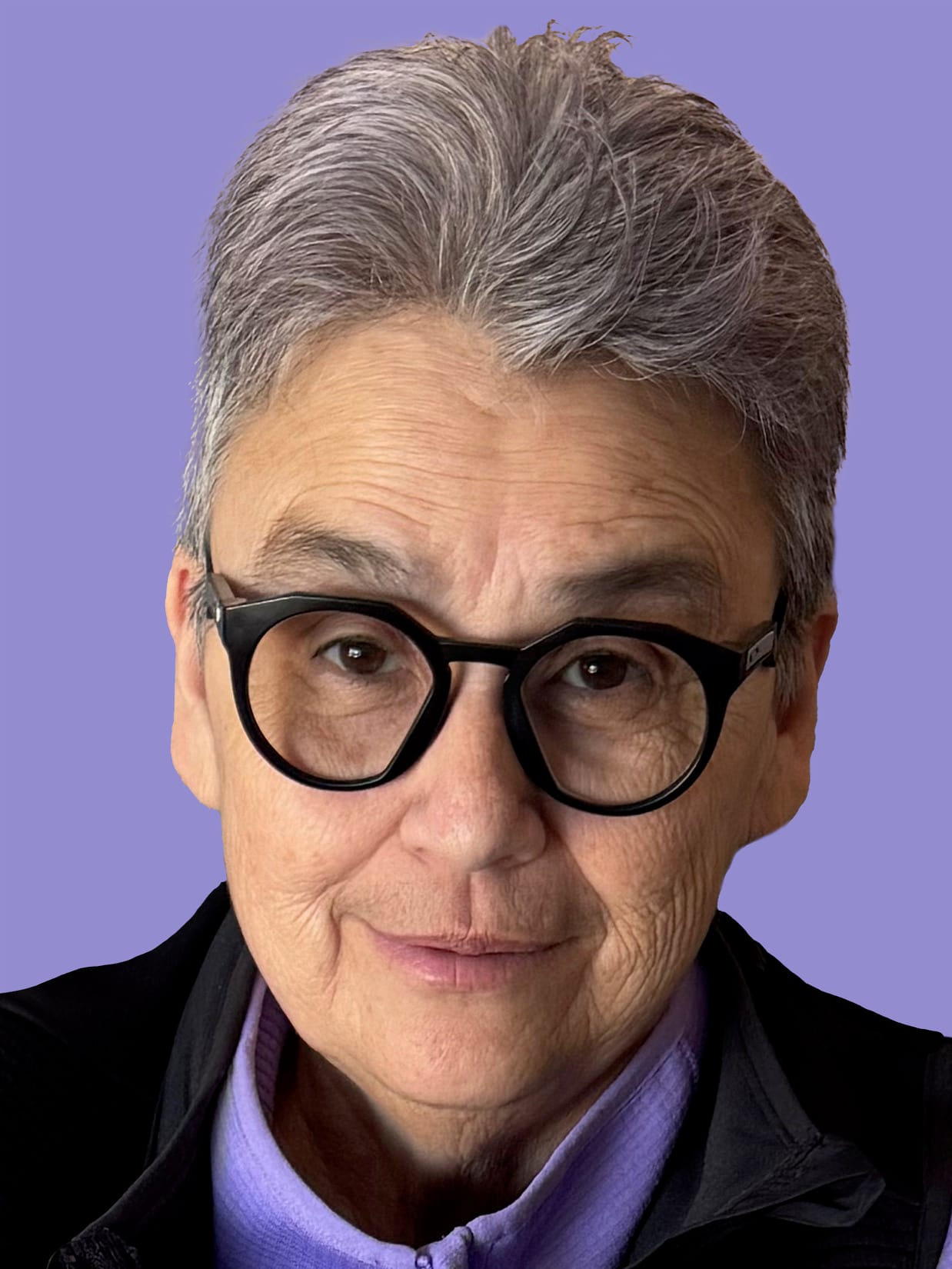
Rosalie Favell knows who she is, but she wasn’t always so sure of it. Living and working in Ottawa, Favell is a lesbian Métis artist who both questioned her identity and found the answers through her family and personal archives. Through autobiographical photography, personal text, and digital collage, Favell extrapolates truths of her ancestry and sexuality that were hiding in plain sight, and inserts herself where she wants to be — where she knows she belongs.
A traveling retrospective celebrating 40 years of the artist’s practice, Rosalie Favell: Belonging (1982–2024), is on view through June 20 at the Art Gallery of Algoma, and will debut at the Kitchener-Waterloo Art Gallery on August 8.
Hyperallergic: So, you began taking photos when you were pretty young, right?
Rosalie Favell: I did, yeah. In my teens, I started photography because I couldn’t draw, so I found a way to express myself by picking up a camera, and off I went. I loved the family photo albums we had, too. So, when the camera came out, I would be running towards it — I still am — but I started taking classes at the local high school, and it was just magic. Especially once you get into the darkroom, it’s just really incredible to watch something materialize right in front of you.
H: I’m also seeing that your Native heritage was not available to you while you were growing up, yes?
RF: That’s correct, I started looking into it in my early 20s. It’s often common, particularly in being Métis, because that marker signifies the mixing of two cultures. It’s a historical mixing in the 1700s, directly from the colonial traders (from England, in my case) coming and “marrying” First Nations women. We called it “taking a country wife.” So, my great-great-great-great-grandmother was Cree. Métis are one of the three recognized indigenous cultures in Canada, but we didn’t grow up identifying with it because part of the history is that it was more important to pass [as White] to survive in the world that took First Nations people off of their ancestral land and denied them rights. Louis Riel led an uprising in the late 1800s to secure some rights for the Métis, and there was a lot of pride in that battle, but we still went underground to survive the economic and political conditions because of the discrimination.
It wasn’t until we were older that we started talking about it as a family, my grandparents and my dad, and I realized that we are Métis. The family connections are really important, and we certainly had that, and now we started naming it and identifying it.
H: How did you start identifying these connections?
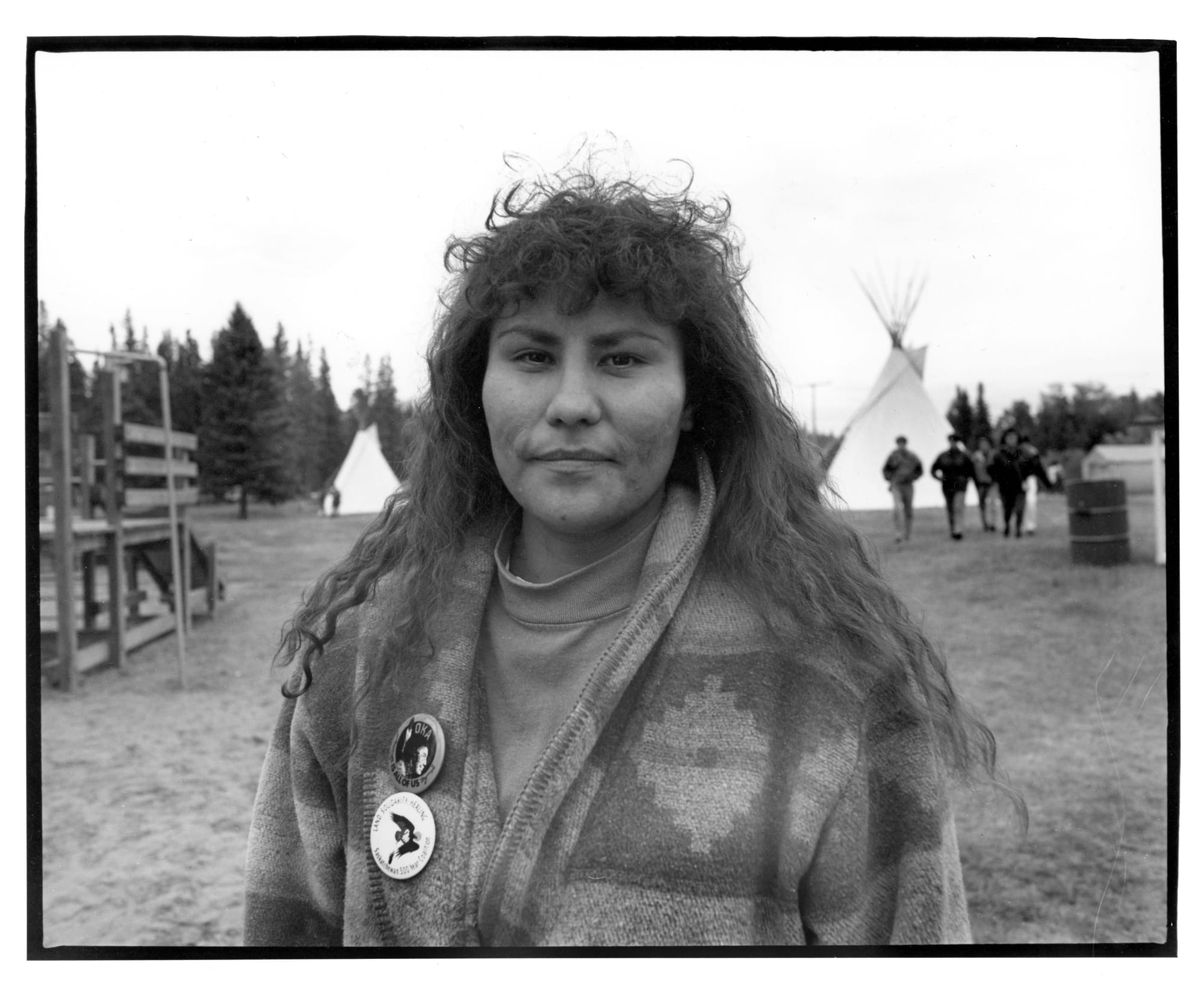
RF: What often has to be done is to get these records of genealogy for proof. And fortunately for my family, it was the Hudson’s Bay Company that kept the records of their men, women, and children, so we could trace the genealogy and then go back to that first contact. I’m glad to have those records, because it helps when you’re searching and trying to construct or reconstruct or recover your own individual history and that of your family’s. It just kept building from there, and with photography, I decided I was going to take portraits of First Nations women in Winnipeg. I sought out a First Nations woman in the area and got an invite to a Native women’s community for my Portraits In Blood (1990–93) series. I’m kind of embarrassed to say, but I was going around learning about them and then asking, “Can I be Indigenous? Can I be a Native woman?” You know, just asking, “Who am I, and do I have permission to claim this right now?”
Ultimately, it wasn’t their permission to give, and I later learned more about the difference between being Aboriginal versus Métis, but they certainly welcomed me and made me feel a part of this world.
H: In terms of identity searching, and as you mentioned that Métis people passed as White for survival, I’m wondering how this journey of your heritage intersects with your identity as an LGBTQ+ person.
RF: Well, I came out as a lesbian before I came out as an Indigenous woman, so it’s kind of funny … I came out during the second wave of feminism, sometime in the ’70s or ’80s. I really identified with being a woman, and that was really important because I also knew I had a different life path that I was gonna take. I wasn’t going to get married and have children and have a family the way that everyone in my family was doing.
So I started searching out women’s communities, gay communities, and disco dancing. I think I even joined a handball team so that I could meet other women. There was this whole convoluted way of finding community, and it was definitely underground. I grew up in Winnipeg, and I moved out to Toronto to study photography and got involved in the larger community, especially the music scene and the self-help groups. Maybe this was easier because I was younger, and I hate to say “easier” because it really was difficult, but it was very different from looking at my family’s cultural history and trying to embrace that as an individual and take that into my practice. There are so many different facets of an individual, but those were big ones for me to come out and be a part of the community and be public.
H: How was it letting the family know?
RF: That was really scary for me, but I talked to my mom and told her that I love women, and she went, “Hmm, well, it kind of makes sense now.” But I was so terrified that I was gonna be disowned. After that, I slowly let other members of my family know — sometime around the mid-’80s — and I had to think about how I wanted to live my life because family is really important to me, but I knew I wasn’t going to be marrying a man, and I didn’t want to have children.
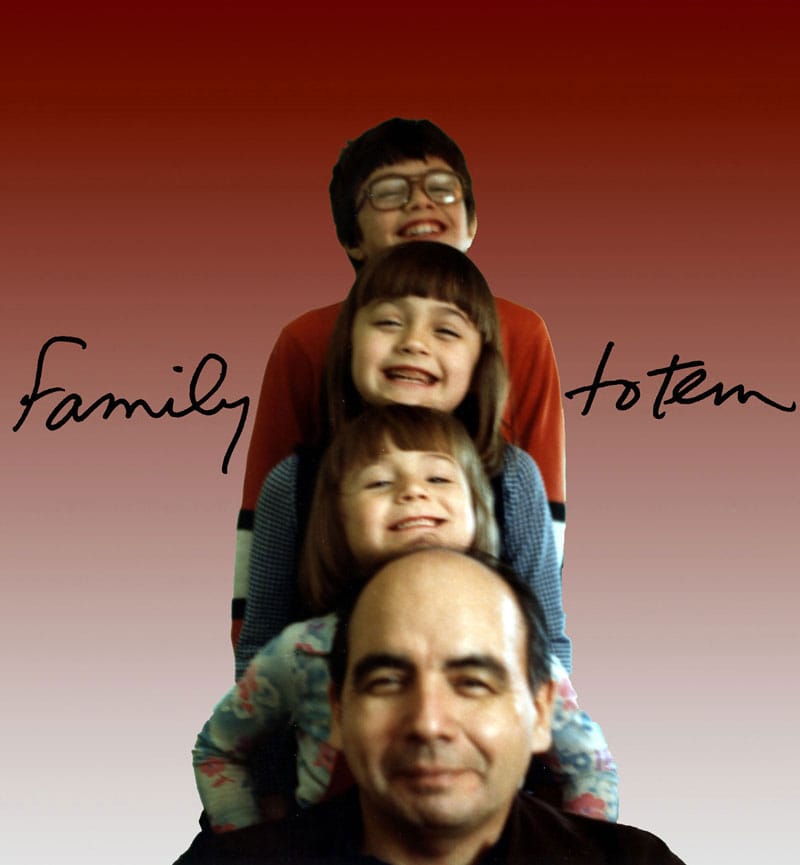
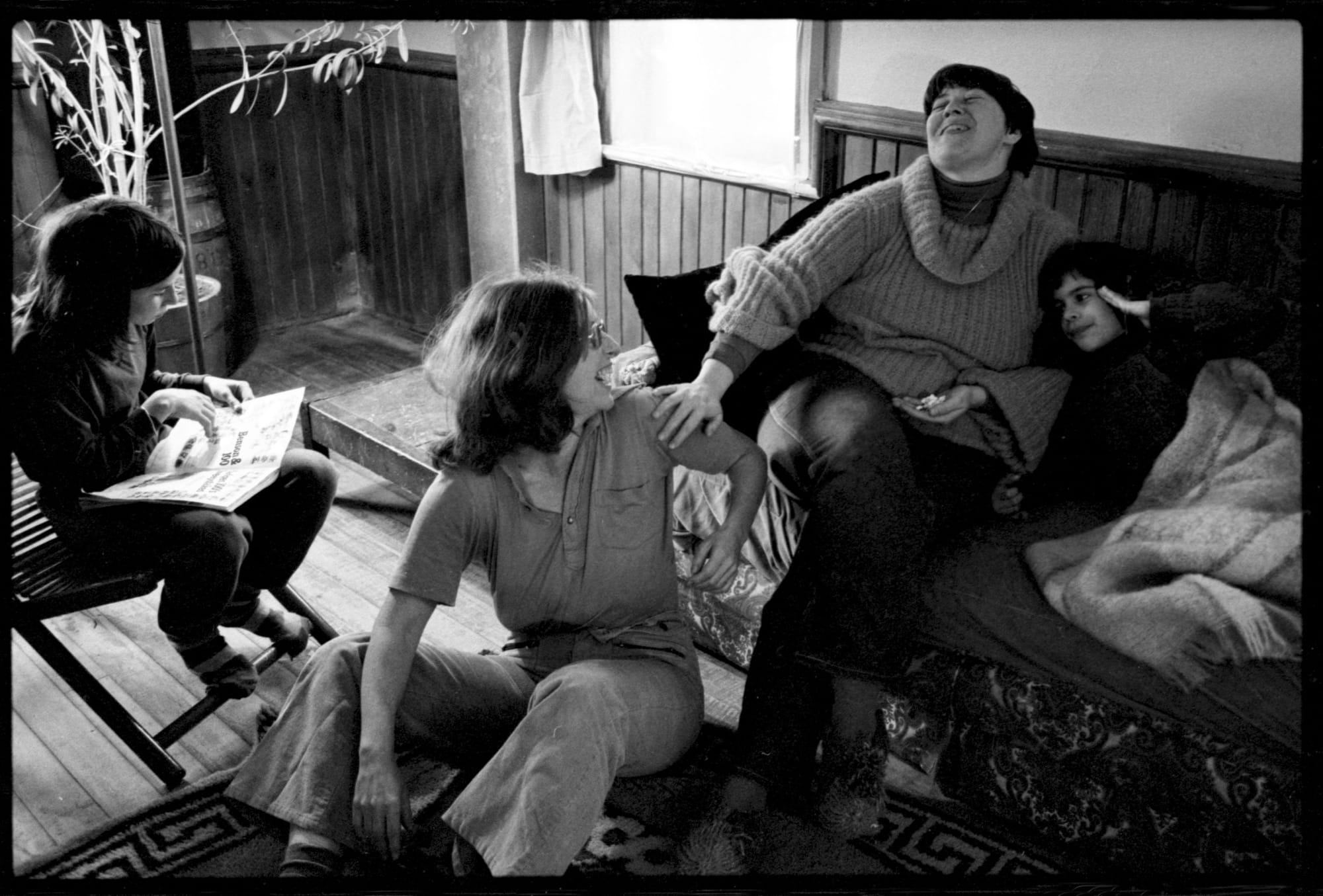
Back in Toronto, I got to know these two women who were raising two daughters out in the country. I was doing a documentary project, so I asked if I could come out and take some photos of them, and that became Family Circle (1982). I was still working out my own issues about having children with this, and it was really fun to see how natural and comfortable this family was in the world they lived in. This was also around the time of the first Pride march in Toronto after the bathhouse raids, which I was there for, so it was a very politically and socially active moment.
H: I’m curious about what the dating scene was like for you, or just what the process of finding a meaningful relationship was like at the intersection of being Métis and a lesbian. Was there any mutual understanding between those two spheres?
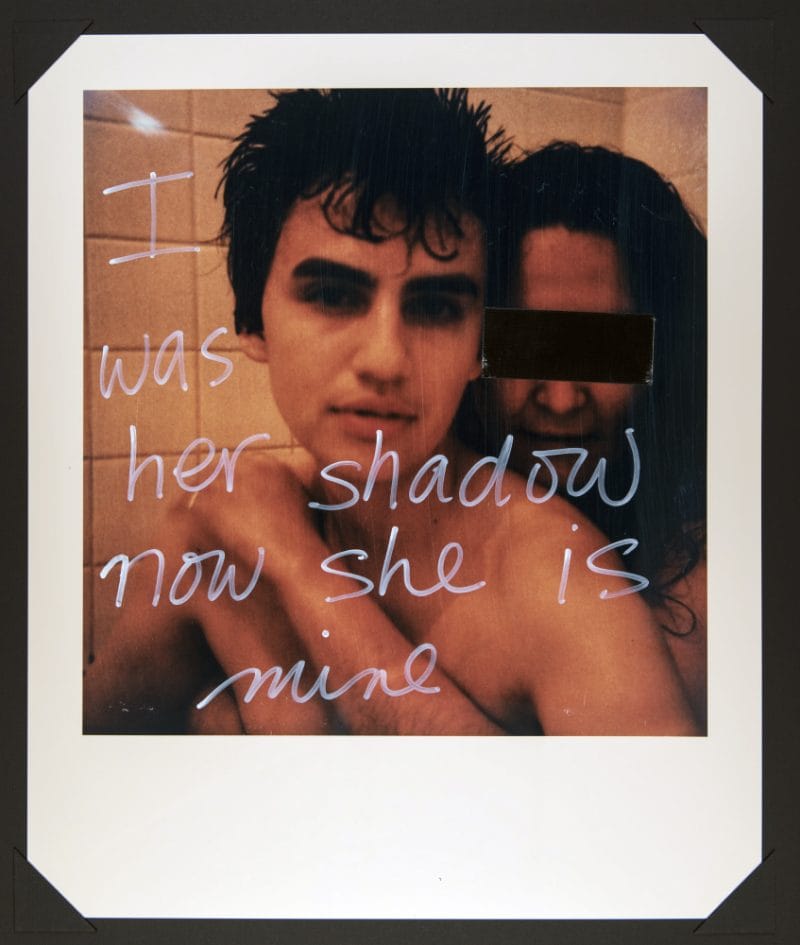
RF: There were a number of out Indigenous women, but again — double secret. I did fall in love with a First Nations woman, like totally in love, but the relationship ended a few years in. I was looking back at all of these photos I had of her and of us together and trying to make sense of it all afterward, so I picked out like 70 Polaroids — that’s early selfies — and made the series Living Evidence (1994), which talked about being hidden. That was the early ’90s, and there was a lot of apprehension about outing people, so I put black tape over her eyes to protect her and the work became stronger. I’d never “defaced” my own photographs like that, and then I wrote over them with text from my journal entries too. I didn’t put tape over my own eyes, so I suddenly started to appear as an individual who survived and came out of that, and carried on.
H: Switching gears for a second, how was moving from Toronto to New Mexico?
RF: Oh, that was wild. I got involved with a group called the Native Indian/Inuit Photographers Association and met someone who was teaching at the Institute of American Indian Arts out in Santa Fe. I had been working in photo labs and doing medical photography, and just wanted to get back into being serious about my practice, so I called him up to see if I could come down and take a class, but then he said there was a teaching job for one semester and asked if I was interested.
I kept asking him what Santa Fe was like, and he just kept saying “it’s the high desert.” I was blown away when I went in to teach because of how Indigenous culture was emphasized in the market. When I decided to get my Master’s degree, I got into the University of New Mexico in Albuquerque, which had a big photo program. I was in heaven the entire time I was in New Mexico.
H: Were you studying alongside any other Indigenous photography students there?
RF: There were a few, including a dear friend of mine who eventually hired me to teach later on. But I also became more knowledgeable about the Mexican connection to both Indigenous and local culture. Someone had to loop me into Selena.
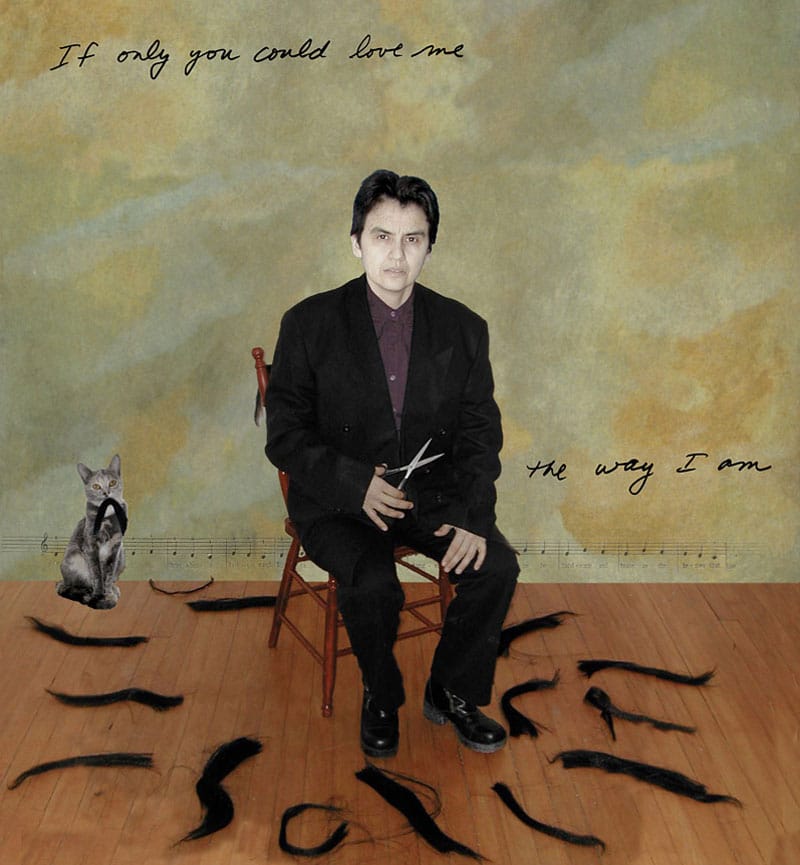
I also learned more about Frida Kahlo, especially her “Self-Portrait with Cropped Hair” (1940) from after her divorce. That one spoke to me because of the gender ambiguities, because she was sitting there in her suit and she’d cut off her hair, so I made “If only you could love me the way I am” (2003). I wasn’t writing a story to an ex, though; I was writing a story to the world, but also to myself, saying “If only you could love me the way I am.” That I’ve gone through all of this, I’ve cut off my hair.
H: Going back to Living Evidence for a second, this was around the time you began building upon your photography, right? Adding text, collaging, embedding them in different spaces …
RF: That was the first time that I started working with text, yes. Later, I shot on SX-70 film and enlarged the photos so that they were big enough to write on. During grad school, when I was doing triptychs, it was really hard to get everything to be the same size because only a technician could use this photocopier machine we had, and one of my friends was like, “You know, you could do that on the computer.”
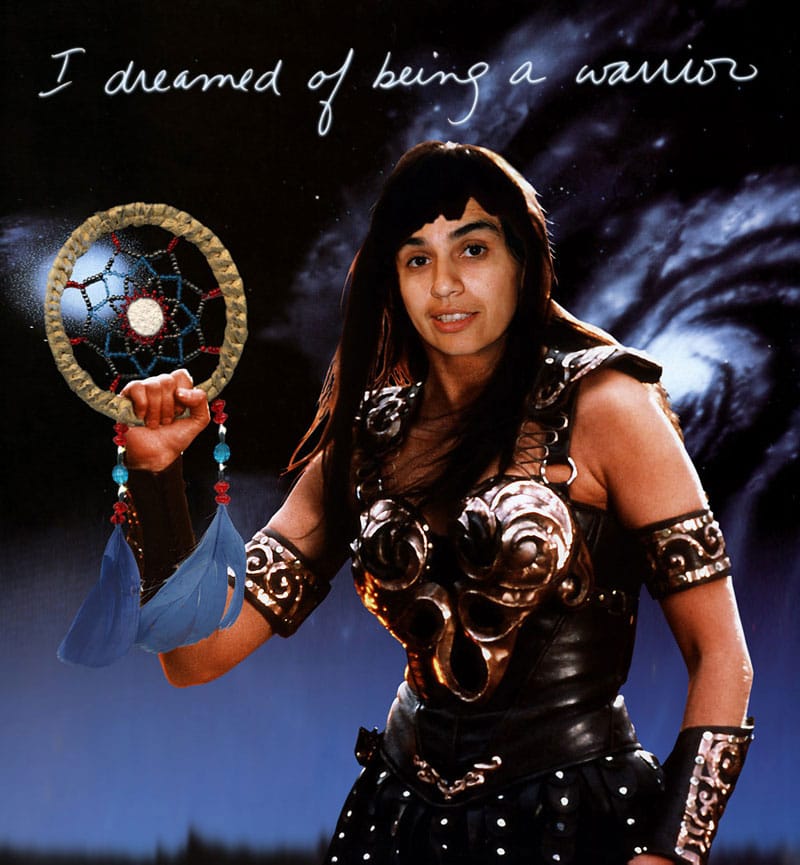
That was during the mid-’90s, so I didn’t know the computer very well. It was when I went back home, and a friend of mine told me that I could use the computer to put my head on someone else’s body, that I learned how to use it for collage work. I started to put my head on Xena: Warrior Princess, in my attempt to become my own hero rather than keep looking for heroes out there because it was time for me to step up.
H: What was the journey like from taking an image to making an image with this new expansion of your practice?
RF: I would come up with a story or an idea, and then I would photograph myself or search through what I already had from my own photos. For the Xena one, I just put my head on her body and added a dreamcatcher. I would order press photos because I had no other way to get these pictures of my TV heroes. And so I’d get these little 8-by-10s of Xena, or Captain Janeway and Diana Rigg from The Avengers, and I’d scan them or photograph them, and then bring all the components together on the computer. The computer and scanner became my good friends.
H: You do a lot of work sifting through personal archives, too.
RF: Yeah, most of my work is all about the family archives right now. Way back then, my parents might have had one roll of film for the year and take pictures at special events or occasions, and we’d all look at them together on slide night. My mom kept albums from back in the ’40s and ’50s, and so I have those. I have some of my parents’ negatives, and both of their parents’ negatives and photo albums.
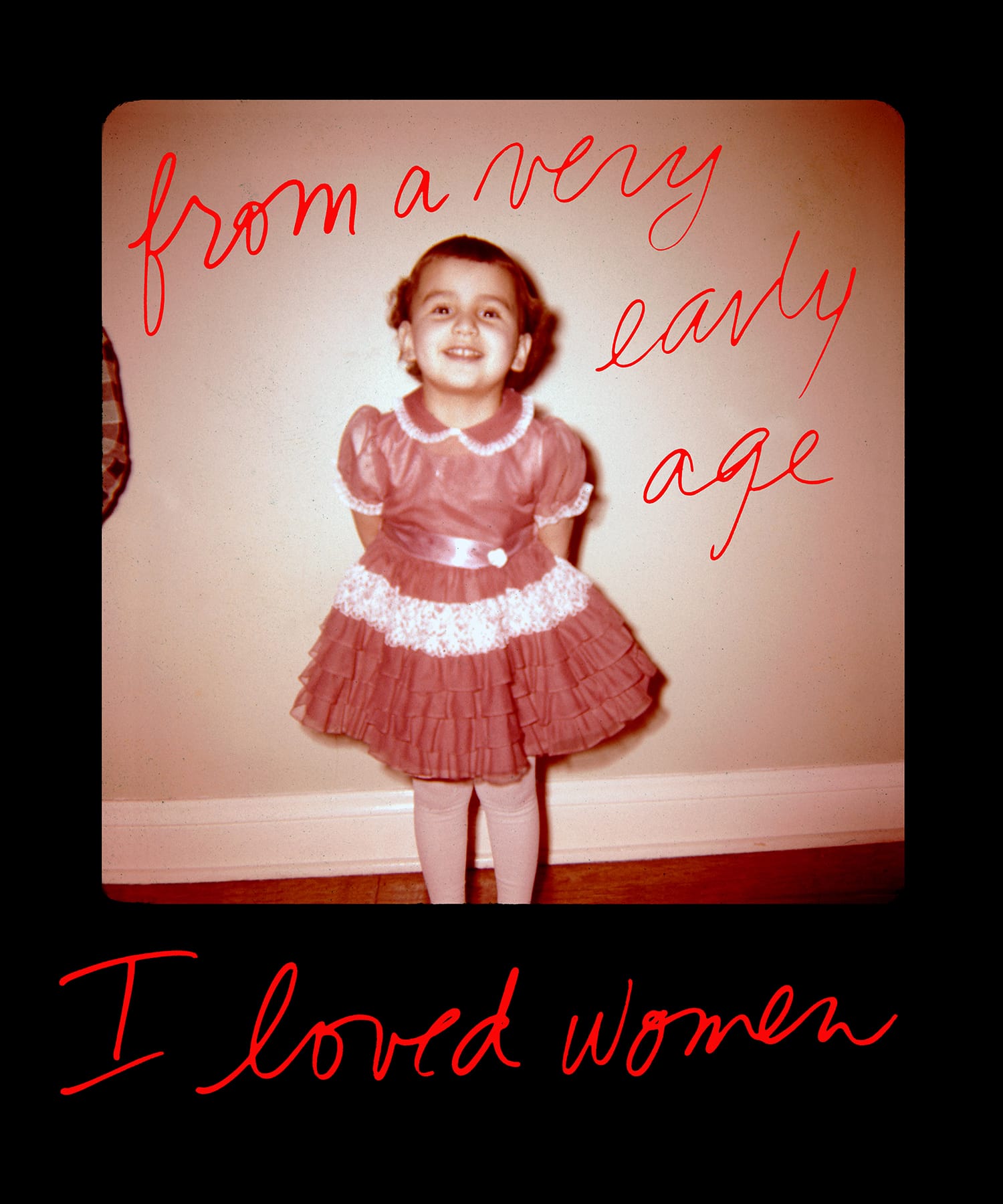
H: When you look back at those photos from when you were a little girl, versus now with your identity established as Métis and lesbian, how does that inform the way you work with these pictures?
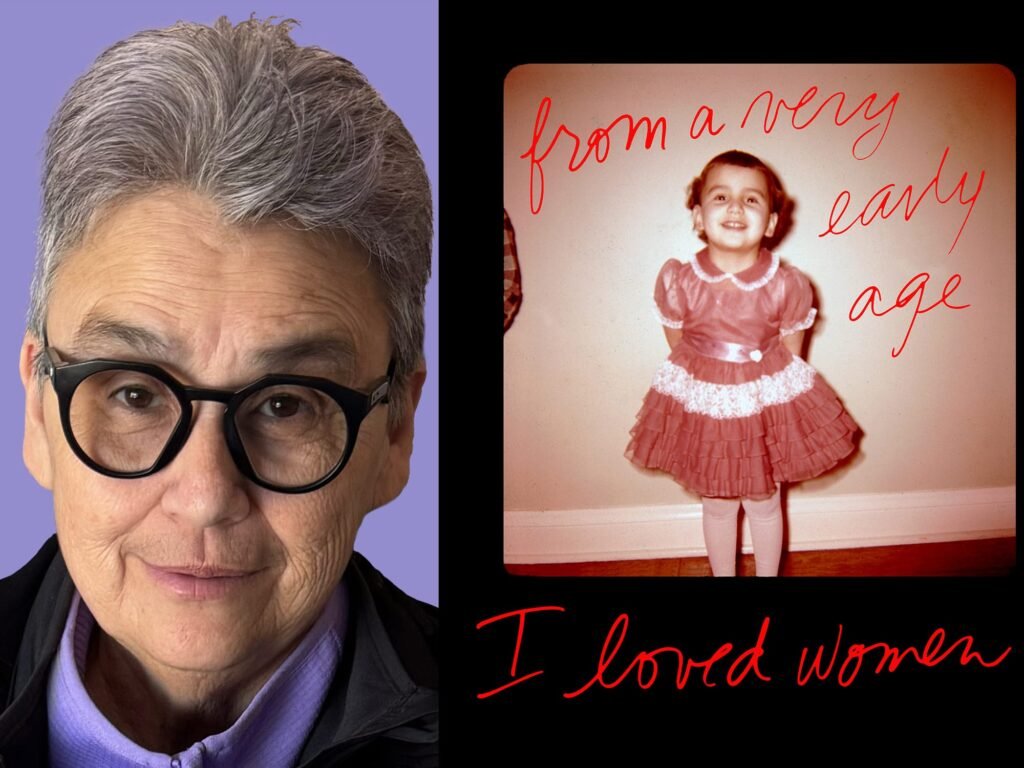
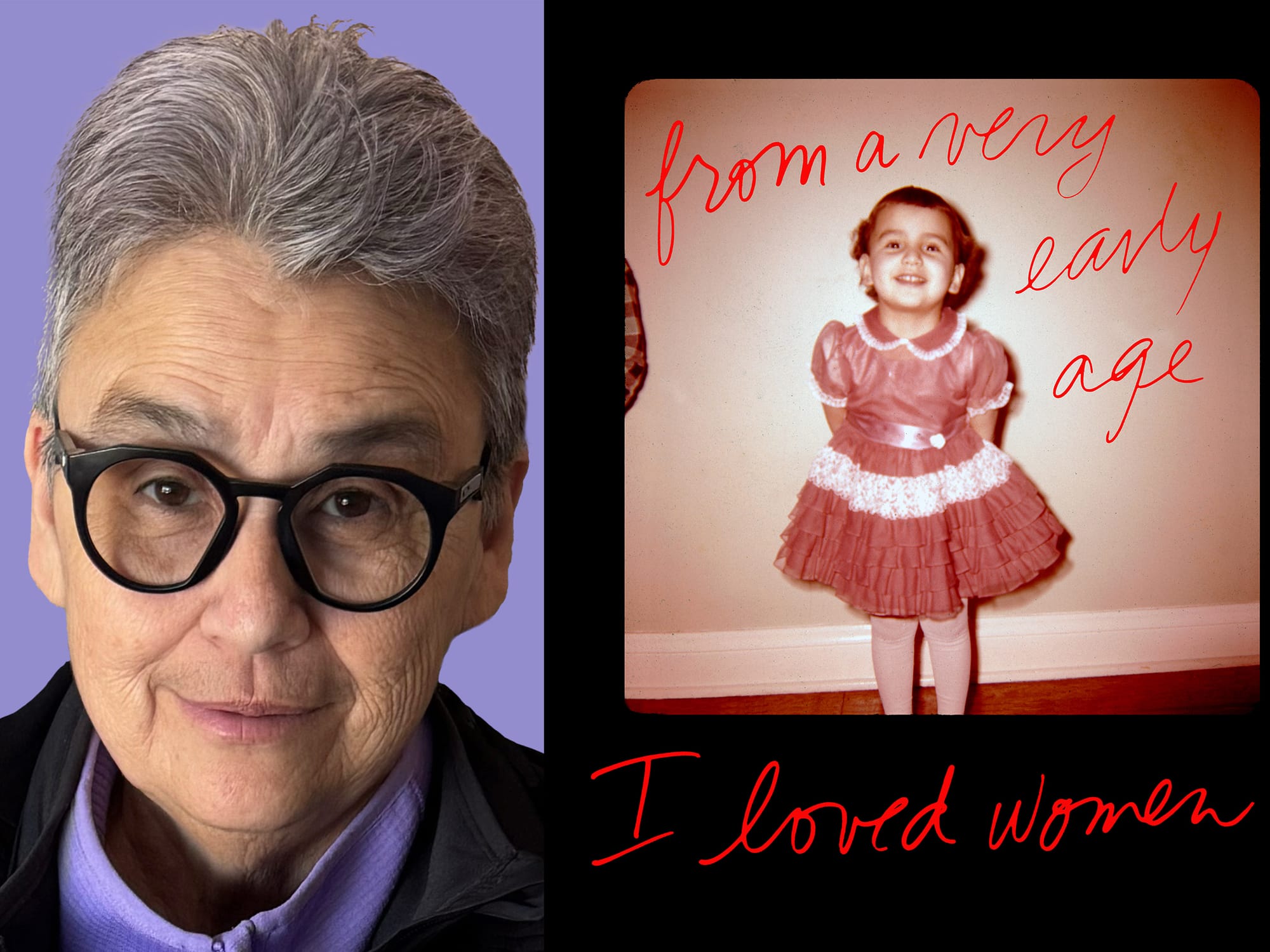
RF: I was looking for clues, for evidence, in those photos when I was doing work about my ancestry. Like, “Hmm, did this exist and I just didn’t know?” Similarly, I have a photo as a three-year-old with my little crinoline dress, looking cheeky, and I wrote: “From an early age, I loved women.” So it’s situated in today, or whenever I made that work, while looking back. I’m rewriting my own history in a way. I’m like an archaeologist or anthropologist, sifting through old bones, looking for my relatives and looking for myself. A lot of it is identity-searching and making that visible to me and everyone else.
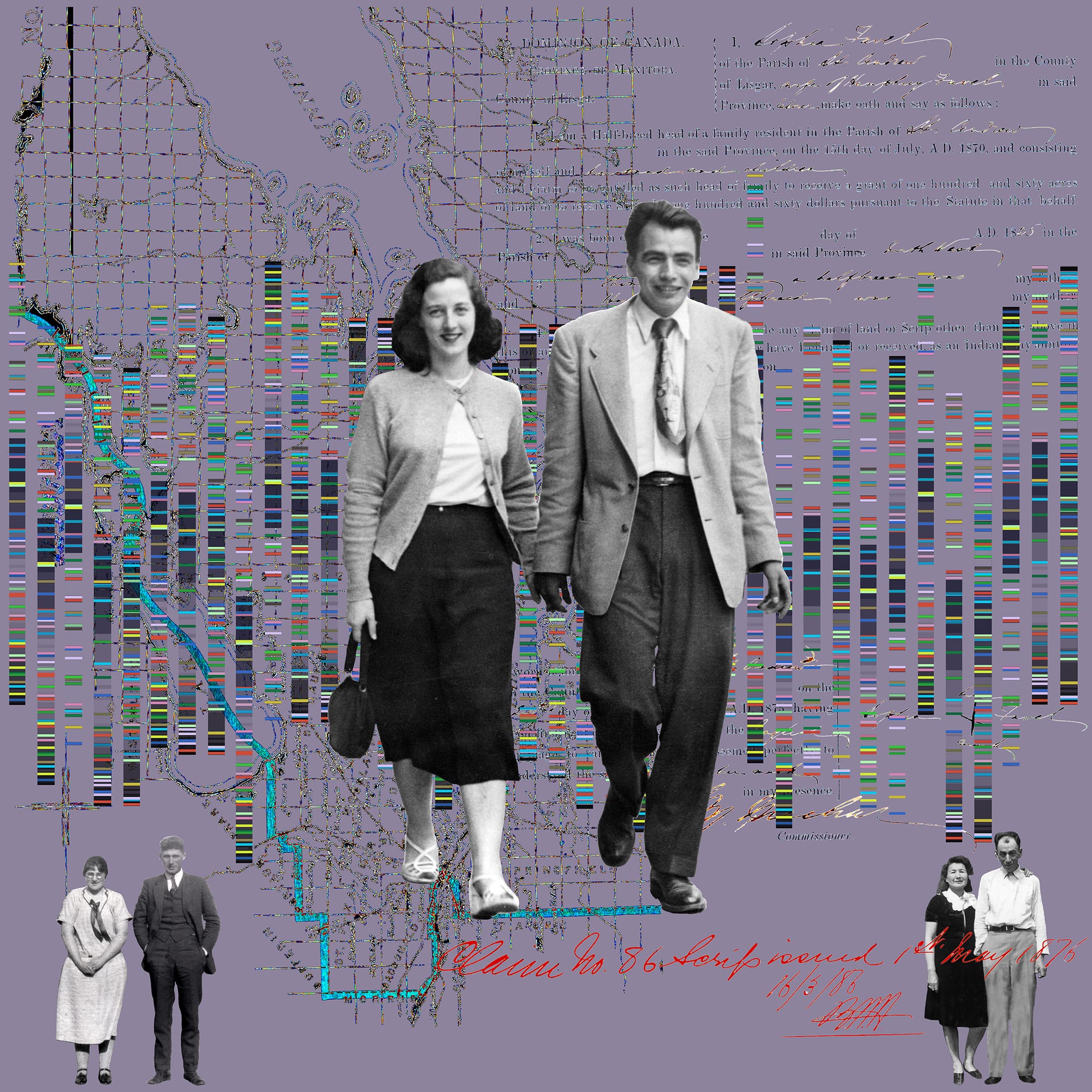
I made a work about Métis scrip, and there’s a whole history around it that not everyone, even Métis people, knows about. And for Family Circle, it was important to make visible this identity, this lifestyle, and put it out to the world.
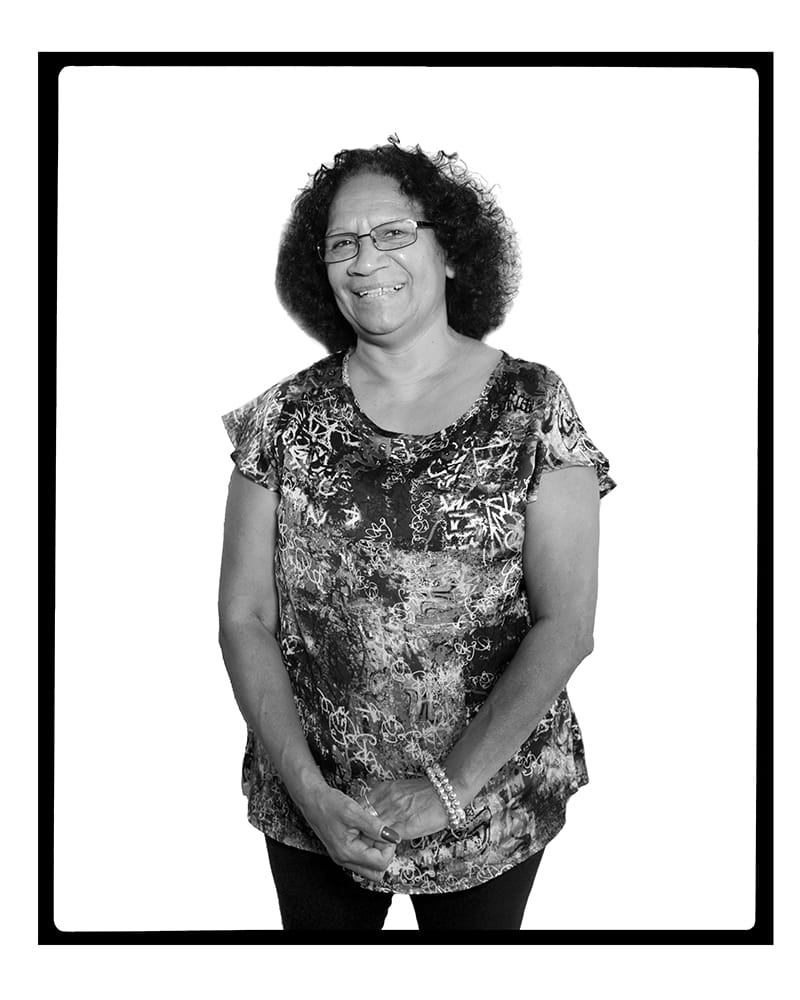
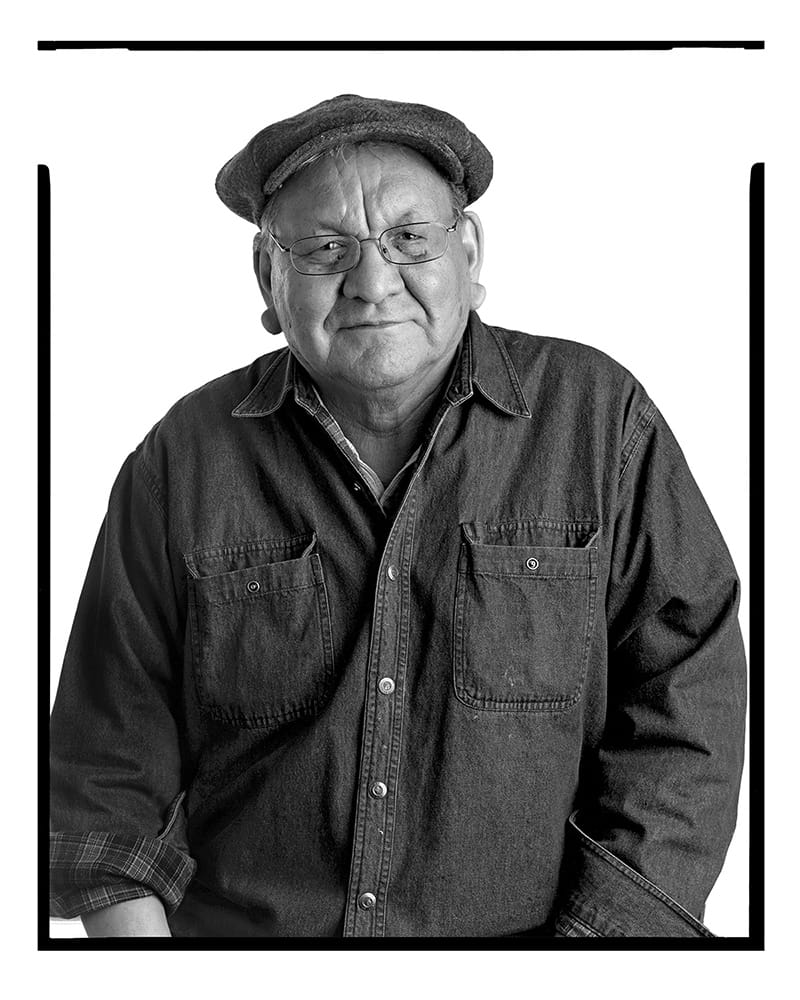
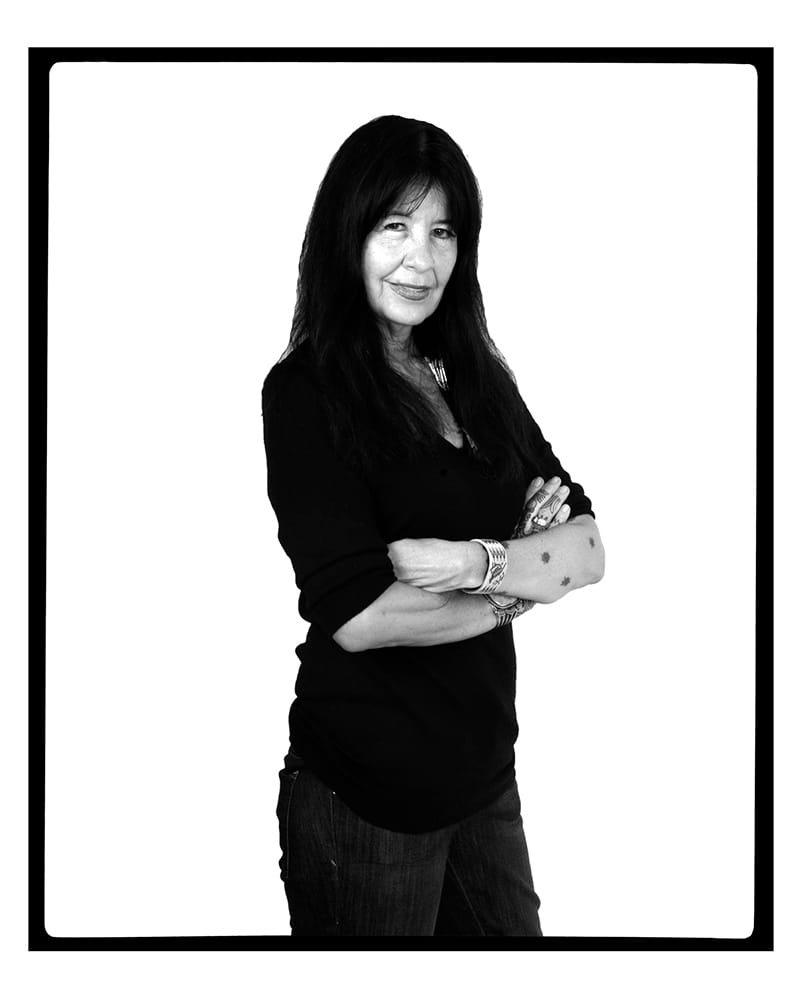
Left: “Eileen Harrison, Melbourne, Australia, 2016” Center: “Alex Janvier, Banff AB, 2008” Right: “Joy Harjo, Santa Fe, NM, 2012”
H: And with “Facing the Camera” (2008-18; 2023), you capture hundreds of Indigenous artists throughout Canada, the US, and Australia as well. That must be really meaningful to have both that power and that privilege to show people the way they want to be shown.
RF: It’s really meaningful, yes. With work about me, to make visible to people what a Métis person looks like. But with Facing the Camera early on, I walked into an opening and heard someone say, “Well, they don’t look Indigenous. I would never know.” I mean, what do you think we look like?
The series started at an Indigenous artists’ residency that I was a little late in joining, so I opted to do portraits. I took photos of the 15 of us and thought, “There’s something here,” in documenting all these incredible artists and giving that to the community and to the individuals. I’m documenting their physical presence, and I like to think that their spirit or energy comes through. I didn’t necessarily photograph them where they were from, but rather where I met them. Some of those artists we’ve lost now, so this is just a little time capsule.
H: What would you want to say to this generation of kids with intersecting marginalized identities who are trying to define themselves and find visibility? Or what would you say worked for you?
RF: I went around asking if I could belong. I would say that you do belong, it’s okay to be who you are and love yourself the way you are. In my ideal world, that comes from yourself. But you do function in a larger world; you need to seek out and find support from community. If you could find just one person or one place, reach out. There are people there who can relate to you, who love you until you can love yourself, and even after that. They can show you the love and pride that they carry.