As anyone that has attempted to incorporate a large amount of pea protein into a beverage will know, taste and texture can quickly become an issue. Zurich-based SentiaNova—a startup emerging from stealth with patented tech to remove off-flavors from pulse proteins and improve their functionality in the process—reckons it has the solution.
The firm (tagline: “Plant proteins that don’t taste like plant proteins”) says samples of its neutral-tasting pea protein concentrate are available now, with commercial volumes to come in Q4. Isolates will follow at a later date.
“Once you go above 10 or 15 grams, you have issues, which is why formulators always combine plant proteins,” cofounder and CTO Roi Wurgaft tells AgFunderNews. “We’ve spoken to a lot of the ready to mix and sports nutrition companies and they say the key barrier is flavor.
“We de-flavor plant-derived proteins. But we’re not masking off flavors, we’re taking them out. This is the cleanest tasting pea protein the world has seen so far.”
SentiaNova’s tech—which Giacomo Cattaneo at Zurich-based venture studio FOOD FOUNDERS Studio recognized as potentially game-changing when he first came across it—is simple, cost effective, and presents no regulatory barriers, he claims: three things you rarely hear in relation to an early stage foodtech company.
When Cattaneo first tried a chickpea milk using proteins that had undergone SentiaNova’s process, it tasted “80-90% better” than the control, he recalls. “It was like, Holy cow! This is not incremental, this is game changing, and scalable, and it will reduce the need for flavor maskers, which are a major cost driver in any formulation.”
Low capex/opex
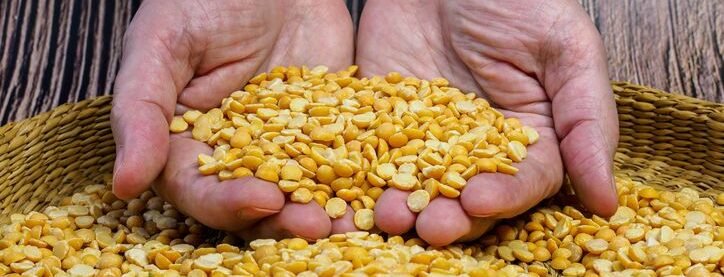
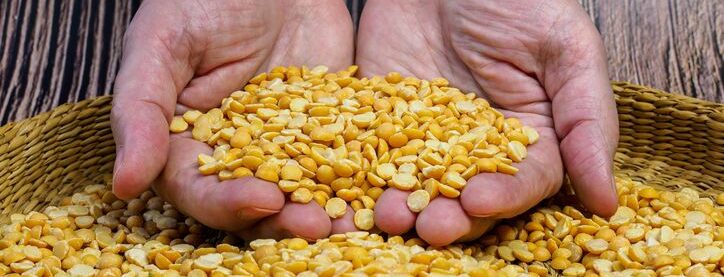
Typically, says Wurgaft, harvested peas are cleaned, dehulled, split, and dry fractionated, where an air classifier separates a protein-rich fraction from a starch-rich fraction.
Inserted as a preprocessing step after before dry-fractionation, SentiaNova’s technology can be integrated into existing infrastructure, says cofounder and CEO Daria Reisch, who says SentiaNova hopes to partner with established pulse protein manufacturers to bring high volumes to market.
Off-flavors in pulse proteins come from naturally occurring compounds such as flavonoids and saponins. SentiaNova uses a proprietary pre-treatment process to selectively remove these compounds without heat or steam, avoiding protein denaturation, “toasty” flavors, or a loss of functionality that can come with some other de-flavoring treatments.
By improving functionality as well as taste— the process improves dispersibility, emulsification, and water-holding capacity—SentiaNova enables higher inclusion rates in foods and can upgrade currently underutilized plant protein (that is often sold to lower value animal feed markets) into human food ingredients.
Cost savings for formulators
An independent sensory evaluation conducted by Haystack Consulting with application development supported by Nursh, found that SentiaNova’s products outperformed commercially available de-flavored pea protein concentrates and isolates, recording consistent and significant reductions in bitterness, astringency, and green notes.
The same evaluation also showed that firms making a vanilla pudding could save on ingredient costs by replacing commercially available de-flavored pea protein with SentiaNova’s product by eliminating masking agents and reducing the amount of vanilla needed to achieve the same experience.
“I have spent 26 years building plant protein facilities, and I have watched a lot of interesting technologies fail because the unit economics did not work,” says Wurgaft. “That is why we built SentiaNova.”
Tech works on peas, fava beans, chickpeas, mung beans, and lentils
While the tech can be used to tackle taste issues in peas, fava beans, chickpeas, mung beans, and lentils, the most interest is in pea “because there is a very large, underutilized capacity of dry fractionation that currently goes to pet and animal feed,” claims Wurgaft.
The firm—which secured initial funding from FOOD FOUNDERS Studio in Zurich—is now looking for seed investors, he says.
“There is a real demand for protein right now and whey protein is constrained by a lack of capacity which has pushed up prices.”
“The conditions for plant proteins to close the protein gap are finally in place,” adds Reisch. “Processing capacity is built, legume cultivation is being incentivized across Europe for local protein sovereignty and nitrogen capture, and demand is accelerating.
“Taste has been the last barrier. SentiaNova removes it.”
Further reading:
US alt-meat slump continues, but plant protein gains traction in beverages – GFI
Alpine Bio debuts ‘insanely soluble’ soy protein isolate and iron-rich lactoferrin made in soybeans
Israeli startup deploys CRISPR to ‘virtually eliminate’ bitter-tasting saponins in yellow peas
The post SentiaNova emerges from stealth to tackle plant protein’s taste problem appeared first on AgFunderNews.