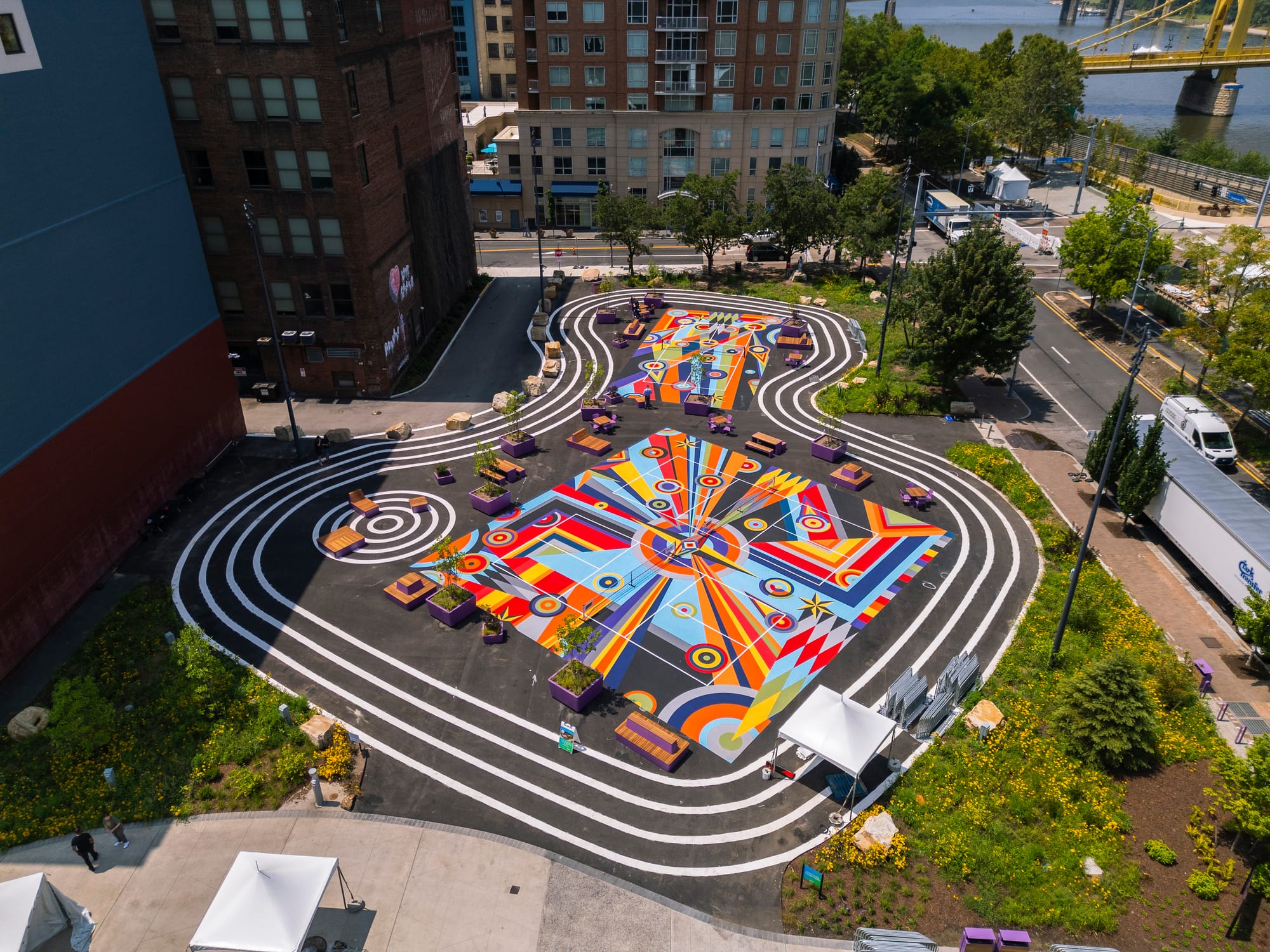
Pickleball aficionados in downtown Pittsburgh get to enjoy an art experience as they play thanks to artist Sharmistha Ray’s vibrant floor murals.
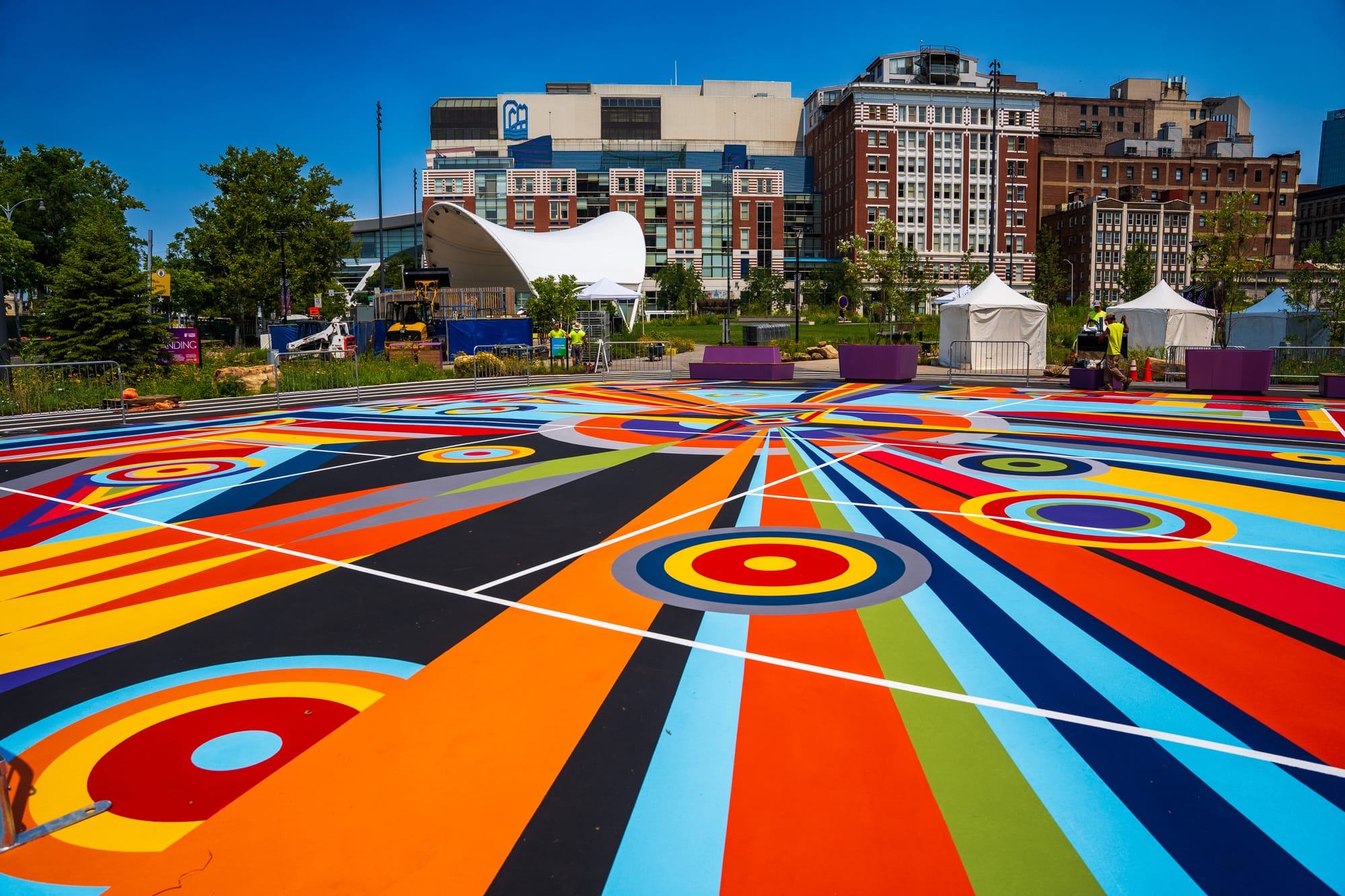
The artist’s new “Geometry of Play” installation invites the public to step into — and onto — the vibrant surfaces, pickleball paddle in hand.
Unveiled on July 16, the three courts are part of Arts Landing, a $31 million community gathering space that opened earlier this year. The Pittsburgh Cultural Trust commissioned Ray to design the courts, which will be surrounded by other public works from artists such as Thaddeus Mosley and John Peña.
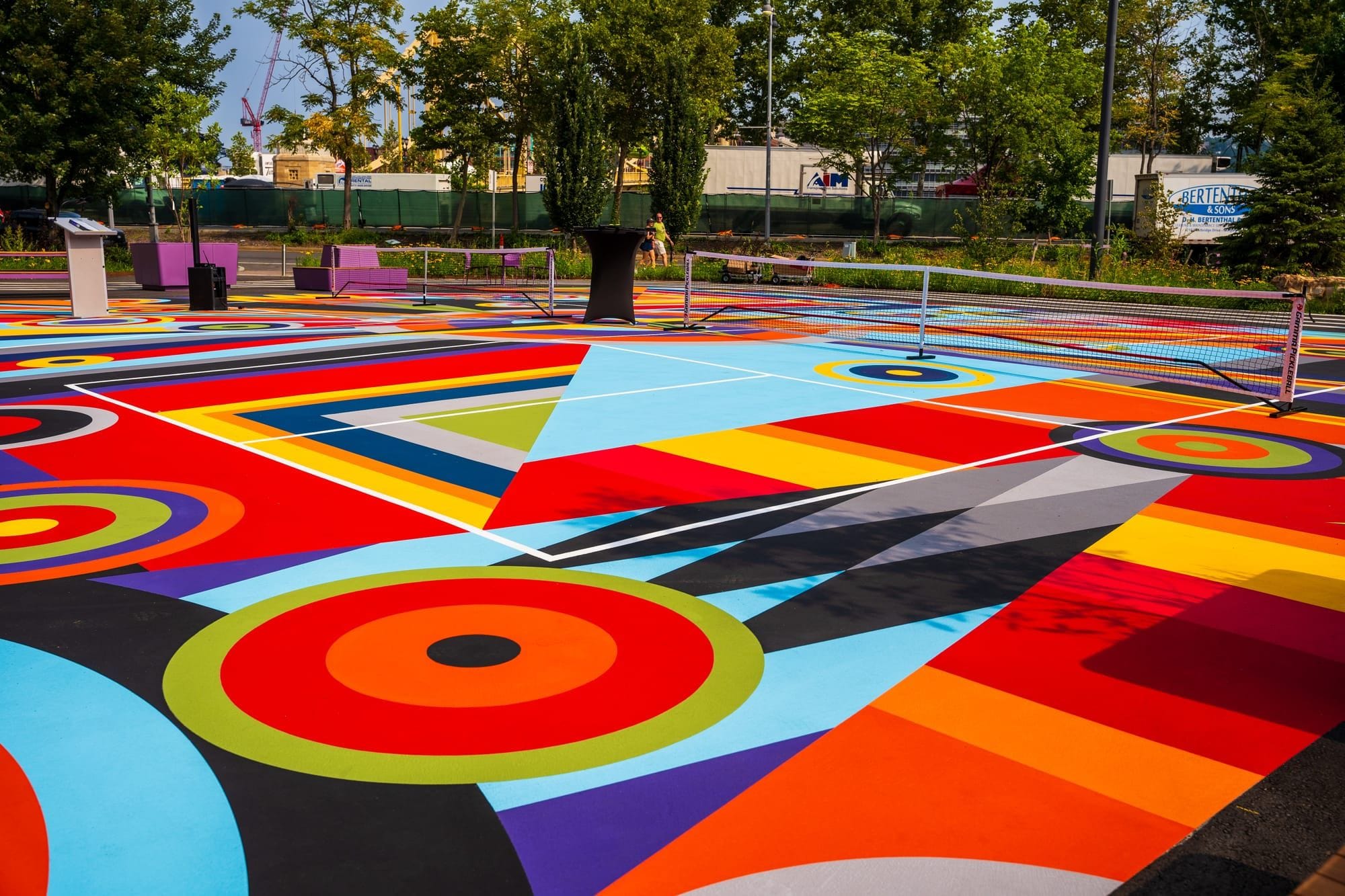
“Pickleball is special in that it provides a low barrier to entry in terms of ability and cost,” Ray told Hyperallergic. “It feels like a social sport, and I appreciate that about it.”
Sourcing inspiration from the Indian game “Pachisi” — later adopted as “Parcheesi” in the US — Ray infuses the murals with patterns that shift and morph from different angles. A large concentric circle connects two of the courts, out of which rays of saturated color spurt and race towards the border. On the other court, a kaleidoscopic prism slices through the playing surface, as other shapes interject in an array of hues and sizes.
Best known as a co-founder of Hilma’s Ghost — an experimental collective rooted in feminist and spiritual practices — Ray centers community building in much of their work. “We were never working in isolation,” Ray told Hyperallergic earlier this year. “There was always a village.”
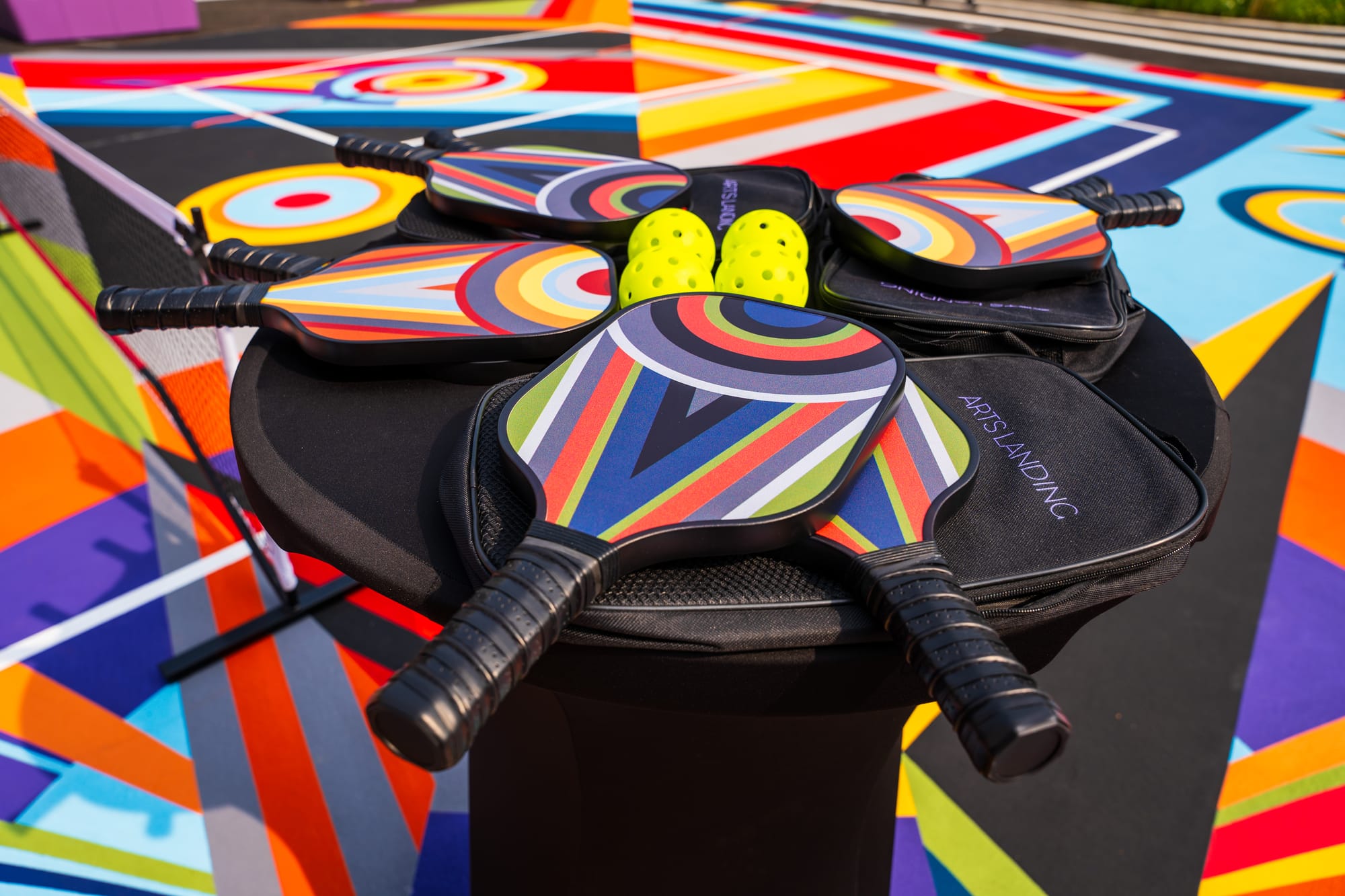
The artist has worked with mediums like glass for other public works, such as the mosaic for Manhattan’s Grand Central Station. Yet the sports paint created its own challenges, requiring Ray to color-match the available options as closely as possible to their original design. Ray designed a number of pickleball paddles with the same hues, which echo the vibrant patterns sprawling across the courts.
While they previously partook in racket sports like tennis, badminton, and squash, Ray played pickleball for the first time to better understand their project. As a proponent and creator of public art, they felt as if the mural could illuminate the democratic ethos of open recreational areas.
“Whether you come to play or simply to watch the choreography of movement unfold across the mural, I hope the work offers a moment of joy, connection, and possibility,” Ray said.