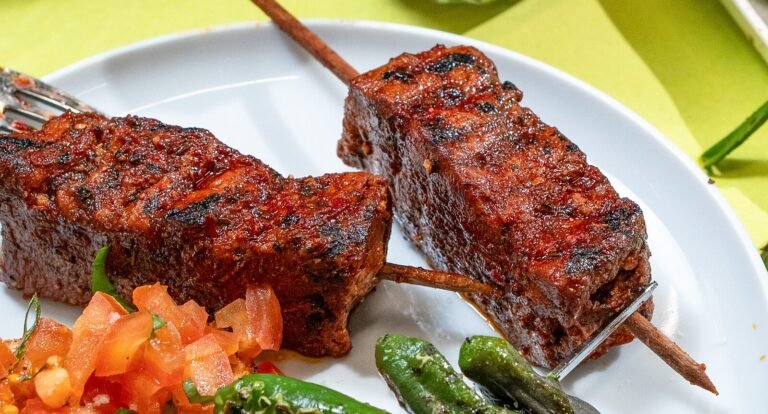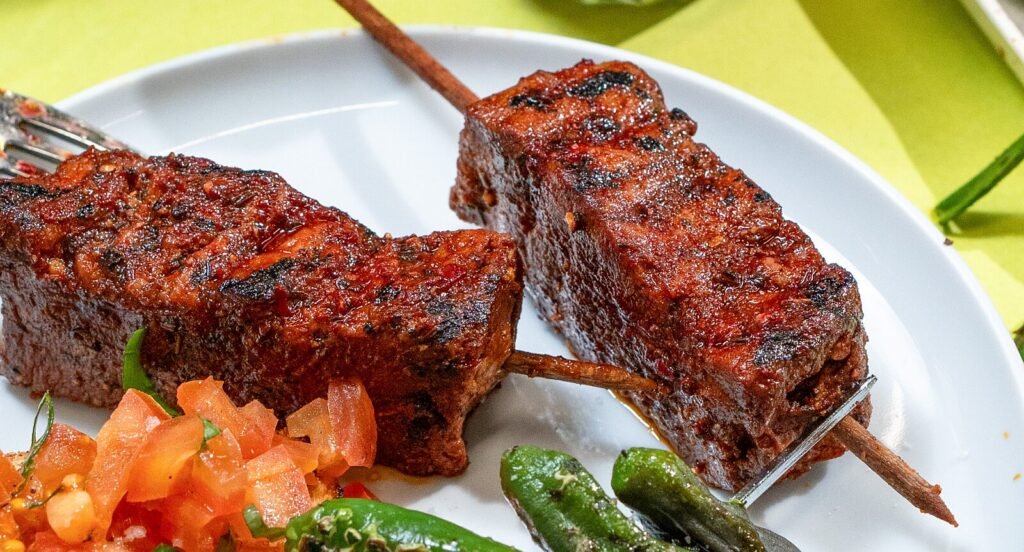
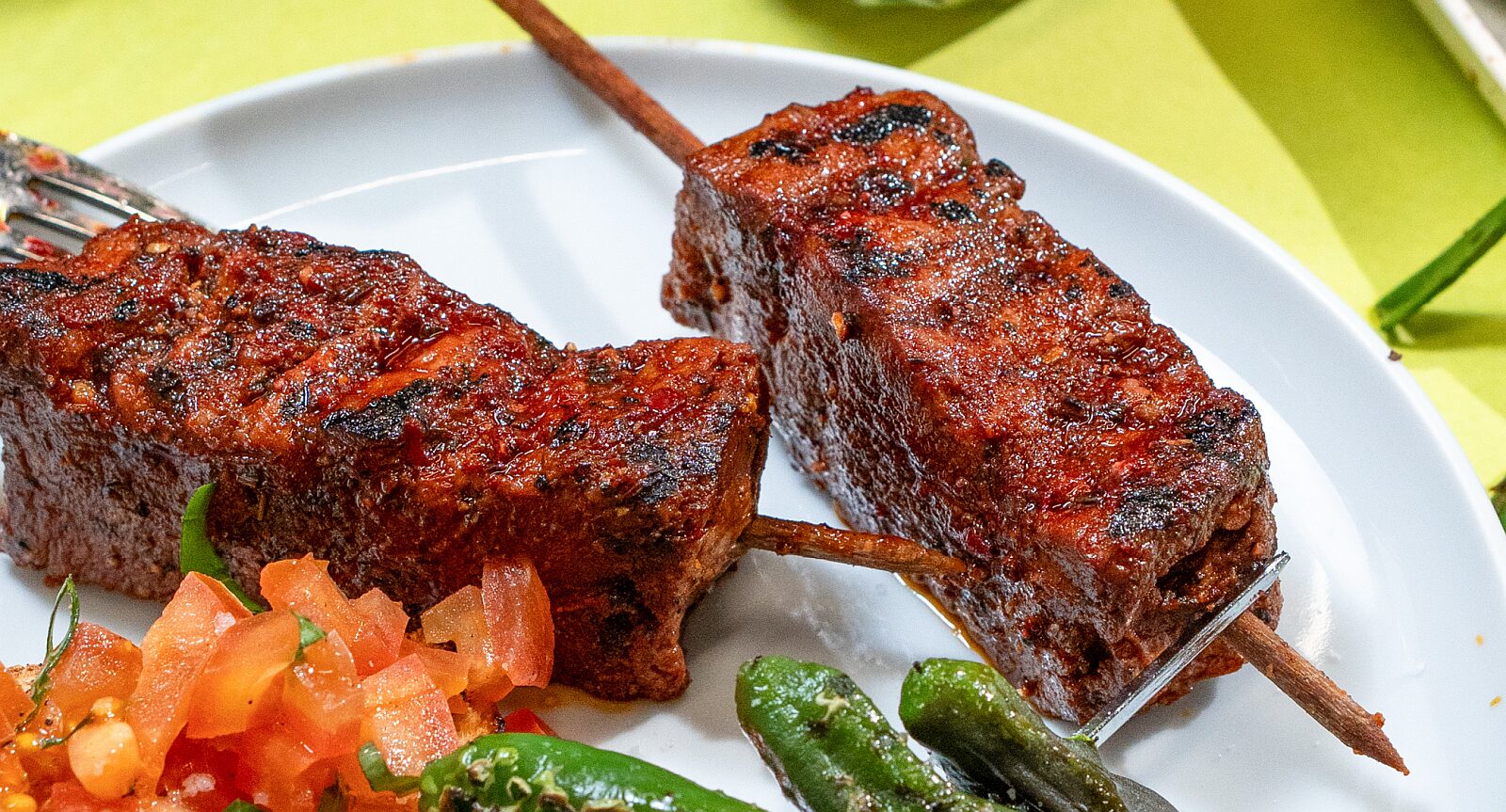
Swiss plant-based meat firm Planted is planning to double production capacity at its facility in Memmingen, Germany, to meet growing demand for steaks and other products made via its proprietary solid-state fermentation technology.
“We’re adding more capacity and taking our whole-muscle technology into new product categories, including cold cuts, where basically, you create a whole muscle that can be cut into thin pieces,” said CEO Pascal Bieri, who would not put a figure on the capex involved.
The facility, which opened in 2025, puts extruded proteins through a solid-state fermentation process in chambers. This creates “huge, muscle-like pieces of meat that we then can form, cut, cure, and marinate,” said Bieri.
Extrusion provides the initial structure, while fermentation delivers additional texture, flavor and juiciness, added Bieri, who claimed the system was relatively capital efficient.
“We learned one thing going into the most difficult retail market in the world, Germany, which is that price matters. We never wanted to build a product that is solely used in Michelin restaurants. We wanted to reach everyone, so we only push technologies that can deliver on that.
“Our big goal vision, which we internally call ‘One Plus One Vision,’ is that we want to spend $1 on raw materials and another $1 on processing and packaging to produce one kilogram of meat for $2.”
The firm’s original facility in Kemptthal, Switzerland, handles extrusion, cutting, slicing, dicing, skewering, marinating and packaging for its core range, while the Memmingen site is focused on products made using fermentation.
Bieri added: “We’re making the steak and steak bites in Germany and very limited volumes of pastrami, which comes from the same muscle platform as the steak, it’s just cured differently and smoked differently. A minced meat that we’re launching soon is also coming off that platform, but we don’t have enough capacity to make as much as our customers would love.”
The Memmingen site currently produces about eight tons of product a day. Combined with the Kemptthal site, Planted makes around 20-25 tons a day with a 50:50 split between retail and foodservice.
Job cuts a ‘readjustment to the future’
Addressing recent media reports describing layoffs and internal dissatisfaction (anonymous sources described “total chaos,” a “culture of fear” and a “bad financial situation” on the Kununu review platform) Bieri said Planted had cut around 11% of its workforce over a year and now employs 231 people.
“Certainly it’s not something you want to do, especially as a founder or manager but it’s a readjustment to the future,” said Bieri, who cofounded Planted in 2019 with Lukas Böni, Eric Stirnemann, Christoph Jenny, and Judith Wemmer.
“But we do try to have as many direct conversations as possible with everybody and our doors are always open. We have town halls with the whole company,” added Bieri, who would not comment on the firm’s runway, funding plans, or path to profitability.
The cuts reflected shifting priorities, technologies and geographic focus, and were concentrated in global management roles in Switzerland and in some markets where the business model is shifting.
Asked about the Netherlands, France and the UK, he said: “We have listings active at Tesco, Albert Heijn, and Carrefour, all of the big retailers in these markets. As we have scarce capacity, we have had to prioritize, so for us that was on DACH [Germany, Austria, and Switzerland]. But we do want to reach consumers all across Europe.”
Partnerships and a potential b2b model
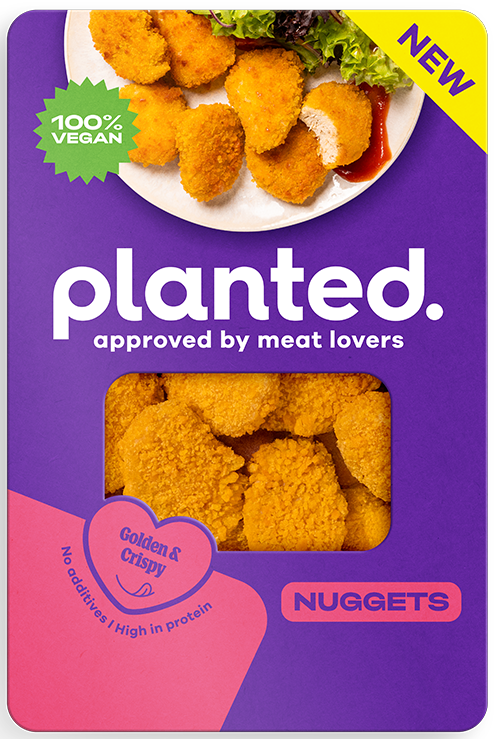
Planted—which is backed by investors including L Catterton and Tengelmann Ventures—has historically sold products under its own brand. However, its fermentation platform could ultimately supply semi-finished products to local brands, manufacturers or butchers, said Bieri.
In France, for example, Planted is “exploring partnership opportunities” and new business models.
“I don’t think a better protein always needs to be branded,” said Bieri. “I don’t imagine a protein shelf being purple [the Planted brand color] across the world in 20 years. I think local brands prevail, local tastes prevail, and we do look at that very strategically.
“The question is with whom do we want to operate in certain market to maximize volumes and margins, for ease of doing business, and to make better local products for local consumers.”
He likened the model to supplying a carcass that can be processed differently in each market. Under such an arrangement, Planted would manufacture its fermented “muscle” in bulk, with local partners carrying out further processing and product development.
“Honestly I think I have a pretty good understanding of a typical German or Swiss consumer but I’m not necessarily [best-placed to] know what a consumer in northern Spain or southern France expects from a meat product,” he said. “I know what mistakes have been made by brands in the US that have come over to Europe with a totally un-European patty that never got any love here.”
Strong growth in Germany
The European plant-based meat market varies significantly by country but presents a very different picture from the struggling US category, where retail sales in particular have been declining precipitously in recent years, said Bieri.
In contrast, retail sales of alt meat in Germany grew 7.2% in the first quarter, while sales of Planted grew 49% driven by increased distribution and strong velocity, especially for the steak products, he claimed.
According to Bieri, alt meat sales in Austria and Italy are also growing, while Switzerland is broadly flat. Spain is declining and the UK remains “a bit difficult.”
He added: “In Austria and Switzerland we’re the market leader and in Germany we’re the fastest growing player and hopefully getting into a good challenger position.”
Swiss naming ruling has not hurt sales
Planted has changed the names of its products in Switzerland following a court ruling preventing it from using terms such as “chicken” in plant-based product names, although it is still permitted to instruct consumers to “cook it like chicken,” he said.
“Actually, volumes have increased [since the label change], but we did adjust pricing downwards together with some of our partners so it’s hard to know [whether the name change had any direct impact].”
The addressable market
Despite recent challenges across plant-based meat, Bieri remains optimistic, although he expects further consolidation.
“I still truly believe the addressable market is the total protein market, and that the better technologies, the better unit economics, and the better products will prevail.”
Planted does not view itself as competing only within plant-based meat, he added, but within a broader protein market that will increasingly include animal, plant-based and cell-based products.
“Screw the ‘alt-protein’ [characterization]. The whole protein market will be so much more diverse in the future.”
Further reading:
The post Swiss alt meat startup Planted scales fermented whole-cut platform, eyes B2B partnerships appeared first on AgFunderNews.