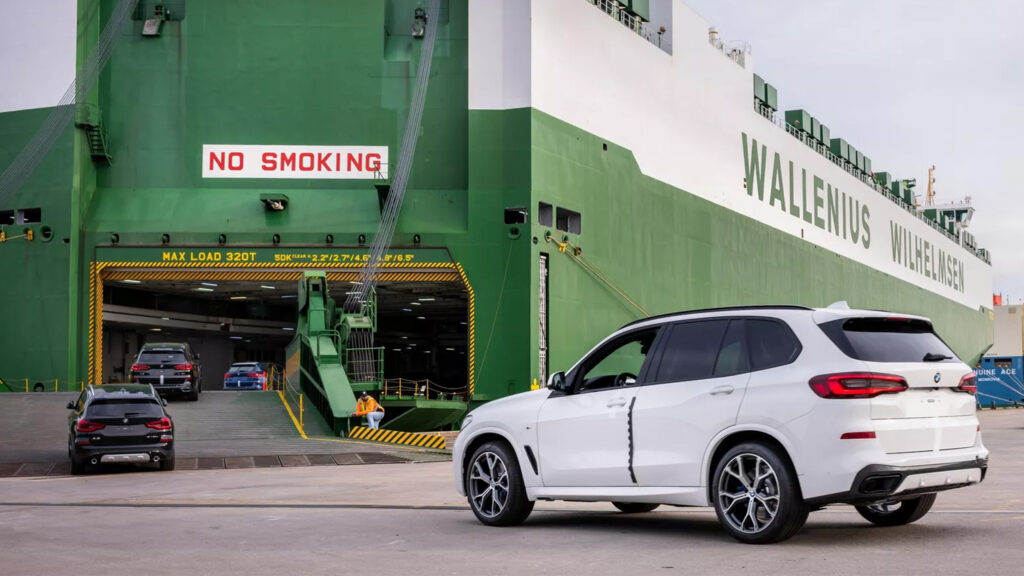
- The bustling Port of Antwerp-Bruges typically ships more than 3 million vehicles each year.
- Come August 1, the US could enact sweeping 30 percent tariffs on European imports.
- Exports from this port to the US have decreased 15.9 percent through the first half of 2025.
European automakers are storing thousands of cars at ports in Europe holding out hope that US President Donald Trump will eventually relent and lower, or perhaps even abandon, sweeping tariffs. However, this appears to be increasingly unlikely and vehicles may continue to pile up at ports.
It’s been revealed that the number of new passenger cars being exported from the Port of Antwerp-Bruges in Belgium to the United States has fallen 15.9 percent through the first six months of this year. This port is one of the world’s largest transportation hubs for cars and, in 2024, shipped more than 3 million vehicles around the world.
Read: The EU Got Too Comfortable Before Trump Made It Uncomfortable
Now, the port is home to thousands of vehicles from European brands, including BMW, Smart, and others. According to the facility, the outlook for the second half of the year “remains uncertain,” and “will depend on whether a trade agreement between the EU and the US can be reached by 1 August.”
Speaking with The Guardian, Justin Atkin, the UK and Irish representative of the port, stated that the tariffs have had an immediate and significant impact on several industries.
“With the pandemic, we had lockdown, then we were out of lockdown, then back into lockdown, and people got used to managing it after being unprepared,” he said. “Whereas here… people have talked about tariffs in the build-up [to Trump] but I don’t think anyone expected the level and the severity of the instantaneous action.”

It’s not just the exportation of cars from the port that has slowed this year. Approximately 31.5 percent less “high and heavy equipment” is being exported to the United States as well, including construction vehicles and tractors.
Things may get worse before they get better. Despite weeks of negotiations between the US and the European Union, a new trade deal has yet to be reached. This prompted Trump to announce earlier this week that new 30 percent tariffs will be enforced on the EU from August 1. While this new tariff would be separate from sector-specific tariffs, such as those placed on cars and steel, it threatens to strain global trading relations further and may cause even more cars to start accumulating at major ports.