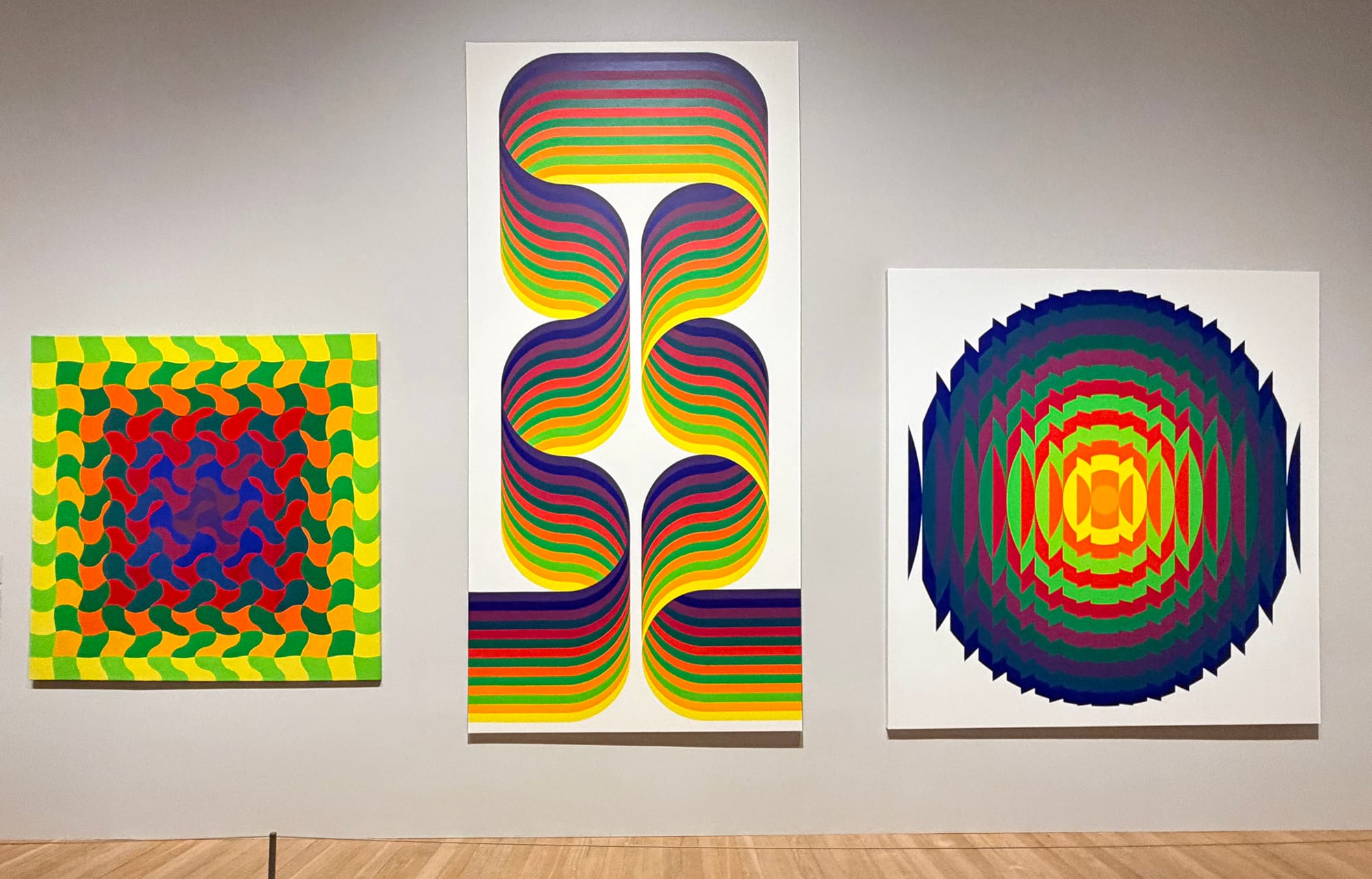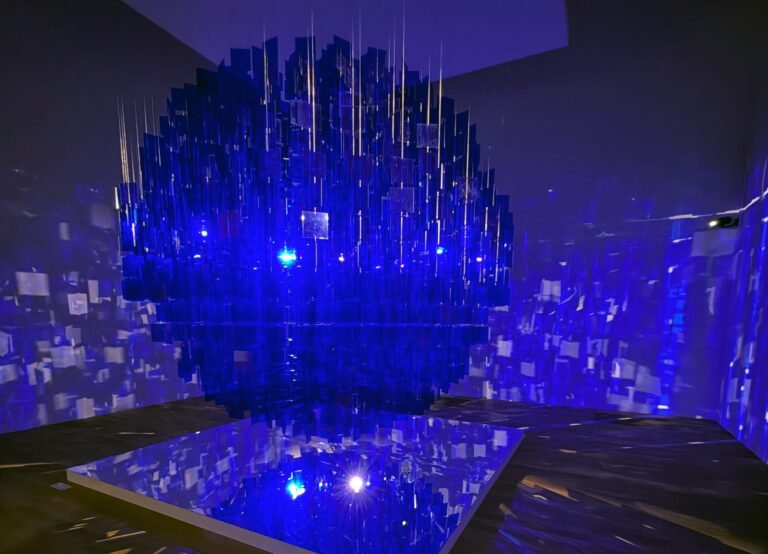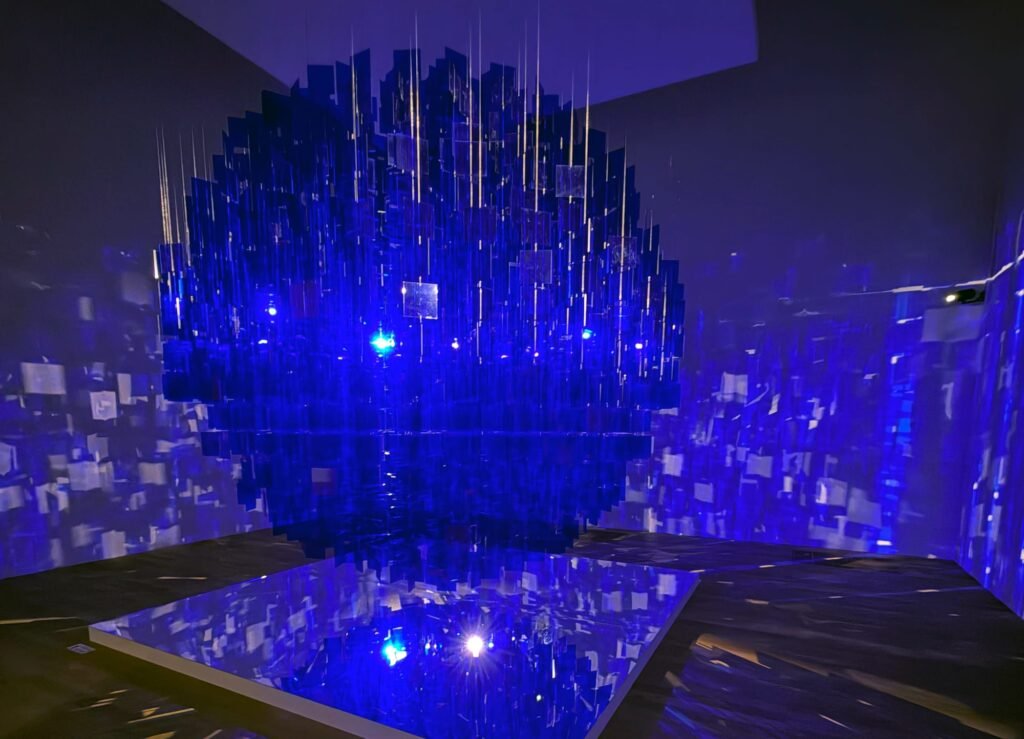
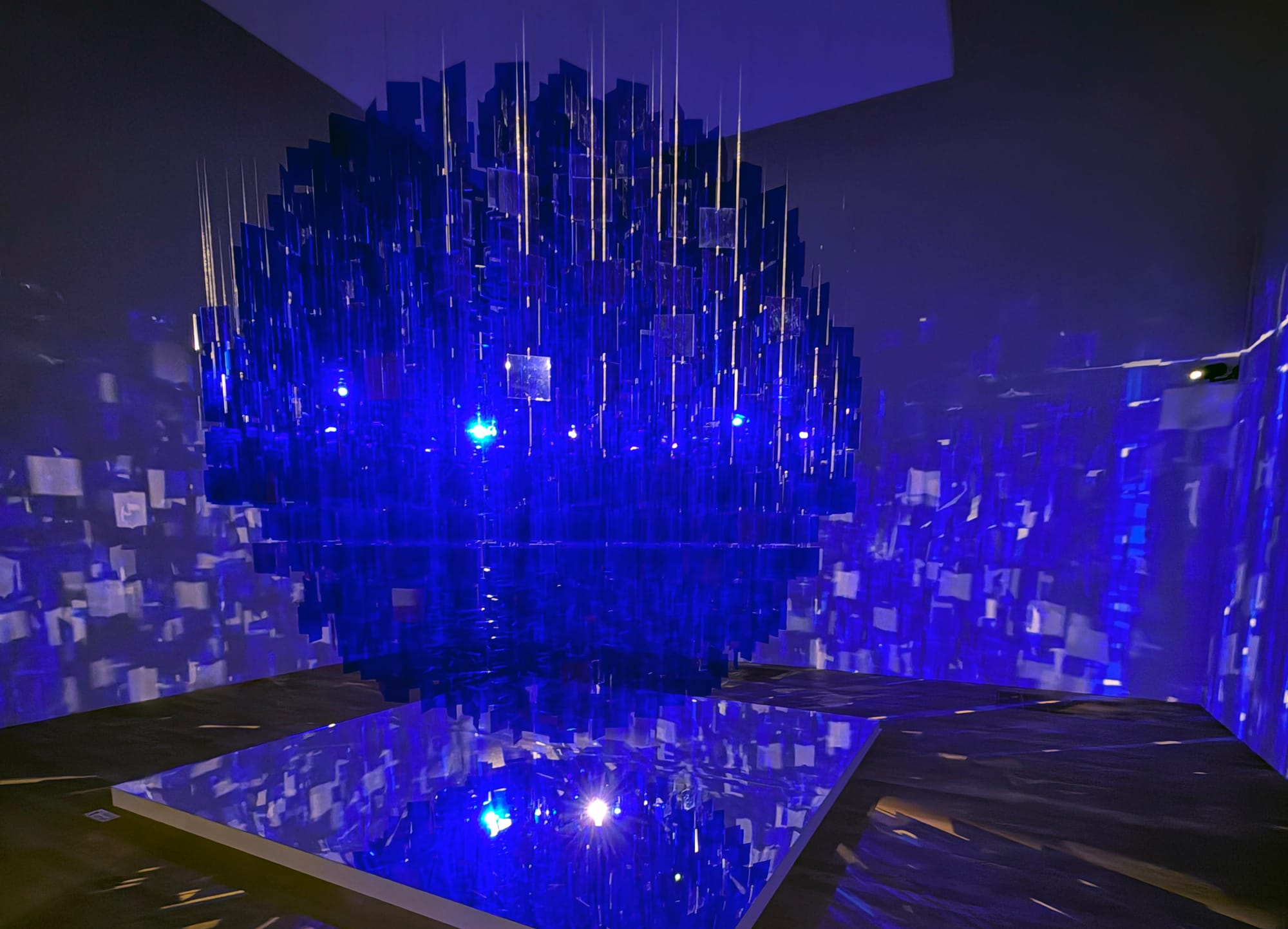
LONDON — In Paris, in the years leading up to the massive social upheavals of 1968, Julio Le Parc was making the first of his Game Rooms. These were collections of works that aimed to playfully destabilize the viewer’s experience, such as seats with springs that challenged the act of sitting, areas of uneven tile floors, and patterned discs designed to be manually spun. But for Le Parc, as well as the progressive collective Groupe de Recherche d’Art Visuel (GRAV) that he co-founded, the works were about far more than entertainment. Indeed, he hoped that cultivating the audience’s active participation would not only disrupt what he saw as the hierarchical and passive nature of the museum, but also effect a political awakening outside of it.
A recreation of one of the Game Rooms appears in the exhibition Julio Le Parc: Light. Colour. Action., which was “developed in close dialogue with the artist,” before his death earlier this year at the age of 97. Though the current world, as in 1960s Paris, grapples with mounting social and political tensions, one is unlikely to describe today’s art museum experience as “passive.” Indeed, outgoing Tate Modern Interim Director Catherine Wood notes in the exhibition catalog’s foreword, “At a time of heightened popularity for exhibitions touting immersive and interactive experiences, celebrating Julio Le Parc’s seven-decade career with a monographic exhibition at Tate Modern feels especially meaningful and urgent.”