Toyota’s V6 That Caused a Lot of Headaches
Toyota’s reputation for bulletproof reliability is legendary, so when its non-hybrid 3.4-liter twin-turbo V6 started making headlines for all the wrong reasons, people took notice. This engine, which powers everything from the Toyota Tundra to the Lexus LX, came into the recall spotlight after Toyota traced engine failures to rogue manufacturing debris.
According to Toyota, the main problem is machining debris left inside the engine during production. In worse cases, the automaker has recommended engine replacements.
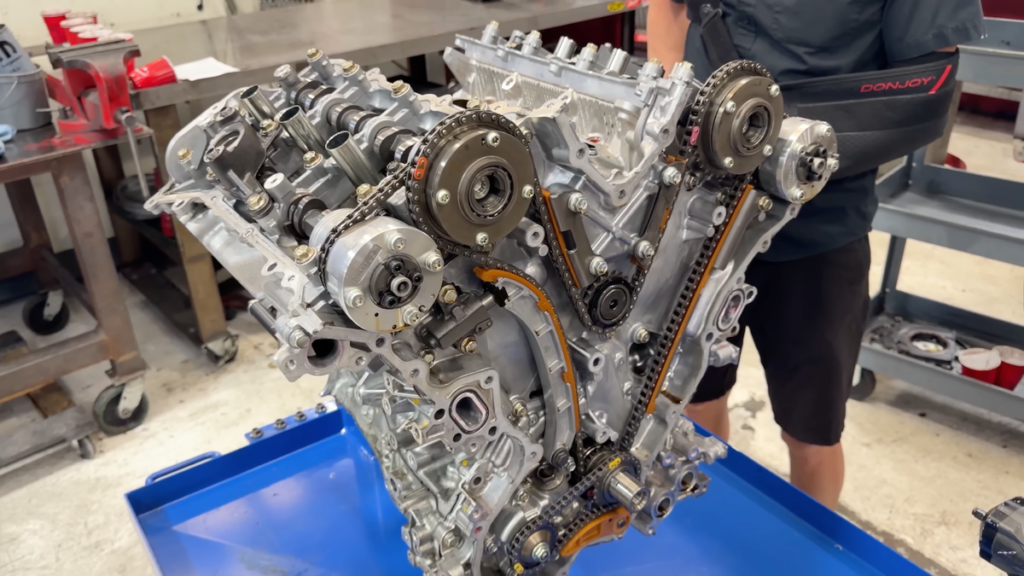
YouTube mechanic Dave’s Auto Center decided to skip the paperwork and get their hands dirty, tearing down a seized V35A-FTS engine straight from a customer. What they found was a ringside seat to the mayhem that unfolds when even a speck of debris sneaks into the oil passages of a modern engine.
Early Signs of Contamination
The engine teardown started with a snag: the block was locked solid. After removing the timing components and front covers, metallic debris was found in the lubrication system. The oil pump also looked battered, with clear signs that something nasty had chewed its way through.
Digging deeper, the mechanics found contamination everywhere: oil passages, timing bits, hydraulic tensioners, and valvetrain parts. Debris had wormed its way into places where tolerances are measured in hair-thin thousandths of an inch.
The farther they dug, the uglier it got. Cylinder walls were scored and scuffed, and the lower end showed signs of damaged main bearings. They even checked out the piston oil squirters – the components that keep turbocharged pistons cool. According to the video, the blocked oil flow caused overheating and further wear.
By the time they reached the crankshaft, it was clear: contamination had been making the rounds through the entire oiling system.
Dave’s Auto Center/YouTube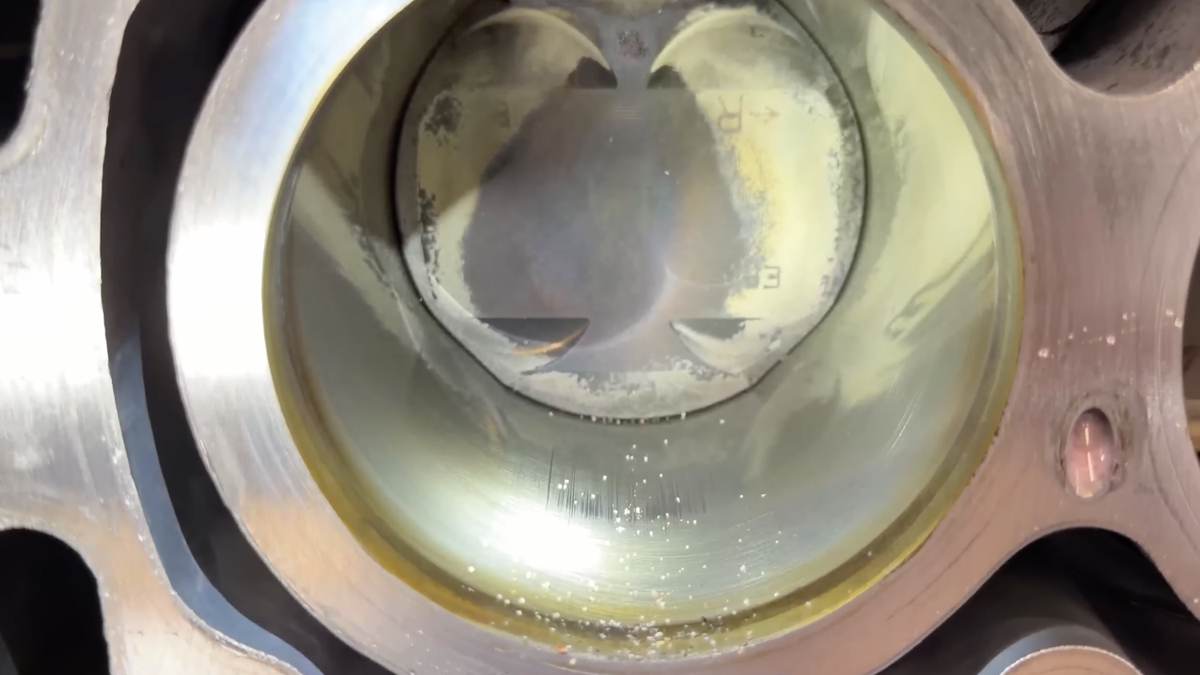
What Owners Can Learn From This
If there’s one lesson here, it’s to keep an eye on your oil. The techs pointed out that slicing open your oil filter can sometimes reveal metallic shrapnel before things go nuclear. It’s not a replacement for a pro diagnosis, but it might just give you a heads-up on your engine’s health.
The teardown also made it painfully clear just how tough it is to bring a contaminated engine back from the dead. Modern engines are riddled with oil galleries, tiny passages, and secret hideouts where debris loves to hang out. Getting everything clean usually means a full strip-down and some serious machine work.
Technically, this engine could be saved, but given the damage and the machine work required, swapping it out, as Toyota recommends, makes more sense.