A shopper asks an AI assistant for sneakers for a 23-year-old. Another Googles a boutique hotel in Rome. Before either sees a picture of a shoe or a room, artificial intelligence has helped decide which brands deserve consideration. Mental availability is no longer formed directly by comms and shopper experience; a new intermediary has stepped in.
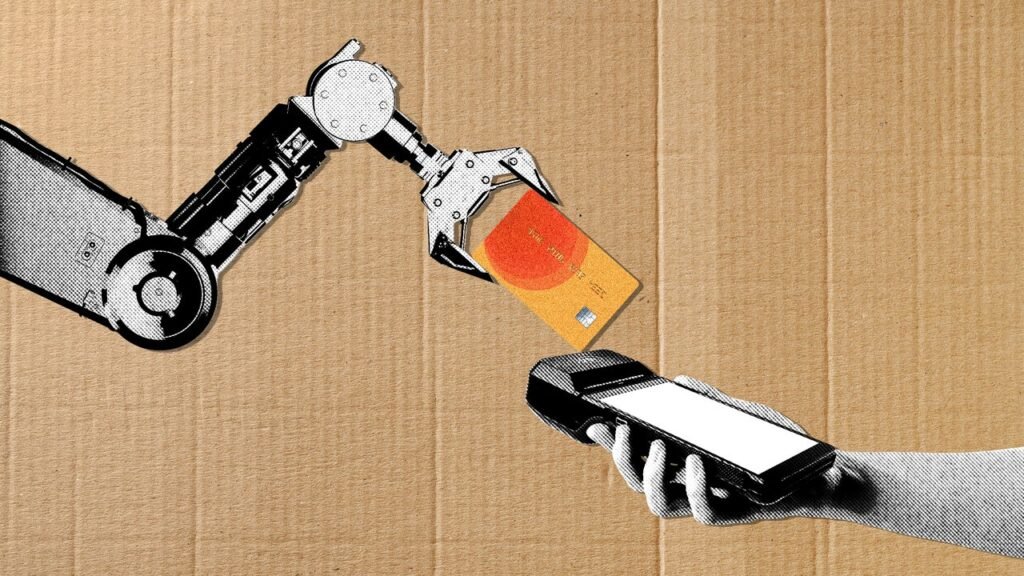
AI is increasingly a gatekeeper between businesses and their customers. Shoppers don’t have to open a chatbot for AI to influence their choices. It is already embedded in familiar services. Think of Google, where AI-generated answers appear before people visit a brand’s website.
Morgan Stanley estimates that agent-influenced shopping could account for $190 billion to $385 billion in U.S. e-commerce spending by 2030, or 10% to 20% of the market. Of course, being memorable to humans is still essential, but leaders also need to consider whether their brand is understood by AI, not just people.
People can accommodate changing messages within an existing emotional attachment to a brand. Machines do not share that attachment. Fragmented messaging or unsupported claims can leave AI systems with conflicting information, making them less likely to recommend the brand.
Even the biggest names cannot assume they will appear. Authors writing in Harvard Business Review in 2026 found that Brooks appeared more reliably than Nike in their tests of AI recommendations for running shoes.
The response requires more than trying to influence where AI looks for answers. Brands are racing to SEO, GEO, and Reddit strategies, but the landscape is continually evolving. To remain in consideration by both audiences, brands need to go back to their roots, examine their foundations, and be more disciplined in their execution. They must focus on the core idea the brand stands for and how consistently that meaning comes across wherever the brand appears.
So, how do you do it?
Design your business for humans and machines at the same time
AI does not feel your brand. It can identify the emotions associated with it, but it does not share the attachment that makes someone instinctively reach for your product.
Emotional resonance and machine legibility require a coordinated approach. The question is whether the meaning you have built around your brand is relevant to the shopper. Does it connect to the visual presence you have built, and can the machine validate it all?
Take Dove. Its real beauty message has created a powerful position around inclusion. Yet when we asked an AI assistant to recommend a good cream for sensitive skin, Dove did not appear. Asked why, the assistant associated it with affordability. The brand’s broader message had not translated into relevance to that skincare request.
KitKat has a particularly clear narrative: Take a break. It gives people a reason to reach for the brand beyond simply wanting chocolate, making KitKat come to mind when they want a pause.
Our research into AI and brand magnetism has shown that to build both mental availability and machine awareness, brands need at least three ownable distinctive assets and a clear relevant narrative. To ensure your brand is understood by AI, keep your messaging consistent across channels and over time.
Nike shows that even owning distinctive assets alone is not enough. The Swoosh and “Just Do It” make Nike instantly recognizable, yet when AI was asked to recommend a running shoe for a 23-year-old, it didn’t feature Nike in the top three. Surprising perhaps, but AI points out that competitors have built strong associations with emerging buying needs: New Balance on authenticity, Lululemon with wellness. Not only have other brands created more relevant narratives, Nike’s own is suffering from semantic contradictions: “Just do it,” “Believe in something,” “Why do it?’ Irrespective of how emotional appealing it all is to humans, the machine finds these contradictions and so will not recommend the brand.
Brands structured for this new AI-mediated world have to deal with this new complexity. Build emotional appeal for people alongside information machines can use to understand that relevance. This is the new standard of brand craft, giving creativity a sharper brief. Brands that master both early will be harder to displace.
Build through repetition, coherence, and ownable signals
Once that relevance is established, the brand itself needs to accumulate presence through repeated exposure. The same visual and verbal cues should reinforce one another across websites, retail communications, and social channels.
Research by Charlie Oscar, reported by WARC, analyzed 30 brands across six categories, and attributed 63% of LLM visibility to long-term brand equity. AI pulls from everything, so years of brand building matter. Volvo’s long-term association with safety illustrates the strength of a settled meaning, for example.
A social post may feel fresh in isolation, but if it introduces a conflicting message, it adds confusion to the brand’s wider digital footprint.
That makes marketers’ impatience expensive. Your team may be tired of a campaign long before customers have properly registered it. Internal boredom is no reason to discard an association you are still building. Familiarity takes time to build and reinforce.
Pursuing new trends becomes a trap door. The brand needs to be clear about what must not change—ownable visual assets and core narrative—and what can change: executions.
Heinz shows the value of continuity. Years ago, there was discussion about removing its keystone logo because it seemed old-fashioned. The surrounding communications could be refreshed without discarding the symbol that made the brand recognizable.
Give agencies recognizable assets to work with and a clear meaning to reinforce. Find fresh expressions of the brand. Change the shirt, change the earrings, but remain recognizably yourself.
The same discipline applies to promises. Make sure your claims reflect what your business actually does, and provide evidence to support them.
The strongest brands give people reasons to remember them and machines clear signals to work with. Build those together, consistently over time, and you give both audiences a reason to choose you.