At a time when Hollywood needs a win, acclaimed filmmaker Christopher Nolan is again betting on the experience economy. His epic masterpiece The Odyssey hits theaters today (Friday, July 17) and is already projected to break box office records.
Let’s take a look at the numbers, what sets this film apart, and how this summer blockbuster fits into the big picture of the moviegoing experience.
‘The Odyssey’ by the numbers
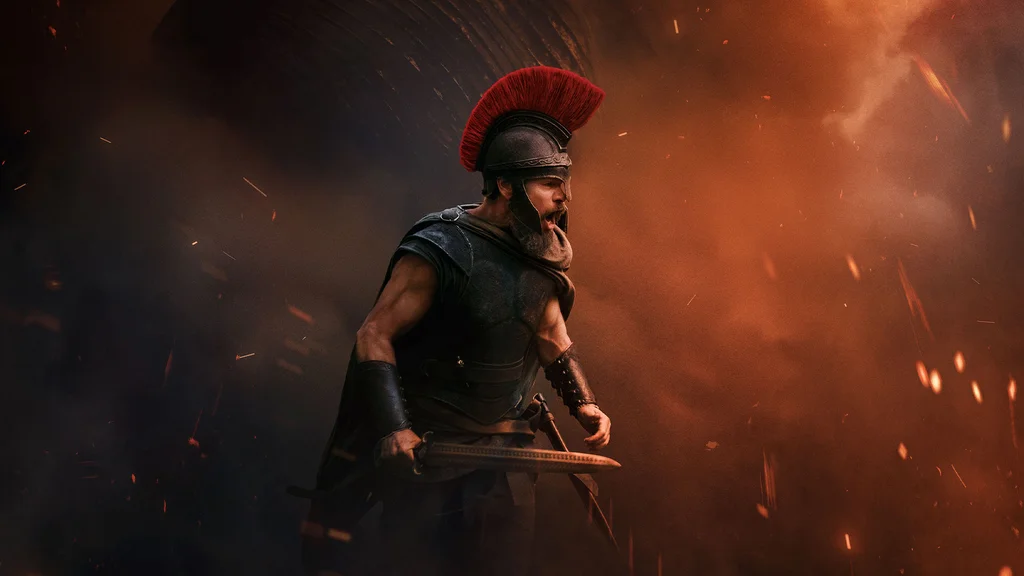
The Odyssey is based on the epic poem attributed to Homer and written in the 8th or 7th century BCE. The plot tells the story of King Odysseus’ 10-year journey home to Ithaca after the Trojan War. He runs into some trouble on the road to say the least.
Nolan was first inspired to adapt this literary classic 20 years ago when he was briefly attached to direct 2004’s Troy.
Nine films later—and riding the success of 2023’s Oppenheimer—he has the clout to do this film exactly how he wanted to. When you make $975.8 million at the worldwide box office and win seven Academy Awards, people want to fund your next project.
It took Nolan seven months to write the script. Filming took 91 days across six countries. Nolan actually wrapped nine days early. The movie’s budget was over $250 million.
Variety projects that The Odyssey will make between $90 million to $100 million in North America in the opening weekend alone.
If these figures come to fruition, this would be Nolan’s biggest non-Batman opening. Tickets went on sale a year ago, and many of the limited 70mm IMAX screens have already sold out.
What sets ‘The Odyssey’ apart
Nolan is the first filmmaker to shoot a feature entirely on 65mm IMAX film cameras. A new camera called the Keighley made this possible.
Previously, the cameras were too loud for intimate dialogue-heavy scenes, but a blimp was created to muffle the noise. Mirrors were used to give actors eye lines to connect with their scene partners. True cinephiles will want to see it in IMAX 70mm, but it is also available in formats depending on the theater’s capabilities.
Nolan also chose to use mostly practical effects, limiting green screens. Odysseus’ boat is really on the water. The Cyclops, voiced by Bill Irwin, was physically created through puppetry and animatronics, augmented by computer graphics.
The all-star cast relished this filming experience. Odysseus himself, Matt Damon, gushed about it to Empire. “I can say, without hyperbole, that it was the best experience of my career,” he stated.
Damon’s sentiments have been echoed by costars Anne Hathaway (Penelope), Tom Holland (Telemachus), Robert Pattinson (Antinous), Zendaya (Athena), and Charlize Theron (Calypso.)
What do critics think?
Nolan’s hard work has already impressed critics. Early reviews are glowing.
Deadline’s Gregory Nussen called it Nolan’s “most achingly humanistic film.” Nussen continued: “Extraordinarily staged and brimming with profundity, The Odyssey is a thunderous, anti-war screed on the persistent damage of patriarchal arrogance.”
Rolling Stone’s David Fear agrees. “What you tend to walk away with after bearing witness to The Odyssey, arguably Christopher Nolan’s best work after 2017’s Dunkirk, is an overall sensation of awe,” they gushed.
The Guardian’s Peter Bradshaw praised the “gasp-inducing, Imax-sized landscapes of loneliness shot by cinematographer Hoyte van Hoytema” and “thrilling ambition, boldness, seriousness, generosity and flair” found throughout the film.
What ‘The Odyssey’ could mean for box office
Nolan’s love of the cinematic experience could once again help theaters prove their relevance in the age of streaming.
According to Variety, 2026 summer blockbusters are already on track to gross more than $4 billion, a feat that has only been accomplished one other time since the pandemic. The Odyssey will only add fuel to this fire and may bring box office figures even closer to 2019’s numbers.