The global shipping industry is currently facing unprecedented disruptions as key maritime chokepoints around the world experience simultaneous crises. From geopolitical tensions in the Middle East to environmental challenges affecting canal transits, the ‘arteries’ of global trade are under immense pressure.
Six months into a war between the United States, Israel and Iran, the world’s most important oil chokepoint is still running at a fraction of normal capacity, and the bill for that is already showing up where most people never think to check: the fuel pump, the supermarket aisle, the insurance renewal notice.
The Strait of Hormuz Crisis: A Chokepoint Under Pressure
Chokepoints matter because they concentrate risk that would otherwise be spread out. Open ocean gives a ship an almost unlimited number of ways to get from point A to point B. A strait gives it one, maybe two. So when Bab el-Mandeb becomes too dangerous to sail through, or when the Panama Canal’s water levels drop too low to run at full capacity, it isn’t a local shipping problem, it’s a forced re-route for anyone who wants to move goods through that gap. Russian oil bound for East Asia does not wait for the water level to rise, it goes the long way round at a higher cost, on a longer schedule.
Energy chokepoints carry a particular amount of economic weight that other trade routes don’t. Oil and gas are priced on global markets and burned almost everywhere, so a supply shock in the Strait of Hormuz doesn’t just impact the Gulf. It shows up as a higher pump price in Tokyo, a costlier heating bill in Rotterdam, and a jump at the register in Los Angeles, usually within days.
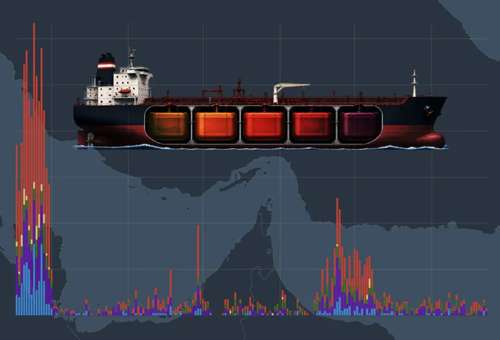
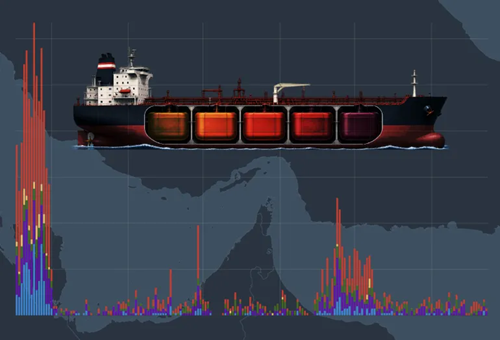
Hormuz carries more than a third of the world’s crude oil and close to a third of global LPG flows, squeezed through a 33 kilometre gap between Iran and Oman with no real substitute. Researchers, including a recent ScienceDirect study on maritime chokepoints, have warned for years that this kind of geography concentrates risk that would otherwise be spread across open sea routes. Before the war, roughly 100 vessels a day used the strait. By late August, that number had fallen to about five a day, and it has been like that for months, not days.
The Detour Economy: The Hidden Cost of Rerouting Ships
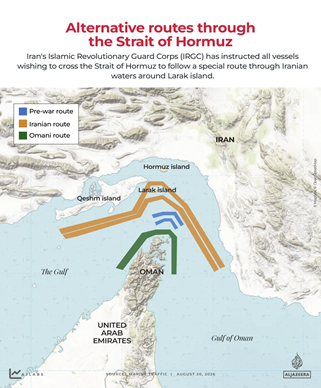
Markets hate a vacuum, and shipping has filled this one with money. Freight rates on routes touching the Gulf have spiked so high that owners now send empty supertankers hundreds of miles just to collect cargo, at rates running into the hundreds of thousands of dollars a day. War risk insurance for a single crossing now adds millions to a voyage; the mechanism through which every extra dollar of risk eventually becomes an extra dollar on a receipt down the chain. Iran and Oman have each carved out temporary corridors through their own waters, so cargo that once cut straight through the strait now zig-zags around it. Efficiency has quietly become this crisis’s first casualty.
Who Wins When Maritime Chokepoints Are Disrupted?
This complicates the tidy “global trade in crisis” narrative. Not everyone is losing. Countries with pipelines that bypass the strait like Saudi Arabia have absorbed the shock far better than neighbours like Kuwait, whose only route to open water runs through Hormuz and whose port calls have collapsed by 86 percent. Russia has found a new outlet for its fuel oil through Singapore and Malaysia, with shipments up two and a half times in a month, and tanker owners are having their best year in a decade. A crisis this large doesn’t just redistribute pain; it redistributes profit, and the winners tend to be whoever already had the most options before the war started.
How Shipping Disruptions Raise the Cost of Everyday Goods
Oil prices are still about 20 percent above pre-war levels, even after cooling from more than $130 a barrel in April, and that number doesn’t stay confined to the pump. It works its way into airfares, into the diesel that moves food from farm to warehouse, into packaging. Fertiliser, a large share of which normally moves out of the Gulf, has gotten scarcer and pricier, and that shows up months later as costlier: not just in oil-importing economies, but for anyone buying food grown with imported inputs. Layer on higher freight and insurance costs baked quietly into anything shipped from Asia; electronics, clothing, parts for a new car, and the “shipping crisis” becomes a few extra dollars on every receipt, spread thin enough that most people never trace it back to a strait they’ve never heard of. It is, in effect, a tax nobody voted for, collected by geography and war instead of a legislature.
Hormuz Isn’t Shipping’s Only Weak Link
The Red Sea offers a useful, slightly counterintuitive contrast: it has held up better than expected, with traffic staying firm even under a Houthi blockade, even as the UN warns Yemen could slide back into war. “Risk” in shipping isn’t a fixed number, it’s a comparison. Owners simply choose the least bad option in front of them, and lately that has meant more ships sailing into the Red Sea, not fewer. Underneath it is a structural problem: the International Chamber of Shipping and BIMCO warn of a coming shortfall of 90,000 ship officers, a gap that will make every future chokepoint crisis harder to manage safely as the next crisis will have fewer experienced people managing it than this one did. Diplomacy has offered some hope: Iran and Qatar held fresh talks in late August aimed at reviving dialogue with Washington, even as President Trump has floated putting Hormuz under American control, an idea Tehran has flatly rejected.
The Real Cost of Maritime Chokepoints
None of the workarounds change the underlying math. Routing around the Cape of Good Hope adds roughly two weeks and an extra thousands of dollars in fuel; the Strait of Malacca can’t handle the largest ships at all. The lesson of 2026 isn’t really about Iran, or even oil; it’s that modern supply chains were built for efficiency, not war, and every one of the world’s few chokepoints is a single point of failure with global reach. The honest fix isn’t a ceasefire announcement or a new pipeline; it’s redundancy nobody wants to pay for until they need it; alternate routes, spare capacity, naval partnerships built years in advance instead of negotiated mid-crisis. Until that changes, the next chokepoint closure, wherever it happens, will land the same way this one did, quietly, in someone’s bill, long before it makes the news.
REFERENCES:
- https://www.sciencedirect.com/science/article/pii/S0966692326000293
- https://indiafoundation.in/articles-and-commentaries/chokepoints-of-the-world-how-a-handful-of-narrow-waters-hold-global-commerce-hostage/
- https://www.aljazeera.com/news/2026/8/27/how-a-95-percent-drop-in-hormuz-traffic-changed-global-shipping
- https://www.aljazeera.com/news/2026/8/27/iran-qatar-hold-hormuz-talks-amid-intl-hopes-dialogue-with-us-will-resume
- https://news.un.org/en/story/2026/04/1167383
- https://www.cnbc.com/2026/09/03/shipping-hormuz-tankers-earnings-freight-rates-iran-trump-crude-china-stocks.html
- https://www.nytimes.com/2026/09/06/business/iran-us-strait-of-hormuz-shipping.html
- https://gcaptain.com/iranian-attacks-push-hormuz-shipping-toward-tehran-controlled-route/
- https://maritime-executive.com/article/trump-pledges-to-make-hormuz-a-territory-of-the-united-states
- https://www.lloydslist.com/LL1158196/Red-Sea-traffic-holds-firm-despite-Houthi-blockade-as-UN-warns-Yemen-on-brink-of-renewed-war
- https://finance.yahoo.com/energy/articles/empty-tanker-pays-4-6-200500748.html
- https://gcaptain.com/hormuz-traffic-dips-to-lowest-since-may-after-us-iranian-strikes-on-ships/
Written by: Pranav Bongirwar
Edited by: Vania Jain
<p>The post The Real Cost of Chokepoints: How War at Sea Impacts Global Trade first appeared on The Economic Transcript.</p>