CONS ›› Limited highway range, minor ergonomic quirks
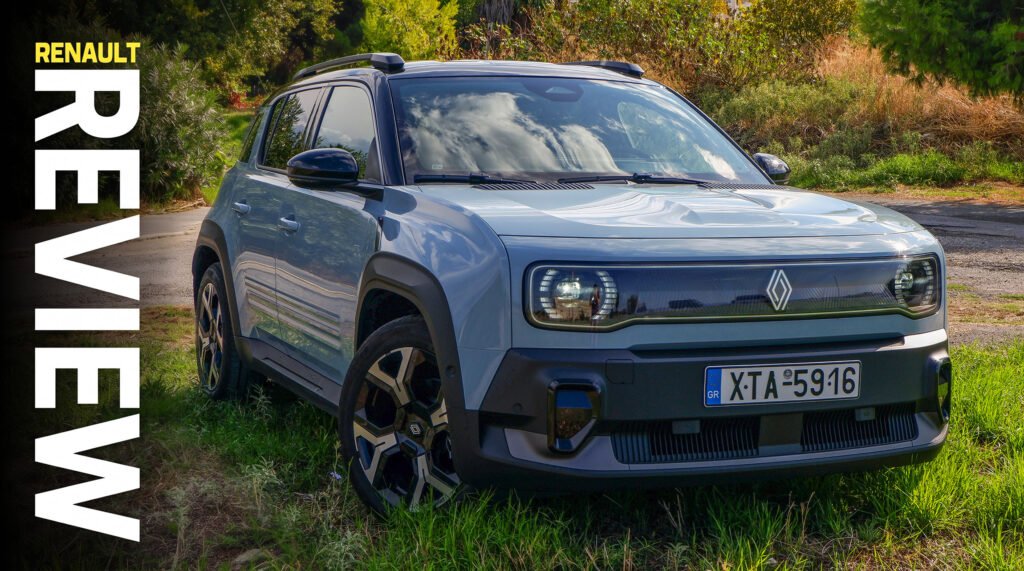
One would think that Europe has enough small SUVs to satisfy the growing demand, but every once in a while, a new addition to the segment proves there’s always room for one more. A fitting example is the Renault 4 E-Tech, an EV-only alternative to the Clio-based Captur with a retro-modern design and Renault 5 E-Tech underpinnings.
A few months after we drove the R5 hatchback, we got the keys to the R4 crossover which – unlike what the numbers may suggest – is a larger and more practical offering.
Review: The Fun 2026 Renault 5 EV America Will Never Get To Buy
Our press car is the mid-spec Techno trim, slotting right in between the entry-level Evolution and the flagship Iconic. Besides the standard Renault 4 E-Tech, the company is also offering a Plein Sud variant with a retractable fabric top creating an open-air feeling.
QUICK FACTS
SWIPE
*Manufacturer
But let’s start with the basics. The original R4 was introduced in 1961 as the first front-wheel-drive passenger car by Renault. The 4L was designed to serve families and workers, and ended up selling 8.13 million units over its 33-year production run, becoming one of the most successful French vehicles in history.
Modern Revival With A Twist
Fast forward to the present, Renault has infused the spirit of the classic estate/hatchback into a modern electric crossover. The production version debuted in 2025, following the rugged Renault 4ever Trophy concept from 2022.
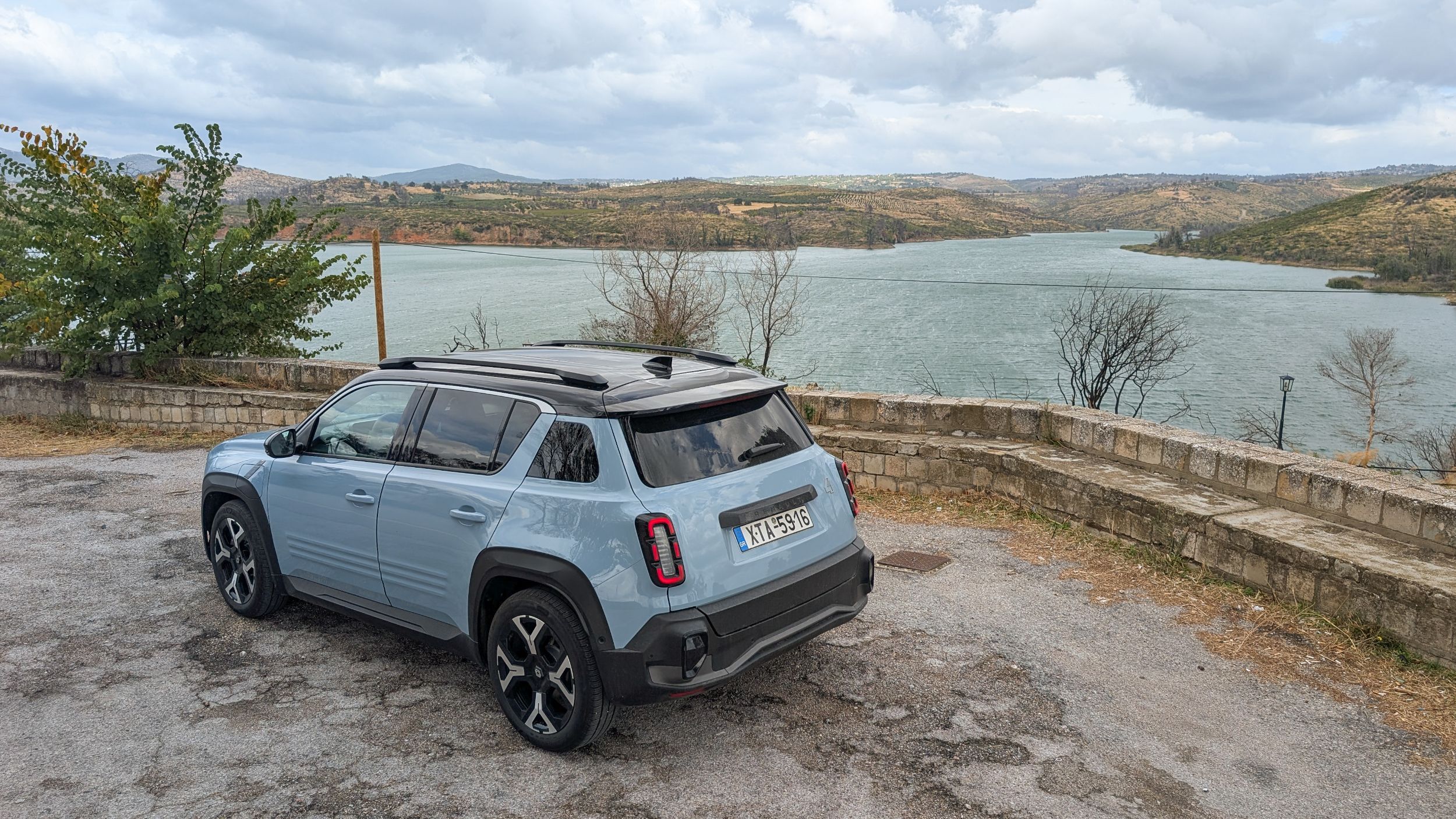
Of course, 64 years of evolution brought big changes to the technology and the footprint, with the R4 E-Tech being almost half a meter longer compared to its predecessor. Still, the EV remains on the smaller side of Europe’s B-SUV segment measuring 4,144 mm (163.2 in) long. When compared to the R5, the R4 is 222 mm (8.7 in) longer, with 84 mm (3.3 in) of the extra length between the axles.
Photos and Videos: Thanos Pappas/Carscoops
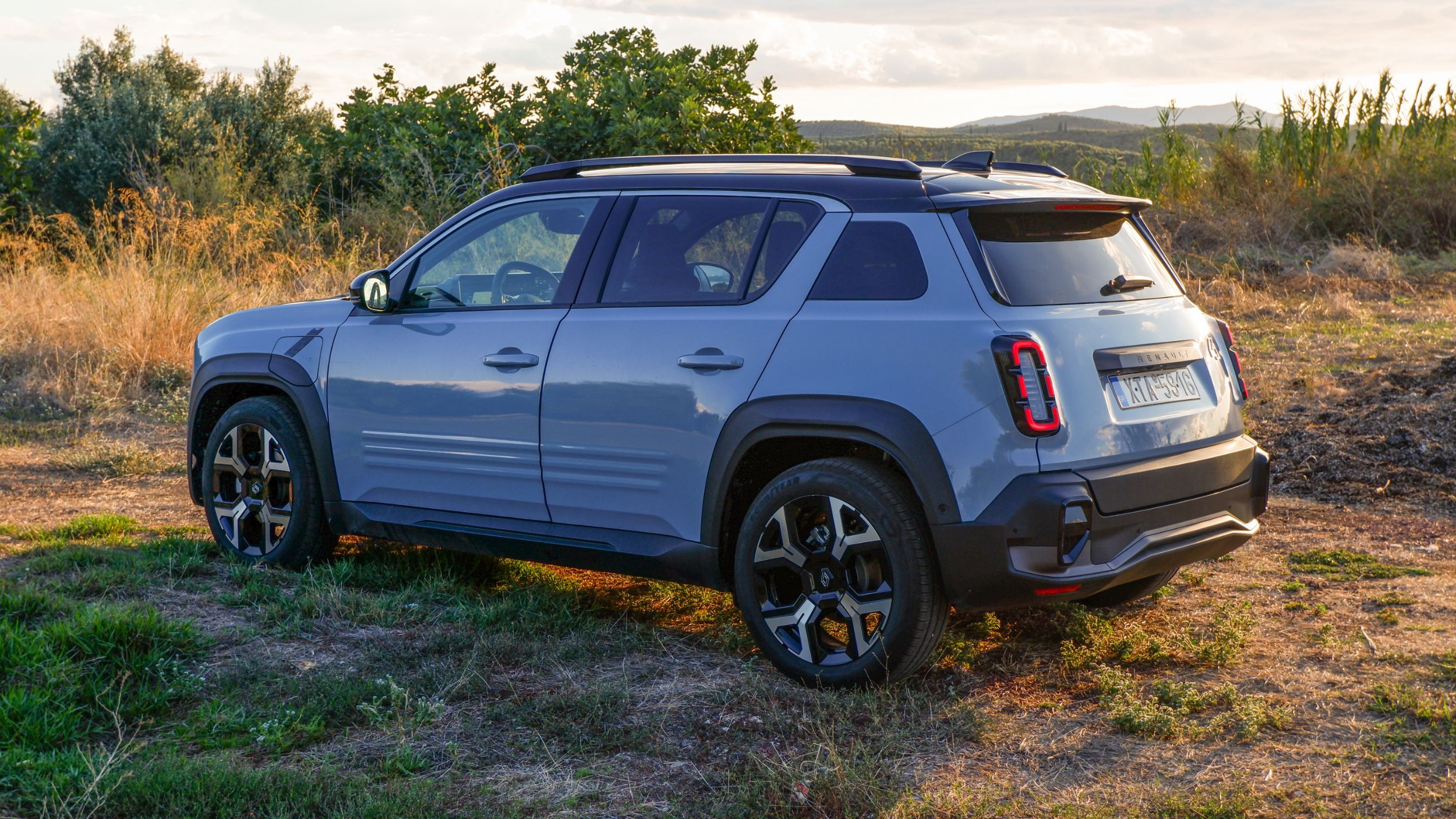
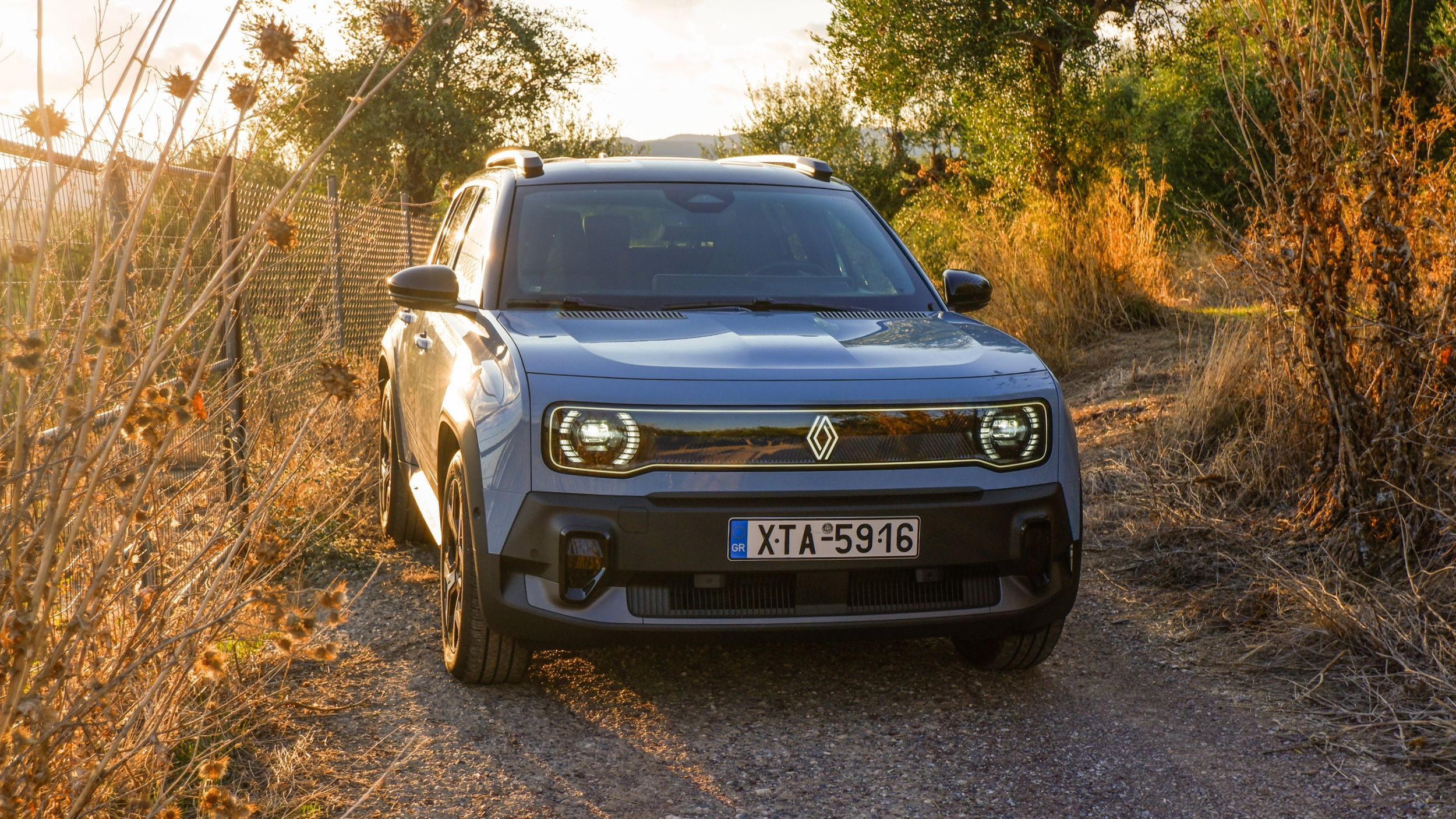
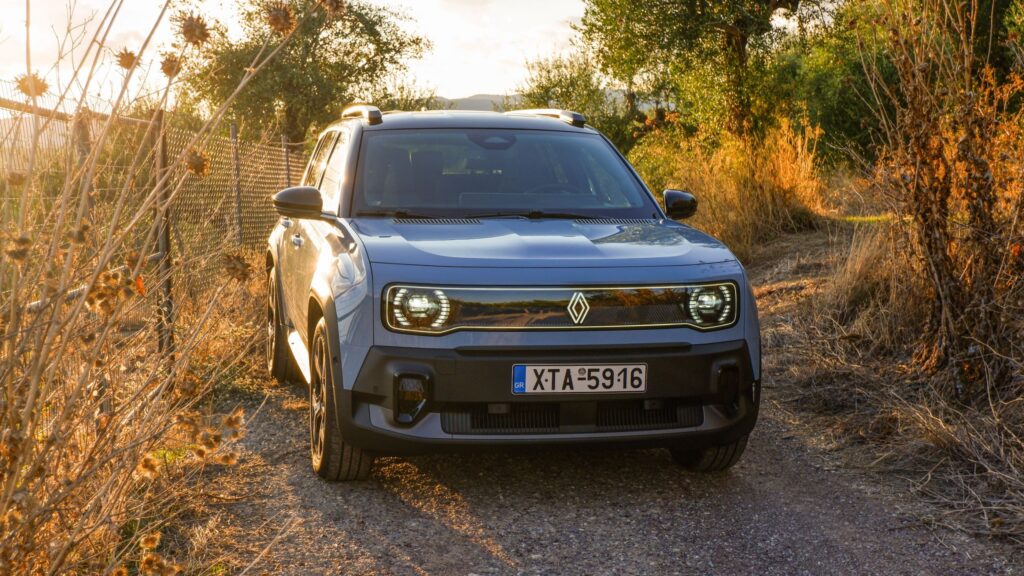
Despite the bump in dimensions and the jump into crossover territory, Renault designers managed to seamlessly integrate multiple styling references to the original. The R4 might not be as attractive as the R5, but it still turns heads on the road thanks to its retro yet fresh appearance.
More: Renault’s R4 Concept Just Became A Beach Buggy That Moonlights As A Pickup
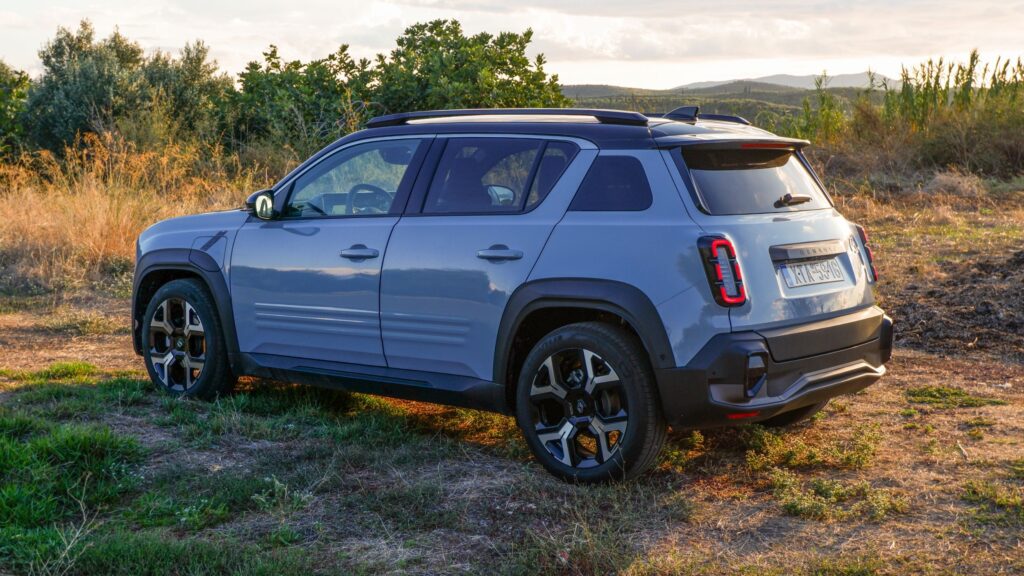
Highlights include the tastefully illuminated grille integrating the semi-circular LED headlights, the protective cladding on the bumpers, the squared-off wheel arches, the sculpted lines on the profile, and the signature greenhouse. The pill-shaped LED taillights and black roof are reminiscent of the previous-gen Mini Countryman, but some of these features were taken from the classic 4L.
Modern Interior Design
Moving inside, the dashboard and and digital cockpit are carried over from the Renault 5 E-Tech. While the upper and lower sections are dominated by hard plastics, the fabric inserts on the dashboard and the door cards help improve the perceived quality.
Review: The 2026 Renault Austral Facelift Is Polished, But It Has A BMW-Sized Problem
The 10.1-inch infotainment display sits right in your face, but thankfully there’s a power button so you can switch it off when you’re driving at night. The Google-powered OpenR software is easy to use and responsive, although I did encounter a few Android Auto bugs during my time with it. The “Reno” AI assistant is also a bit annoying, popping up at random times.
Minor ergonomic issues include the volume buttons which are mounted on the top of the screen, even though there is a dedicated media stalk behind the steering wheel. Another thing that needs time to get used to is the position of the column-mounted gear selector, creating a stalk-heavy setup. On the bright side, the physical controls on the center console are a wonderful touch, giving you immediate access to the climate settings.
Space And Equipment
The real advantage of the R4 over the R5 lies in passenger accommodation thanks to the longer wheelbase and the taller roofline. Rear-seat headroom is generous and knee room is adequate, while the rear bench can accommodate three adults for short trips.
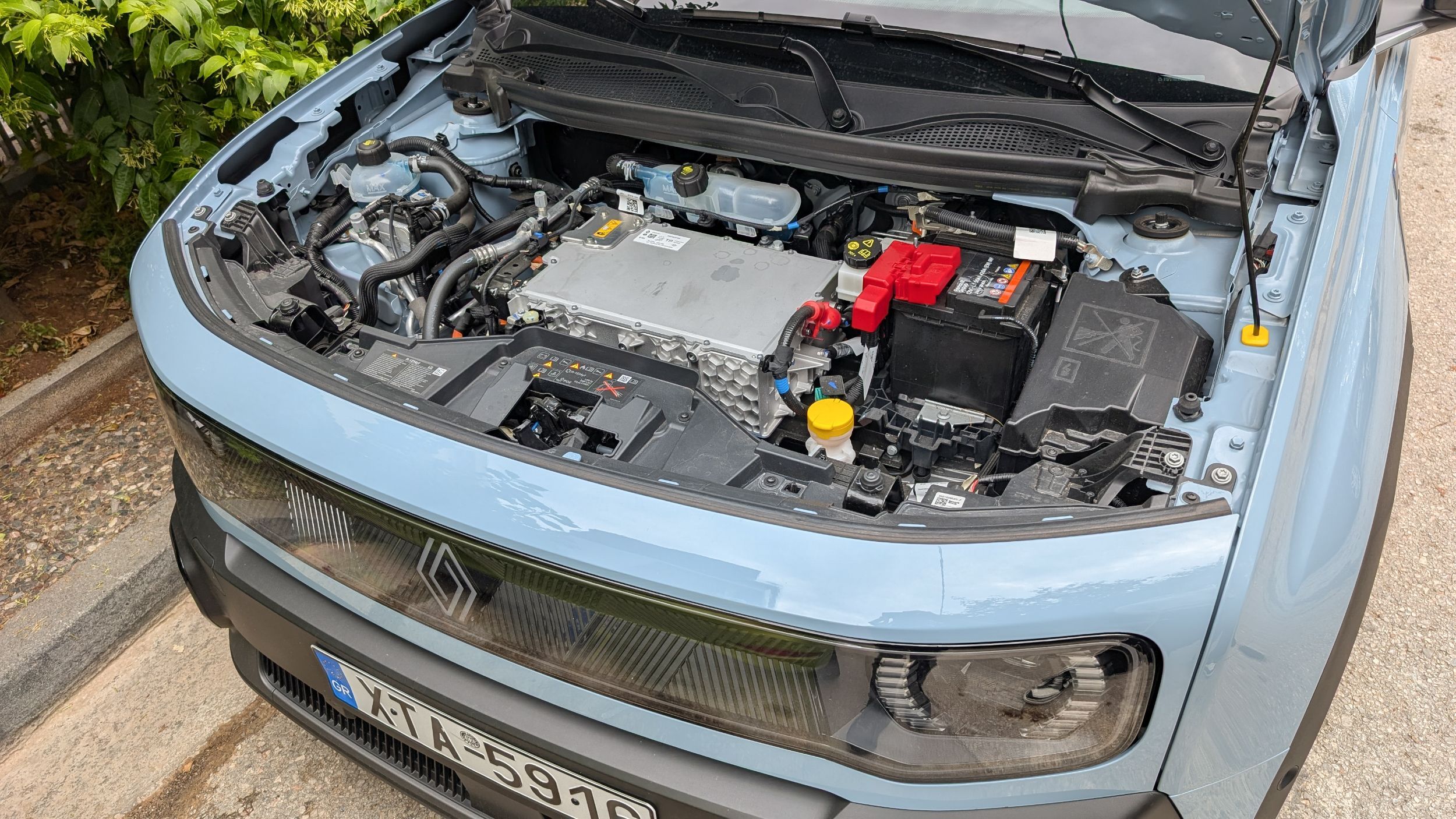
The 420 lt (14.8 cubic feet) boot is large enough for a vehicle of its size, although it would be nice to have a dedicated compartment for the charging cables since the electric motor occupies all of the space under the hood.
More: Renault’s E-Space Concept Reboots A Minivan Icon
I was also impressed with the standard equipment. Our mid-spec Techno trim comes with 18-inch alloy wheels, roof rails, the digital cockpit, a six speaker audio system, a wireless charging pad, four USB-C outlets, auto climate control, a hands-free tailgate, auto-folding mirrors, Multi-Sense drive modes, and a comprehensive ADAS suite with auto parking.
The only reason to upgrade to the flagship Iconic is if you really need the heated steering wheel and heated seats with a massaging function for the driver and synthetic leather upholstery. And the only important omission from entire lineup is rear climate vents, although this is common amongst B-SUVs.
Superb Road Manners
Believe it or not, the greatest strength of the R4 E-Tech is how it drives. The EV-dedicated AmpR Small architecture is a lot more sophisticated than its size suggests. The superb suspension setup with a standard multi-link rear axle is only slightly softer than the R5, enough to make it a bit more comfortable without loosing its sharpness.
More: Can Pixels Beat Nostalgia? We Compared Nissan’s New Sub-€20k EV To Its Renault Twin Up Close
On B-roads, the R4 drives like more like a hatchback than a crossover, keeping its composure in the corners with almost no body roll. At full throttle and in slippery conditions the FWD setup might struggle to put the power on the road, causing torque steer. The steering might not be as communicative as in the Ford Puma, but it is quick and direct. In the Sport mode, it gets a slightly more weighted feel, making the driving experience more enjoyable than your average EV.
At the same time, the R4 offers a refined and quiet ride on the highway, while being zippy and agile in urban environments. Thankfully, Renault listened to our feedback and added a One Pedal drive function making life easier in everyday traffic.
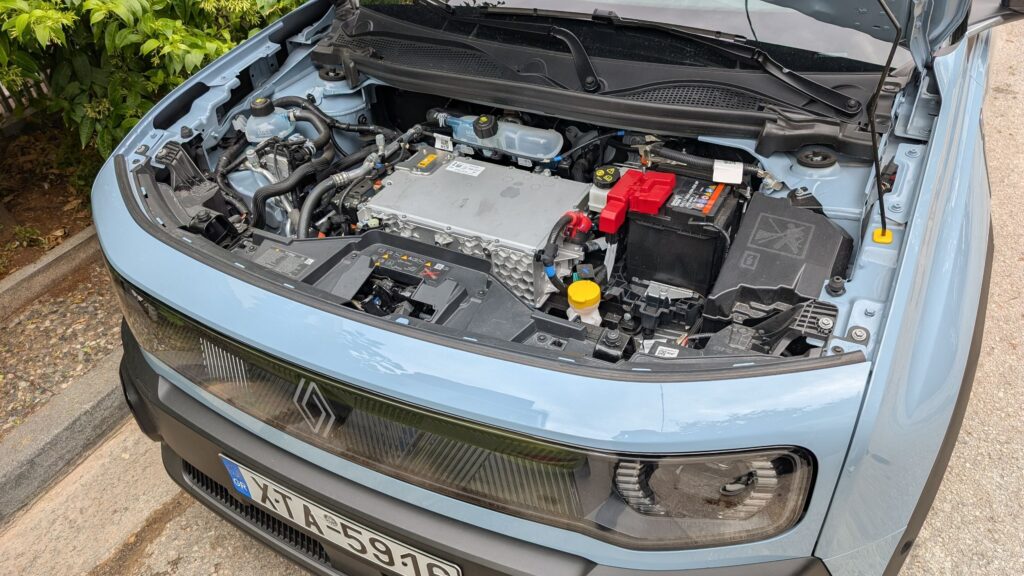
Our press car featured the flagship powertrain with a front-mounted electric motor producing 148 hp (110 kW / 150 PS), accelerating from 0-100 km/h (0-62 mph) in 8.2 seconds.
In reality, the R4 feels a lot faster than the number suggests, especially within the 40-120 km/h (25-75 mph) threshold. The Sport mode unlocks full power, the Comfort is slightly smoother in its response, while the Eco significantly limits the output for the sake of efficiency making it perfect for the city.
In terms of range, the R4 E-Tech with the 52 kWh battery can easily exceed 400 km (250 miles) in suburban and city traffic, meaning that the average driver will be charging it less often than once per week. However, if you are constantly driving at highway speeds, real-world range drops closer to 250-280 km (155-186 miles). Thankfully, the battery can replenish 15-80% of its energy in roughly half an hour when connected to a 100 kW DC charger. In my case, I only had to stop for 10-15 minutes to complete a 260 km (160-mile) journey.

For buyers seeking a lower price point, Renault also offers a cheaper version with a 40 kWh battery offering a 310 km (193 mile) range, and a 118 hp (88 kW / 120 PS) electric motor. By the end of the year, the lineup will grow further with an entry-level Jogging variant featuring an even smaller 37 kWh battery, 305 km (190 miles) of range, and an 107 hp (80 kW / 110 PS) electric motor.
More: Alpine’s Hot Hatch Just Became More Stylish With A Simple Trick
Still, based on my experience with the 52 kWh battery, I wouldn’t recommend opting for the smaller units if you intend to use the R4 as a family hauler or outside the city walls. Fortunately, the 2027 model year updates have increased the range of the flagship variant to 415 km (256 miles). Overall, I believe that the R4 would still benefit from the addition of a longer-range battery option later in the product cycle.
As for a potential dual-motor AWD option like the one offered by the rival Kia EV3, it would certainly make the R4 more suitable for all-weather adventures, although there’s no indication there will ever be one. After all, even the larger Megane E-Tech and Scenic E-Tech EVs are exclusively available with FWD setups despite riding on the AWD-compatible AmpR Medium architecture.
Pricing And Rivals
We tested the Renault 4 E-Tech in Greece, where it is priced from €28,900 ($32,400) for the base 40 kWh Evolution 120 PS model – dropping to as little as €24,400 ($27,300) when you account for the local EV subsidies and scrappage benefit. This is only €2,000 ($2,200) more expensive than the smaller Renault 5 E-Tech hatchback with the same powertrain, making it a good deal.
More: Renault 8 Gordini Is Back As A Bold Electric Coupe With Rally Heritage
Stepping up to the larger 52 kWh battery with 150 PS brings the entry point to €33,500 ($37,500) before subsidies for the Evolution trim. Our mid-spec Techno retains at €35,500 ($39,800), while the flagship Iconic tops out at €37,500 ($42,000). Finally, the Plein Sud canvas roof adds a €1,200 ($1,300) premium.
Key rivals in the crowded subcompact electric SUV segment include the Peugeot E-2008, Ford Puma Gen-E, Kia EV2 and EV3, Jeep Avenger Electric, Mini Aceman, Fiat 600e, as well as the budget-conscious and family-friendly Citroën ë-C3 Aircross.
More: Renault Rafale Hypnotic Is The Brand’s Most Expensive SUV To Date
Besides EVs, the model is also facing competition from numerous well-established hybrid and ICE alternatives like the super-popular Toyota Yaris Cross and the Dacia Duster. Another option is Renault Captur sibling which starts from as little as €20,900 ($23,400) for the cheapest LPG/gasoline version and from €24,500 ($27,500) for the self-charging hybrid.
Verdict
The Renault 4 E-Tech does a great job in expanding the charm of the closely-related R5 hatchback by adding genuine day-to-day practicality without sacrificing much of its fun-to-drive character. While a longer-range battery option would have made it even more desirable, it already stands out as one of the most complete subcompact electric crossovers.
The combination of eye-catching looks with a generous equipment, and a superb chassis setup for the standards of the segment, makes the R4 E-Tech a compelling case for being the best mainstream retro EV on the market. Too bad it’s availability is currently limited to Europe and the UK.