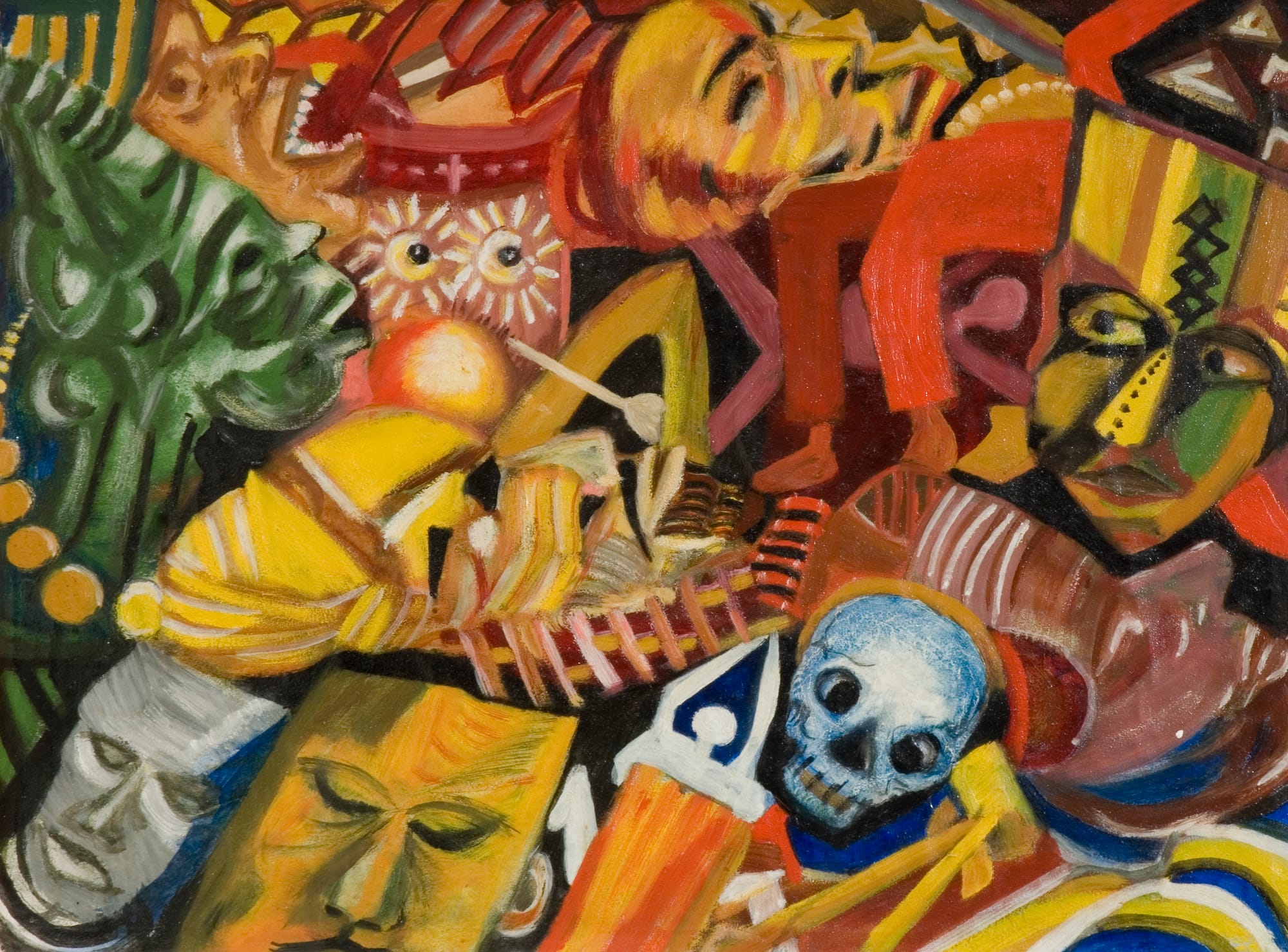
LONDON — In October 1960, Nigerian artist Uche Okeke (1933–2016) boldly declared the beginning of a new era of independence. A member of the radical Zaria Art Society, which promoted local visual traditions over British artistic teaching, his excitement about the defining role artists would play in this new postcolonial world was palpable: “This is our renaissance era!”
This revolutionary thrill can be felt throughout the explosion of works that emerged during this pivotal moment, as Nigeria charted its course to independence and beyond. Nigerian Modernism, at London’s Tate Modern, captures the exhilaration of this moment, but sometimes stops short of providing sufficient historical backing to explain just how radical it was. The first show of its kind in the United Kingdom, it offers an ambitious, if at times uneven, look at how Nigeria’s artists forged a collective postcolonial identity across the 20th century. This is no easy task: Nigerian modernism was not, as the opening placard reminds us, a single movement, but a variety of responses to the nation’s shifting cultural and political identity.
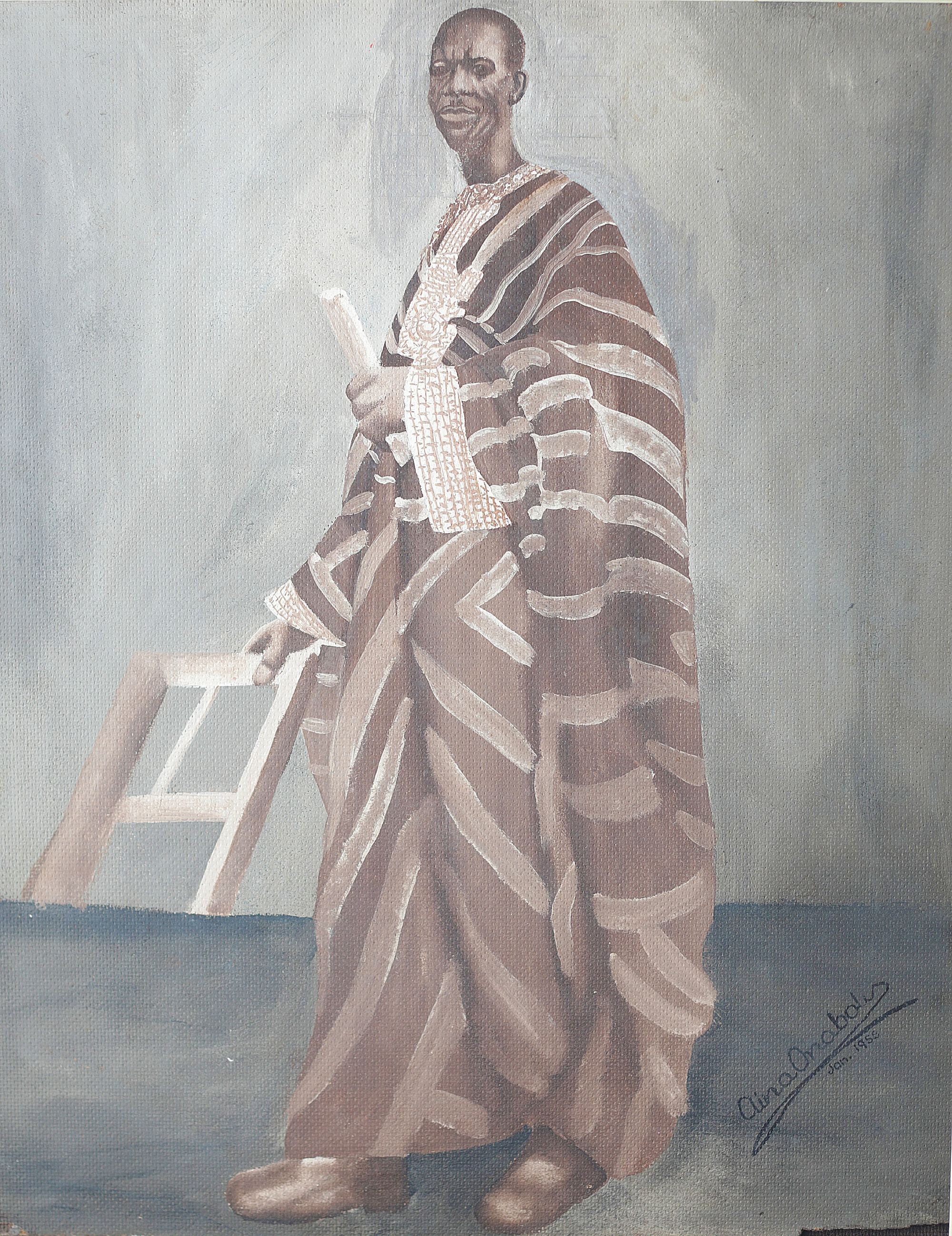
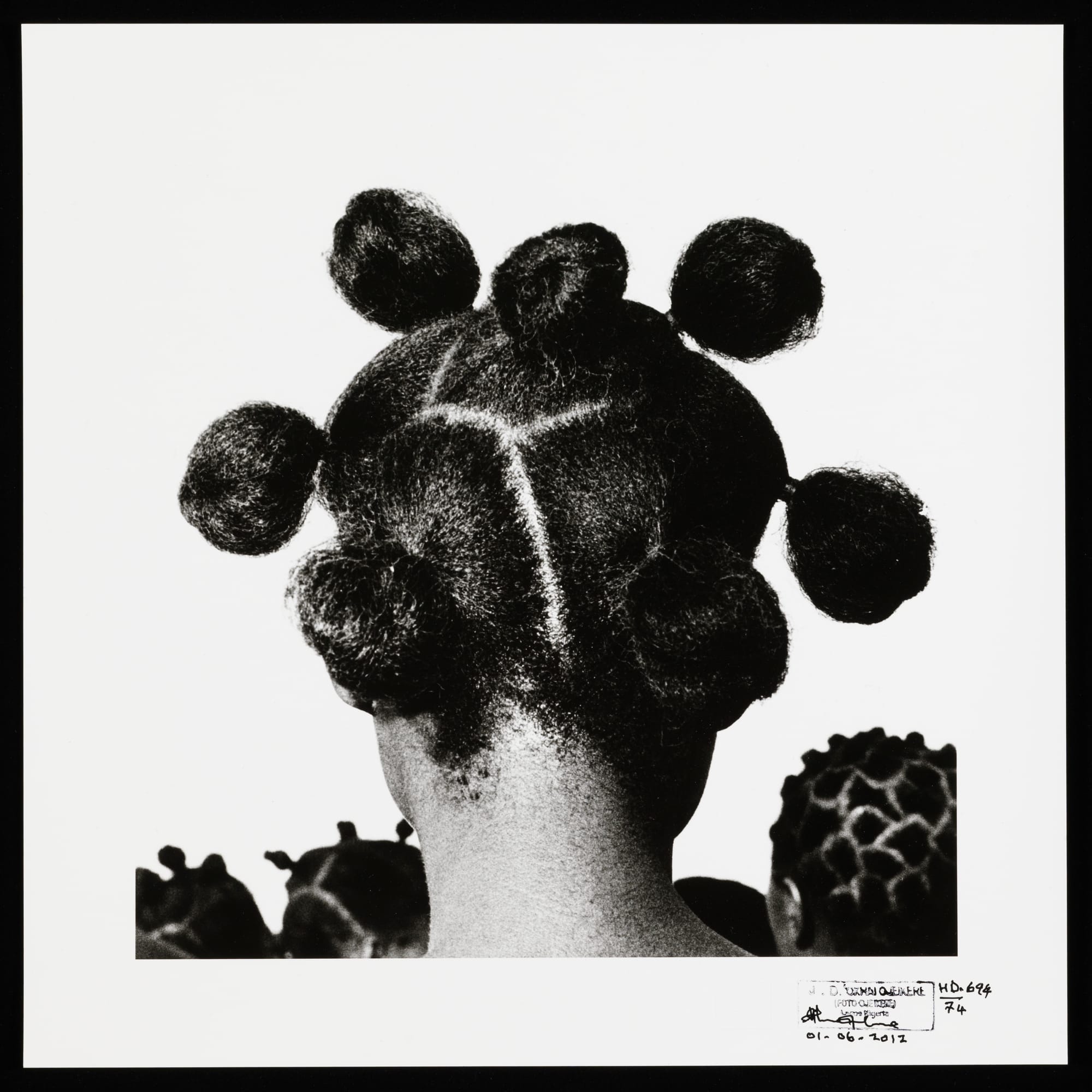
Left: Aina Onabolu, “Portrait of an African Man” (1955) (© Aina Onabolu; courtesy Yemisi Shyllon Museum of Art, Pan-Atlantic University); right: J.D. Okhai Ojeikere, “Untitled (Mkpuk Eba)” (1974/2012)(© reserved)
The show opens with the works of Aina Onabolu (1882–1963), who, in 1923, created a new art curriculum across several secondary schools in Eko (precolonial Lagos). A triptych of oil paintings depicting Nigerian elites demonstrates one early attempt to forge a different, if hybrid, artistic identity: They bear the hallmarks of academic European art in terms of color, perspective, and form, but their subjects are distinctly Nigerian.
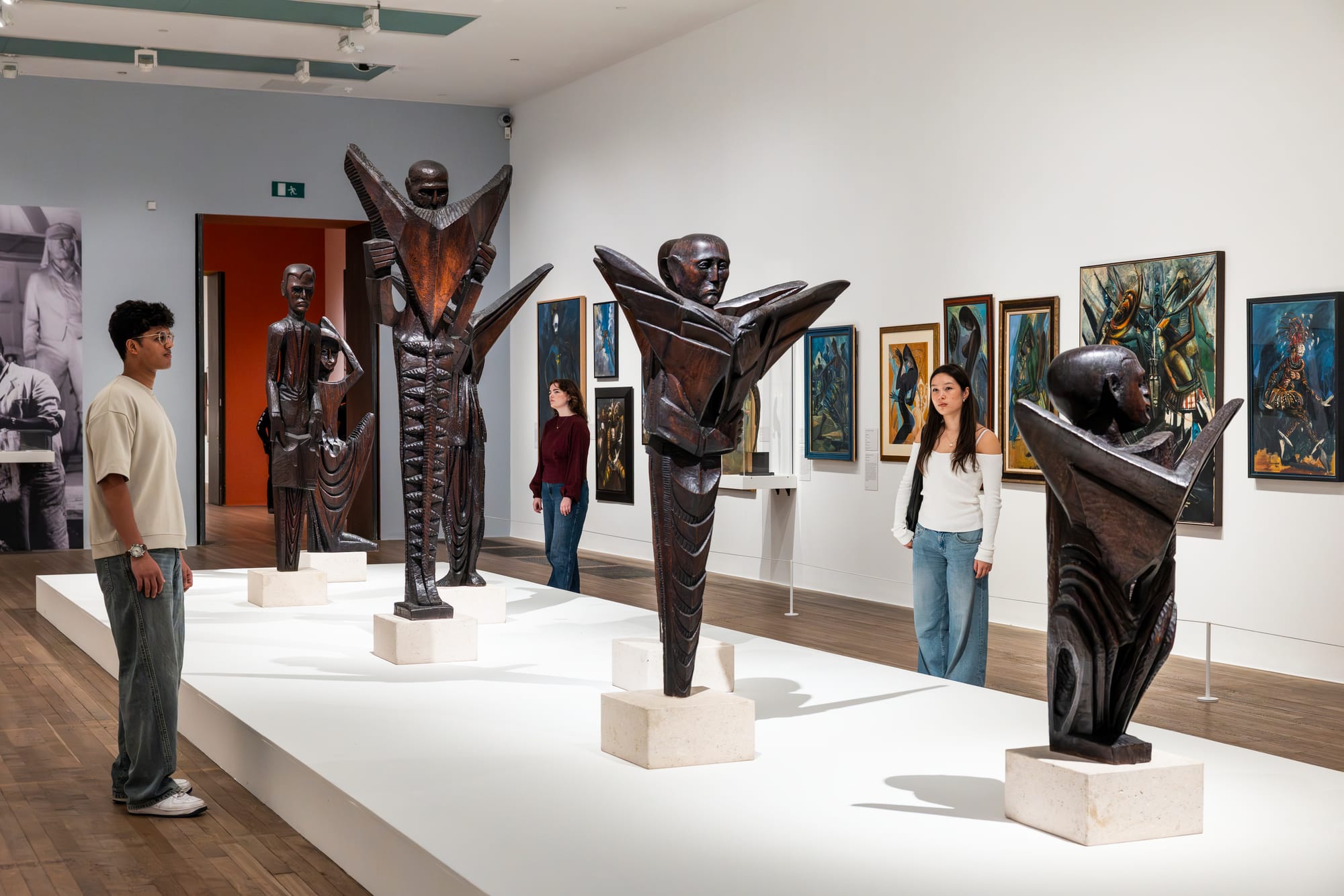
The bright embers of these first few works become a roaring fire in the second room, dedicated to Benedict Enwonwu (1917–94). The first African modernist to gain international recognition, his staggering panoply of work blends the Igbo sculptural traditions inherited from his father and his own quest for a modern cultural idiom. Through oil paintings and gouache works, he depicts Igbo concepts of femininity through sinuous, confident curves (“Black Culture,” 1986) and powerful spirit masquerade figures, like the ethereally graceful, white-masked Agbogho Mmuo (“The Dancer,” 1962). These are juxtaposed with somber paintings with almost claustrophobic brushstrokes like “Storm over Biafra” (1972), painted after Enwonwu fled Biafra during the Civil War of 1967–70. Dividing the space are a series of monumental wooden sculptures Enwonwu was commissioned to create at a peak in his career in 1961 for the new headquarters of the British tabloid the Daily Mirror. These combine Igbo hallmarks, including the carving of slender, monolithic figures with symbolic postures out of African hardwood, and contemporary details, such as the newspapers the figures hold.
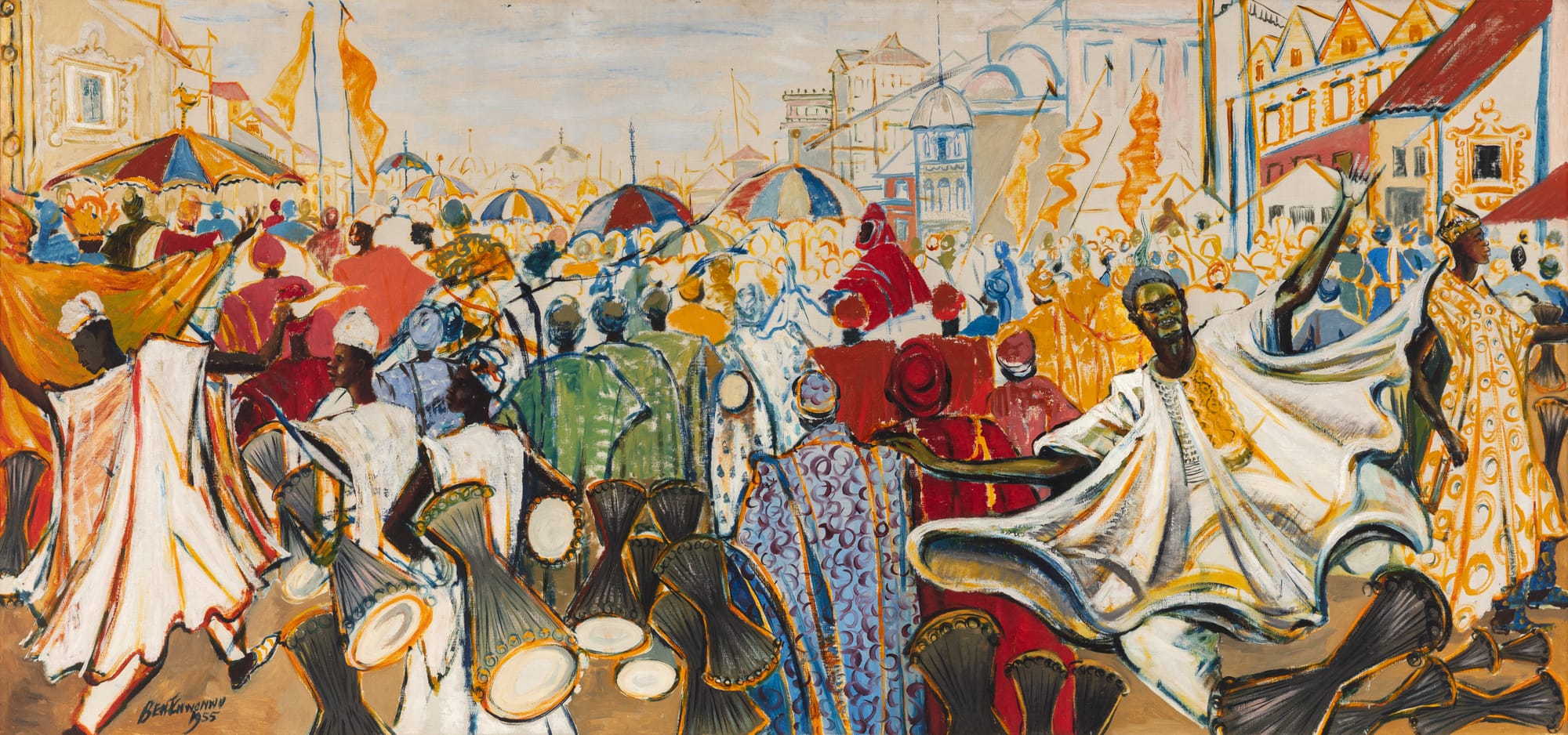
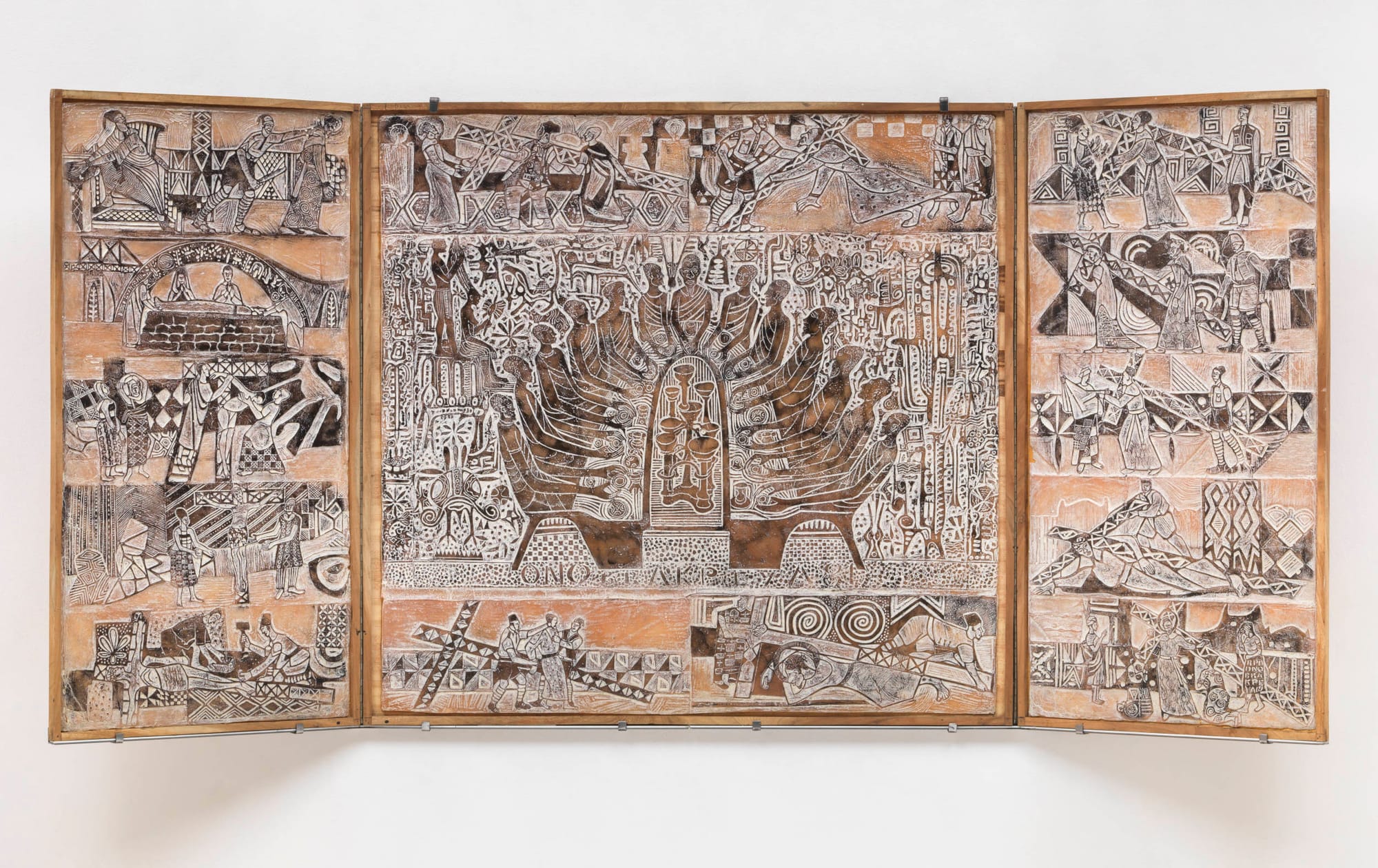
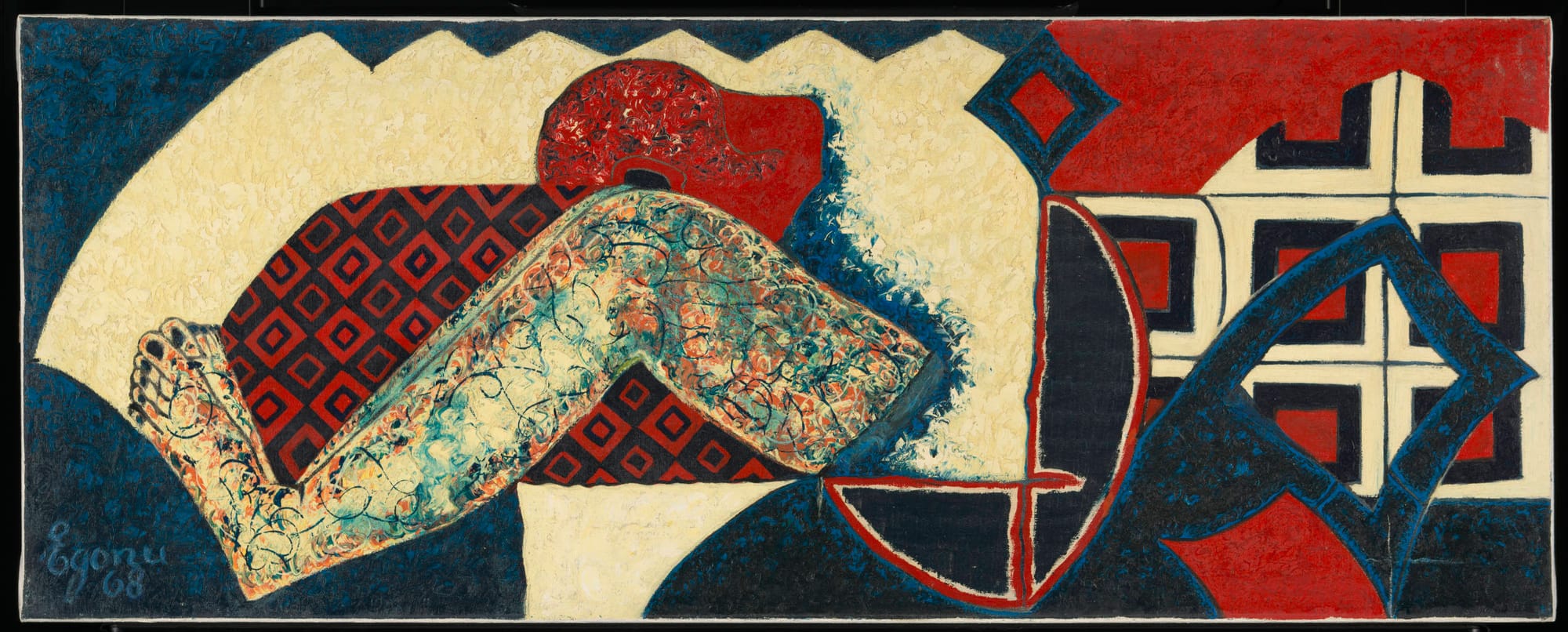
This desire to break traditions and create something vibrant and new, befitting a post-independence country, runs through the showcase of the Zaria Art Society’s works. Jimo Akolo’s (1935–2023) geometric design of “Fulani Horsemen” (1962), with its bold linework and colors, looks like a cross between an Islamic bas-relief and an acid-house album cover. Clara Etso Ugbodaga-Ngu’s (1928–2003) “Yoruba Palm Wine Seller” (1963), in contrast, uses soft and sensuous tones to depict the economic activity of women in Southern Nigeria, a theme she consistently focused on in her work.
But even as the exhibition spotlights some of the most impactful figures of Nigerian modernism, it chooses breadth and quantity over detail and explanation. Had the exhibition devoted more time and space to explaining the cultural heritage these artists drew from (Igbo, Hausa, Yoruba, Christian, Islamic), it would’ve been a tour de force. As it stands, we are given a dizzying and somewhat overwhelming view of the grand tapestry of Nigerian Modernism without a clear understanding of its threads.
Overall, Nigerian Modernism is an ambitious dive into this exhilaratingly creative and fascinatingly liminal cultural period in Nigeria’s history, even if it sometimes leaves you struggling to keep afloat.
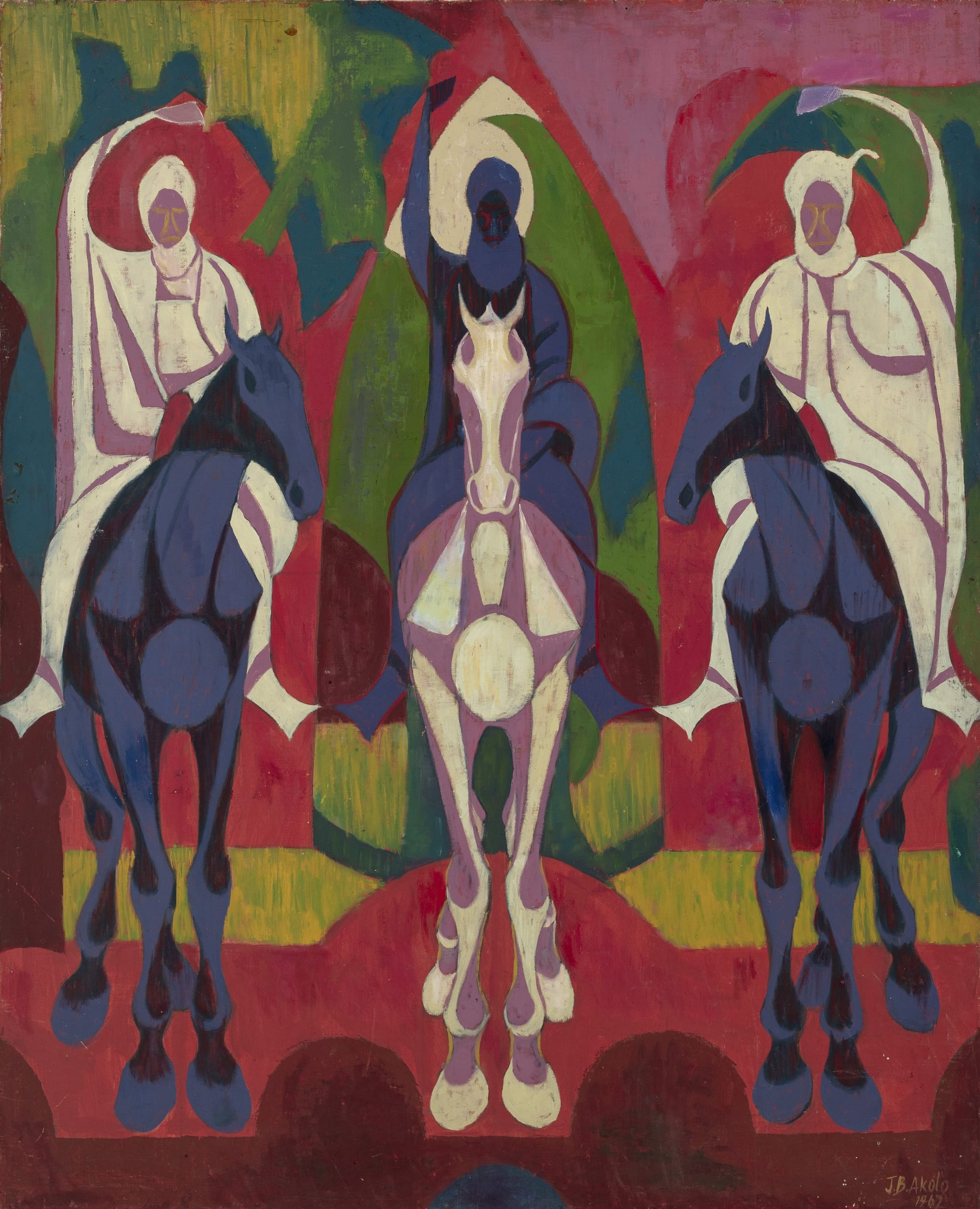
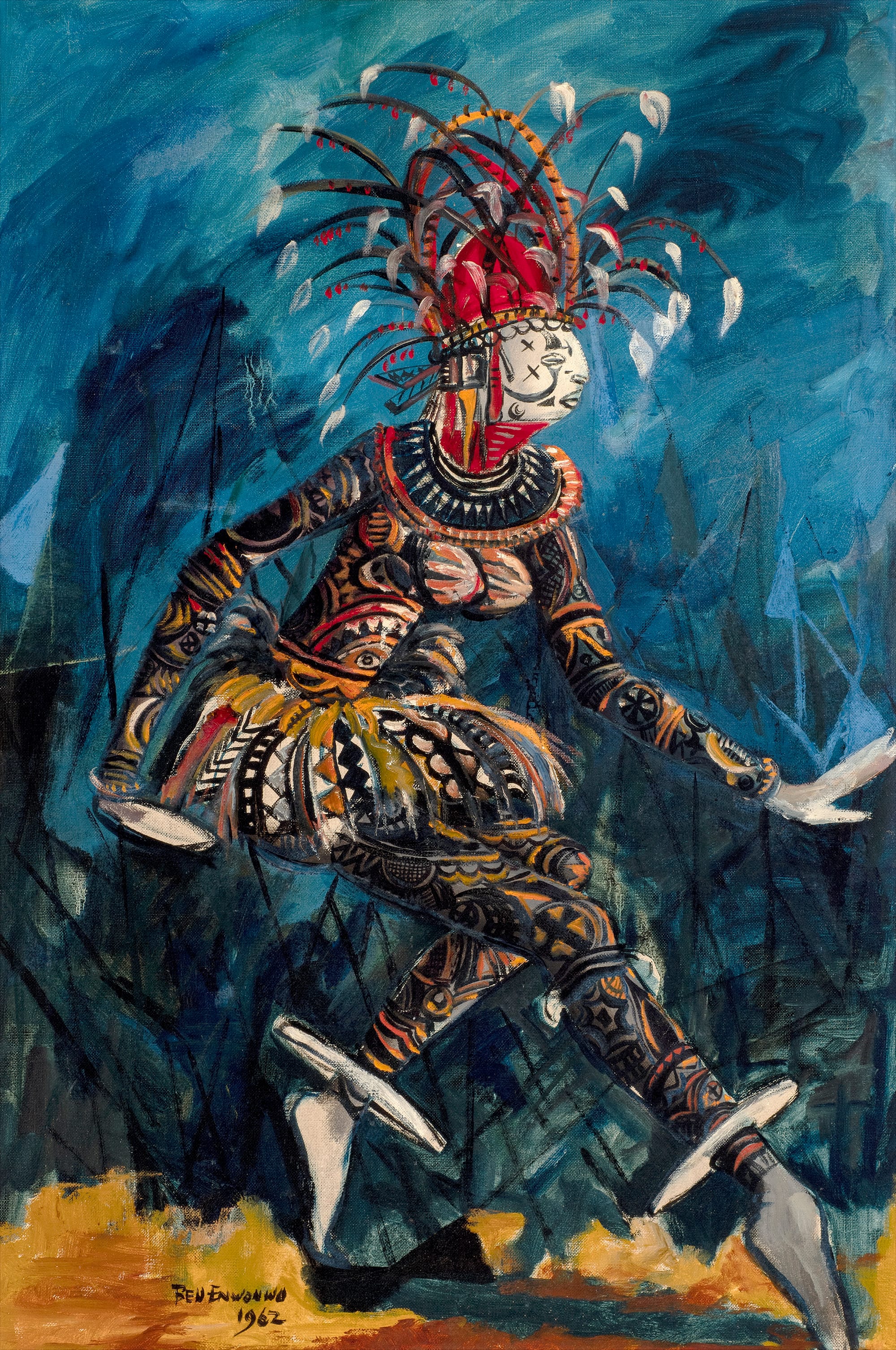
Left: Jimo Akolo, “Fulani Horsemen” (1962)(© Reserved; courtesy Bristol Museum and Art Gallery); right: Ben Enwonwu, “The Dancer (Agbogho Mmuo – Maiden Spirit Mask)” (1962) (© Ben Enwonwu Foundation, courtesy Ben Uri Gallery & Museum)
Nigerian Modernism continues at Tate Modern (Bankside, London) through May 10. The exhibition was curated by Osei Bonsu and Bilal Akkouche.