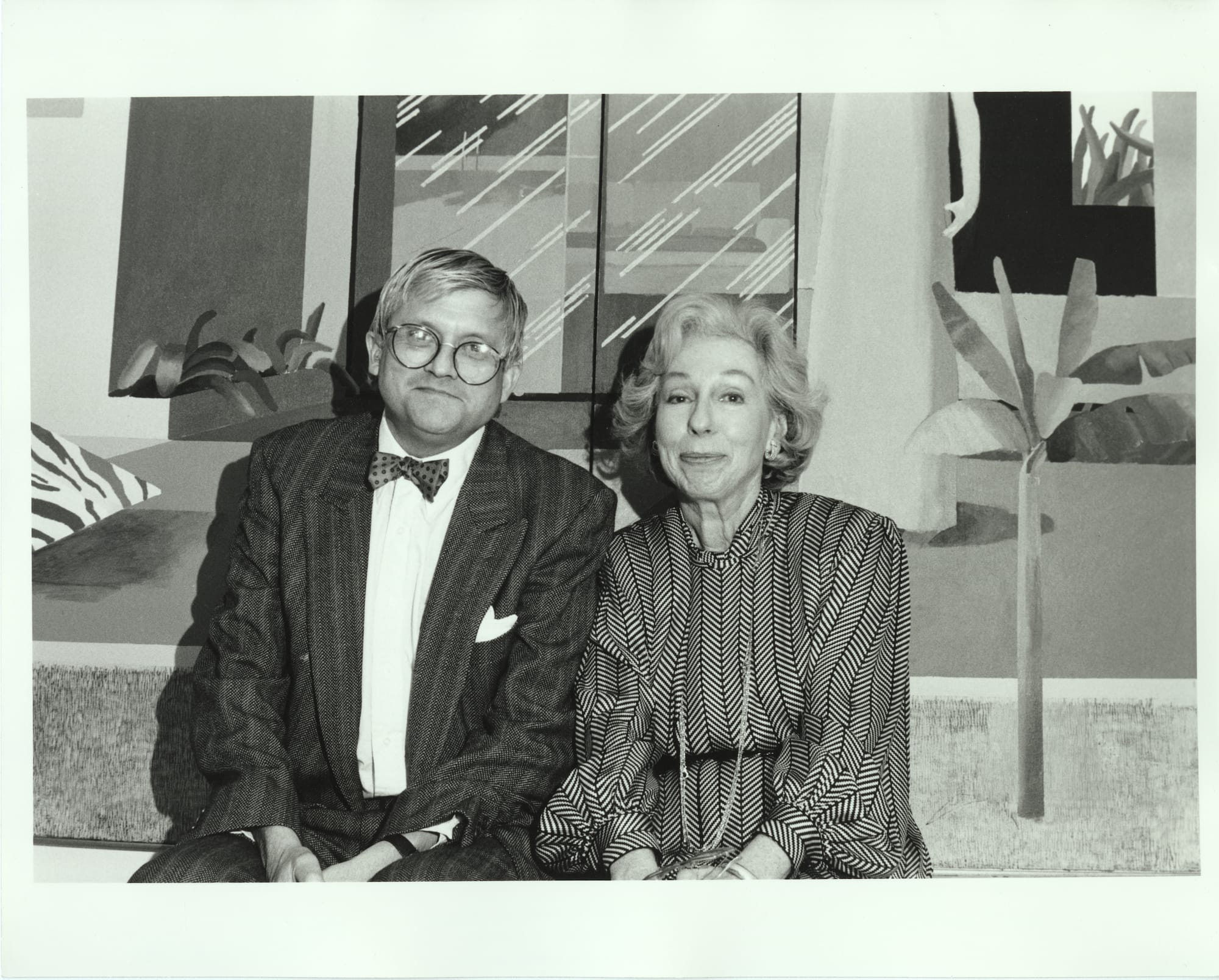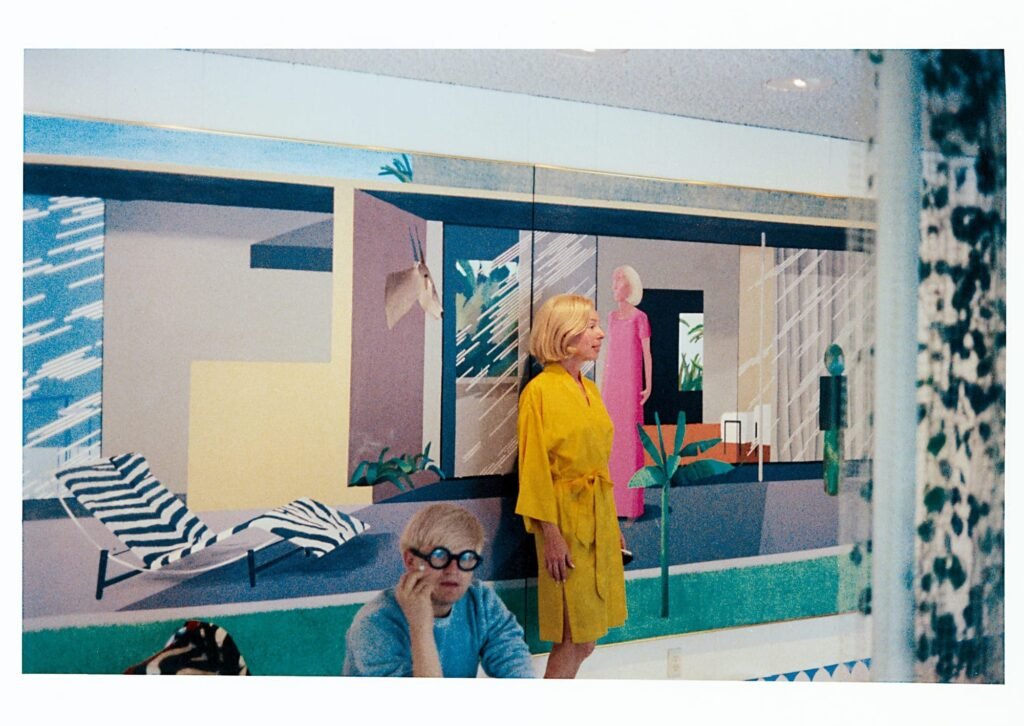
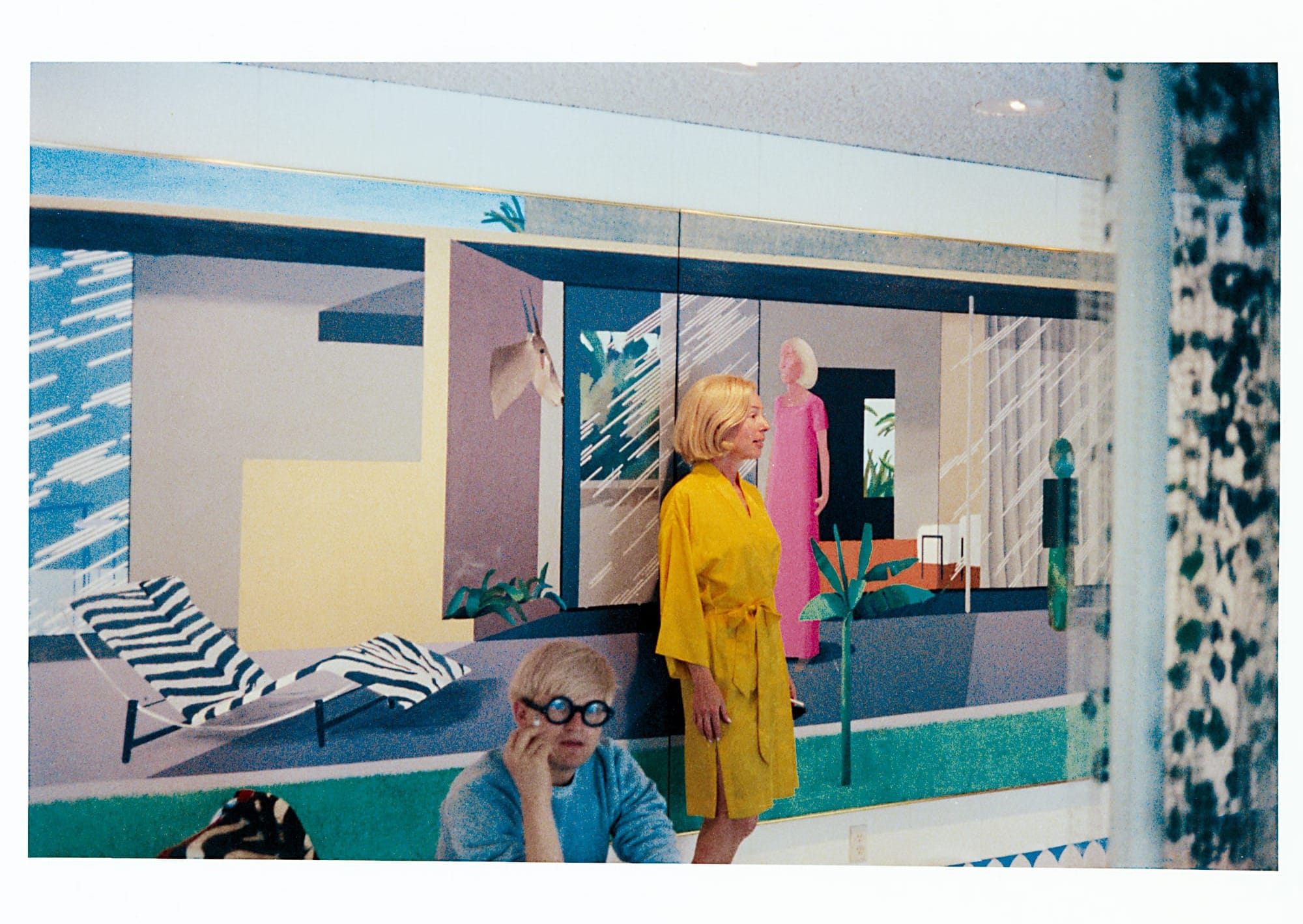
In the summer of 1966, David Hockney began work on one of his most iconic paintings: “Beverly Hills Housewife,” a portrait of the arts patron Betty Freeman. She is depicted on her garden patio in front of her sleek, modernist house, which is framed by strips of blue sky and green lawn. A few status symbols surround her — a William Turnbull sculpture, a zebra-skin lounge designed by Le Corbusier, and a mounted antelope head— but the focal point is Freeman in her bright pink dress, gazing wistfully beyond the confines of the canvas.
Critic and novelist James Cahill uses the painting as a jumping off point to expound on the intertwined lives of both artist and muse, as well as to provide a fragmentary snapshot of Los Angeles in the 1960s, in his new book. With The Beverly Hills Housewife: Hockney’s Californian Muse and the World Beyond the Pool (2026), Cahill bounces between formal analysis of the painting, historical anecdotes, and inferences about the broader culture, zigzagging as if driving across LA without a map. Some of the detours prove less relevant to his central narrative than others, but they are nonetheless diverting pit stops on a thoroughly engrossing journey about the friendship between two complex individuals who played formative roles in shaping LA’s cultural landscape.