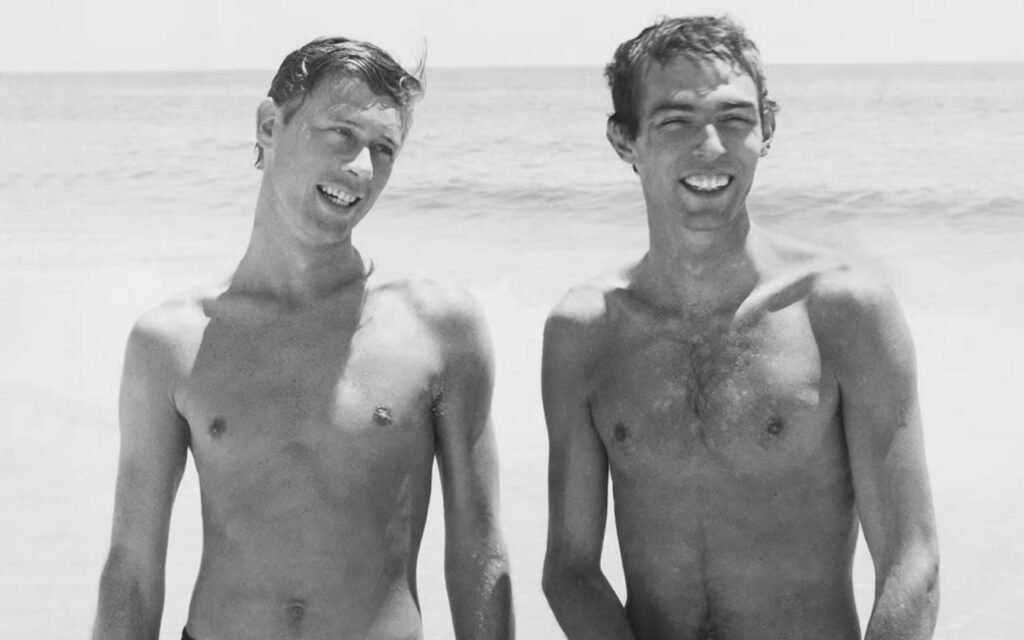
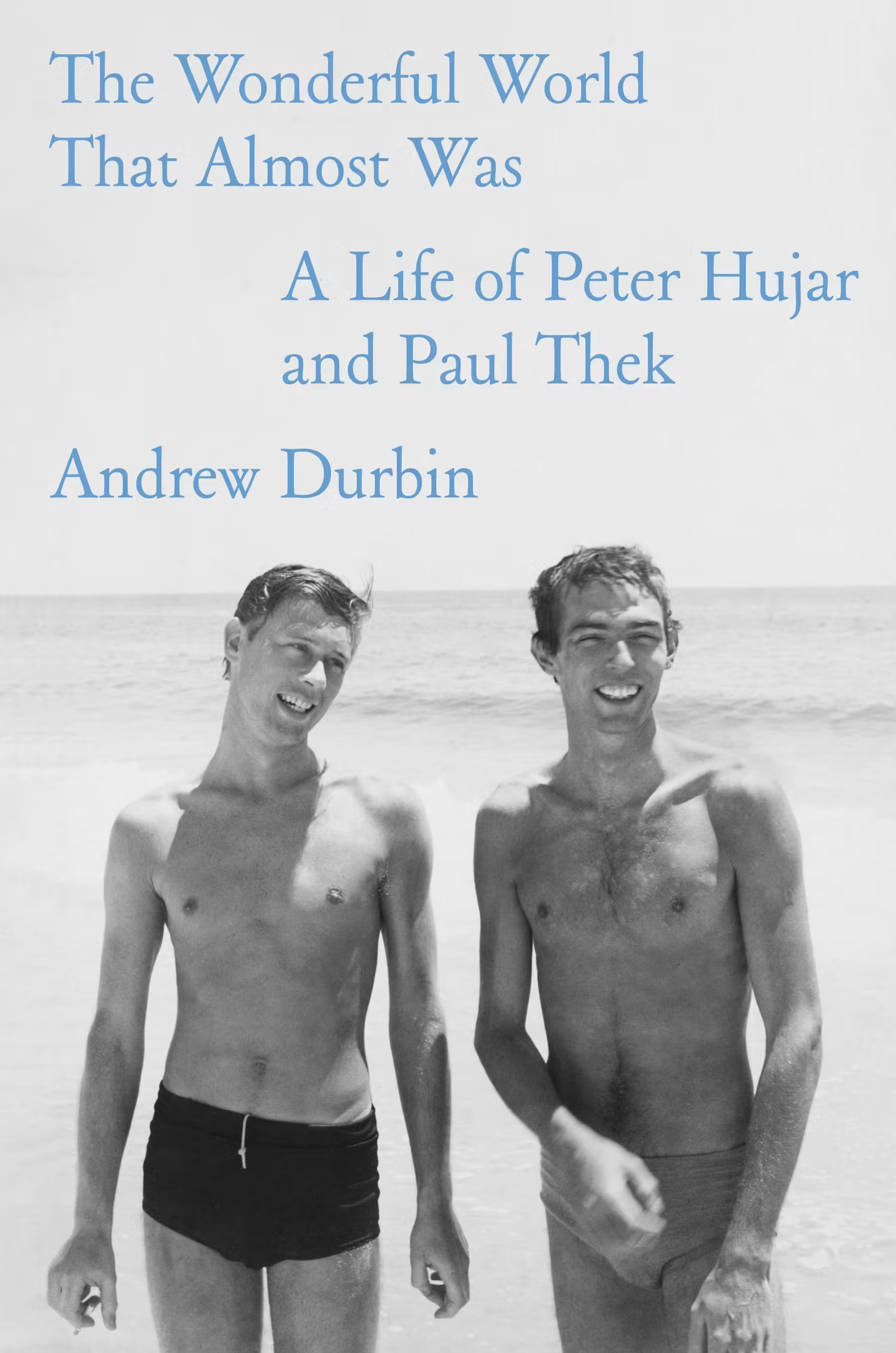
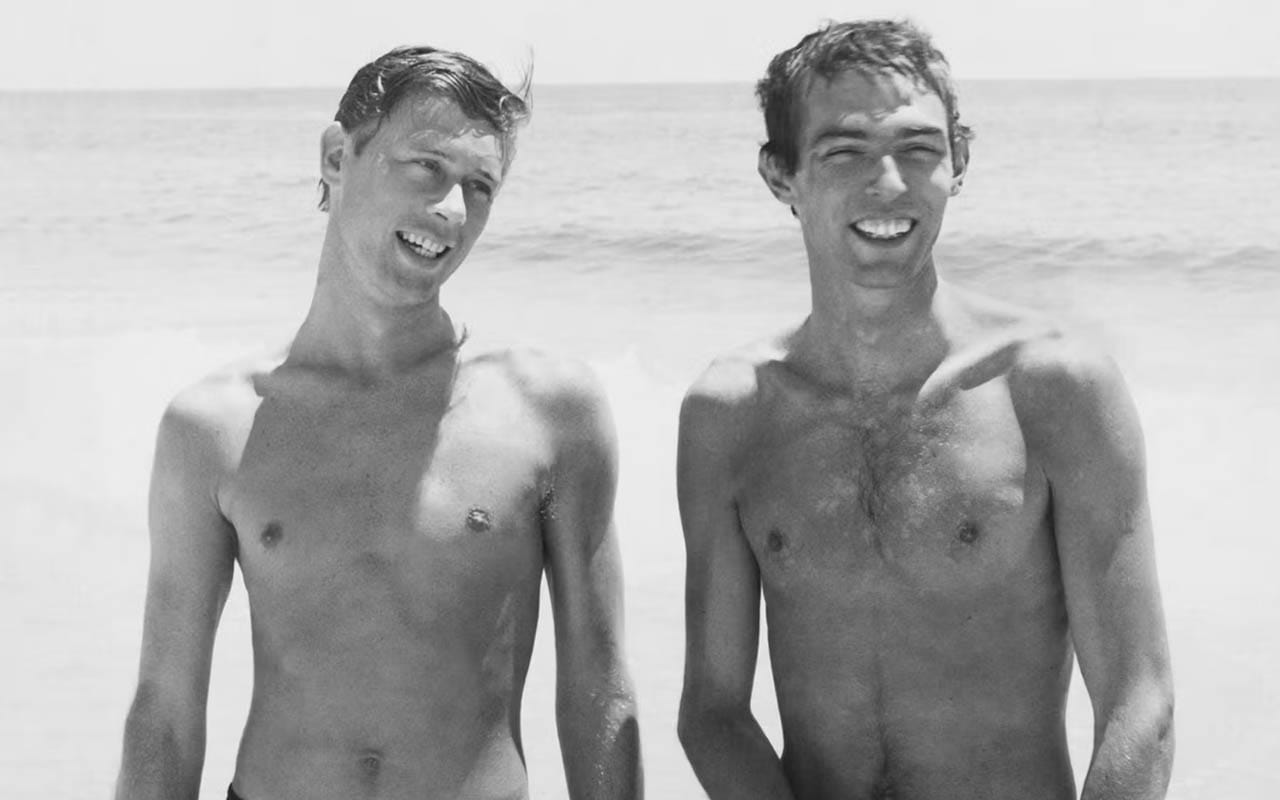
The late photographer Peter Hujar and visual artist Paul Thek keep showing up these days. From Alex Da Corte’s recreation of Paul Thek’s The Tomb for his excellent show at Matthew Marks’ New York gallery in late 2025, to the 2025 film Peter Hujar’s Day, along with forthcoming shows later this year at The Watermill Center and the Morgan Library, there is clearly a renewed interest in their work. And now we have Andrew Durbin’s thoughtfully rendered dual biography of these lovers and friends: The Wonderful World That Almost Was: A Life of Peter Hujar and Paul Thek.
Dual biographies are not a common thing. Nor is it common for biographies to skip the detail-dense recounting of the subjects’ forebears and early years. But the story is better for it. Paul Thek, born in 1933 in Brooklyn, and Peter Hujar, born in 1934 in New Jersey, first met in Florida early in their 20s, and though there is some degree of preamble, Durbin’s writing largely picks up around this moment. At that time, both men were early in their artistic careers, but neither was yet clear on which medium they would focus their energies on, and each was still looking for the inspiration that would drive them. This is a biography of two artists coming into being, witnessing each other, building careers, and moving through the complexities of a relationship that began as lovers, confidantes, and advocates, but shifted over time to include longing, resentment, and an inability to connect.
This is neither a happily-ever-after romance nor an entirely tragic tale, though both men died of AIDS in the late 1980s. Instead, it feels more grounded in daily reality, more nuanced and ever-changing, holding the full complexity of queer relations with care and understanding. As a dyke, I particularly cherished this portrait of queer entanglement characterized by duration and valences beyond the sexual or romantic. In lesbian and lesbian-adjacent culture, it’s a cliché that people will stay close with their exes, remaining wrapped up in each other’s lives after the sexual phase of their connection ends. By contrast, popular tropes surrounding gay men focus largely on sex, brevity, and unresolved desires for emotional intimacy. But nothing is that simple, and queer worlds are small, giving you no choice but to keep encountering the same people over and over. Queer art communities (both then and now) demand a world-building that is co-created, that witnesses itself in order to assert its own existence, and that gathers and shares resources. While a utopian vision could be read into that statement, there is also a deeply practical truth to it. And these two men were part of that truth.
Peter Hujar’s photographs are a record of his queer universe and relations. Even if you’re not sure you know his work, if you’ve spent time combing through queer history books or exhibits, you’ve likely seen his pictures. There’s his shot of Gay Liberation Front members, fists raised, running down Wooster Street in the 1970 poster entreating onlookers to “COME OUT!!”; his portrait of Susan Sontag lying on her back, the hint of a smile in her eyes, pensive but at ease; a dark-lipped, arms-draped Candy Darling on what would be her deathbed; or his searching portraits of lovers such as David Wojnarowicz and Thek. He was not only a master at portraiture, but also at printing. His finished prints carry contrast without starkness, diffused light that holds without isolating, and areas that might be white are instead filled with a creamy weight and texture evoking closeness and touch.
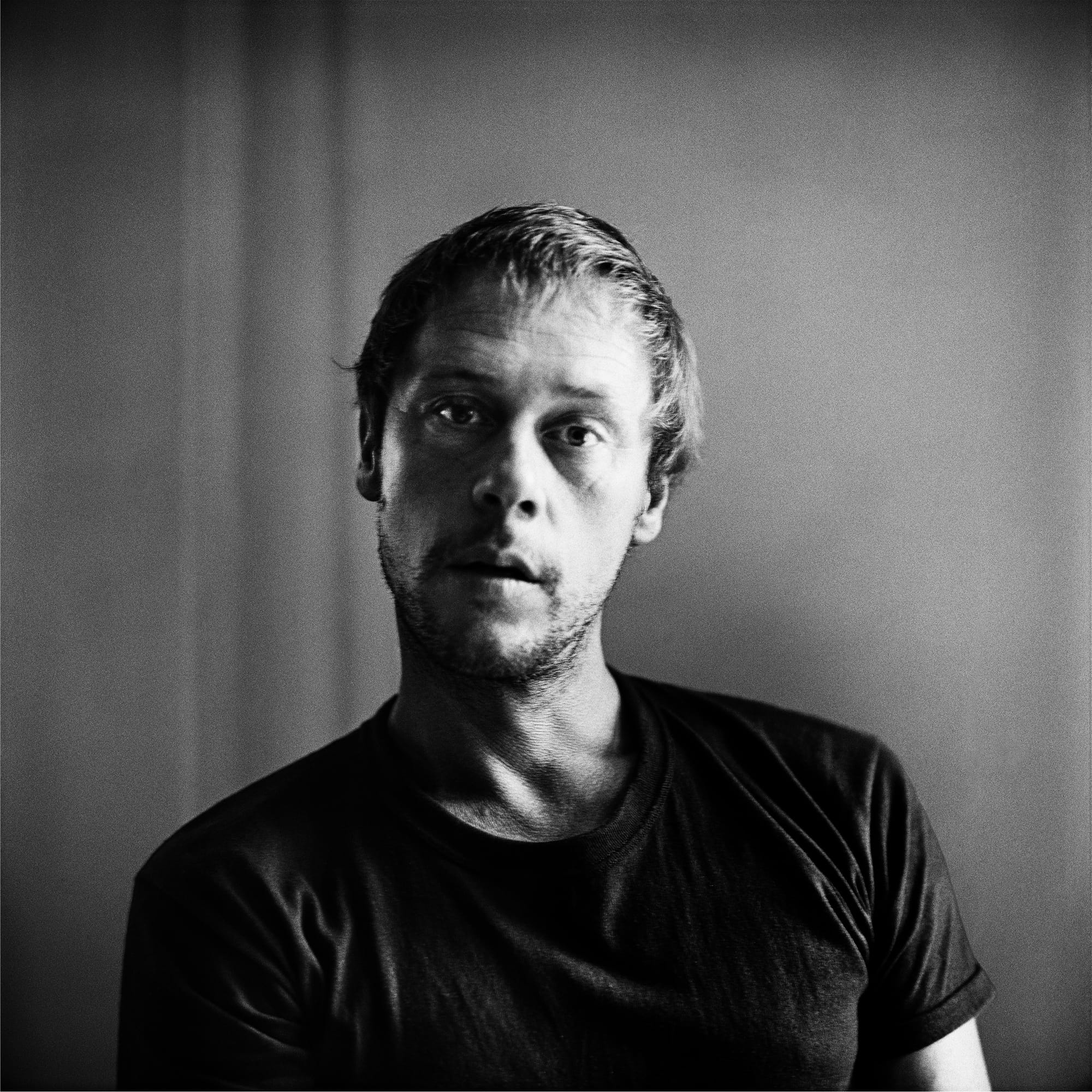
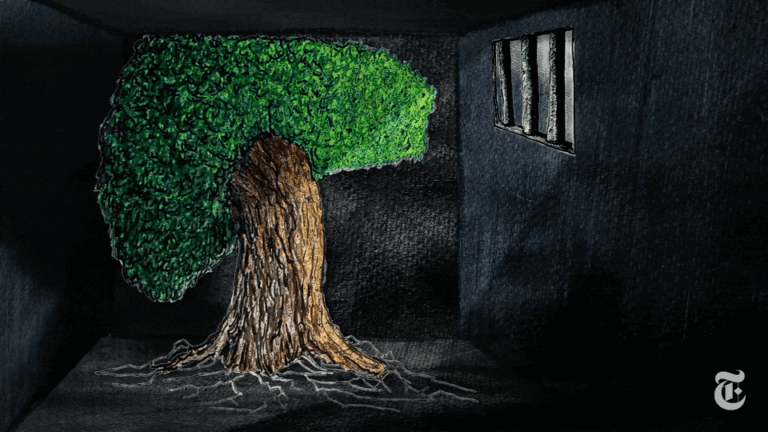
Thek’s work might be less familiar. As the artist Mike Kelley describes in the book, he “is known to makers of art and not to those who record it.” Thek’s most famous installation, The Tomb (1967), popularly referred to as “Death of a Hippie” at the time, in which a full cast of his body sits in both repose and decomposition, has been entirely lost. And the primary photos we have of him are those taken by Hujar. But Thek’s wide-ranging sculpture, drawing, painting, and installation practice, addressing mortality, the violence and contradictions of the times in which he lived, as well as religiosity, has received new attention in recent years.
While Durbin’s book demonstrates the importance of their relationship, it also reveals pivotal moments in their careers. Key among them was their 1963 visit to the Capuchin Catacombs in Palermo, Italy, where the remains of thousands of people are interred, including over one thousand of which have been mummified using a variety of techniques, many dressed in their own clothing and posed, seeming to greet visitors or awaiting an end to their sleep. Those familiar with Hujar’s work will know that images from the Catacombs are included in his 1976 photo book Portraits in Life and Death (re-issued in 2024 by Liveright Publishing), and it’s not hard to see how the visit informed Thek’s creations, particularly his Meat Pieces, interested as he was in both the “thingness” of our physical selves and the relation between religion and the body.
But beyond getting to spend time with the work and ideas of these two men, what moved me most was seeing the world they occupied and helped create, their failures and attempts, navigating their need to make money, their egos, and seeing how they were held by others. Rather than a romantic depiction, it felt loving and real. A particularly evocative moment came in the epilogue: learning of David Wojnarowicz’s visit to Thek on his deathbed, less than a year after Hujar’s passing, and the ways Wojnarowicz held these men’s lives and stories. As I see people in my own life and queer world witnessing and holding each other, it’s hard not to feel moved by just how important those gestures are, whether the person will one day end up in a biography or not.
The Wonderful World That Almost Was: A Life of Peter Hujar and Paul Thek (2026) by Andrew Durbin is published by Farrar, Straus and Giroux, and available online and in bookstores.