Research has found that at least one kind of negative messaging on roadway signage can actually increase crashes. One insurance company is taking the opposite approach with a new activation.
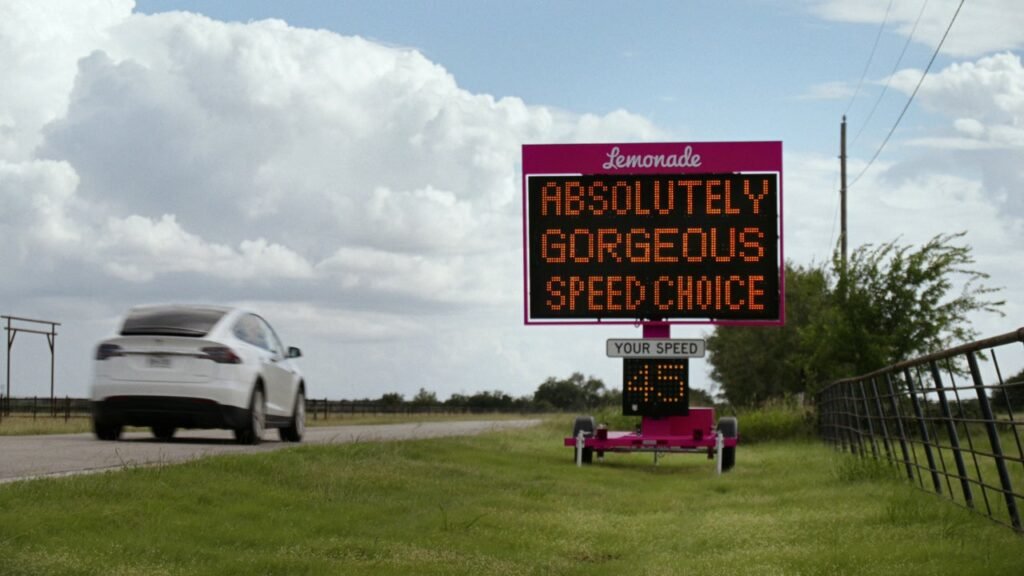
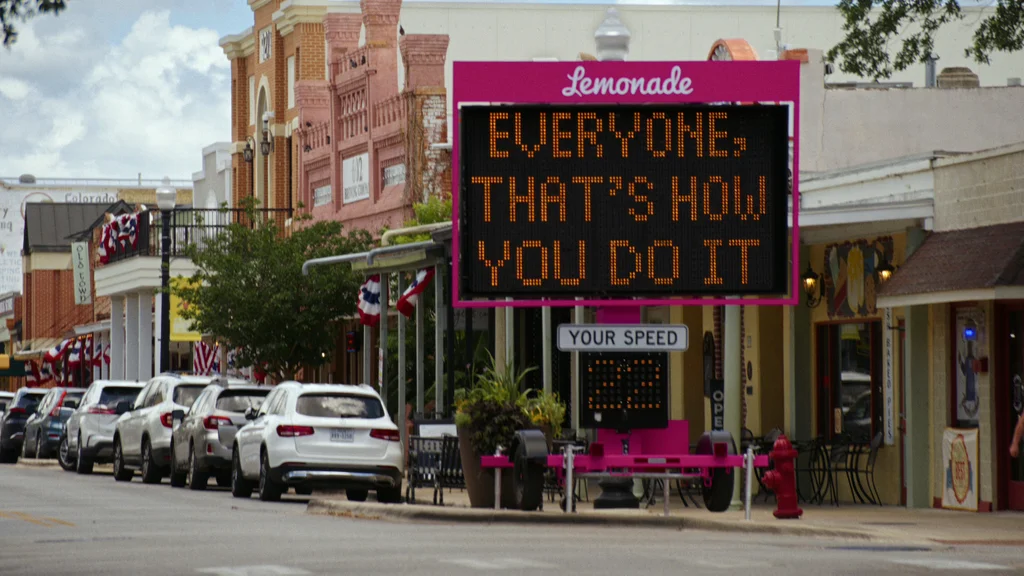
New York City-based Lemonade created “The Slow Sign,” a digital sign that compliments drivers for following the speed limit. Made with the creative agency Cash Studio, the insurance company set up a pink, branded digital roadside sign outside Austin with a radar speed sign and a message board that works only if you’re obeying the speed limit.
When motorists drove past the sign at speeds over the limit, the radar speed sign flashed with their speed. When motorists followed the speed limit, though, the message board came to life.
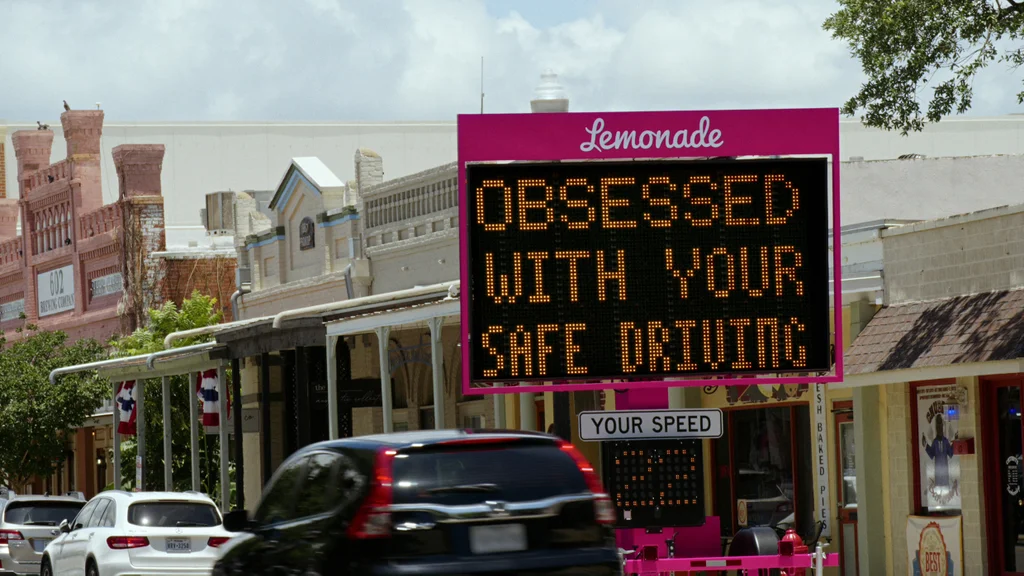
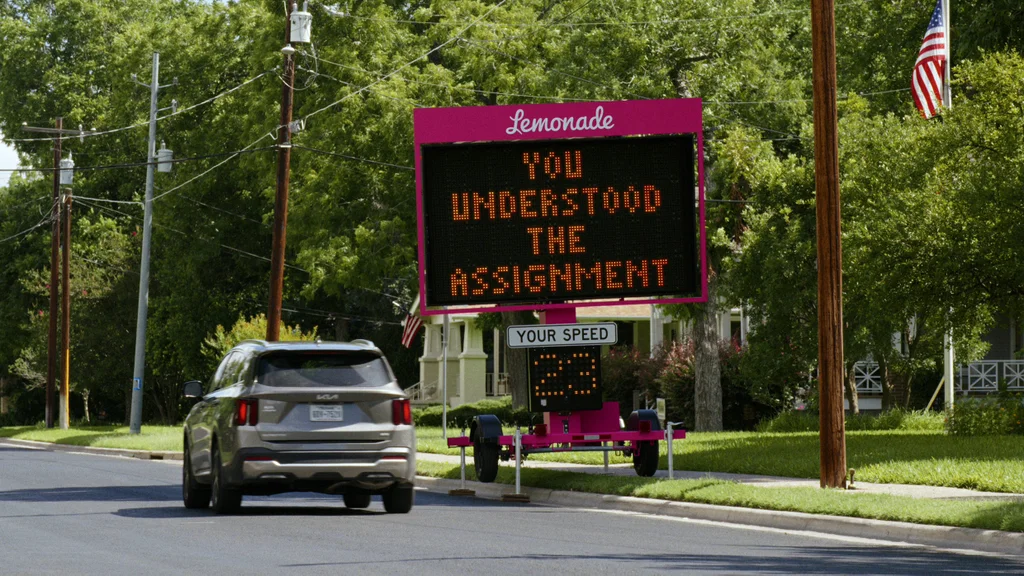
The message board identified the color and make of an approaching car with a personalized message thanks to a spotter down the road with a walkie talkie, and that was followed by language like “Obsessed With Your Safe Driving,” “Way To Drive a Fast Car Slow,” and “You Understood The Assignment.”
“Tasked with coming up with a nontraditional campaign to promote Lemonade car insurance, where safe drivers pay less, we homed in on Texas, a state most in need of safe driving, with more car crashes than any other state,” Cash Studios’ founder, Ivan Cash, tells Fast Company. “Texas also issues a record number of speeding tickets each year, yet during our research we found that only 10% of drivers actually follow the speed limit.”
Depending on the messaging, digital signage has been found both to slow drivers down and cause an increase in crashes.
The Federal Highway Administration found that installing speed signs leads to an average drop of seven miles per hour, but other well-meaning electronic messages don’t always lead to similarly positive outcomes.
Researchers discovered in Texas that displays indicating the number of local road fatalities on electronic signage actually increased crashes by 1.52% within about three miles of the sign. The authors of study, published in Science in 2022, wrote that one explanation for their findings may be because these “in-your-face,” “sobering,” negatively framed messages “seize too much attention” and interfere with drivers’ ability to respond to changes in traffic conditions.
Officials in Finland once tried a similar approach to Lemonade’s activation, but with symbols instead of words. Motorists who drove near or at the speed limit were shown a green smiley face on signage. Those driving 10 kilometers per hour (6.2 mph) over the limit were shown a red frown face and anyone going faster than that was shown a red exclamation point.
The study found a statistically significant reduction in speeding at most of the sites it tested the new signs, and what’s more, those speed reductions remained even after the signs were taken down. Sometimes, a simple carrot-instead-of-stick approach really works to improve behavior.