You can’t make a Mod-u without breaking a few eggs.
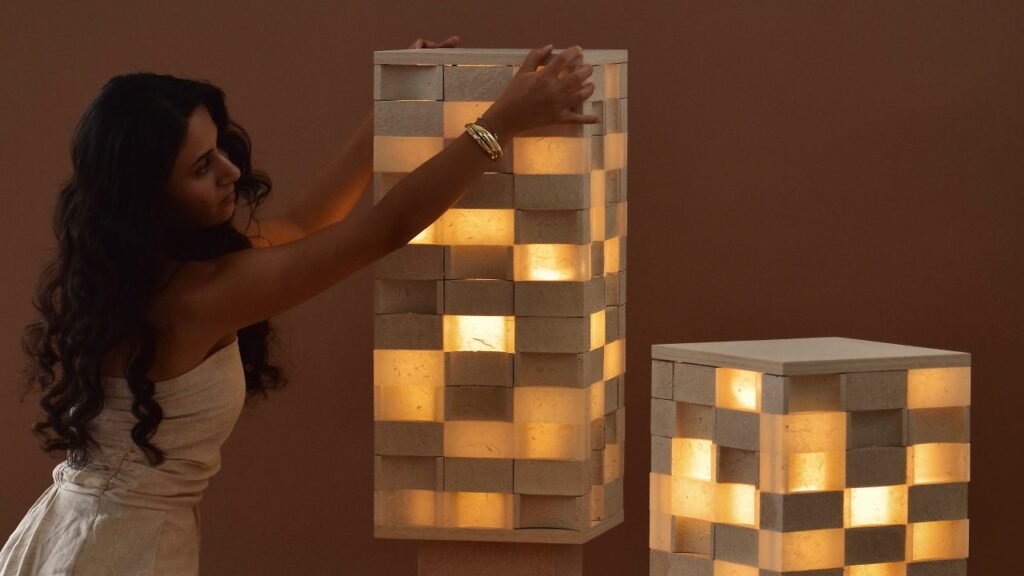
The lamp by the Australian designer Joanne Odisho is named to emphasize the fact you can configure and stack its modular system yourself, but the material it’s made from is more noteworthy—it’s an eggshell composite.
Odisho began working with eggshells after she was assigned to create a new material for furniture design using food waste while studying at RMIT University in Melbourne, and it’s since evolved into an ongoing exploration.
“The process of transforming discarded materials into something valuable and functional immediately resonated with me,” she tells Fast Company.
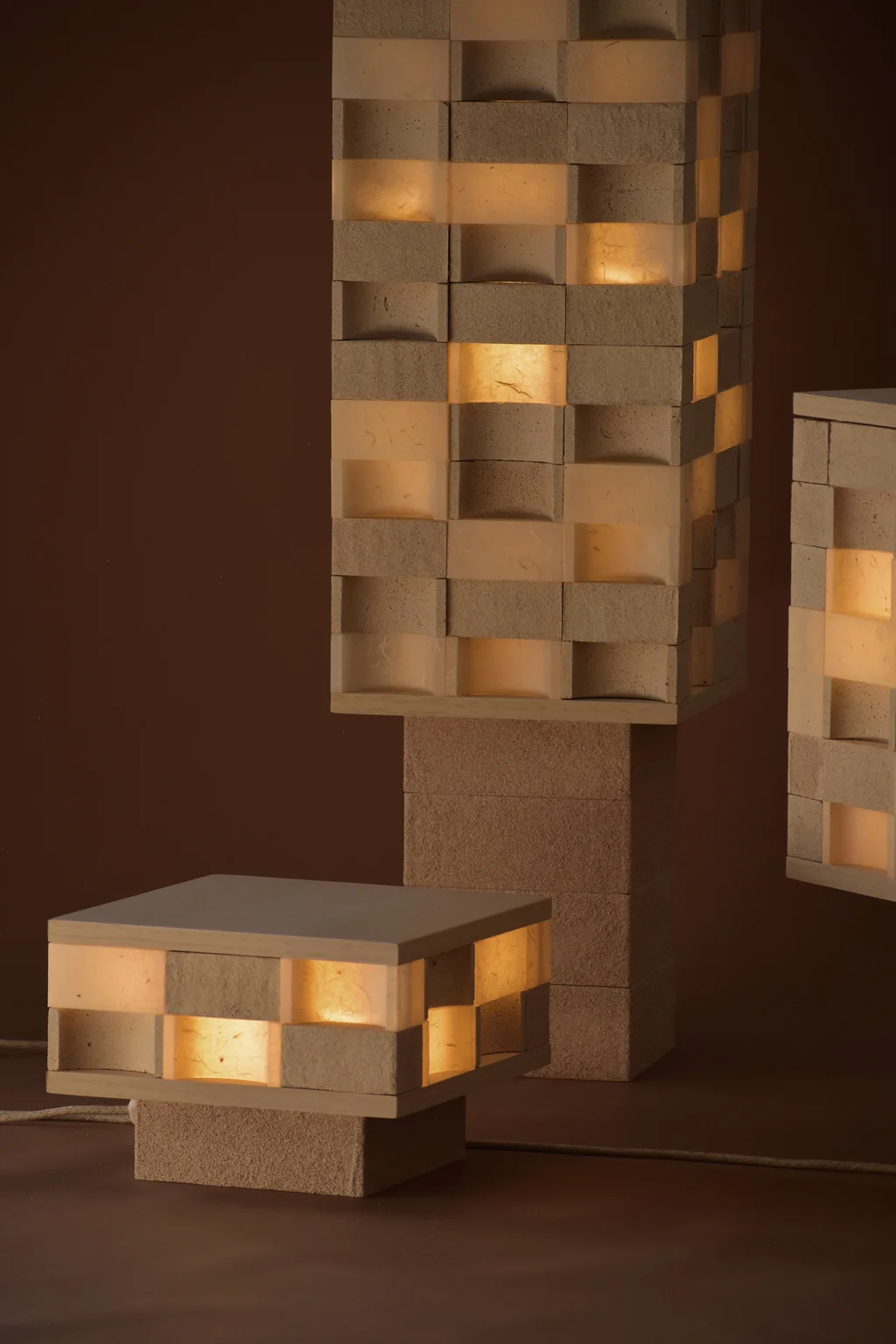
Odisho creates the composite by finely crushing shells sourced from local cafés that are set aside for weekly collection. She cleans, sterilizes, and dries them, then processes the stuff into a fine powder that’s mixed with a biopolymer. The resulting material retains the neutral color of the eggshells, which also happens to be perfect for a lamp shade, and it has a texture she describes as similar to an aerated ceramic. Unryu paper made from mulberry fibers and coated in a biodegradable bioplastic diffuses the light, and the top and base components are made from plywood.
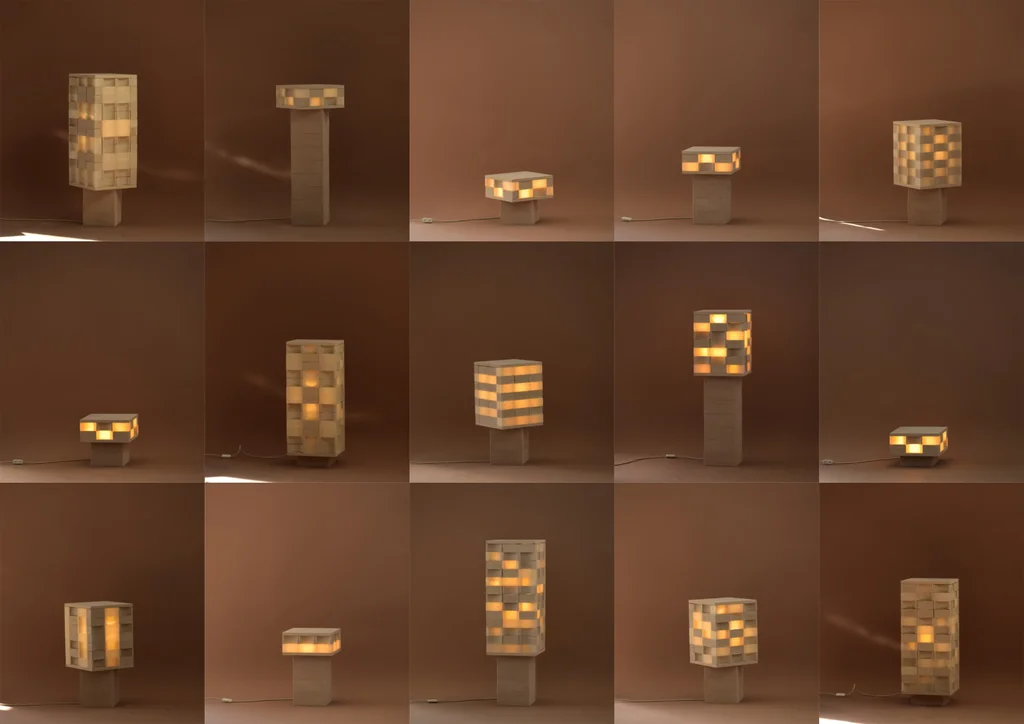
There are three sizes: small, medium, and large. Lit up, the lamp looks like a building, but it also feels organic and sculptural.
Using eggshells to make a lamp is novel, and it fits a wider trend of designers experimenting with waste as a raw material, like human hair used to make a fabric, or corn waste as a 3D-printable building material. The practice also exemplifies circular design, which takes a material that would otherwise be destined for a landfill at the end of its product life cycle and instead makes it the building block of something new.
Eggshells are a miracle of natural engineering, formed to be strong enough to distribute force, but made to be broken eventually. It turns out they also make a great bioceramic once the shell is ground into dust. The Argentine artist Cynthia Nudel used eggshells to make vases and pots, for instance, and Odisho’s lamp won the 2026 Australian Furniture Design Award.
Odisho has experimented with other food waste, like coffee grounds, avocado peels, and onion skins as natural dyes. She also incorporates paper waste and timber shavings that she collects from local manufacturers to develop bio-based materials and sustainable design applications.
“Sustainability is a core part of my practice and design ethos, and I am particularly interested in creating earth-to-earth objects with a circular life cycle,” Odisho says.
She estimates each individual eggshell block she makes for the Mod-u contains about 200 eggshells. Since the small lamp contains 10 eggshell blocks, the medium 35, and the large 65, each lamp repurposes thousands of eggshells that would otherwise end up as waste.