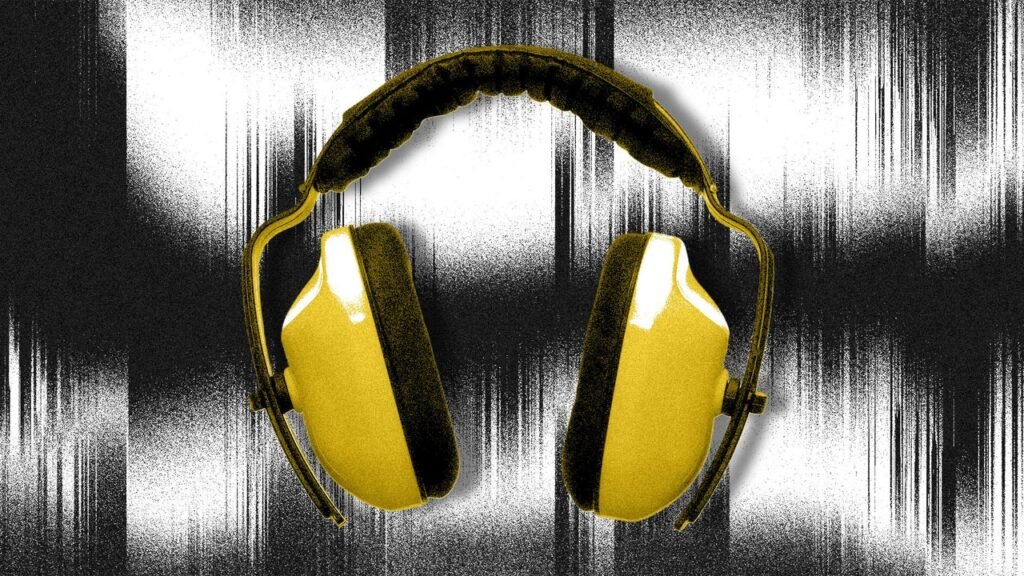
People have found plenty to dislike about data centers, from their massive energy and water usage to their potential to drive up the cost of living in surrounding areas. But perhaps the biggest anxiety around data center development is the threat of noise pollution, and one Michigan community in crisis is arguing that living down the block from a data center can be nightmarish.
Since 2024, residents in Dowagiac, Michigan, have reported nonstop noise from a local data center, not only making it uncomfortable to spend time outside, but permeating the walls of their homes. It’s led to a class action lawsuit against the company behind the data center.
Meanwhile, a news clip highlighting the noise pollution has garnered more than 700,000 views online and thousands of commenters rallying behind the Dowagiac community, in southwestern Michigan.
‘Be a better neighbor’: Why residents are suing
The Detroit news station WXYZ-TV investigated the noise complaints in Dowagiac, getting firsthand testimonies from residents who live near the data center.
“It sounds like someone set up a vacuum in your living room . . . and they just left it on and walked out,” one resident explained. Another compared the experience of living near a data center to being tortured with sound.
Indeed, an obnoxious buzzing, whining sound from the data center is ever-present throughout the news clip, giving a glimpse into the reality Dowagiac residents have endured for the past two years.
Though the in-person volume of the data center is difficult to gauge from the video alone, the city has fined it for exceeding city sound ordinances, which limit noise to 65 decibels during the day and 55 decibels at night. That’s comparable to the volume of a normal conversation or the ambient noise of an office—not unbearable, but not ignorable either, let alone conducive to a good night’s sleep.
The data center is called Hyperscale Data, and is owned by Las Vegas-based Alliance Cloud Services LLC. At a city council meeting, Hyperscale’s CEO, William Horne, spoke to Dowagiac residents about the company’s plans for the data center. He said that Hyperscale intends to reduce sound levels from the center in the next few months, as its operations pivot from cryptocurrency mining toward AI computing.
“If they still aren’t happy and feel that their home isn’t enjoyable, then we’ll buy their property from them,” Horne said.
But residents don’t necessarily want to sell their homes—they just want them to be livable. That’s where the class action lawsuit comes in, which alleges negligence and nuisance on Hyperscale’s part.
“They don’t have the right to cause a substantial interference with your use and enjoyment of your property,” explained Laura Sheets, a partner at Liddle Sheets, the Detroit law firm bringing the class action suit against Alliance Cloud Services. “This data center is their neighbor, whether they’re happy about that or not. But people do have options to help force the company to be a better neighbor.”
‘Insulting and high-handed’: The internet claps back
In the comments on the news story on YouTube, users commiserated with Dowagiac’s residents and voiced their support for the lawsuit. “If that noise came from a residential home, you’d be fined to oblivion,” one commenter noted.
“The noise would give me a mental breakdown,” commented another.
“If they can’t SOUNDPROOF that data center, then that center needs to GO!” wrote a third.
Several commenters also took issue with Horne’s suggestion that uncomfortable residents could simply sell their homes to Hyperspace.
“Saying they will buy their homes has to be the most insulting and high-handed thing I’ve ever heard!” one commenter wrote. Others said the offer “sounded like a threat” and was “de facto eminent domain.”
“Build a data center next to the CEO’s house and then offer to buy his house for ten cents on the dollar,” suggested one user.
Those comments are in line with the attitude toward data centers across the country. Gallup polling from March showed that seven in 10 Americans oppose the construction of data centers in their local area, including nearly half (48%) who say they strongly oppose new data center development.
Regardless, more than 1,500 data centers are in development across the United States. More than a third of Americans live within five miles of an operational data center, and with the planned data centers, that figure would climb to 42%.
This means more and more communities could face the same noise pollution plaguing Dowagiac—but local governments might be able to step in. This month, New York became the first state to enact a ban on the construction of new large data centers, while several other counties and cities across America have put their own moratoriums in place.