LOS ANGELES — At a time when racism is on the rise in the United States, with the President himself posting a doctored video of the Obamas as apes and Southern states working to gerrymander Black voices out of mattering in elections, Todd Gray’s exhibition at Perrotin feels particularly pressing. Timed to coincide with the opening of his commissioned installation “Octavia’s Gaze” (2025) at the new David Geffen Galleries of the Los Angeles County Museum of Art, Portals features several multi-paneled photo assemblages that explore the evolution of Black history and identity through the juxtaposition of images related to slavery with views of European art, architecture, and formal gardens — the symbols of the excessive wealth funded by and perpetuating the labor of enslaved people.
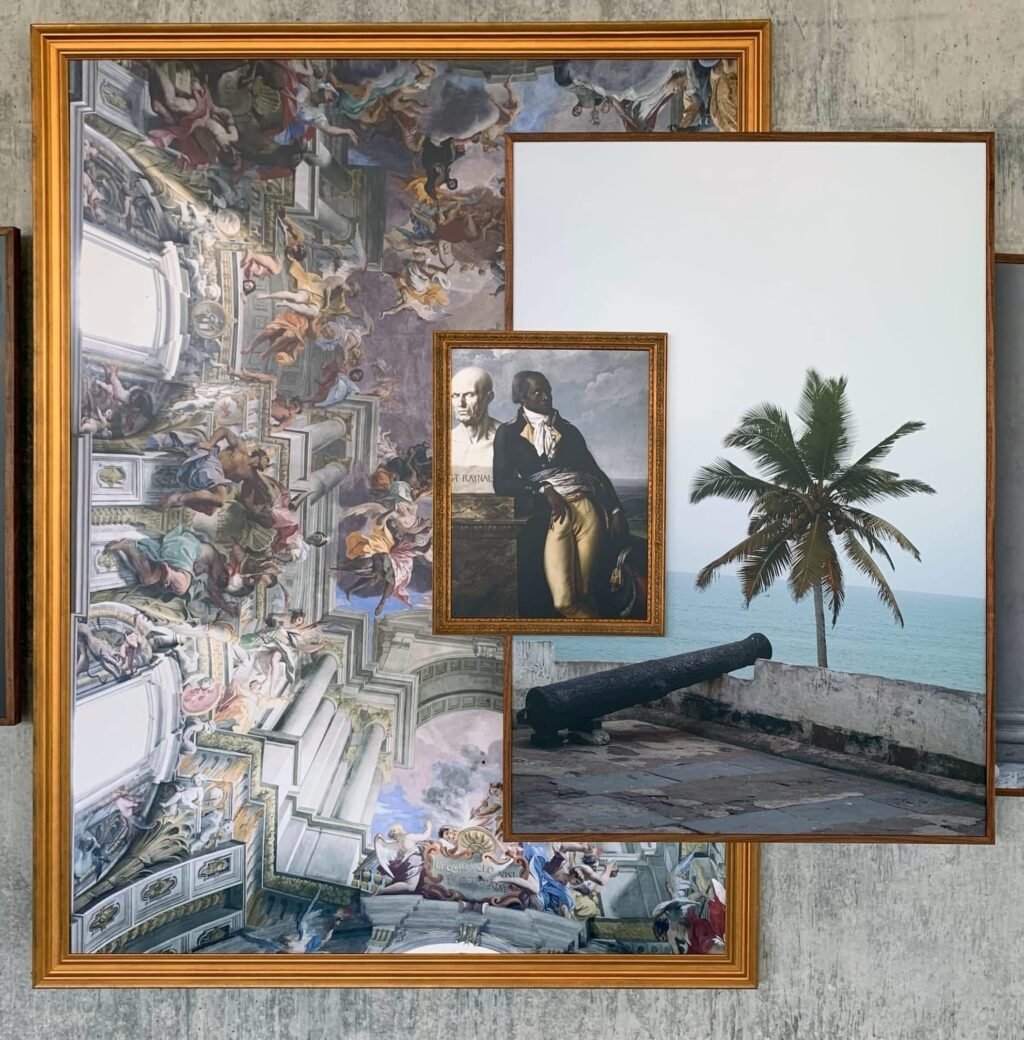
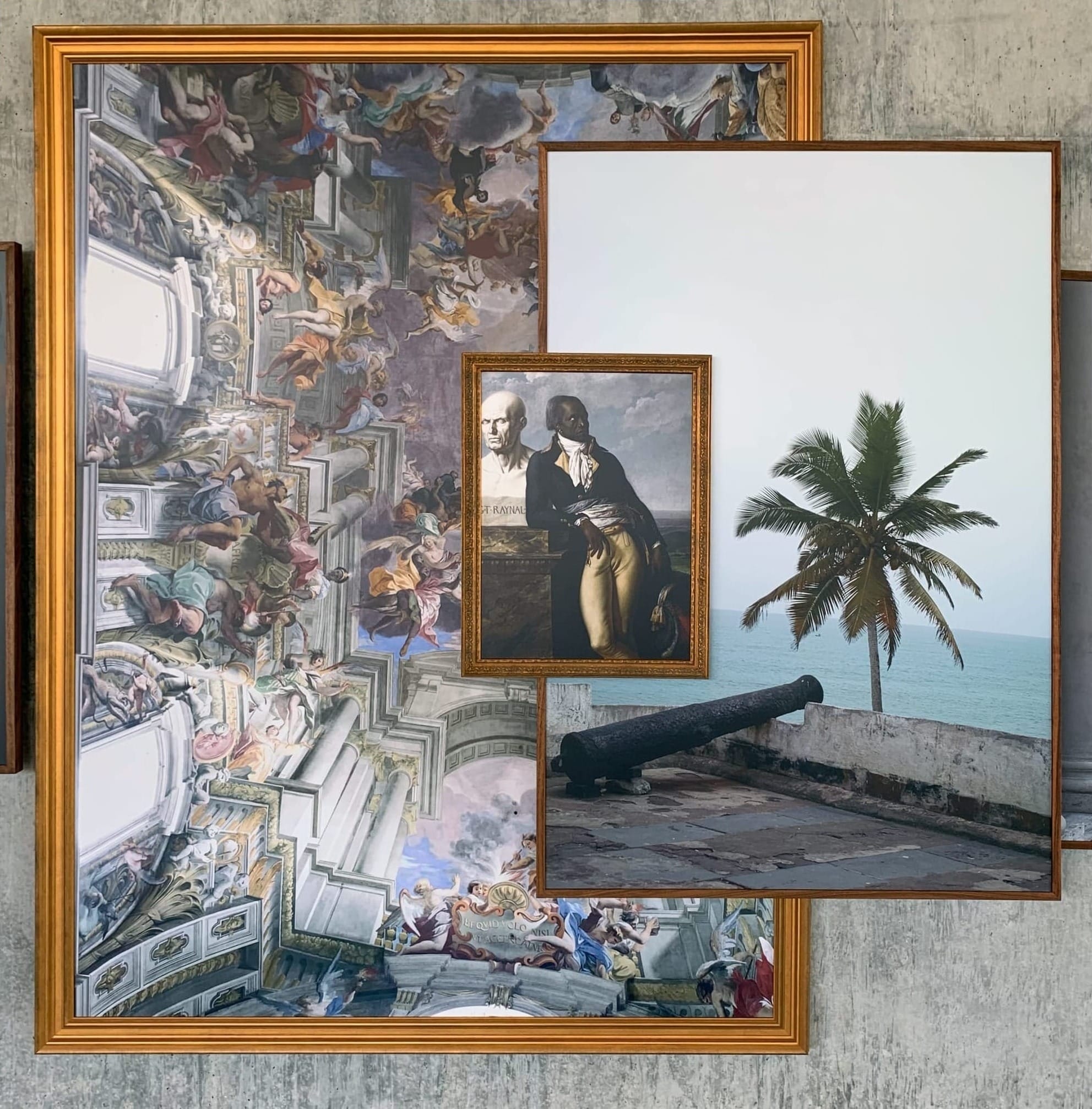
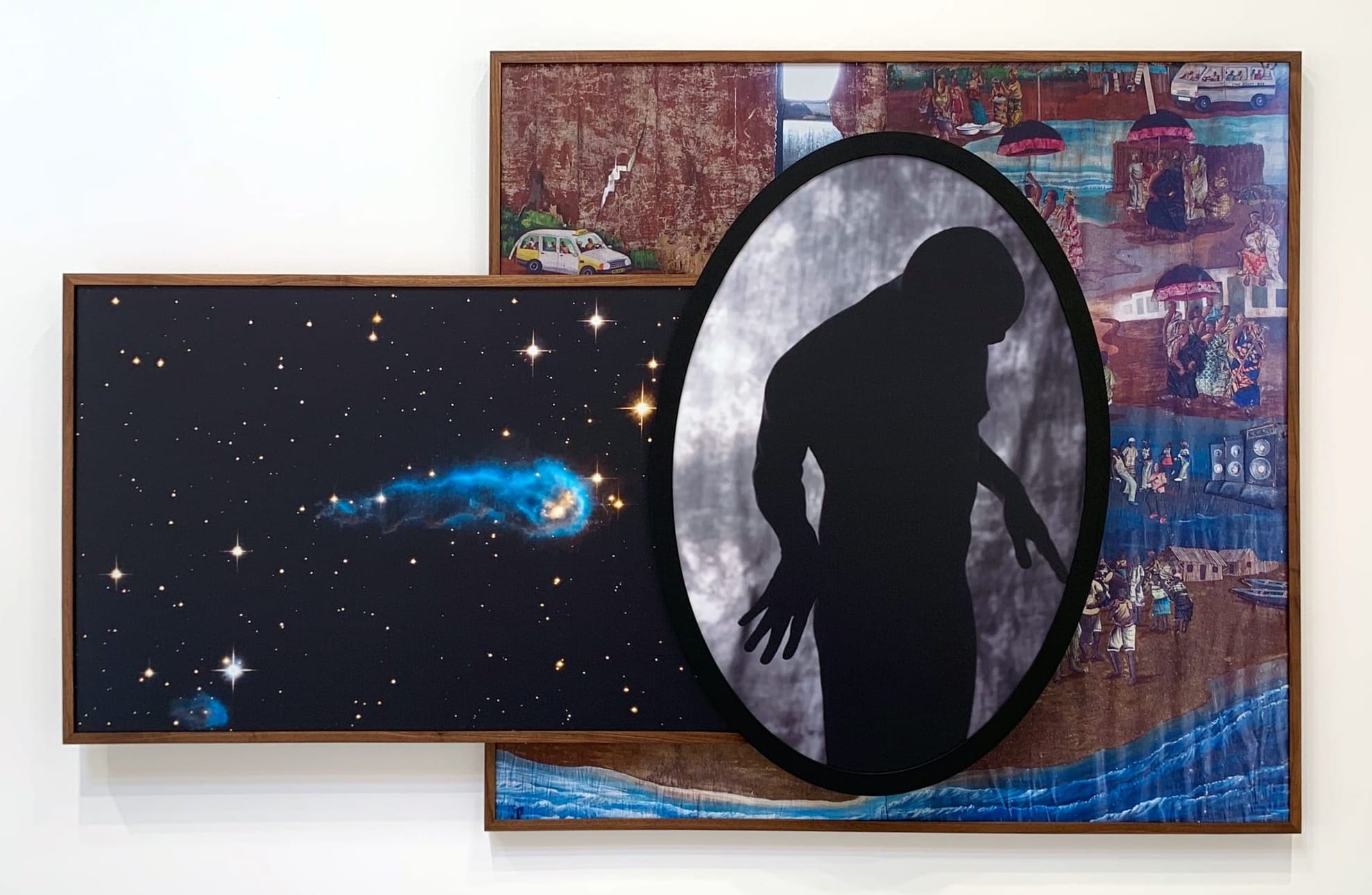
Gray’s photo assemblages are carefully constructed from his own photos combined with those culled from other sources, such as views of the galaxies taken by the Hubble Space Telescope. This format of joining together framed photos in a single work finds a precedent in the art of John Baldessari, who was a driving force at the California Institute of the Arts when Gray earned his BFA and MFA degrees there. Yet, unlike Baldessari’s rather deadpan approach, Gray goes for beauty and emotion. He mixes up his photos in nonlinear fashion, as well as allows some to overlap with and obscure others. In this way, he creates visual puzzles, the titular portals being entrance points for exploration. These works feel intentionally, even strategically, sumptuous, as they entice viewers to keep looking, find connections, and ask questions. They suggest that African diasporic identity is multilayered, complex, and shifts over time, forging unexpected interconnections between past, present, and future.
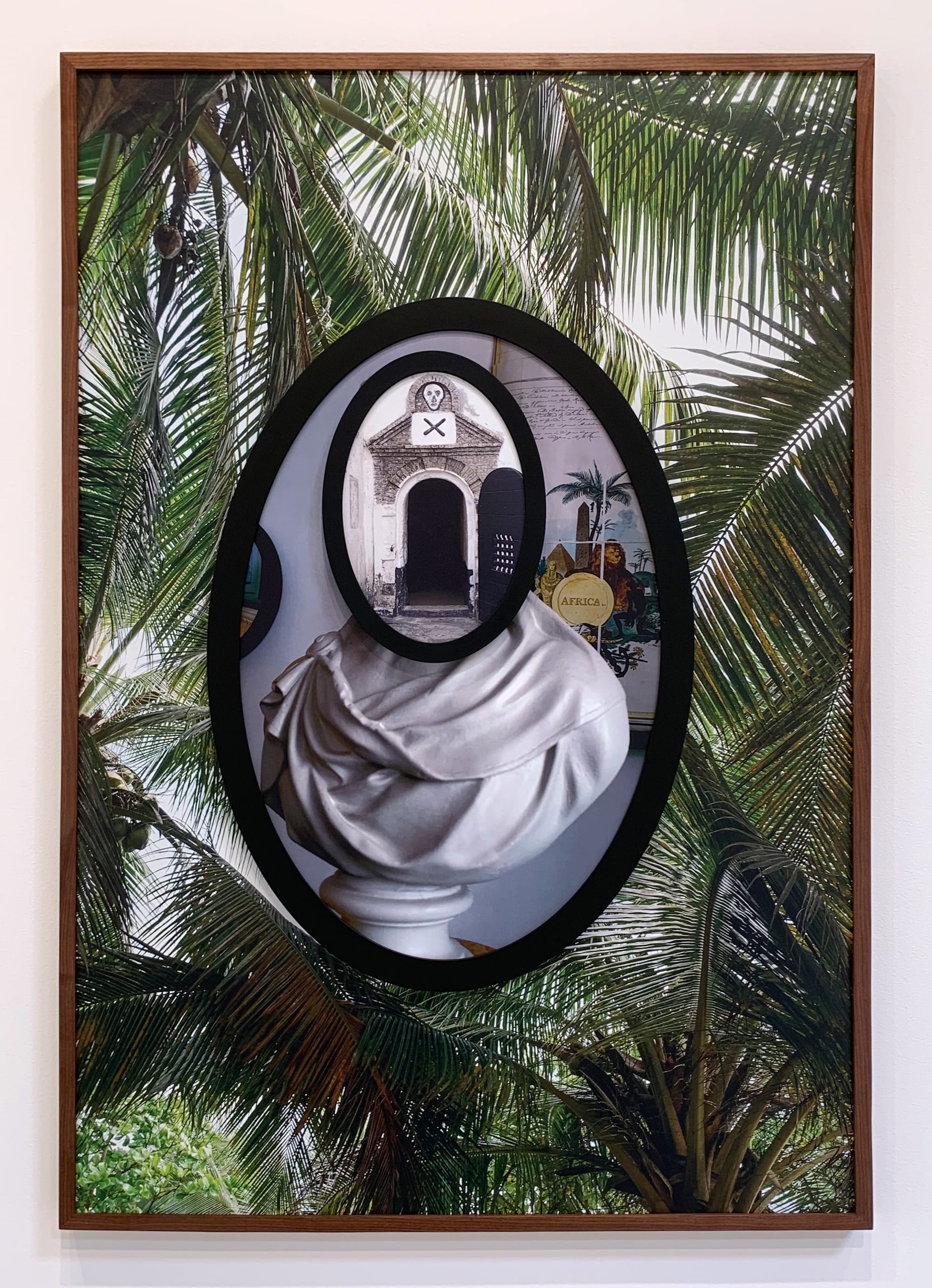
Indeed, Gray often provides us with starting points for further research via parentheticals in titles. In “Paradox of Liberty (Monticello, Elmina, Akwidaa)” (2026), oval-shaped photos are stacked and superimposed over images of lush vegetation in Akwidaa, a coastal village in Ghana where the artist maintains a part-time home and studio, and through which enslaved people were transported from Africa to the Americas. The middle photo depicts a bust whose head is hidden by a third photo of a building façade adorned with a skull and crossbones. The titular reference to “Monticello” clues us in that the bust is of Thomas Jefferson, who championed liberty but owned more than 600 enslaved people, while “Elmina” is a castle in Ghana where thousands were held before being transported to what is now the US. The effect is chilling, inducing a visceral response to horrific histories often sanitized or completely omitted in textbooks.
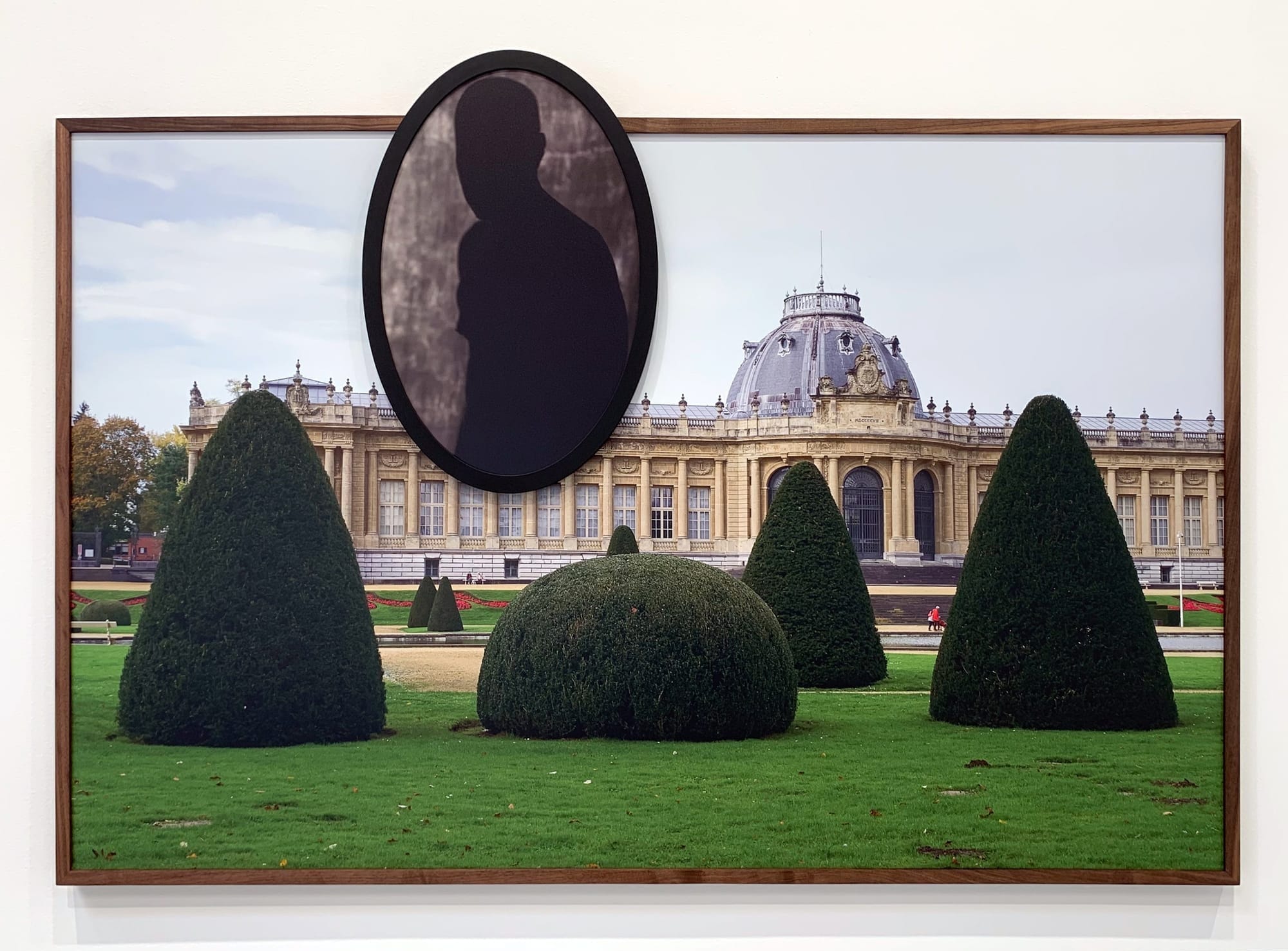
Another little-known story about the brutality of slavery underlies the imagery in “Heart of Darkness in Eden’s Garden” (2026), one of a few examples where Gray personalizes the work by superimposing a photographic silhouette of himself over the main scene, a formal garden with manicured shrubbery and stately architecture in the distance. While the work poignantly conveys a sense of solemnity and loss, our understanding of it could have benefited from an assist in the title or the press release. Only through contacting the gallery was I able to learn that the building is the AfricaMuseum in Belgium, which once exhibited a “human zoo” where 60 Congolese people lived on public display. Our knowledge of what we are looking at significantly enhances our understanding of it, while clearly strengthening the emotional impact.
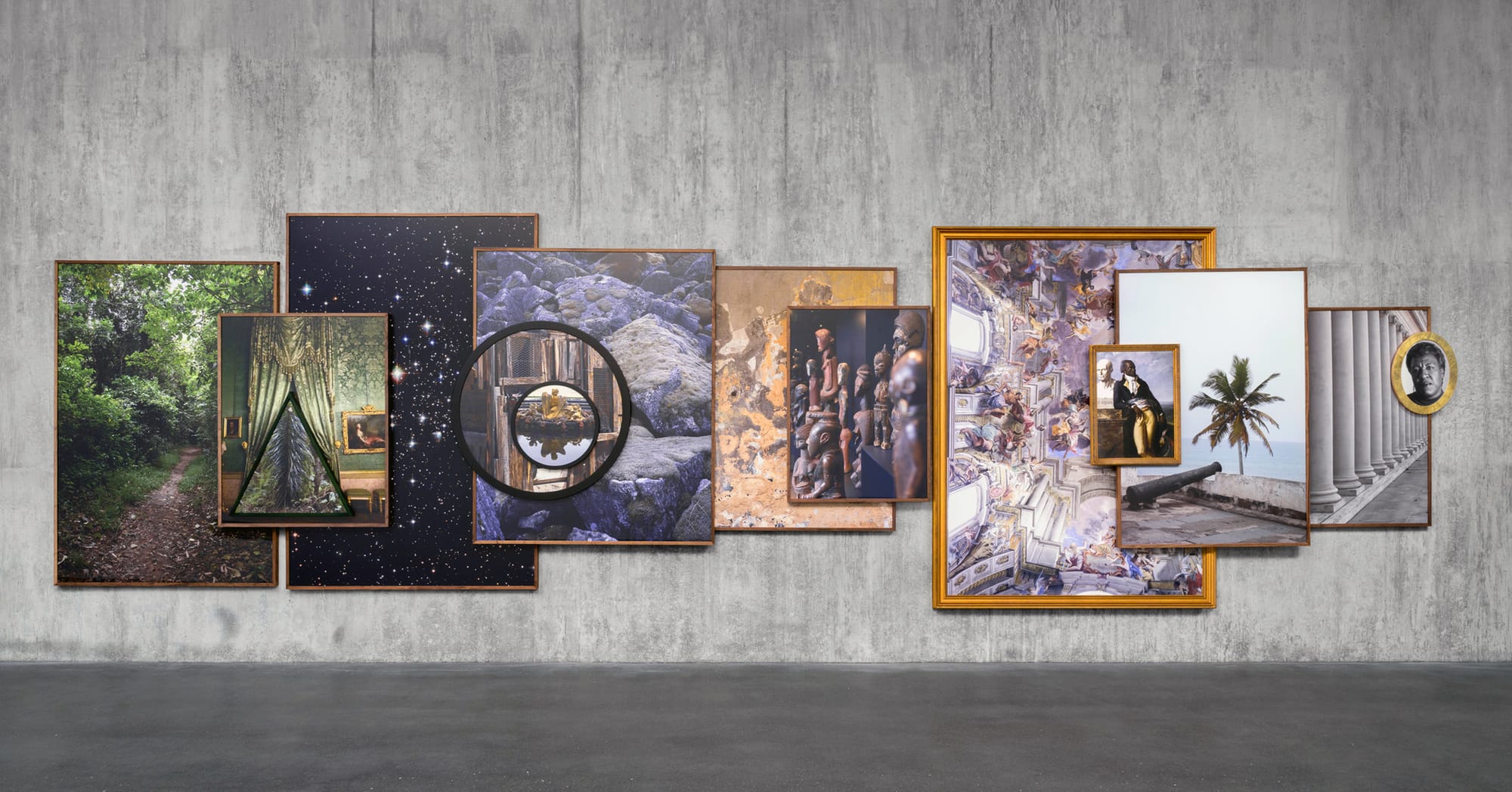
For the section of LACMA’s new galleries focusing on circulation, migration, trade, and cultural exchange associated with the Atlantic Ocean, Gray constructed a 27-foot-long photo assemblage that weaves together several narratives about the African presence in Europe as manifested in colonialism, enslavement, and the looting of cultural objects. It is titled “Octavia’s Gaze” because it includes a photographic portrait he took of the late Afro-futurist author Octavia Butler in the 1990s. Like Butler, Gray is a Black Angeleno whose work explores histories, geographies, and imagined futures to reveal how the past continues to shape human survival and transformation, so he framed the oval portrait in gold to honor her. The remainder intermingles the artist’s photos of the Ghanaian landscape, European art and architecture, Congolese sculptures from a Belgian museum, and a reproduction of a late-18th-century painting of a Senegalese man who went from being enslaved to a French elected official. As with the smaller works at Perrotin, “Octavia’s Gaze” takes an expansive view of Black heritage, one that is deeply researched, poetic, and inspiring. In that respect, the work helps LACMA fulfill one of the primary missions of an encyclopedic art museum: to tell as complete a history of art as it can.
Todd Gray: Portals continues at Perrotin Los Angeles (5036 West Pico Boulevard, Mid-City, Los Angeles) through May 30. The exhibition was organized by the gallery. Gray’s “Octavia’s Gaze” (2025) is on long-term view in the David Geffen Galleries of the Los Angeles County Museum of Art (5905 Wilshire Boulevard, Miracle Mile, Los Angeles).