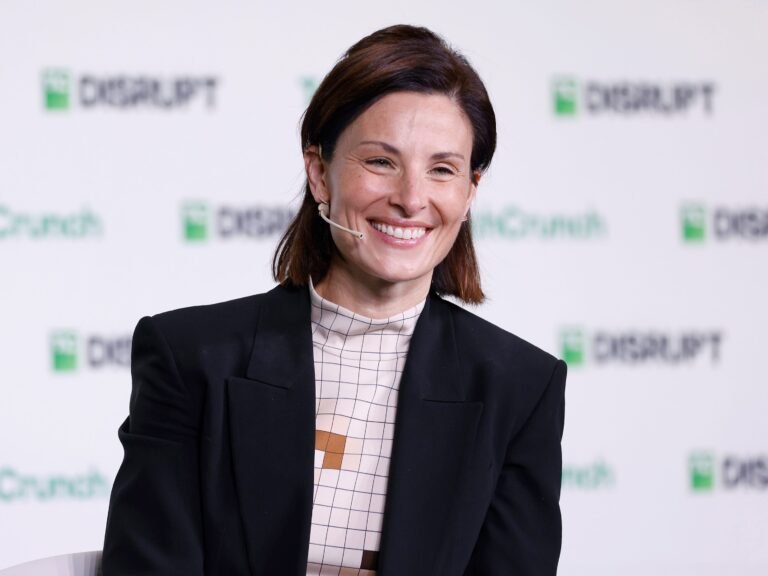
Bloomberg/Getty Images
- Chris Fall has left his role as the Trump administration’s top AI safety official after three months.
- His departure comes as the White House and lawmakers grapple with how to regulate the technology in the US.
- Howard Lutnick wants Fall’s replacement to be someone with deep AI knowledge and expertise, POLITICO reported.
Top Trump administration AI safety official Chris Fall has left after just three months on the job, according to a Commerce Department spokesperson.
Fall, who was director of the Center for AI Standards and Innovation, has been at the center of the federal government’s voluntary review process of frontier AI models. CAISI is a Commerce Department agency that functions as a key point of contact for industry and spearheads commercial AI testing and research.
His departure comes as the White House and lawmakers across the country grapple with how to regulate the emerging technology.
“Following Chris’s departure, NIST Director Dr. Arvind Raman will continue to oversee CAISI and will serve as Acting CAISI Director,” the spokesperson told POLITICO, which, like Business Insider, is a part of the Axel Springer Global Reporters Network.
Raman is also leading the search for a new permanent CAISI director to be announced in the coming weeks, and Commerce Secretary Howard Lutnick wants somebody with deep knowledge and expertise on AI, a Commerce official granted anonymity to discuss personnel issues said.
After Commerce slapped export controls on Anthropic in June, Fall was closely involved in discussions with top Anthropic executives about how to restore access to the company’s advanced Fable 5 and Mythos 5 models, POLITICO previously reported.
He was appointed to lead CAISI in April and was a Department of Energy official during Trump’s first term.
Axios previously reported details of Fall’s departure.
This story originally appeared on POLITICO and is courtesy of the Axel Springer Global Reporters Network, which harnesses the resources of the company’s newsrooms to publish ambitious scoops, investigations, interviews, opinion pieces, and analysis. It allows journalists — including those from POLITICO, Business Insider, WELT, BILD, Onet, and Fakt — to collaborate on major stories for an international audience of hundreds of millions across platforms.