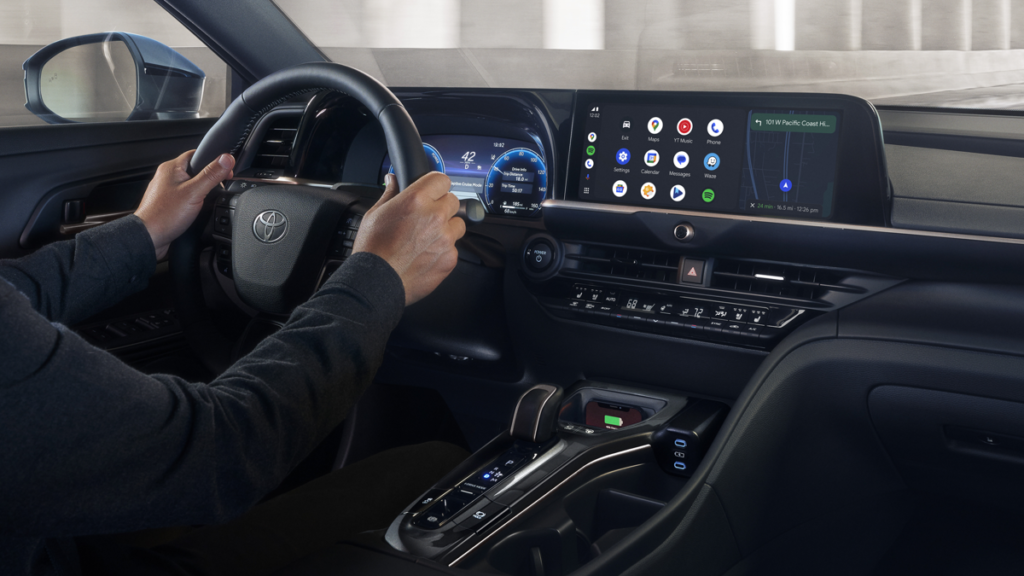
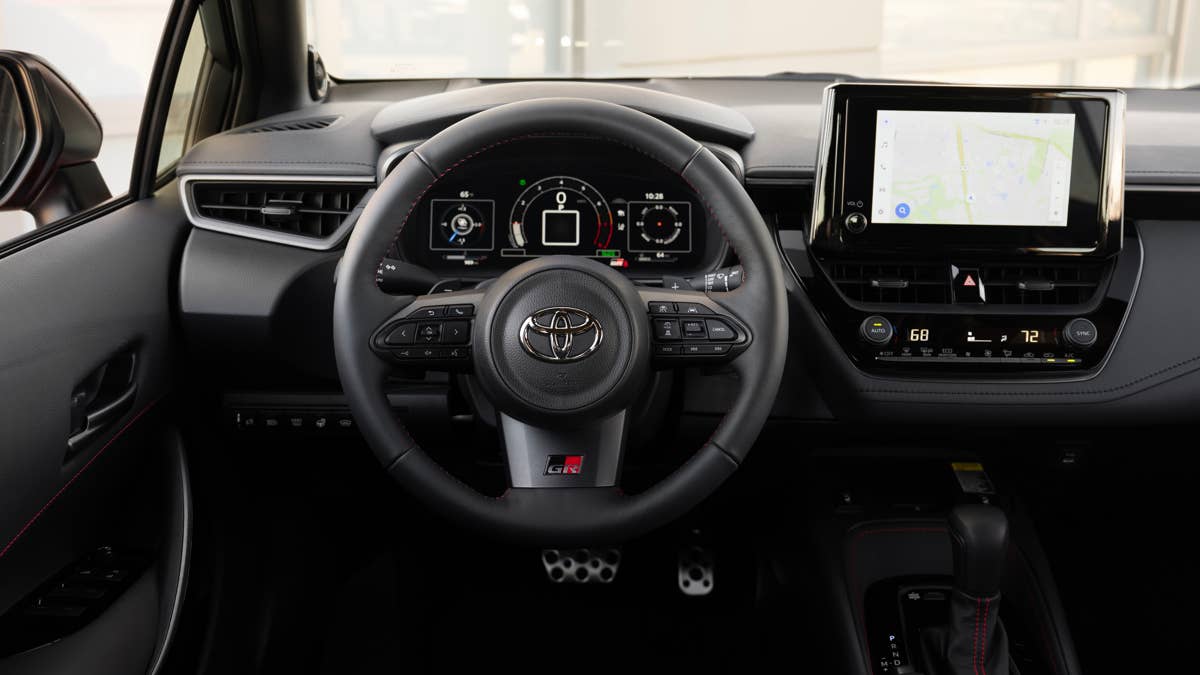
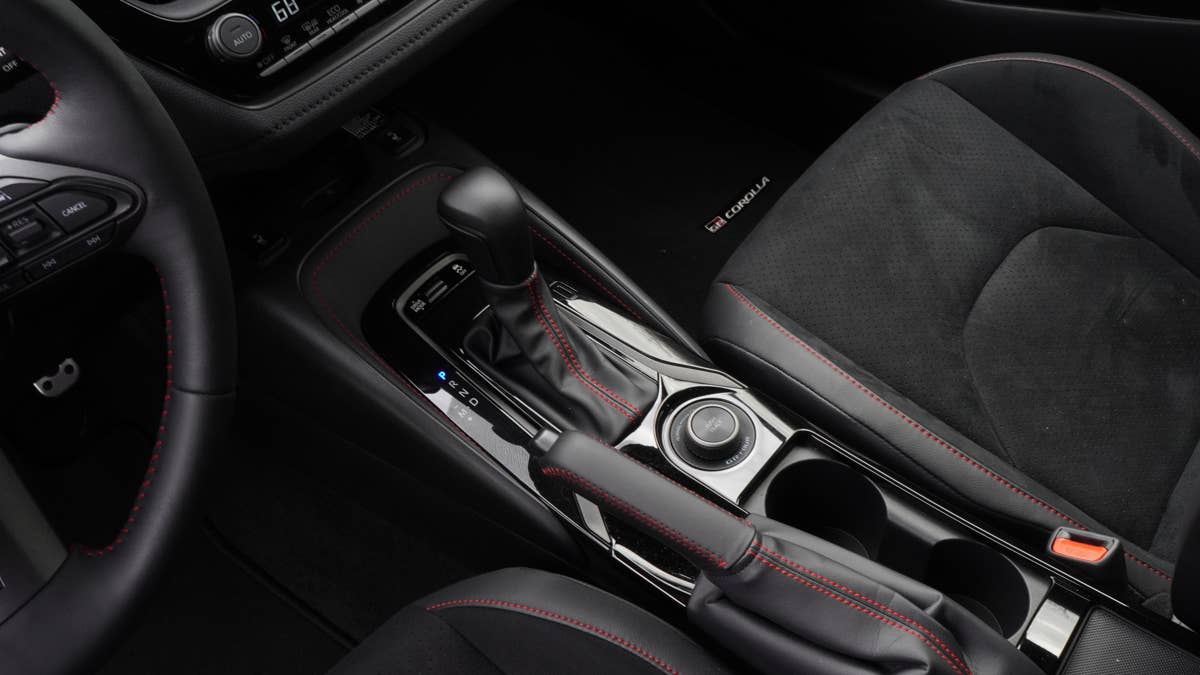
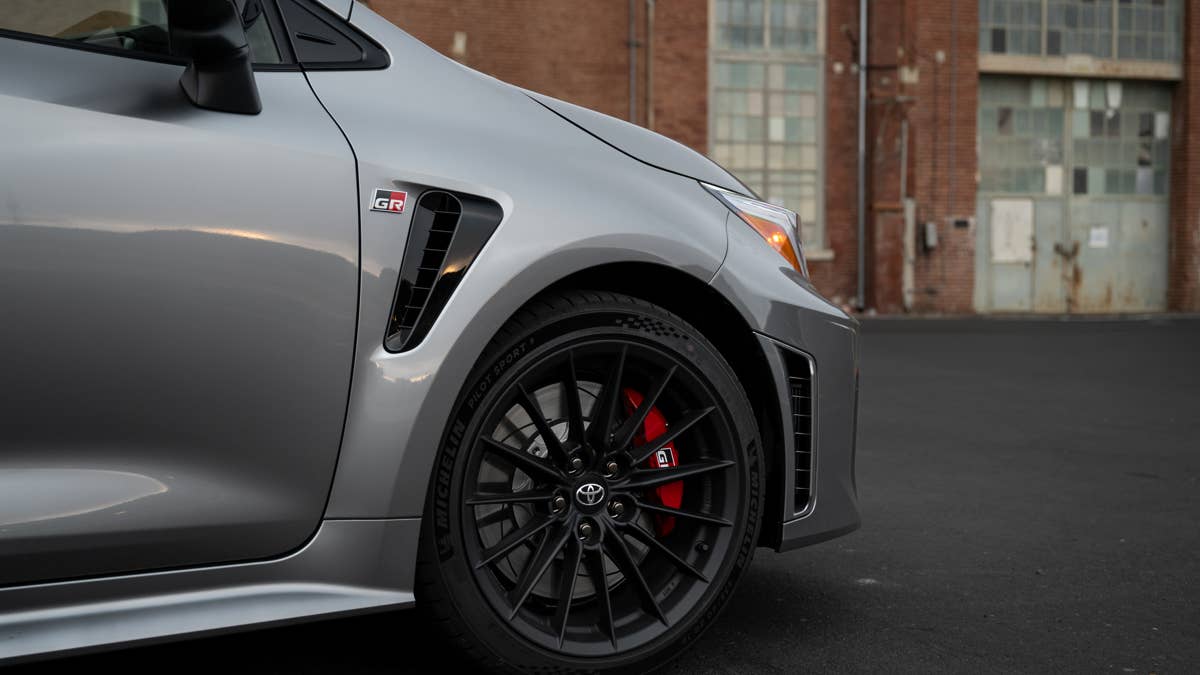
For some time, Toyota has been on a mission to make automatic transmissions fun, understanding that this can be the key to unlocking a passion for all things automotive in those who may not know how to use a manual, or can’t. The GR Corolla is now available with such an eight-speed gearbox, called the Gazoo Racing Direct Automatic Transmission, but it’s not perfect. A dual-clutch automatic tends to be lighter, faster, and, most importantly, still more responsive, but Toyota wants to take full advantage of the cheaper automatic, and a new patent filed with the United States Patent and Trademark Office, discovered by CarBuzz, shows how Toyota could make automatics more engaging by allowing shifts to happen at will.
The Problem Toyota’s New Patent Aims To Solve
Toyota
Traditional automatic transmissions won’t upshift if doing so would cause the engine RPMs to fall so dramatically that the car could stall, nor will they allow downshifts when doing so would cause a severe spike in engine RPM, which could grenade the engine and/or transmission in what’s known as a money shift, when the transmission is moving far more quickly than the engine can safely keep up with but still tries, causing explosive damage. This is the case even when the automatic transmission features so-called ‘manual’ paddle shifters, which you can keep clicking but will simply ignore your requests until inter-system speeds are safely aligned. Toyota’s new patent aims to change these cautionary protocols. The transmission effectively stores impossible requests for transmission shifts and then executes them the moment they are safely possible, aiming to reduce the delay some torque converter autos are known for.
Toyota’s Automatic Transmission Solution
James Ochoa/Autoblog
Let’s say you’re braking hard for a corner, and you click the left downshift paddle, but nothing happens because engine RPMs are too high, and you have to wait for a slower engine speed before pulling the paddle again. Toyota’s new system would remember the downshift request, and instead of only allowing a downshift to happen when there’s a 1,000-RPM buffer between the lower gear’s engine speed and the engine’s redline, it could cut that buffer to 500 RPM or less without a repeat input from the driver. In some scenarios, the transmission might even allow a downshift when RPMs would move slightly above redline, preempting the further fall in revs that would occur in the moments between a downshift request and its execution. Under hard acceleration, the transmission also wouldn’t automatically uphshift at redline, increasing driver control. Basically, Toyota is trying to give you similar responsiveness and similar responsibility to that provided by dual-clutch and manual transmissions, respectively.
Autoblog’s Take
Toyota
Toyota’s new patent may not make production, but it does provide proof that the automaker is trying to make performance driving more accessible, both in price and philosophy. This could resolve the few drawbacks of the Direct Automatic Transmission without much more cost, but Toyota will need to be very careful about how it provides this control to drivers. Not only does more control in the driver’s hands increase the risk of damage to mechanical components, but if a stored downshift request is executed when the driver is not expecting it, that could cause a lock-up of the driven wheels and the driver could find themselves in a ditch or a barrier. Remember the Mercedes-Benz CLK63 AMG Black Series? That AMG Speedshift 7G-Tronic automatic would store a downshift, and it would be later executed when the revs had fallen enough, but sometimes the delay would be so long that the shift would occur at the most unexpected times, causing the rear wheels to suddenly grip and lock and the car to spin out. Hopefully, Toyota tunes this system better.