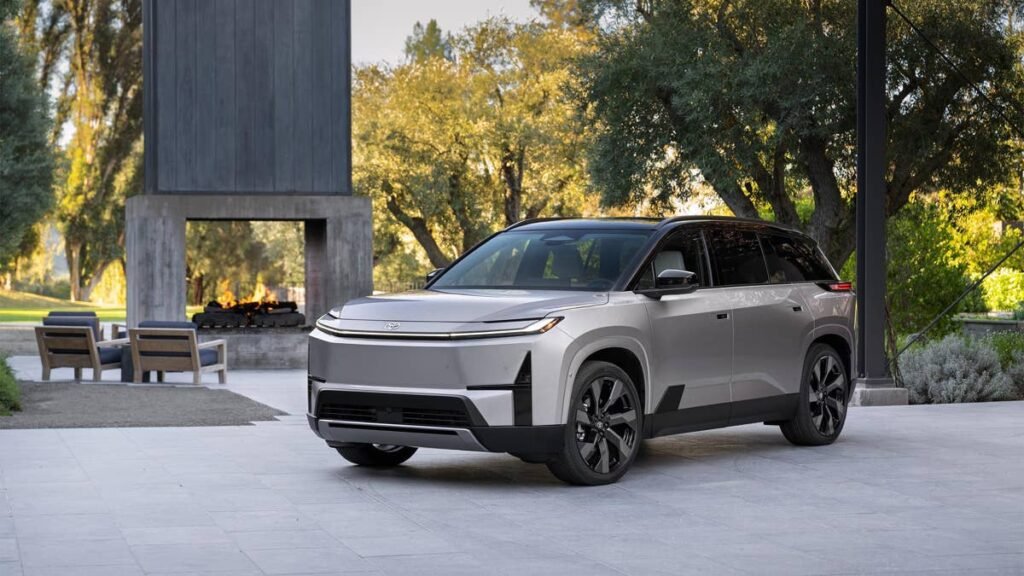
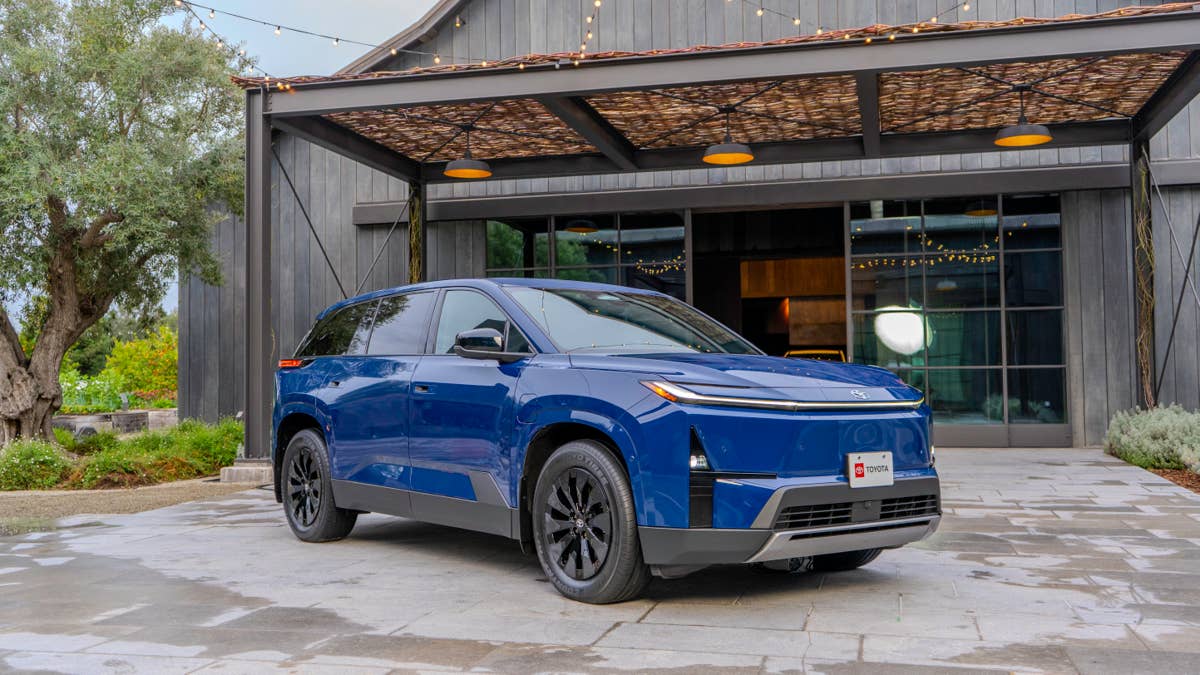
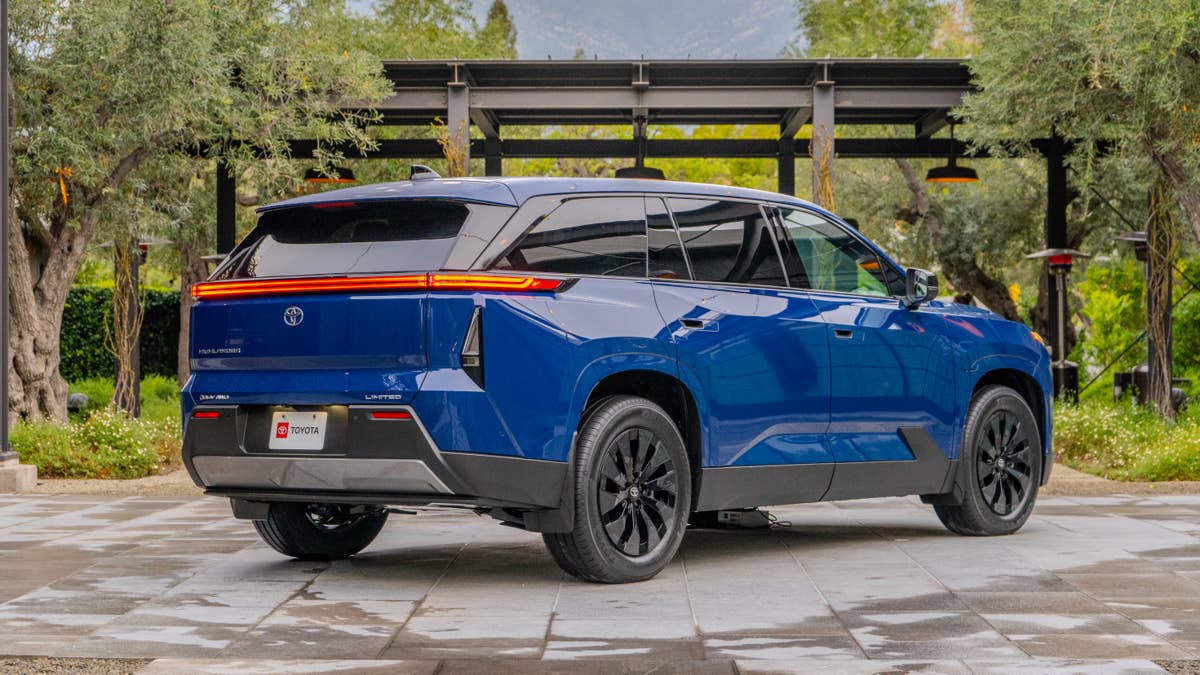
The Toyota Highlander and Grand Highlander overlapped too much, and the former wasn’t quite as popular, so Toyota decided to make it an EV for the 2027 model year. As an all-new vehicle, getting the EV ready has been tricky, and in July, Toyota announced it would delay the launch by at least eight weeks. Now, a report from Nikkei Asia, usually a reputable source of insider information, claims that the 2027 Highlander has been delayed a second time, potentially arriving between four and 12 months later than originally planned. According to this report, the best-case scenario for Toyota’s first U.S.-built EV is a start of production in January 2027.
Toyota Denies Reports of Highlander EV’s New Delay
Cole Attisha/Autoblog
However, Toyota’s U.S. representatives have confirmed that the automaker has not changed the timeline it announced in July, and the Highlander EV is still targeting a launch early in 2027. That means production is likely to start at the end of this year, not in January, and certainly not later than that. The delay announced in July was blamed on “final adjustments,” which means that even without Toyota’s denial, the new Nikkei Asia report is hard to believe; why would a vehicle that is almost ready for production, save for a few tweaks, final checks, and quality tests, be pushed back by up to a year?
Related: Toyota’s New Lexus EV Will Break Its Japan-First Tradition
On the other hand, the relatively slow uptake of EVs in the U.S. might be reason enough for the three-row SUV to be held back. But this line of reasoning doesn’t fit, because Toyota’s EV deliveries in the U.S. have been growing, tripling year-over-year in the second quarter of 2026. It’s also worth mentioning that the mechanically similar Subaru Getaway, which will also be produced in Georgetown, Kentucky, faced the same delay in July but has not been reported to be held back any further.
Autoblog’s Take
Cole Attisha/Autoblog
It’s tough to tell what the truth is. For one thing, if there has been a change in Toyota’s plans, the company would be unlikely to reveal the change by confirming a third-party report, instead waiting for an opportune time to provide a polished explanation. On the other hand, if there hasn’t been a change, one can’t help but wonder why a reputable publication seems to think otherwise. We suspect the truth may lie somewhere in the middle: perhaps the Highlander EV has been delayed again, but it’s so slight a change that Toyota may be able to make up for it soon. We’ll report back once more details become available, but right now, we have to take Toyota’s word.