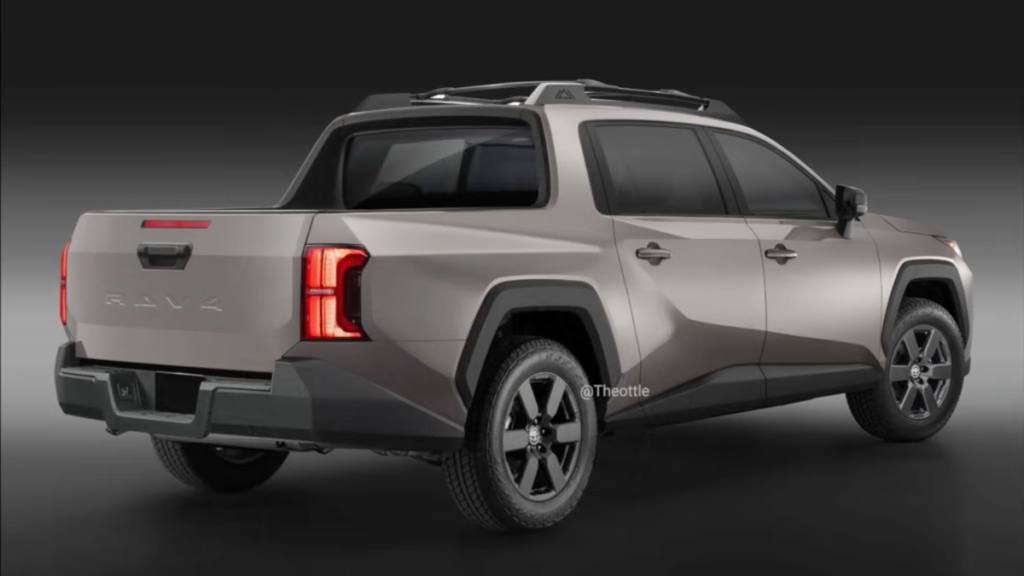
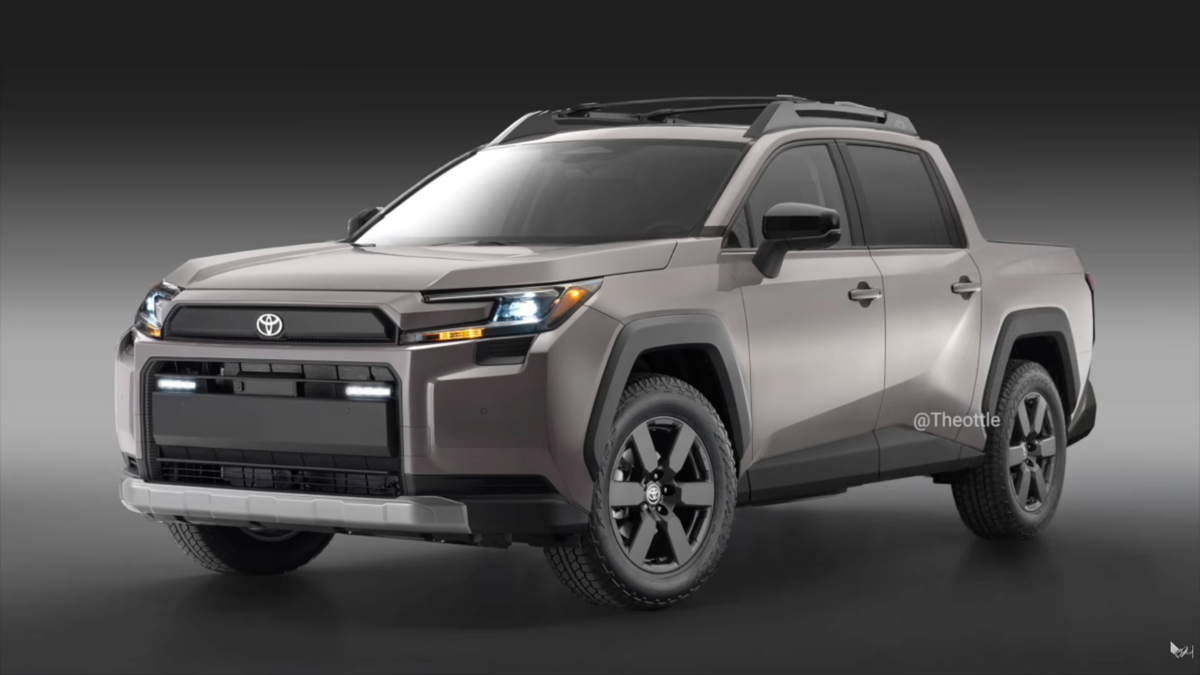
The Ford Maverick is a true success story, and it’s such a good product that it’s attracting Toyota and Honda buyers. These automakers are not content to let that slide, with Honda recently trademarking a name that looks perfect for a compact unibody pickup, and Toyota North America CEO Ted Ogawa alluding to exploring the segment earlier this year. Now, a new patent filed with the United States Patent and Trademark Office indicates that Toyota‘s plans for a Maverick rival have more momentum than the automaker is willing to let on. The patent explores a truck-specific suspension mounting that aims to overcome some of the drawbacks of a traditional unibody design and indicates that Toyota is taking this potential opportunity seriously.
Toyota Wants To Make Unibody Pickups Stronger
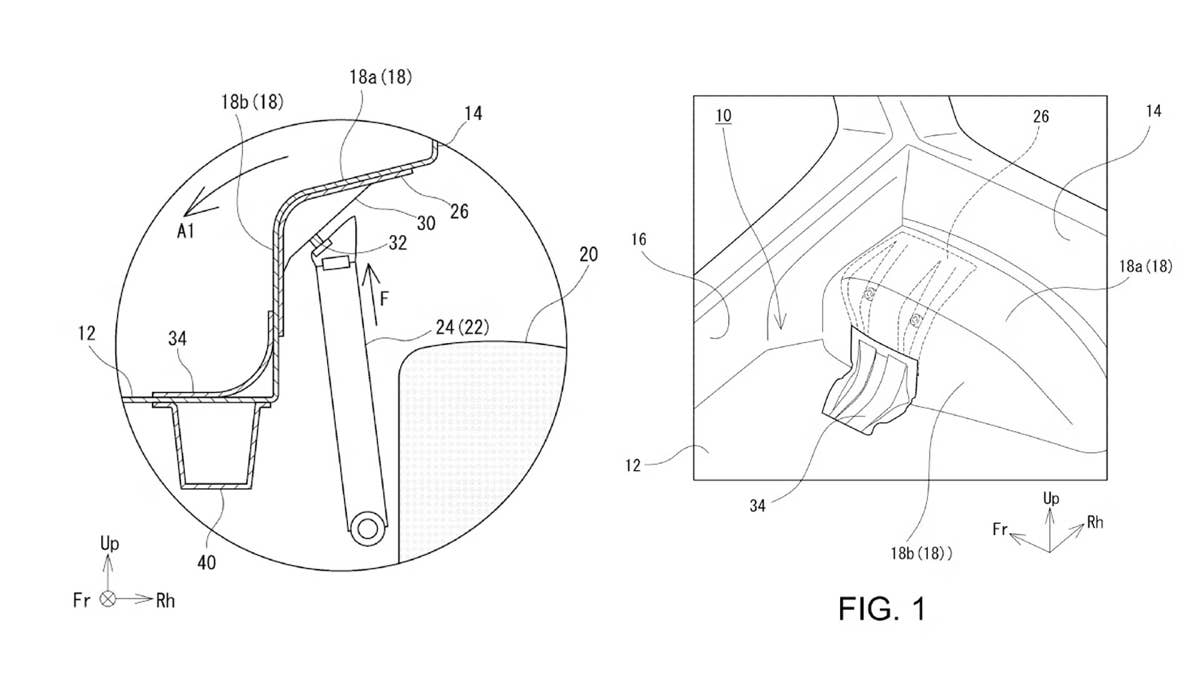
In your typical unibody vehicle, the rear suspension is attached to the body through strut towers in the wheel wells, but Toyota’s patent points out that when load is transferred through the shock absorbers, the strut towers can be pushed inward, and if the load is increased by heavy cargo, the forces of driving through a dip in the road, or a jump, the towers can cause the chassis to bend inward. While this bend is mild and the structural components return to their original shapes once the load is released, over time, permanent deformity may occur, and the chassis components may lose some structural rigidity. Toyota’s patent seeks to prevent this deformation, and it’s specific to pickups because while a car or crossover can transfer forces from the suspension through a bulkhead or the roof structure, or even with a strut brace between the two shock towers, a pickup doesn’t have any such crossmembers to absorb the forces.
Related: Toyota Compact Pickup Truck Preview: Could It Look Like This?
Toyota’s solution is described as a “strainer,” added to the truck bed to more evenly distribute the forces of a loaded suspension system. The component has multiple beads (creases added to sheet metal to improve bending strength), and along with additional beads on the rear arch itself, plus welded nuts holding the rear shocks to the body in those reinforced beads, Toyota’s design aims to keep the inner wheel arches from deforming when the suspension is fully loaded. The same idea can be applied to a crossover without the strainer, with a rear cross-member being implemented instead.
Autoblog’s Take
The patent seems to indicate that not only is Toyota interested in producing a compact unibody pickup that is sturdier than traditional designs, potentially improving both off-road ability and towing capacity, but it’s also exploring using a single platform for both a crossover and a pickup. Dealers have asked for a compact truck, and camouflaged mules spotted in South America suggest Toyota has taken their pleas seriously. Whether Toyota is working on a subcompact Corolla-based pickup or a compact RAV4-based truck is unclear, but both would surely be popular. Maybe it’s time for the Stout name to return.