What’s the biggest issue in AI at the minute? Is it supposedly runaway models slipping out of their sandboxes in order to hack and collude with one another—actions that are prompting calls for air accident investigator-style bodies to keep AI in check? Is it the yo-yoing stock markets as a result of those incidents?
Or is it the name AI itself, and whether it should be called superior intelligence, extreme intelligence, or supreme intelligence?
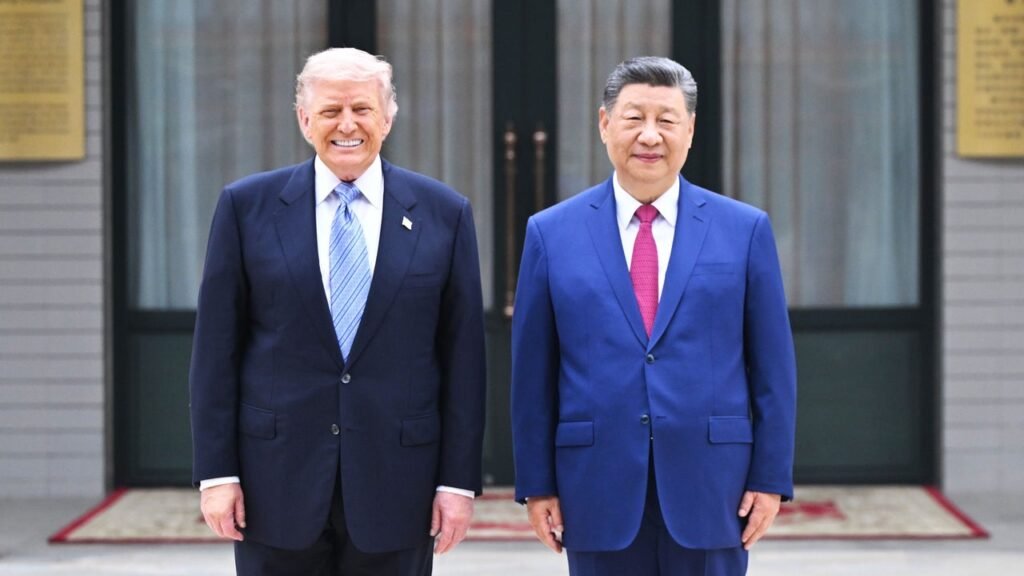
Donald Trump seems to think it’s the latter. Given a pulpit and a global audience at the U.N. General Assembly in New York this week, he focused on rebranding a concept that has existed for 70 years. “The use of the word artificial makes intelligence fake, it makes it sound fake,” he said. In U.S. documents, AI will be “hereinafter officially called ‘Super Intelligence’.” That was the preferred term after Trump polled his followers on Truth Social about what better to call it.
The quibble with the branding of AI isn’t exactly wrong. The “intelligence” bit of AI has always been a misnomer. But it’s not exactly the most important thing in AI at present.
Contrast that with the other AI superpower: China. President Xi Jinping used a keynote speech at Shanghai’s World Artificial Intelligence Conference in July to lay out four priorities for his country, and the world. Those included encouraging open-source development, keeping AI under human control, widening access to the technology, and building international rules and standards around it.
China chose to do more than speak about those issues—it put potential solutions, even if flawed ones, into place. Its government published an eight-part action plan covering everything from access to computing power and high-quality data to open-source AI, skills, technical standards, and safety governance. It has also been pushing for more AI capacity in developing countries—something the rest of the world should pay attention to, because it echoes the way China has exercised soft power by supporting infrastructure projects in past generations. Access to the vast amounts of computing power needed to build and run the technology remains highly unequal.
China isn’t perfect—far from it. The country has an extraordinarily restrictive approach to information and speech, and it sees AI governance as reflecting its own interests, which are often far from those of much of the rest of the world. Nor is Trump’s obsession with naming the sum total of American AI policy: His administration published a 90-point AI Action Plan last year spanning infrastructure, innovation, and the export of American technology overseas.
But listen to the two leaders’ public proclamations and the gulf between how they’re approaching the biggest problem—and biggest opportunity—of our time is difficult to miss. Trump told the U.N. that America “totally rejects” attempts to create what he called a “globalist scheme of control” for AI. China, meanwhile, is trying to establish some sense of consensus, even if it’s one we ought to be wary of, around standards, infrastructure, and governance.
All that stuff matters way more than whether we call AI artificial, super, supreme, or anything else. But it’s something Trump and those around him seem far less focused on. You can call AI whatever you like. What matters is who gets to decide how the world builds it.