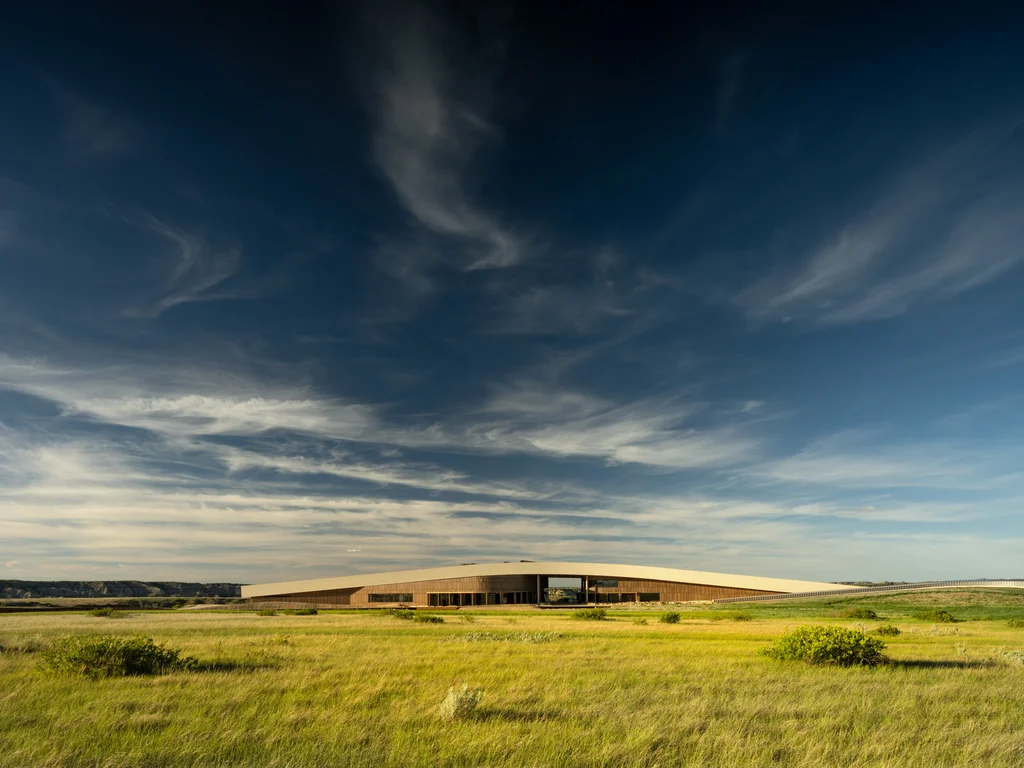
Blending almost seamlessly into a butte in the rugged Badlands of North Dakota, the new Theodore Roosevelt Presidential Library is, in a number of ways, unlike any of its predecessors. The most important difference is that the library, which opens the Fourth of July in Medora, North Dakota, has been wholly conceived, designed, and built more than a century after the 26th president’s death.
“We were not working for the president. And so we had to think about What is the purpose of this institution? Because it’s not about pleasing the ego of one man,” says Charles Melcher, the museum’s executive storyteller, and founder of the studio Future of StoryTelling.
Instead of making a museum in the traditional mold of a presidential library—flattering exhibitions, robust archives, a tight focus on the time in office—the Roosevelt library was conceived from the start to be an institution where the remarkable and tragic life of a towering American figure known as “TR” is framed as a series of lessons visitors can learn from and take into the future.
“The idea was to make this place relevant for people today and have an impact on tomorrow,” Melcher says.
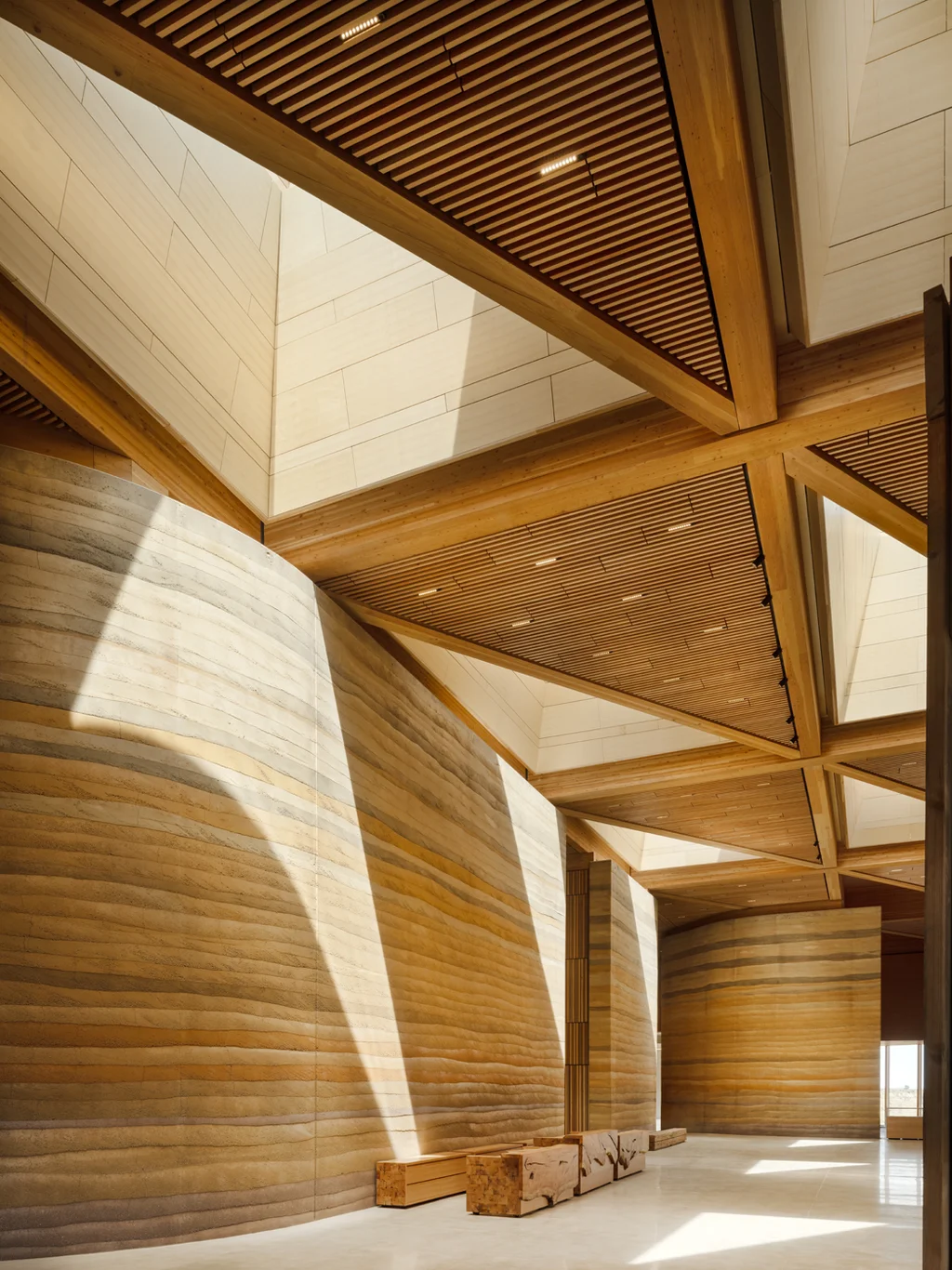
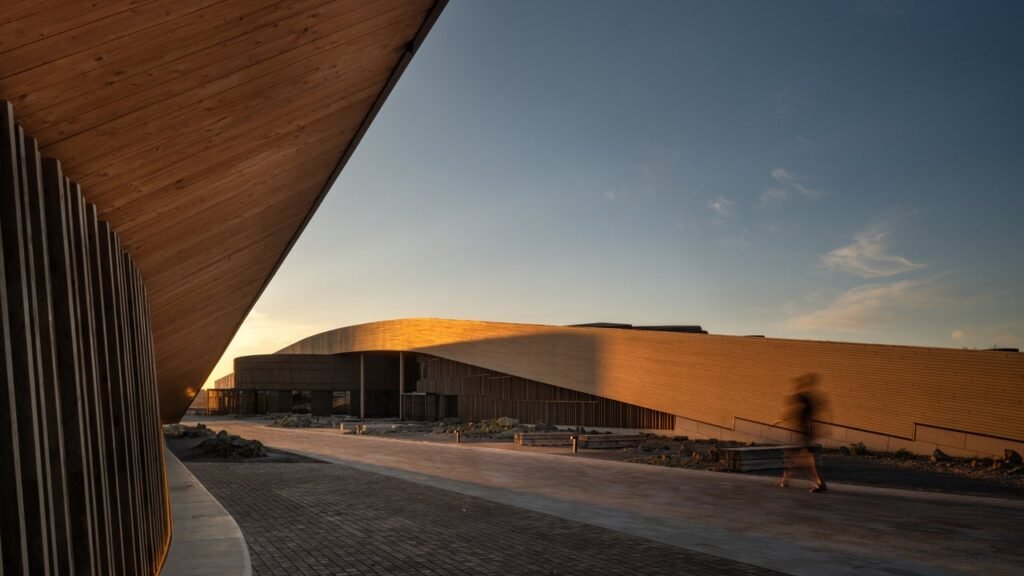
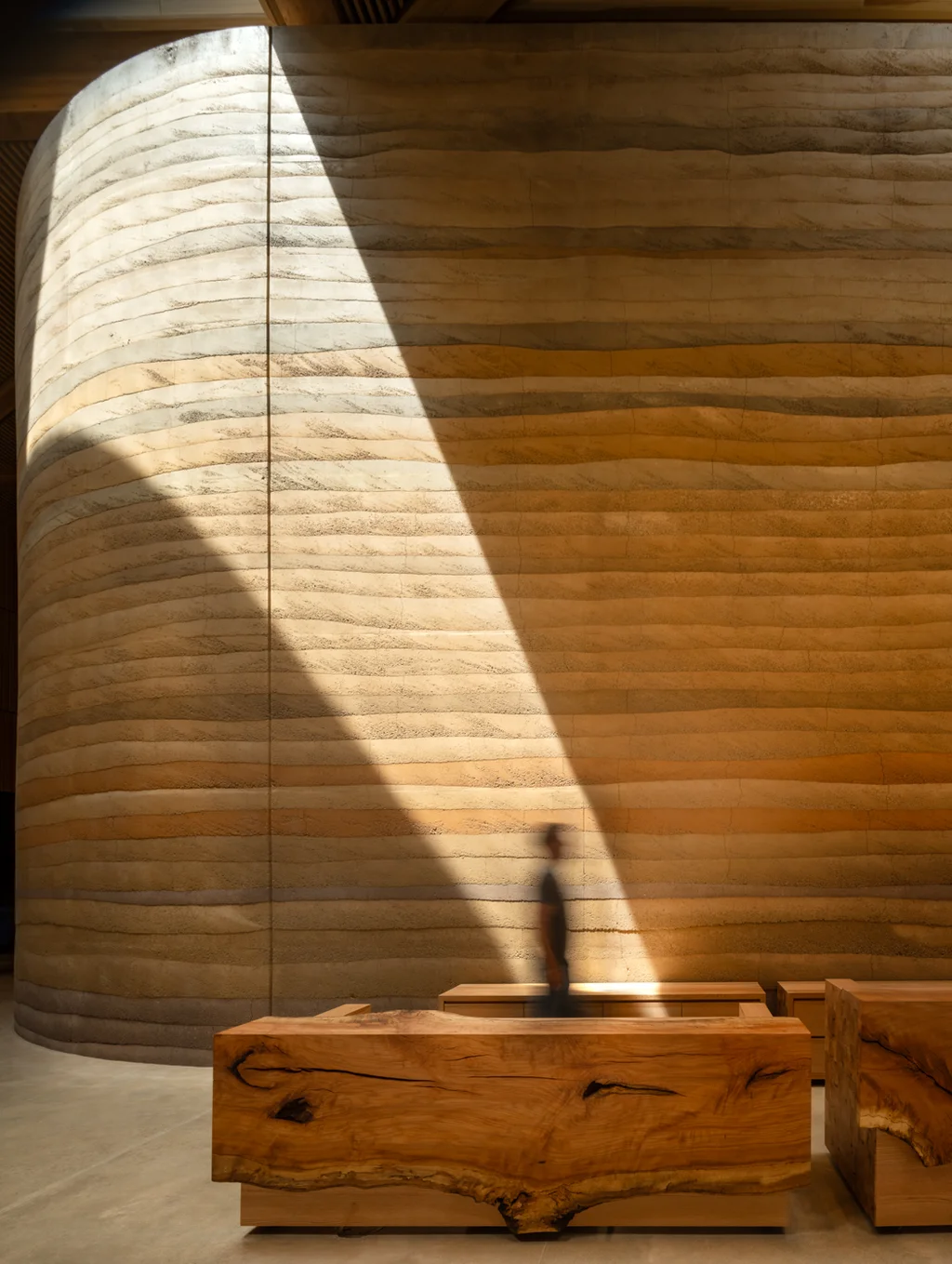
The library itself is a stunning building, designed by the architecture firm Snøhetta to emerge from the landscape and blur into the terrain. With a structure made primarily of rammed earth that literally brings the surrounding land into the building, the library was designed to extremely high environmental standards and in deep conversation with the surrounding landscape.
“The use of rammed earth allows you to still feel connected to the wider view of where you are, even when you enter the main door,” says Craig Dykers, cofounder of Snøhetta. “The landscape is the library and the library is the landscape.”
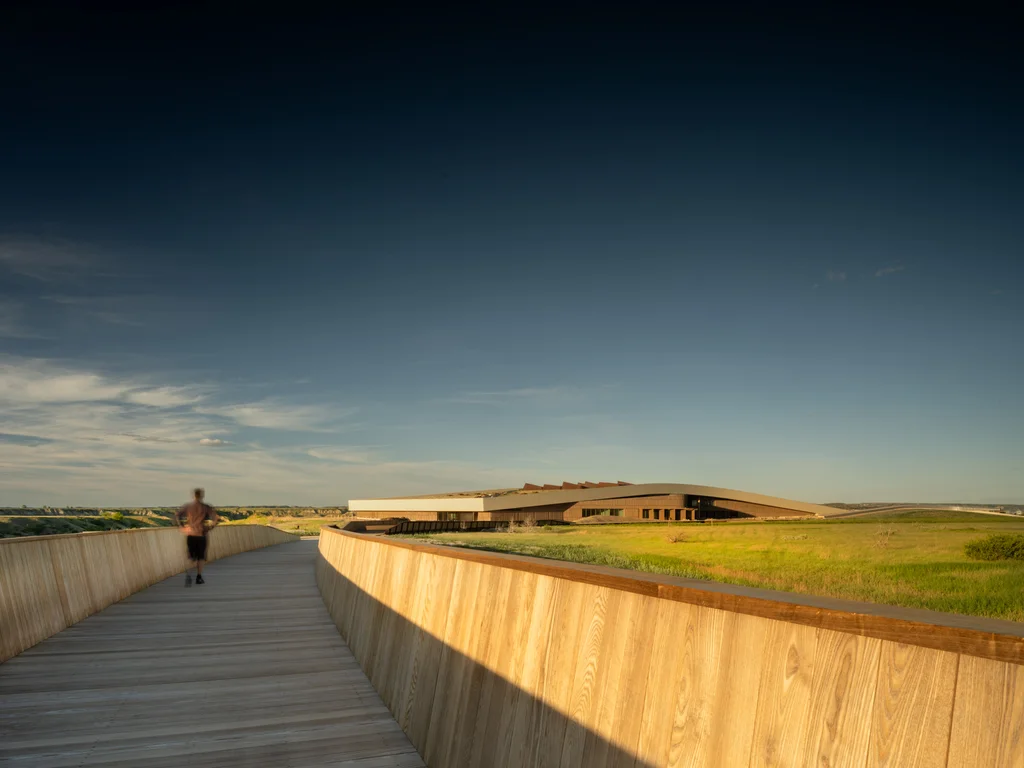
Covering about 95,000 square feet on a 93-acre site, the building is designed to embody Roosevelt’s passion for conservation, one of his most enduring legacies.
Snøhetta designed the building to meet the standards of the Living Building Challenge, which calls for projects to be environmentally regenerative, and it checks the main sustainability boxes, including zero carbon and zero water waste. A large on-site solar array provides much of its electricity, and the rest comes from another array nearby. The library’s roof doubles as accessible green space, and there’s a mile-long boardwalk trail that brings visitors into a restored grassland with more than 60 species of native plants.
Large skylights bring controlled daylight into the galleries, providing almost all of the library’s lighting, especially in its large, central spine. This building-length hall holds a large narrative gallery that tracks Roosevelt’s life through artifacts and displays.
On either side of this narrative gallery, the library includes what it calls “adventure galleries,” featuring interactive and immersive exhibitions recalling some of the most colorful chapters of Roosevelt’s life. Designed by the exhibition and experience design firm Local Projects, these galleries bring visitors into Roosevelt’s shoes and mind during events as diverse as his sickly, imagination-rich childhood, his tragic personal loss, his military derring-do, and a near-deadly canoe trip down the Amazon.
“He’s literally the only president for whom his time in the White House was the most boring part of his life,” says Local Projects founder Jake Barton.
The architecture was designed simultaneously with the development of the library’s exhibitions, which is unusual for such a large institution, but it created the opportunity to have some of the themes and stories from Roosevelt’s life directly influence the building. This is most evident in the placement of large viewing windows, including one at the far end of the narrative gallery, and smaller ones. These openings create a deeper connection to the unique landscape of the region, with its gently rolling topography cut away by sudden canyons and ravines.
“It has this very dramatic, erosive quality,” Dykers says.
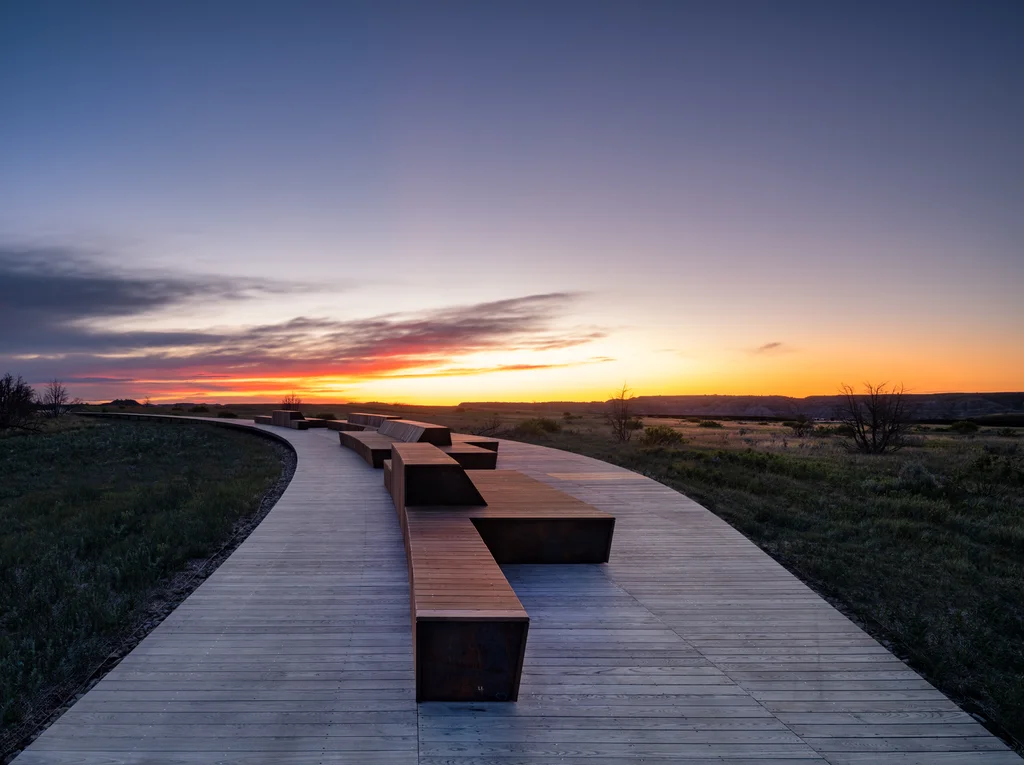
That inspired the architects as they were first developing the concept for the entry into the library’s design competition back in 2020. Walking the site, they were shown a central area on the butte that was envisioned to hold the library building. But, according to Snøhetta partner and landscape architect Michelle Delk, the designers were more drawn to vistas on the butte’s edge, which is where they ended up placing the library.
“The building captures views out towards [Theodore Roosevelt] National Park and towards the Little Missouri Valley, where TR first arrived in the Badlands,” Delk says. “But it also meant that we were able to disturb less of that site than we would have had we placed the building more central.”
That proved a poignant choice, particularly in a small, black gallery that features Roosevelt’s diary entry from the day in 1884 when his mother and wife both died. “The light has gone out of my life,” he wrote underneath a large black X.
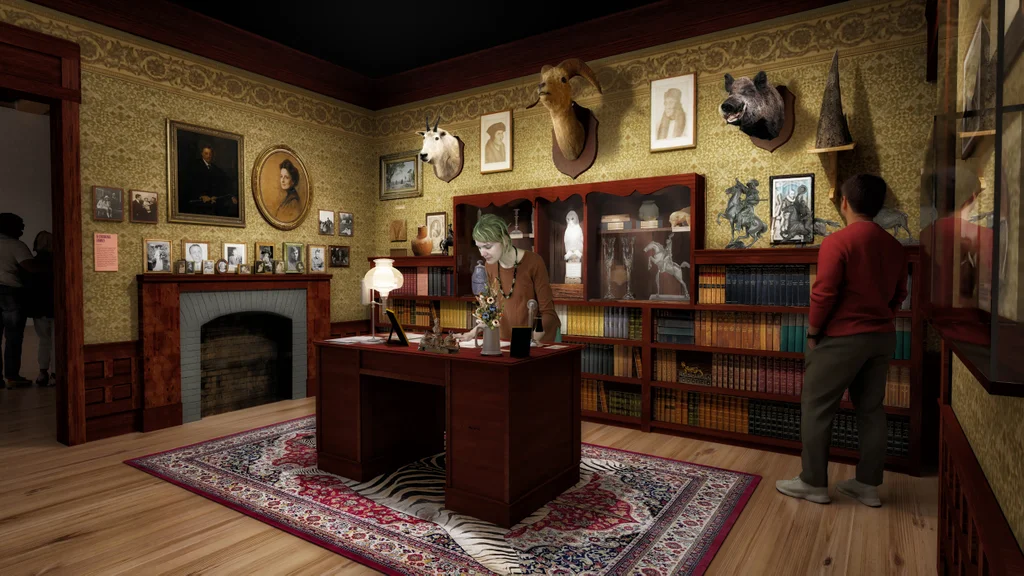
“You can look out onto the North Dakota landscape and use it almost as a healing moment,” says Peter Vikar, physical design director at Local Projects.
Roosevelt himself used the region that way, heading there after the deaths of his mother and wife to reset his life, becoming a rancher and cowboy, and eventually developing an awareness of the importance of the conservation of natural lands and systems.
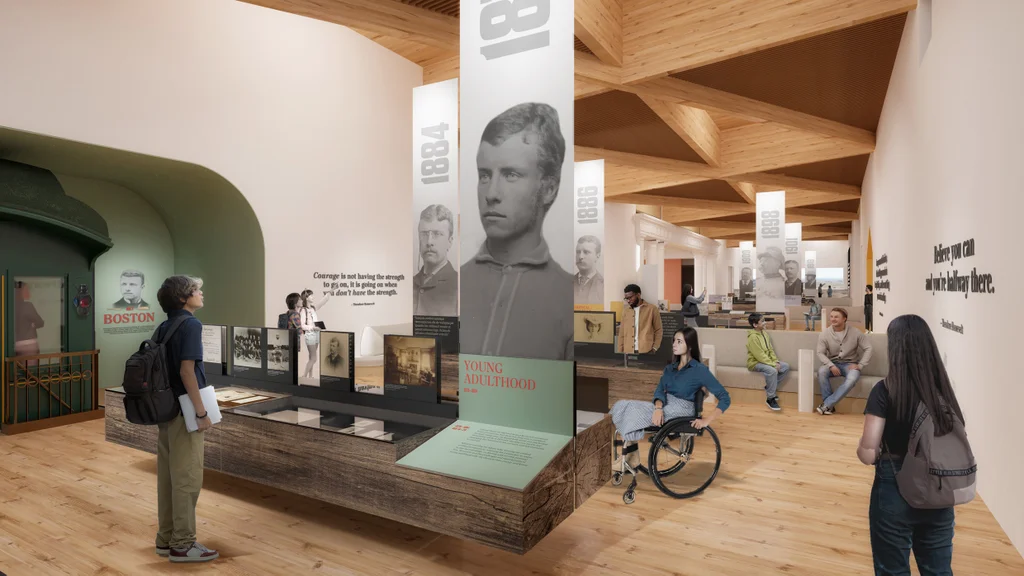
Melcher says this is the kind of takeaway visitors are intended to have, and the exhibitions and interactive elements of the library are aimed at making Roosevelt’s life story one that resonate with people today.
“The goal was to make the guest the hero and to design a series of experiences and actions that they could embody and learn from and literally be inspired in a way that would be transformative for them as they left,” he says.
For a president who’s been dead for more than a century, it’s a challenging goal. But Roosevelt and his swashbuckling persona have staying power in American history. The building and its exhibitions are intended to tap into that enduring fame and over-the-top character by appealing to a range of visitors, from kids who may have never heard of Roosevelt to what the designers began to refer to as “Ted heads.”
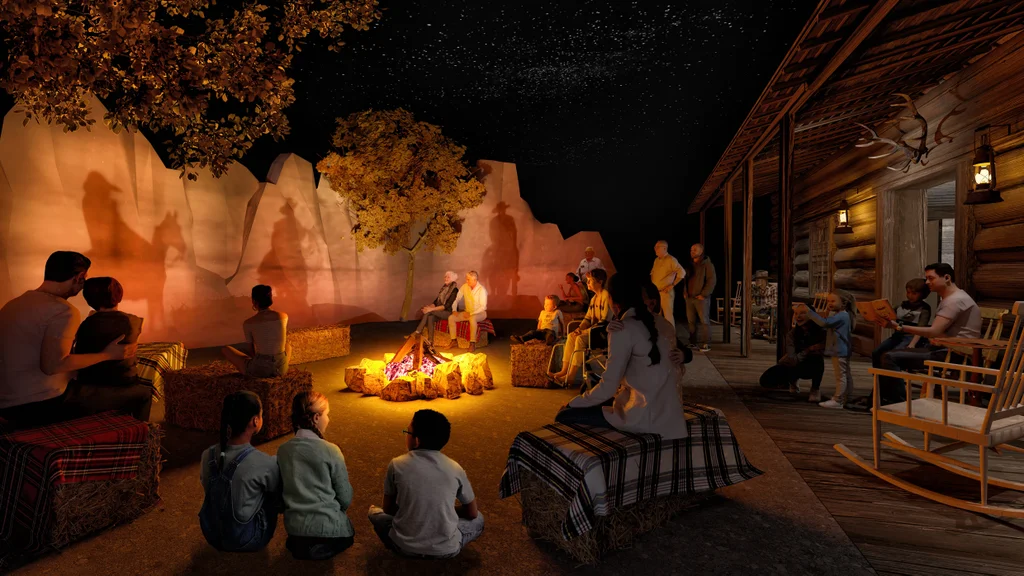
“We really thought about designing for various ages and the skimmers, the swimmers, and the divers,” Melcher says. “Different people are going to want different levels of engagement.”
The library is opening just as the concept of a presidential library is undergoing a reconsideration. The Obama Presidential Center, a community-centric and explicitly non-archival institution, opened in Chicago in June. And earlier this year, President Donald Trump revealed renderings of his own proposed post-term institution that packs Trump memorabilia and White House re-creations into a Miami skyscraper.
Roosevelt’s library carves its own space from these, and from all the other presidential libraries that currently exist. By framing the project around visitors and not merely the stories of a single significant individual, it becomes an institution that’s as much about the future as the past.