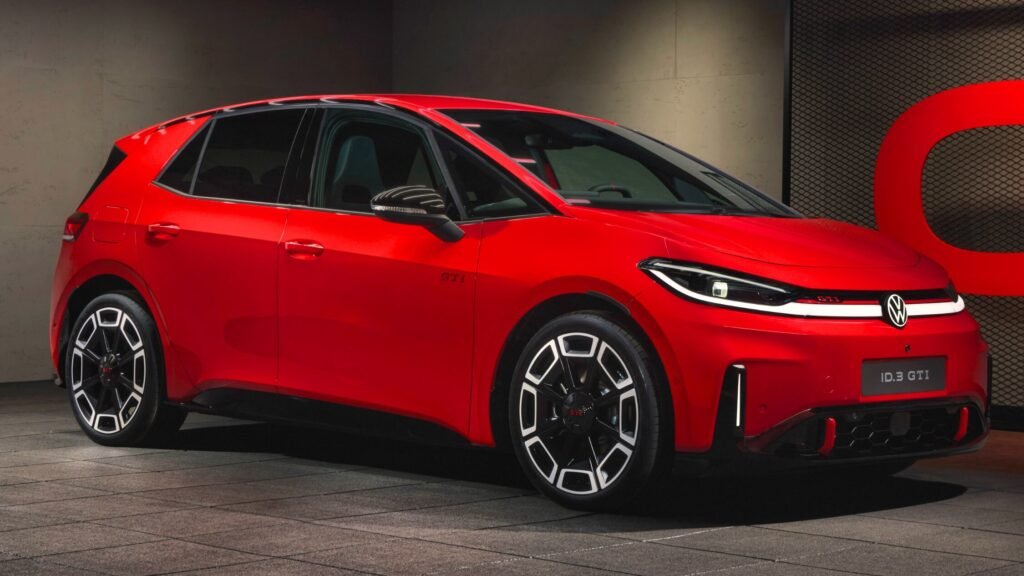
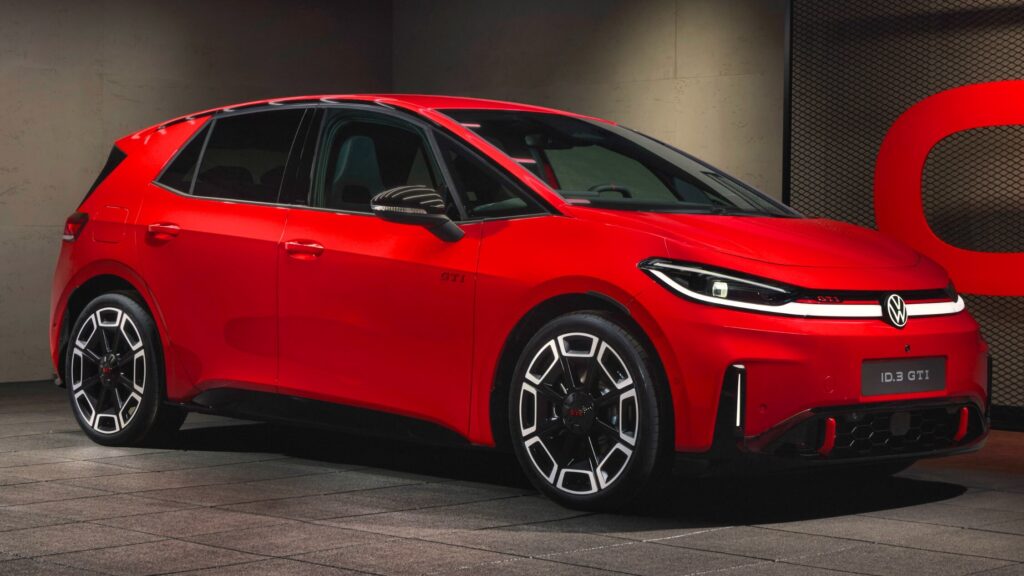
- ID.3 GTI gets a single rear motor and can go from zero to 62 mph in 5.6 seconds.
- 79 kWh net battery gives a WLTP range of 373 miles, can charge at up to 183 kW.
- 20-inch Wörthersee wheel design lifted from the smaller, also-electric ID. Polo GTI.
VW celebrated its GTI badge’s half century earlier this year with the launch of the first ever electric hatch to wear those three letters, the ID. Polo GTI. The ID.3 GTI then, is only the second ever electric GTI. But is a pioneer in other ways. It’s the first ever VW GTI to send its power to the rear wheels, rather than the front.
Europe’s ID.3 electric hatch was overhauled in April, and rebranded ID.3 Neo. The GTI is the halo model of the new lineup and is effectively the pre-facelift GTX, but this time with a GTI badge and some design cues pinched from the ID. Polo GTI.
Related: VW’s ID. Polo Waiting List Is So Long You’ll Get A McLaren Sooner
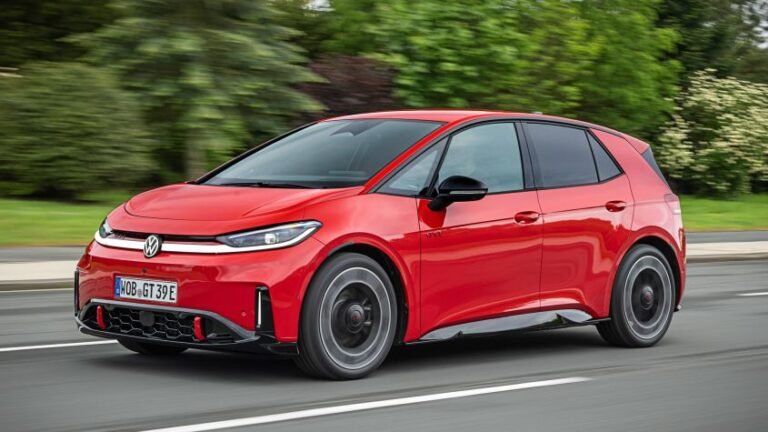
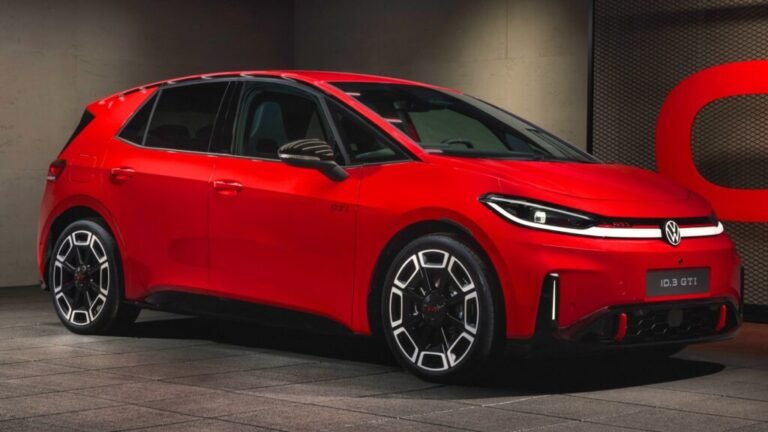
And damn, doesn’t it look the better for it? A GTI trademark red stripe connects the IQ. Light LED matrix headlights and a the gloss-black honeycomb lower grille is punctuated by a pair of red-painted elements that are meant to look like racecar towing eyes.
Contrasting with the launch cars’s searing Tornado red paint – it’s actually a classic 1980s GTI color – are the gorgeous black 20-inch Wörthersee wheels and black mirror caps. But unlike the GTX, the GTI features a body color roof, rear spoiler and rear panel.
What has been carried over from the GTX is the single 322 hp (326 PS / 240 kW) electric motor, which outranks the Golf GTI Edition 50’s as the most powerful GTI engine by just one horse. Unlike the ID. Polo GTI, which uses VW’s new MEB+ front wheel drive platform though, the ID.3 rides on the older MEB shared with models like the ID.4 and ID. Buzz.
Beats Edition 50 For Power, But Not Pace
Which means the single motor sends its power to the rear wheels, VW quoting the exact same 5.6-seconds zero to 62 mph (100 kmh) time it did for the old GTX Performance. That compares with 6.8 seconds for the 223 hp (226 PS / 166 kW) Polo GTI and 5.3 seconds for the petrol GTI Edition 50.
A 79 kWh (net) battery under the floor can charge at 183 kW, top-up from 10-80 percent in a middling 29 minutes and gives a solid WLTP range of 373 miles (601 km). The Polo manages just 263 miles (424 km) from its 52 kWh battery.
GTI Mode
But is the GTI just a GTX with some Tornado red lipstick? VW says it’s more than than thanks to a new GTI-specific tune for the DCC adaptive dampers, springs and anti-roll bars. There’s even a GTI driving mode that shifts the motor, throttle response, steering and chassis into maximum attack mode, and is activated by pressing an illuminated button at the base of the sport steering wheel’s center boss.
You won’t find that feature in other ID.3s, or the motorsport-style 12 o’clock marker or red, black and gray bucket seats. But the GTI does benefit from the same interior upgrade regular ID.3s got earlier this year. That means higher-quality materials, clickable steering wheel buttons and another bank of real switches under the 12.9-inch touchscreen.
One thing VW hasn’t yet revealed is how much the ID.3 GTI will set you back when it goes on sale in Europe (but not America) in early 2027. The old GTX Performance cost more than £46,000 in the UK ($62,000), placing it above the Golf GTI, and even making it more expensive than the mighty R. For some potential buyers, those cars, and the slower, but roomy and fun-looking ID. Polo GTI with its circa £34k ($46k) sticker, are going to seem like tempting alternatives.
VW