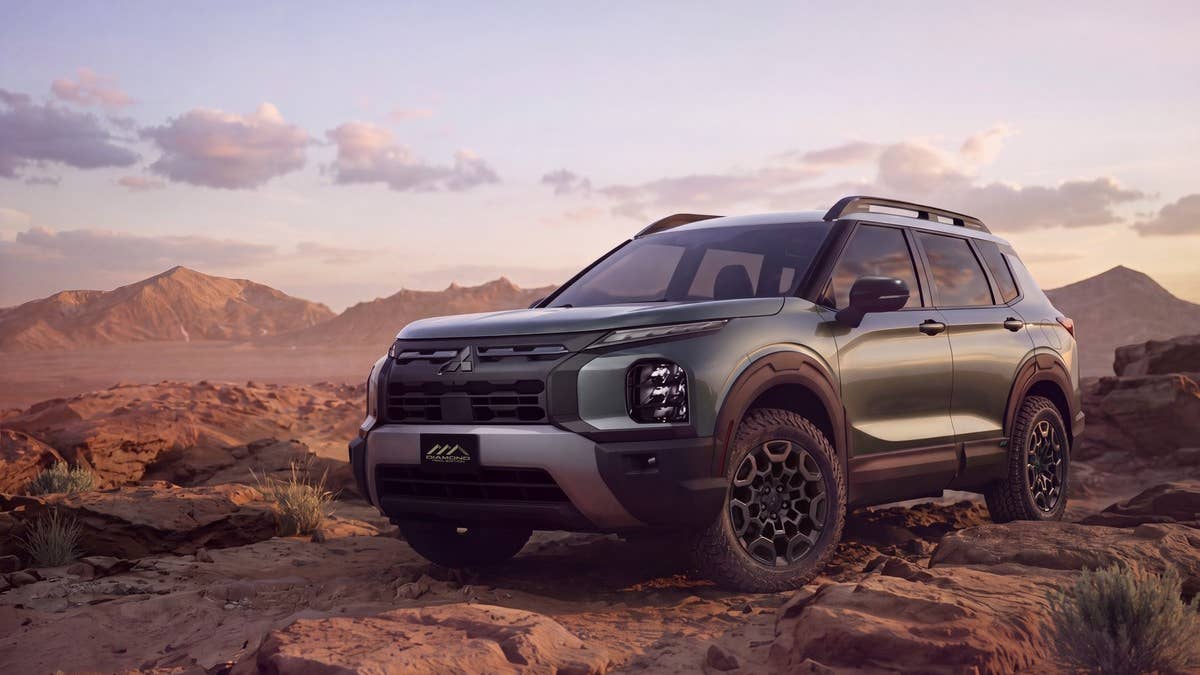
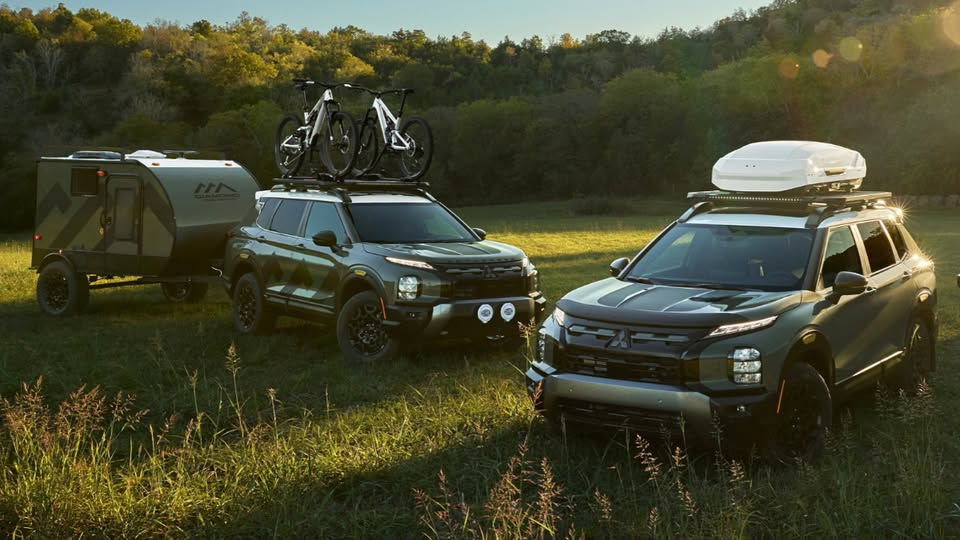
Mitsubishi showed up at the 2026 SEMA Show with an Outlander wearing proper hiking shoes, and I’m pleased to report that the changes extend beyond another badge package. The 2028 Outlander Diamond Trail Edition gets all-terrain tires, revised bumpers, and an upgraded Super All-Wheel Control system with a dedicated Rock mode. It’s still a family crossover, but Mitsubishi appears interested in letting that family venture farther than the super-store parking lot.
That matters to those of us who remember the Montero, known elsewhere as the Pajero. Mitsubishi once built some outstanding off-road vehicles, and I would love to see more of that attitude return to its American lineup. The Diamond Trail Edition isn’t a modern Montero replacement, but it’s an encouraging step. After inspecting the SEMA display, I came away interested in what the production vehicle might accomplish. Driving it will have to settle the rest.
What actually improves its off-road capability?
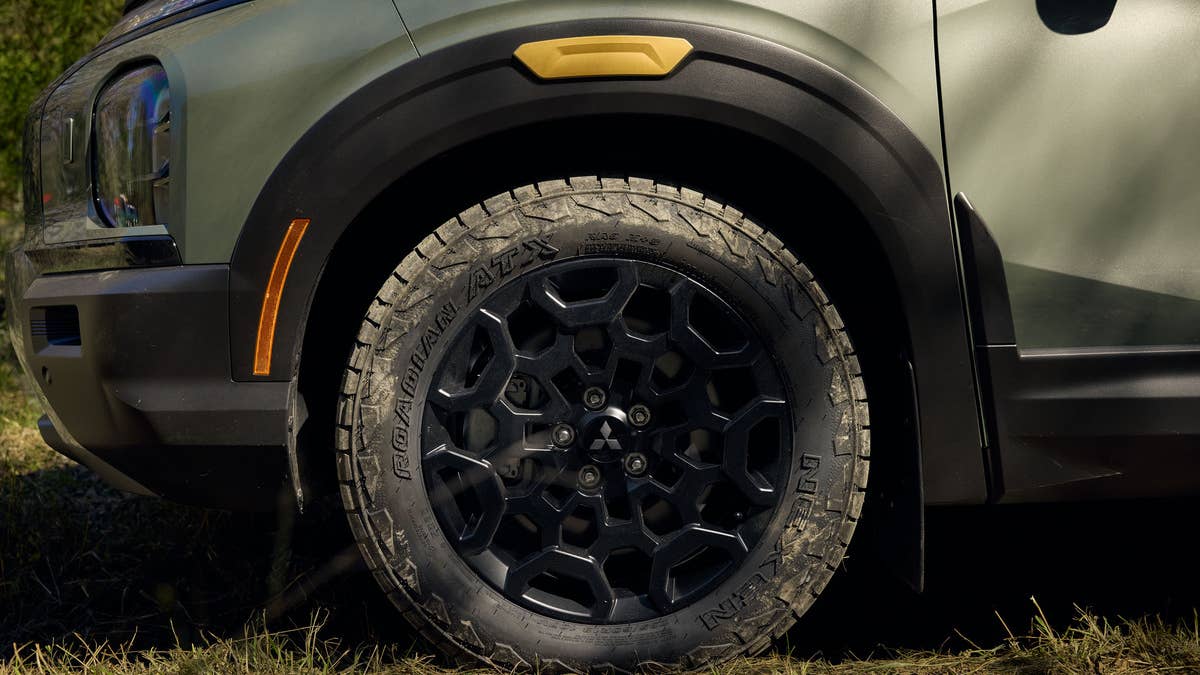
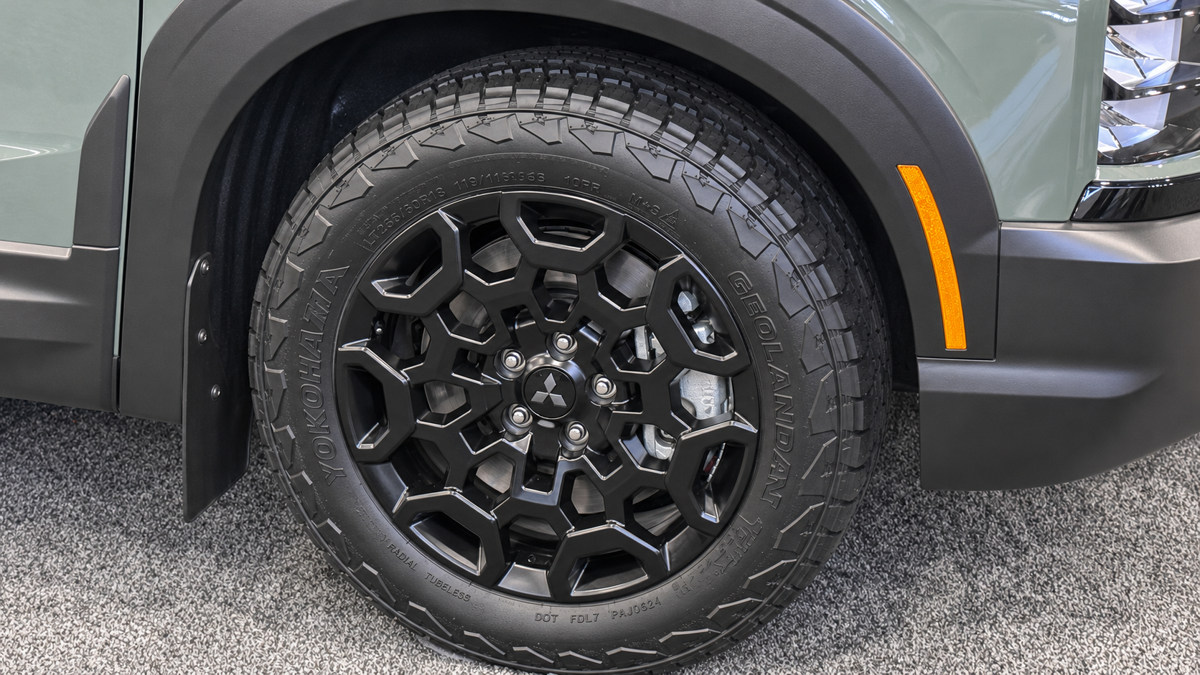
The most important upgrade may be the least glamorous: the tires. Dedicated Nexen Roadian ATX all-terrains replace the sort of street-oriented rubber that often undermines a crossover’s adventurous intentions. They’re mounted on unique 18-inch black alloy wheels. Tires (usually) make a substantial difference when pavement gives way to loose dirt, mud, and uneven surfaces. Adding traction before adding more decorative plastic seems like a sensible order of operations.
Mitsubishi also reshaped the front and rear bumpers. The approach angle improves from 18.3 to 20.5 degrees, while the departure angle increases from 22.2 to 23.1 degrees. Ground clearance is listed at 8.3 inches. No bueno. Those figures won’t intimidate a Wrangler owner, but improved clearance around the ends may mitigate scraping on rutted trails.
The other significant change is Rock mode. Mitsubishi’s S-AWC system receives more aggressive brake-based wheelspin control, reacting faster to help maintain traction when individual tires lose grip. Selecting Rock mode also automatically activates Hill Descent Control, with an adjustable target speed. These are useful changes, although a drive-mode label doesn’t magically install locking differentials or a low-range transfer case. Bummer.
Related: The 2027 Toyota bZ XLE: It’s a Bargain that Grandpa Loves
Friends of mine have taken regular S-AWC-equipped Outlanders through surprisingly deep mud with good results. That makes me curious about what improved tires and more purposeful calibration can accomplish together. I’m optimistic, but I haven’t driven this version off-road, so I’ll save the victory parade until we get it dirty.
Powertrain and towing
The Diamond Trail Edition uses a 1.5-liter turbocharged four-cylinder with a 48-volt mild-hybrid system. Reported output is 174 horsepower and 206 pound-feet of torque, paired with a continuously variable transmission (CVT) and standard S-AWC all-wheel drive.
The mild-hybrid designation deserves clarification. This isn’t the Outlander PHEV, and you won’t be plugging it in for an extended electric commute. The electrical assistance supports the gasoline powertrain rather than turning it into a battery-powered trail machine.
Related: Honda’s 1,300-HP Hybrid Passport Baja Spec Takes Aim at Trophy Truck Racing
I’m less enthusiastic about the CVT when discussing sustained, demanding off-road work. It may be perfectly agreeable for commuting and moderate trails, but this package doesn’t change the Outlander’s fundamental assignment. It’s an everyday crossover with greater capability, not a dedicated rock crawler.
The Outlander’s familiar 2,000-pound towing limit is another consideration, although buyers should confirm the Diamond Trail’s final rating when production specifications arrive. A lightweight camping trailer may fit the mission. A substantial travel trailer probably belongs behind something else. The matching trailer on the SEMA stand looked terrific, but attractive paint coordination doesn’t increase a tow rating. Mitsubishi said the trailer on display weighed just under 2,000 pounds, which would tax the CVT. Of that, I have no doubt.
Three SEMA builds, three levels of ambition
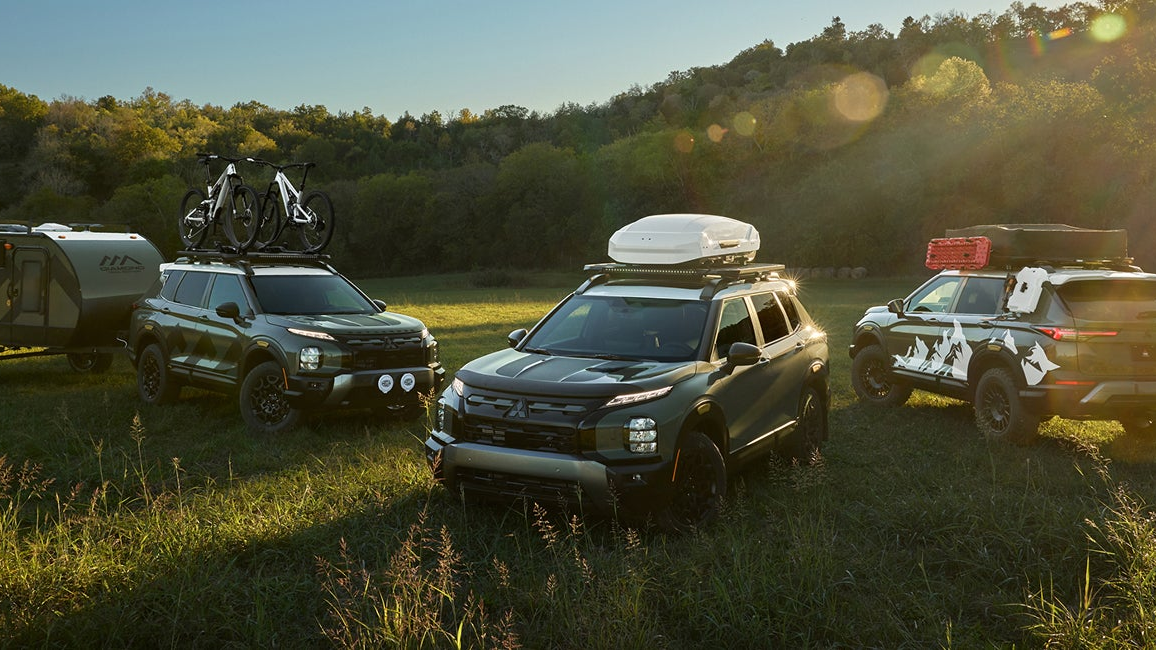
Mitsubishi displayed three interpretations of the Diamond Trail Edition. The closest to production added genuine accessories and a color-matched Thule roof box. A second build wore BFGoodrich Trail-Terrain tires, a 1.5-inch Anderson Design & Fabrication lift, auxiliary lighting, and a roof rack carrying mountain bikes. It also had that matching camping trailer.
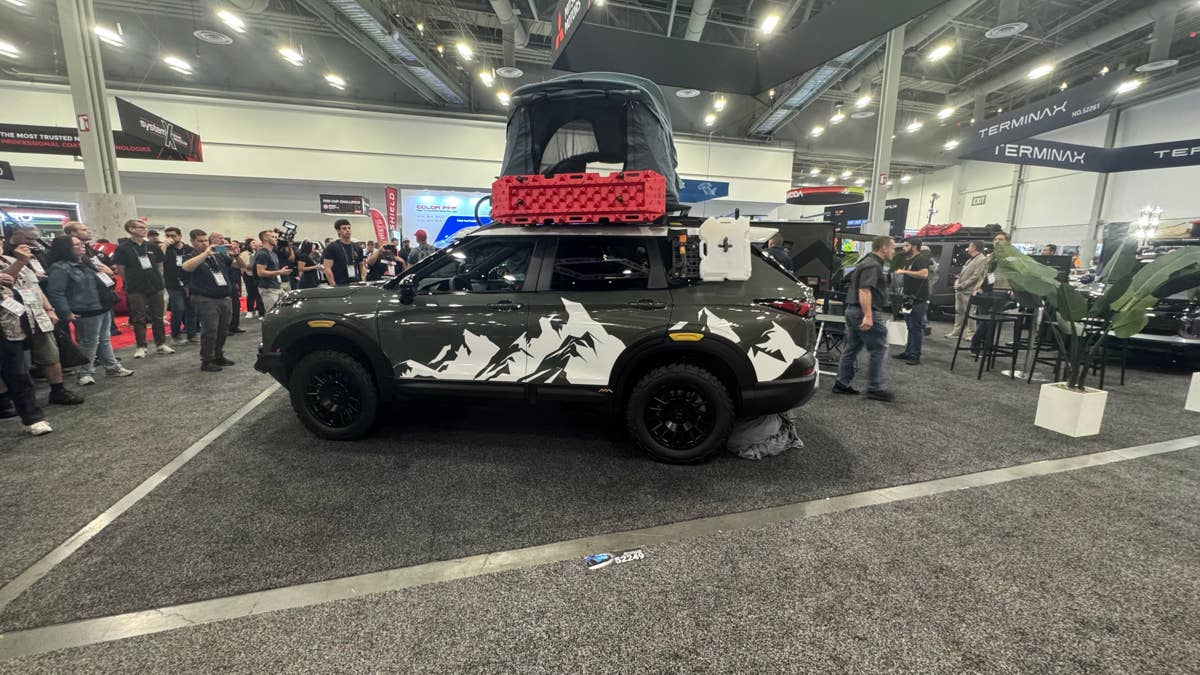
The most aggressive example stepped up to a 2.5-inch Flatout Suspension lift, Method wheels, BFGoodrich all-terrain tires, a rooftop tent, traction boards, and additional lighting. It looked ready to disappear into the woods until somebody remembered a work meeting.
Those lifted vehicles are customized builds, not confirmation of factory lift packages. Aftermarket components on a show vehicle and accessories supported through Mitsubishi dealerships are different propositions. Still, they demonstrate possibilities beyond the standard vehicle, and I hope Mitsubishi pays attention to the response.
Exterior and interior design
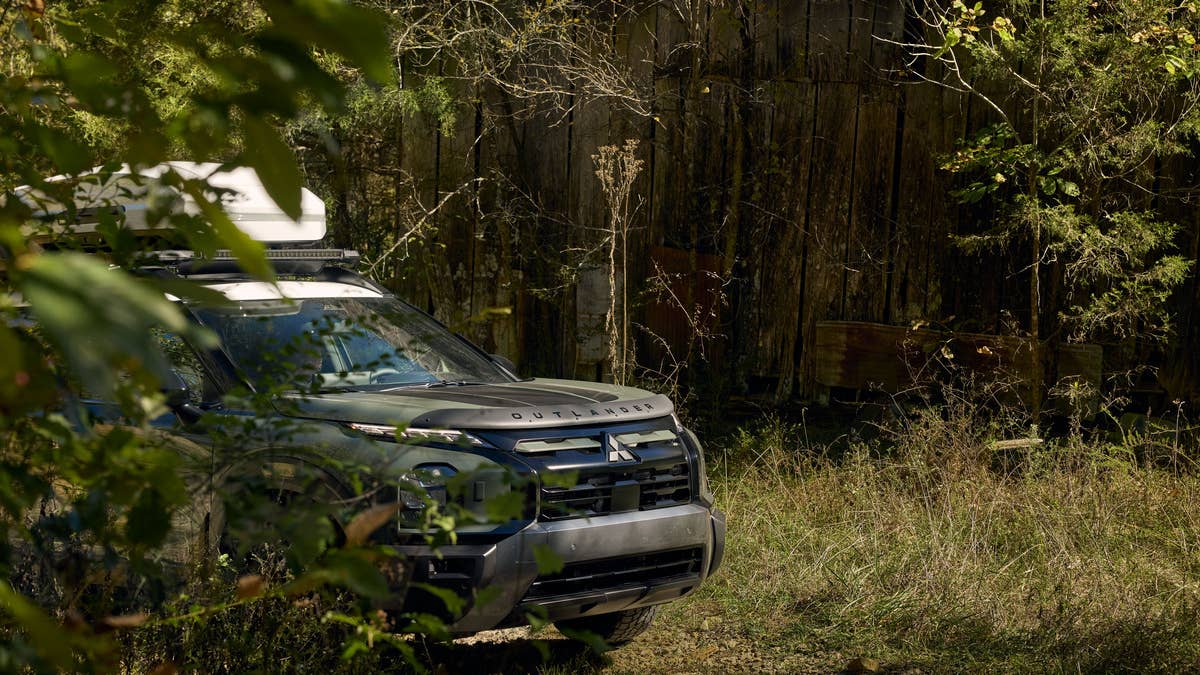
Trail Green Metallic suits the Outlander beautifully, particularly with the available white roof. The matte-black grille, dark Dynamic Shield trim, textured cladding, and broader-looking fenders give it a more purposeful stance. Raised roof rails add practical mounting options for outdoor equipment.
Inside, dark-gray upholstery with khaki stitching looks appropriate for the mission. Mitsubishi says the material resists water and stains and is easier to clean. That’s more useful to an outdoors-oriented vehicle than another glossy panel that collects fingerprints every time you think about touching it.
This version also drops the regular Outlander’s tiny third-row seats in favor of a five-passenger arrangement. I’m comfortable with that trade. Those extra seats provide occasional flexibility, but they’re hardly first-class accommodations. I wouldn’t assume their removal was specifically for weight savings without confirmation.
The technology includes an off-road information display showing steering angle, individual wheel slip, and traction-control intervention. The Multi-View Camera System can remain active up to 18.6 mph, compared with 6.2 mph in the standard model. Better visibility around the vehicle is genuinely helpful when placing tires around obstacles.
Final thoughts
Mitsubishi plans to launch the Diamond Trail Edition in North America during the first half of 2027 as a 2028 model. Pricing remains unannounced, so I can’t declare it a bargain yet. The brand’s value positioning and lengthy warranty coverage should help its case, provided the final price stays sensible.
What interests me most is the combination of useful tires, improved geometry, and traction-system changes. Those upgrades address real limitations rather than merely suggesting an adventurous lifestyle. That’s noteworthy.
It still isn’t the Montero I miss. Not even close. It may come one day, but I’m running short on hope. Still, an Outlander with a little more determination, sensible equipment, and room for muddy gear is worth investigating. At the very least, Mitsubishi remembered where it keeps the hiking boots.
Related: 2027 Hyundai Palisade XRT Pro Review: Finally, Some Dirt Backing Up the Badge