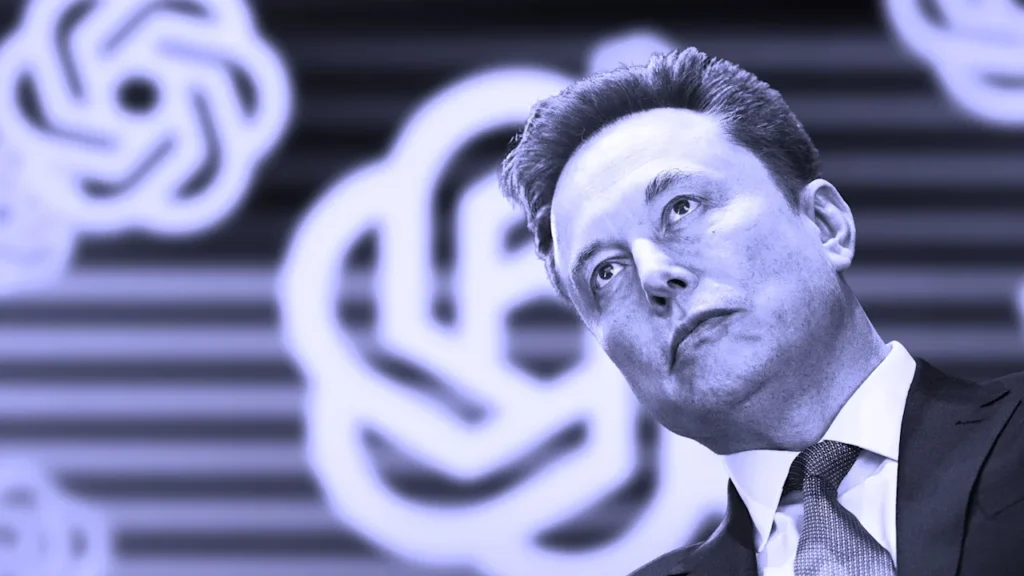
Yesterday, a jury in Oakland, California threw out Elon Musk’s lawsuit against OpenAI.
Musk had sued the company for over $150 billion in damages, claiming that its leadership had “stolen a charity” when they converted OpenAI from a nonprofit AI lab to a for-profit company.
It’s a huge win for OpenAI, to be sure.
But although many people will doubtless see this as a vindication of OpenAI’s bizarre corporate structure and breakneck growth, the way the case was resolved actually says almost nothing about the company’s underlying issues.
Juicy revelations
Throughout the long trial of Musk’s case–which took over three weeks and saw both Musk and OpenAI CEO Sam Altman take the stand–we learned plenty of juicy things about the early days of OpenAI.
We now know that OpenAI co-founder Greg Brockman has made about $30 billion from his shares in OpenAI. An entry in his journal muses about “what will take me to $1B?” in the early days of the company. Manifesting, anyone?
We also got to hear a lovely anecdote in which Musk, leaving OpenAI’s board, reportedly sparred with employee David Achiam over AI safety, calling Achiam a “jackass.” The rest of the staff apparently responded by making Achiam a “Jackass for Safety” trophy.
On a more concerning note, former employee Rosie Campbell testified that OpenAI had become increasingly focused on profits and products, disbanding teams related to safety. And we got to learn that Altman and his crew were concerned about Musk becoming an “AI dictator.”
So in terms of revelations, we didn’t walk away entirely empty-handed.
Still, Musk sought to litigate far bigger issues: whether Altman should stay on as OpenAI’s CEO, whether the company should be allowed to remain a for-profit, and by implication, whether it would be able to proceed with what’s expected to be the world’s largest IPO.
On those issues, he failed. But again, the reason is far more mundane than many people probably expect.
Musk’s miss
When the jury returned their verdict, they only ruled on one issue: the statute of limitations for the case. Most of the drama between Musk and OpenAI happened years ago, and Musk left OpenAI in 2018. He sued in 2024. The jury essentially found that Musk had waited too long to file his lawsuit.
One of the most potentially impactful legal cases in the modern AI era was thus decided not based on the secretive goings-on within a notoriously locked-down company, nor was it determined based on the alleged dictatorial leanings of the world’s richest man.
Rather, what ended up being litigated was Musk’s ability to follow deadlines. He failed on that count.
The jury’s conclusion also impacts the likelihood that Musk could win an appeal. The jury’s finding relates to a procedural fact of the case. Legal experts say that such facts are far more challenging to overturn on appeal than questions of a company’s conduct or a person’s testimony.
Of course, it’s very possible that Musk never intended to win. His motive all along may have been to troll a major competitor or to make his archrival, Sam Altman, look bad.
If that’s the case, Musk may have succeeded. People are notoriously bad at following the details of legal cases. It’s possible that the public will simply remember that OpenAI faced a big lawsuit over safety and governance, and its competitors–notably Anthropic–have had no such challenges.
Things could go the other way, though. The public’s main takeaway from all these courtroom machinations could just as well be “OpenAI won.”
If that’s the case, then Musk has essentially placed a big rubber stamp on the company’s newfound for-profit status, giving it tons of free advertising in advance of its expected IPO later this year.
Lawsuits aren’t just fought in the actual courtroom–they’re litigated in the court of public opinion. By making a public spectacle of his pursuit of OpenAI, Musk may have succeeded in weakening the company. Or he may have inadvertently handed it a golden ticket.