Seeing a cat drink water and then promptly bring it back up can be confusing. Sometimes the explanation is fairly simple, particularly if a cat has swallowed a large amount of water very quickly. But when it keeps happening, it’s time to pay attention.
One important detail is whether a cat is actually vomiting or regurgitating. The two can look similar, but they are very different processes.
Vomiting usually involves obvious effort. A cat may retch, lower its head, and have noticeable abdominal contractions before bringing something up. Regurgitation is much more sudden and happens without the same kind of effort. It often involves undigested food that has come back up from the esophagus, or water.
Regurgitated water can also look different from clear liquid in vomit. Water is thin and runny and is generally brought back up soon after drinking. Clear vomit, meanwhile, is thicker and stickier because it comes from the digestive tract.
Once that distinction is clear, there are several possible explanations for why a cat might regurgitate water.
The Water Simply Went Down Too Fast
One of the more harmless explanations is that a cat drank too much water too quickly.
Cats that eat or drink particularly fast can sometimes bring back almost everything they have just swallowed. In this situation, there may be water or froth on the floor, and the cat may return to normal almost immediately afterward, often starting with eating the regurgitated food!
The occasional episode like this is not necessarily a reason to panic. Cats need regular access to fresh water, so restricting water is never the answer.
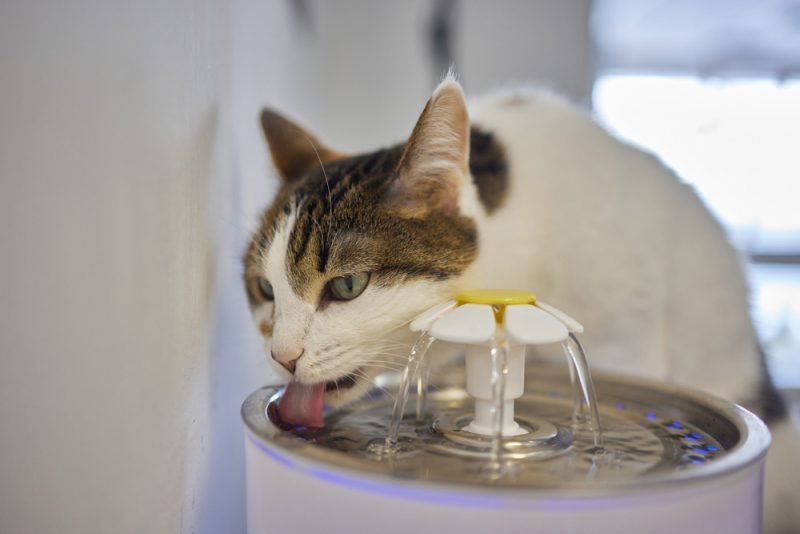
Instead, a water fountain may encourage slower drinking, while ice cubes can give cats something to lick slowly during warm weather.
Red Flags to Note
- If a cat is throwing up after drinking every day or even every week, that is not considered normal and should be checked by a veterinarian.
- Not only can frequent vomiting lead to dehydration, but it can also be a sign of problems involving the kidneys, liver, stomach, pancreas, intestines, or esophagus.
- A cat that suddenly starts drinking much more than usual may have an underlying health problem that needs attention.
Water May Not Be the Problem
Sometimes the timing makes it look as though drinking caused the sudden upchuck, when the cat was actually already feeling unwell.
Hairballs are one possibility. Cats swallow loose hair while grooming, and most of it passes through the digestive system. Occasionally, however, enough hair can collect in the stomach to form a hairball, which will either go up or down.
When a cat tries to bring up a hairball, some of the water and food it has recently swallowed can come up at the same time. A hairball usually has a distinctive long, tube-like appearance because it has passed through the cat’s esophagus.
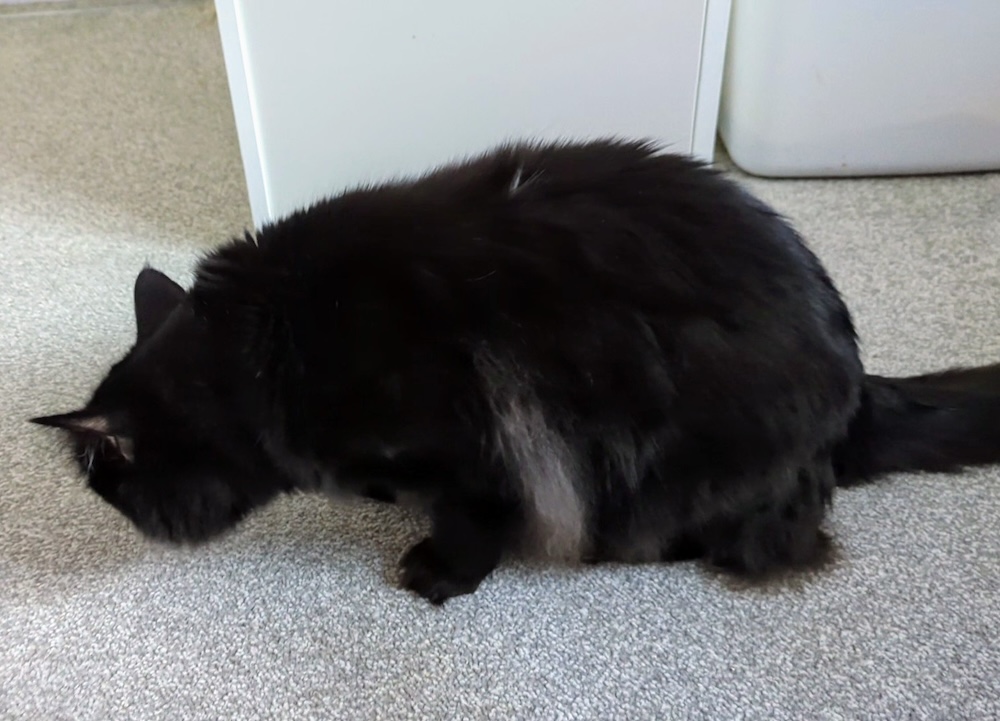
Cats can also bring up other material that has been irritating the stomach. Bits of broken toys, string, and other objects can cause problems if swallowed, particularly in curious kittens and younger cats. Some objects can become stuck or cause a blockage that requires veterinary treatment.
Regular grooming can help reduce the amount of loose hair a cat swallows, although it may not prevent hairballs entirely. Cats that like chewing or swallowing things they shouldn’t must be closely supervised, and loose threads, tantalizing twine, or damaged toys kept out of reach.
Vomiting After Drinking Can Point To Illness
Repeated vomiting or regurgitation can be a sign of a problem affecting the esophagus or digestive system.
Issues involving the esophagus can cause regurgitation after a cat drinks or eats. Other signs may include drooling, difficulty swallowing, reduced appetite, weight loss, postural changes, pain, and lethargy.
Digestive problems more commonly cause vomiting rather than regurgitation. It could be an upset stomach, food allergies, parasites, inflammatory bowel disease, or pancreatitis.
Parasites can also cause vomiting. A significant roundworm infestation, for example, can cause a cat to vomit food or water. Roundworms may sometimes be visible in a cat’s vomit or feces, often looking a bit like cooked spaghetti.
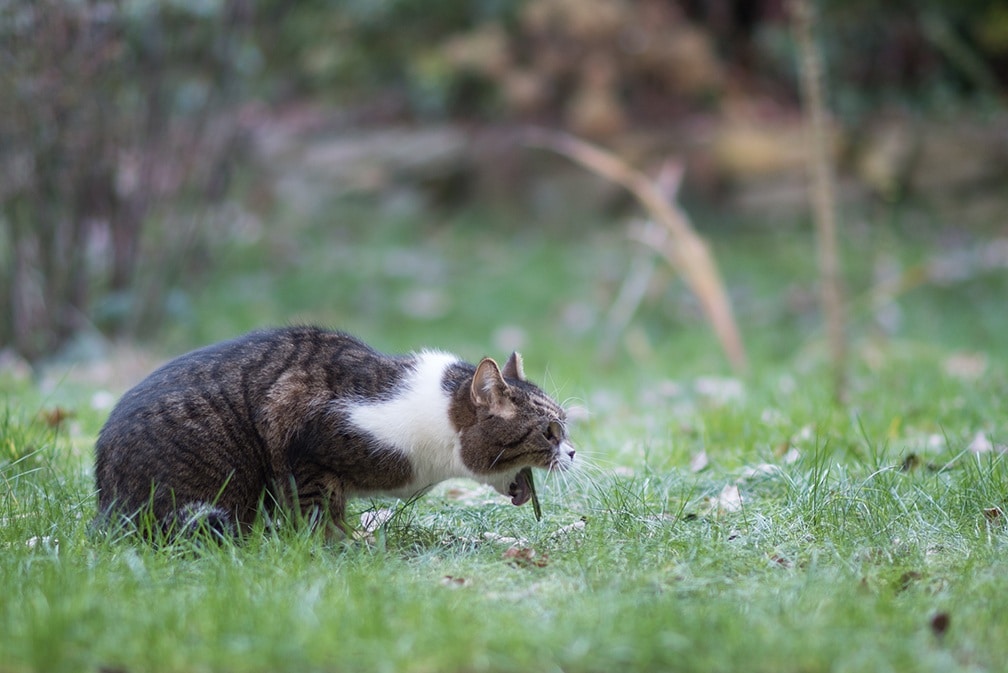
Certain feline health conditions lead to increased urination and thirst. Diabetes, kidney disease, and hyperthyroidism can all cause cats to drink more water than they normally would. A cat that is drinking more than usual may consume a large amount at once and regurgitate it, or be vomiting due to the underlying condition.
The vomiting itself may not be the whole story.
Did You Know?
- Our brand-new posts are rounded up and included in our weekly emails. Don’t miss out on the latest – sign up for our newsletter below!
When Vomiting After Drinking Needs Attention
An occasional episode after drinking too quickly may not be cause for concern, particularly if a cat quickly returns to normal. Repeated vomiting or regurgitation, however, should not simply be dismissed as a quirk.
A cat that cannot keep water down can become dehydrated, and frequent vomiting can be a sign of an underlying illness. If vomiting is accompanied by other changes, such as diarrhea, reduced appetite, tiredness, unusual thirst, or changes in urination, it’s time to get your cat to the vet.
Ultimately, a cat throwing up water, or immediately after drinking, does not necessarily mean the water itself is the problem. Sometimes a drink simply went down too quickly. Other times, it may be the sign of a health issue that needs attention. Watching for patterns and changes in drinking habits can help distinguish an isolated incident from something that warrants a closer look.
Featured Image Credit: Vershinin89, Shutterstock