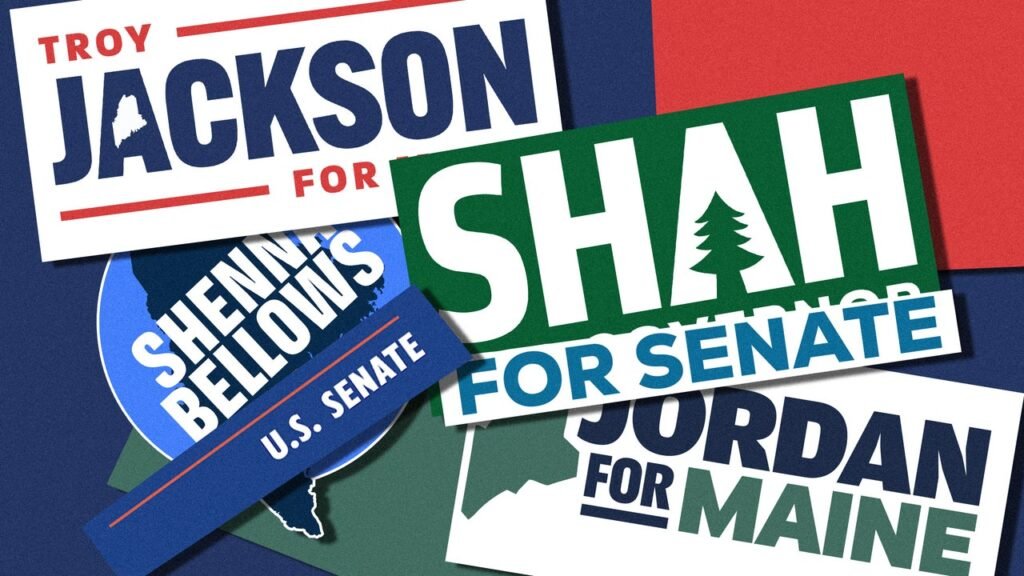
On July 10, after allegations of sexual assault and mistreatment of women, former nominee Graham Platner formally withdrew from the U.S. Senate race in Maine. To pick a last-minute replacement, Maine Democrats are holding a nominating convention on July 25 in time for a state deadline to put forward a new candidate who will face off against Republican Senator Susan Collins in November. With no time to spare, would-be nominees are retrofitting old logos for the new campaign.
There’s not much time for newcomers or learning on the job, and many of the candidates who have so far thrown their hat in the ring have run for office recently.
That means they already have campaign logos, signs, and sticker designs ready to go.
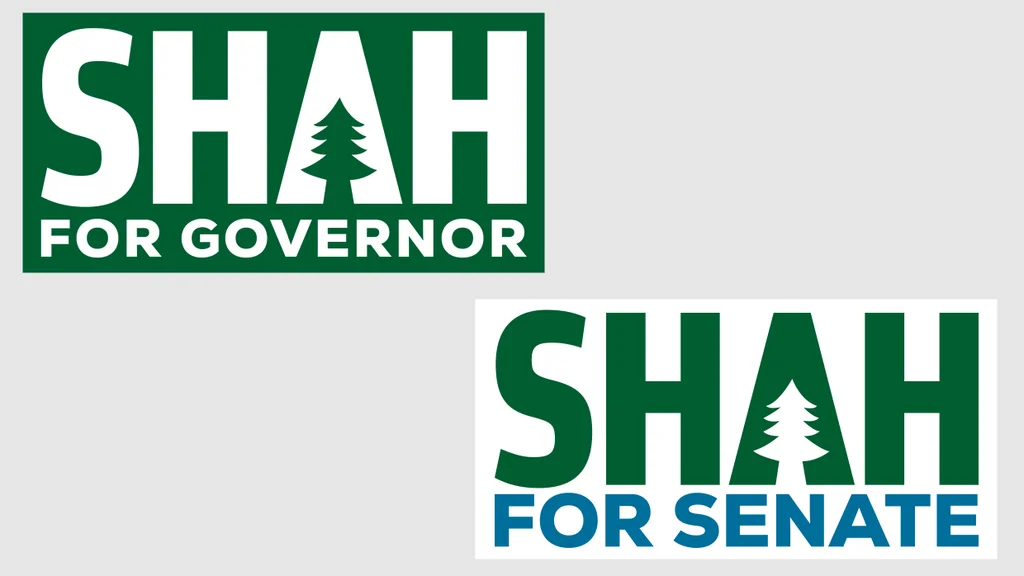
Nirav Shah, a former director of the Maine Center for Disease Control and Prevention, was the runner-up in Maine’s Democratic primary for governor in June. He was the first candidate to collect enough signatures to enter this month’s Senate race; he’s keeping green and white as campaign colors and a logo that makes the letter A in his last name from a pine tree, a Maine state symbol.
Shah’s supporters recently took scissors to his old stickers, cutting off the bottom half that said “For Governor.” According to NBC News, supporters are also retrofitting campaign signs by taping over his old signs to write in “Senate” instead of “Governor.”
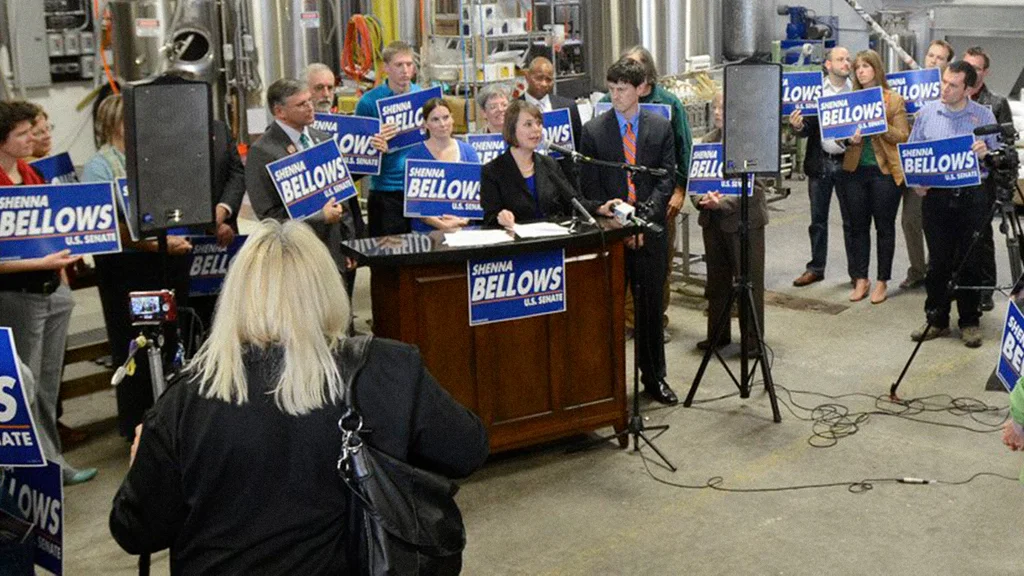
Maine Secretary of State Shenna Bellows, who ran against Collins in 2014 and lost handily in a year less favorable to Democrats, dusted off her 12-year-old U.S. Senate campaign logo for another run. When Bellows ran unsuccessfully for the state’s governorship earlier this year, she used a logo that included a map of Maine and wrote out her name in a tall, sans-serif font.
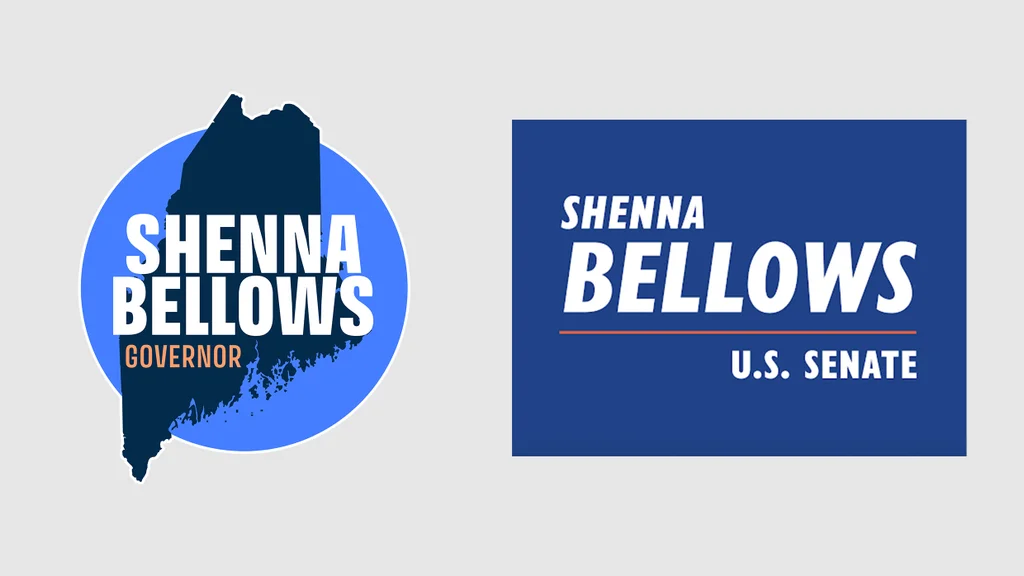
Her new Senate campaign logo is a retread of her 2014 mark: Her name is in all-caps italics in white on a blue background, with a thin, horizontal orange line underneath and “U.S. Senate” written below. It’s minimal and to the point. (Back in 2014, long before he became the mayor of New York City, Zohran Mamdani had a Bellows for Senate laptop sticker.)
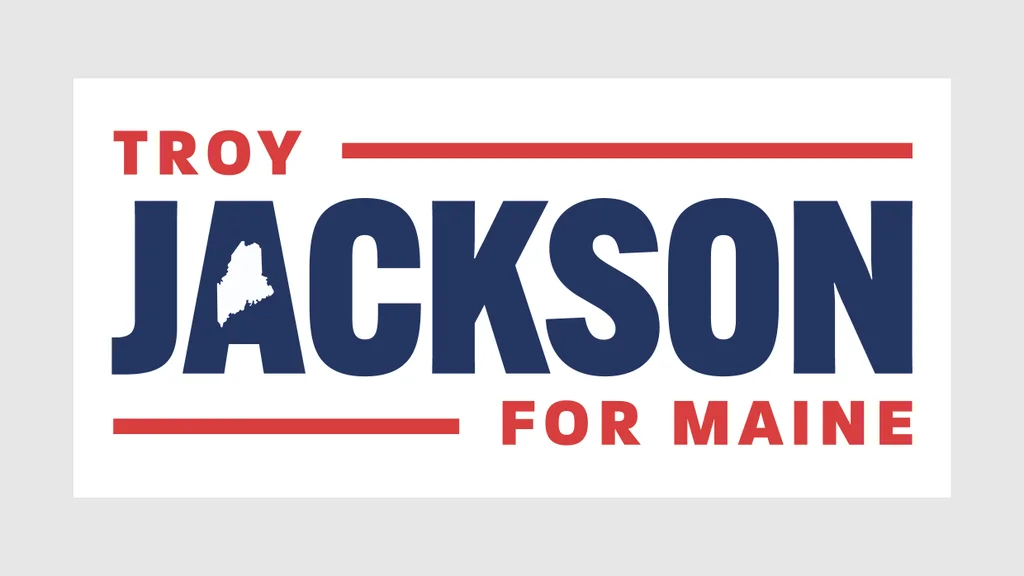
Other candidates are able to reuse old logos because their designs were generic to begin with. Former Maine state Senator Troy Jackson ran for governor earlier this year with a red, white, and blue logo that filled in the counter of the letter A in his last name with a Maine state map. It said “Troy Jackson for Maine,” instead of for the office he was running for, so no edits are needed.
The same goes for Jordan Wood, a former staffer for Democratic Representative Katie Porter of California. Wood briefly ran for Senate before dropping out to run unsuccessfully for a U.S. House seat in Maine last month. Perhaps the third time’s the charm for the “Jordan for Maine” logo now that he’s running for Senate again.
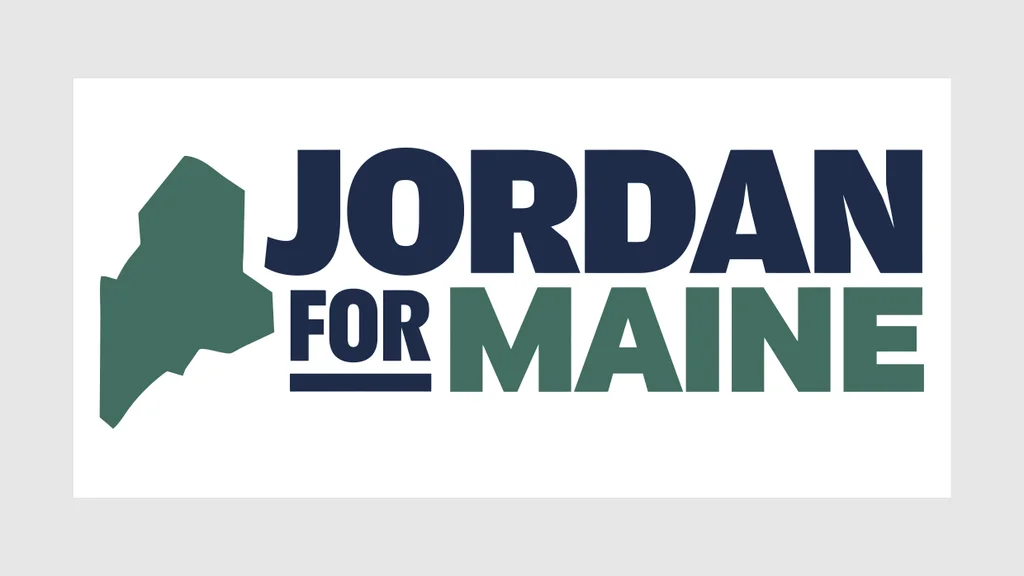
“We were previously a candidate in the Senate race and are using our original campaign branding as a result,” a spokesperson for Wood’s campaign tells Fast Company.
Democrats did something similar in 2024 when then-President Joe Biden dropped out of the race and then-Vice President Kamala Harris took his place. Supporters lopped off the top half of Biden-Harris logo yard signs or brought back old “Kamala Harris for the People” ephemera from her 2020 presidential bid until a new logo and merch could be designed.
Without time for a full-scale creative and brand design process, last-minute campaigns like those for Maine Democrats are inherently resourceful and makeshift. This is no time for a rebrand. You work with what you’ve got. Voters are now deciding among a field of candidates who already have campaign experience under their belts—and the branding to prove it.