KASSEL, Germany, and UTRECHT, the Netherlands — As demonstrated by a small coda to the exhibition Rembrandt 1632: Creation of a Brand, Rembrandt is a name that sells. A case displays ads for Rembrandt-branded tobacco, boxes of toothpaste, and even a television (the name suggests a fair amount of drama but inconsistent picture clarity). Rembrandt’s own first efforts to imbue his name with this power, this exhibition asserts, came in 1632, when he moved from Leiden to Amsterdam.
Running the length of a capacious, purple-walled corridor in the Old Master-encrusted Wilhelmshöhe Palace in Kassel, Germany, the exhibition pinpoints Rembrandt’s transformation into a self-declared, first-name-only celebrity as he stared down the Amsterdam art market. Voluminously productive in this year, Rembrandt made etchings, as well as painted history paintings, portraits of himself and others, and tronies, the distinctively Dutch bust-length genre of anonymous yet highly distinct character types.
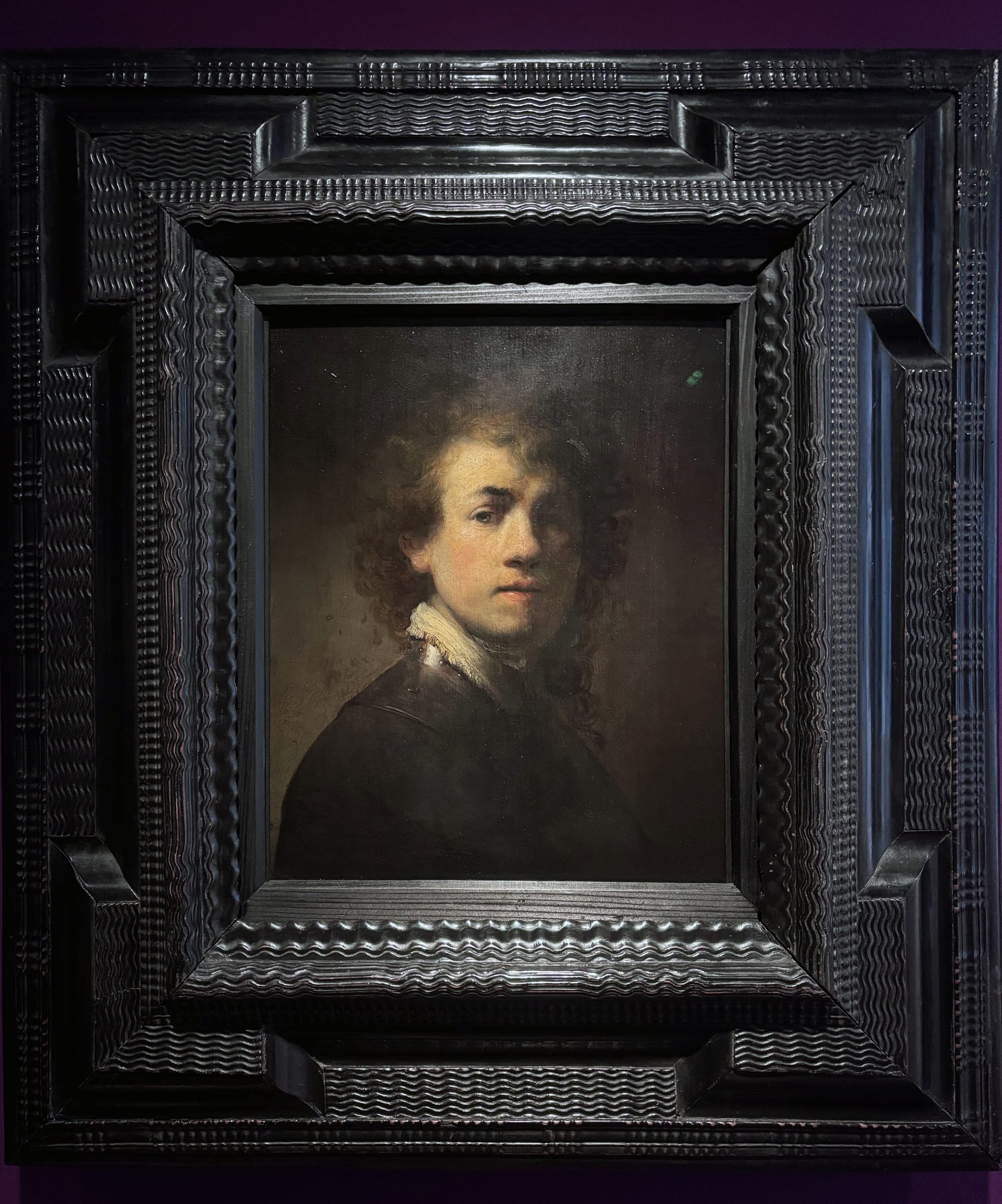
To introduce this early, ambitious, and entrepreneurial Rembrandt, the exhibition begins with two self-portraits. In one, he wears a steel gorget and sits in an adoring patch of light that graces his youthful skin and illuminates the crystal depths of one of his irises. In the other — and stranger — one, the artist wears a simple brown jacket, the highlights in his wild curls scratched into the wet paint to reveal the red ground below. Most of his face is in shadow, his eyes now black holes, giving the artist a searching, intense, and nearly feral quality.