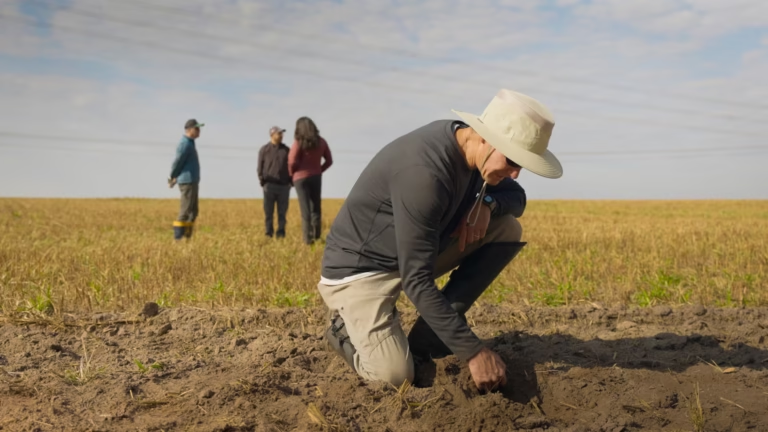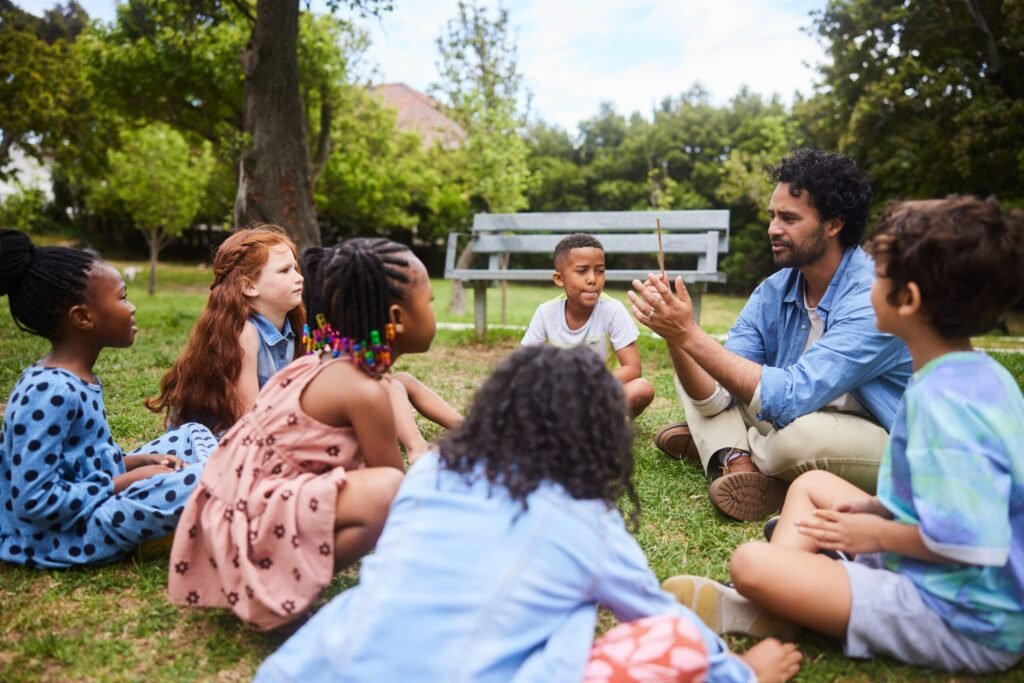
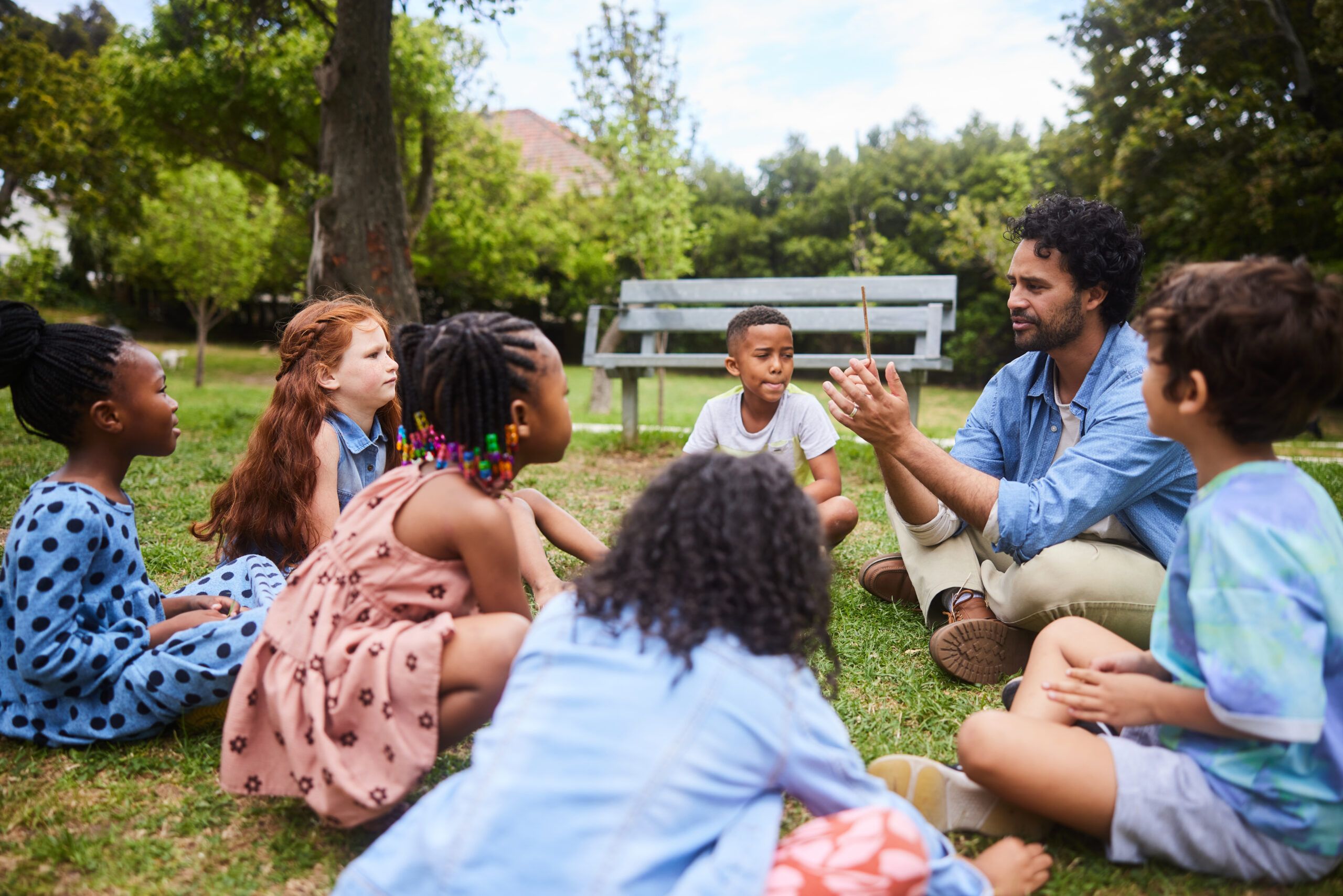
For many educators, taking a lesson outside can feel daunting. Concerns about time, behaviour and meeting curriculum demands are real. At the Zoological Society of London (ZSL), a global conservation charity, we see every day just how powerful learning beyond the classroom can be – not just for academic success, but for learner and teacher wellbeing, confidence and connection to the natural world.
Why?
Children are spending less time outdoors than ever before, and for many, opportunities to experience nature during the school day are limited or non-existent. A recent report from the Play Commission states that only a third of children report regular school activities or lessons outside, other than PE. Children are increasingly disconnected from the natural world. In addition, the children that would benefit most, those from low-income or ethnic minority backgrounds, are often the least likely to have access to green space.
At ZSL, we believe this must change. We see the impacts of connecting with nature firsthand through our zoo-based education and learning programmes. When a child connects with wildlife, whether that’s spotting an insect or coming eye-to-eye with an elephant, it sparks curiosity, wonder and a sense of belonging in the world. These are the moments that start to build a lifelong connection to nature and ultimately, if we are connected to nature, we care enough to protect it.
So, through our ‘Access to Nature’ campaign, we’ve been calling for meaningful, regular access to, and engagement with, nature to become a statutory right for every school student. We’re asking for:
- Dedicated time for outdoor learning within the curriculum
- Investment in resources and training for teachers
- Recognition of nature as an essential part of education
Alongside this, schools are placing greater emphasis on wellbeing, engagement and inclusive practice. ZSL’s teacher training programming encourages schools to value nature within the curriculum and supports teachers to integrate nature and outdoor learning into their lessons.
Nature shouldn’t be an optional extra, it has a fundamental place in learning, development, wellbeing and the future of our planet.
-
 Zoological Society of London (ZSL)
Transforming Teaching With Nature: Indoors and OutdoorsTeaching,Nature & Environment
The benefits of learning outside
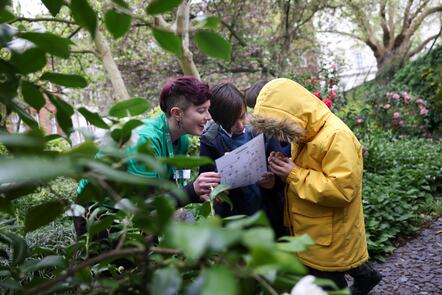
Outdoor learning sits at the heart of all our priorities. The benefits of teaching in natural environments like school grounds or parks, are wide-ranging and well evidenced.
For learners, it can lead to:
- Increased engagement, concentration and motivation
- Improved wellbeing, focus and mental health
- Improved academic achievement and attendance
- Increased emotional resilience, independence and problem-solving skills
- More opportunities for communication and collaboration leading to positive peer relationships
- Stronger immune systems and increased physical activity levels
- Increased connection with nature
Outdoor learning also supports academic outcomes such as improved attainment and attendance. When learning takes place outdoors, abstract concepts come to life. Mathematics becomes measurement in real spaces. Science becomes observation and investigation. English becomes inspired by sounds, textures, and surroundings. Students are not just learning content, they’re experiencing it, making it easier for the learning to stick.
Just as importantly, learning outdoors supports the development of the whole person, helping students to build confidence, resilience and a sense of identity. It plays a vital role in inclusion by creating opportunities for learners who may struggle in traditional classroom environments. It also supports emotional regulation and social skill development ensuring that all students can access meaningful learning experiences.
Outdoor learning doesn’t just benefit learners, it can also help teachers and educators to build confidence and adaptability to teach in different environments, develop more creative teaching approaches, strengthen professional identity and lead to positive feedback from highly engaging lessons. The mental health, wellbeing and emotional resilience benefits also extend to the teachers of outdoor learning.
When approached thoughtfully, learning outside the classroom can become one of the most powerful tools in your teaching toolkit.
Supporting teachers to make It happen
We know that many teachers are already keen to take learning outside, but pressures around time, resources and confidence can make this feel difficult in practice.
That’s why it’s essential that educators are supported to build the skills, knowledge and confidence needed to make outdoor learning a natural part of everyday teaching. High-quality professional learning plays a key role, helping teachers embed nature into the curriculum through subject knowledge, curriculum planning, practical resources and classroom management strategies.
Crucially, outdoor learning will only become sustainable if it is seen not as an additional demand, but as a different way of teaching. Teachers should never feel they have to choose between going outside and meeting curriculum objectives. Instead, learning outdoors offers an opportunity to deliver those objectives in richer, more engaging and more meaningful ways.
Whether teaching science, maths, English, art, PSHE, sociology or geography, the outdoor environment provides:
- Real-world contexts
- Tangible, hands-on examples
- Opportunities for exploration and investigation
- Rich sensory experiences that deepen understanding
Getting started doesn’t require a complete curriculum overhaul. Small steps, such as a 15-minute activity outside, can make a real difference. A short, focused outdoor activity can be just as effective than a longer indoor lesson because of the level of engagement it generates. Over time, these moments can grow into an embedded culture of outdoor learning. It’s not about finding extra time; it’s about using the time you already have more effectively.
For teachers looking to develop their approach further, there are opportunities to explore how nature can be meaningfully integrated into everyday teaching. For example, courses such as Transforming Teaching with Nature: Indoors and Out provide practical, evidence-informed guidance and ideas to help educators get started.
Conclusion
Taking learning outside isn’t about doing more, it’s about doing things differently. It’s about creating experiences that inspire, engage and connect with the real world. Experiences that help learners thrive socially and emotionally, as well as academically. For educators, it offers a rewarding and meaningful way of teaching.
Perhaps most importantly, learning with nature helps nurture a generation that feels connected to the world around them and cares about it too. At ZSL, we believe every student deserves that opportunity and we’re committed to helping it happen.
ZSL is an international science-driven conservation charity, working to restore wildlife in the UK and around the world.