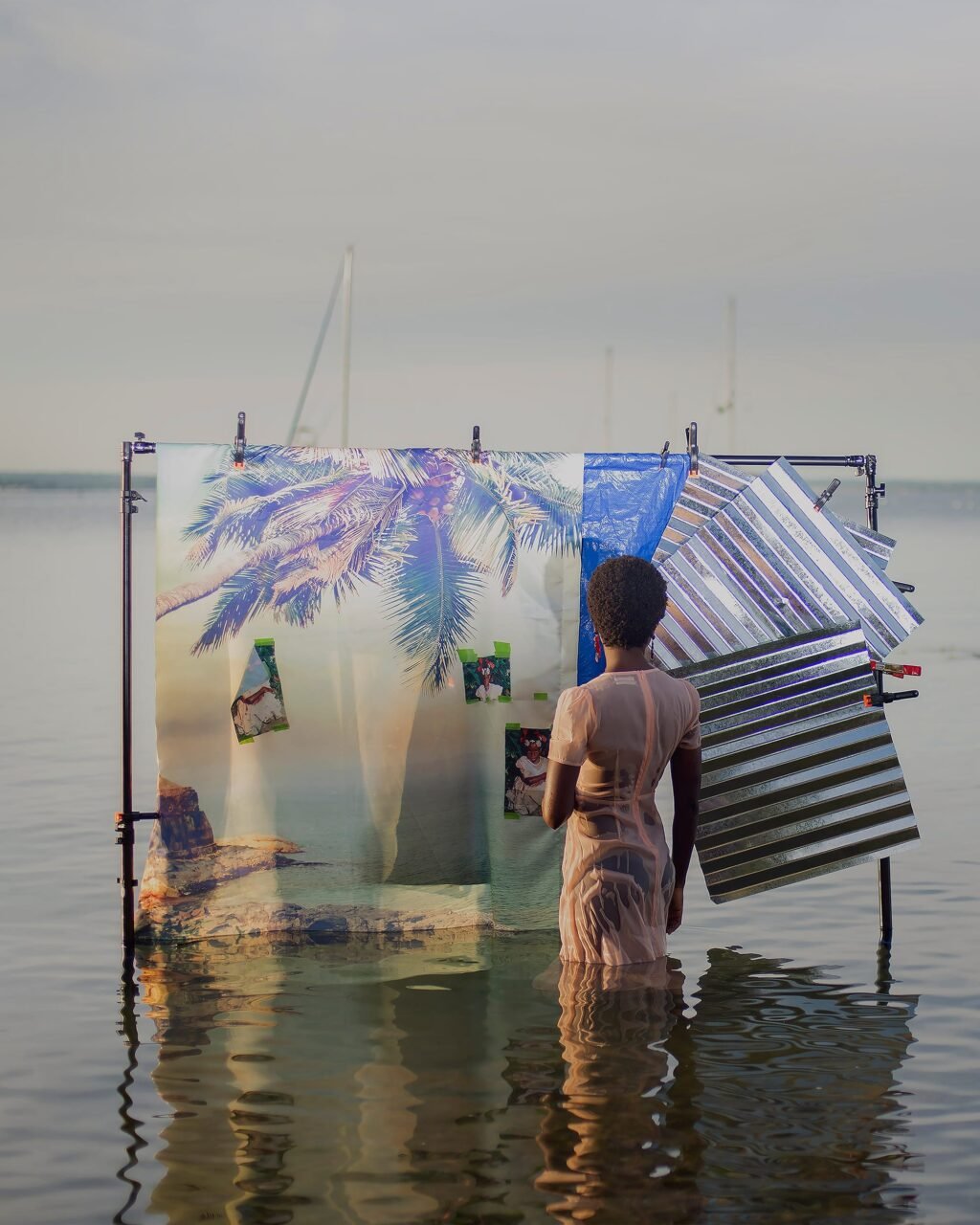
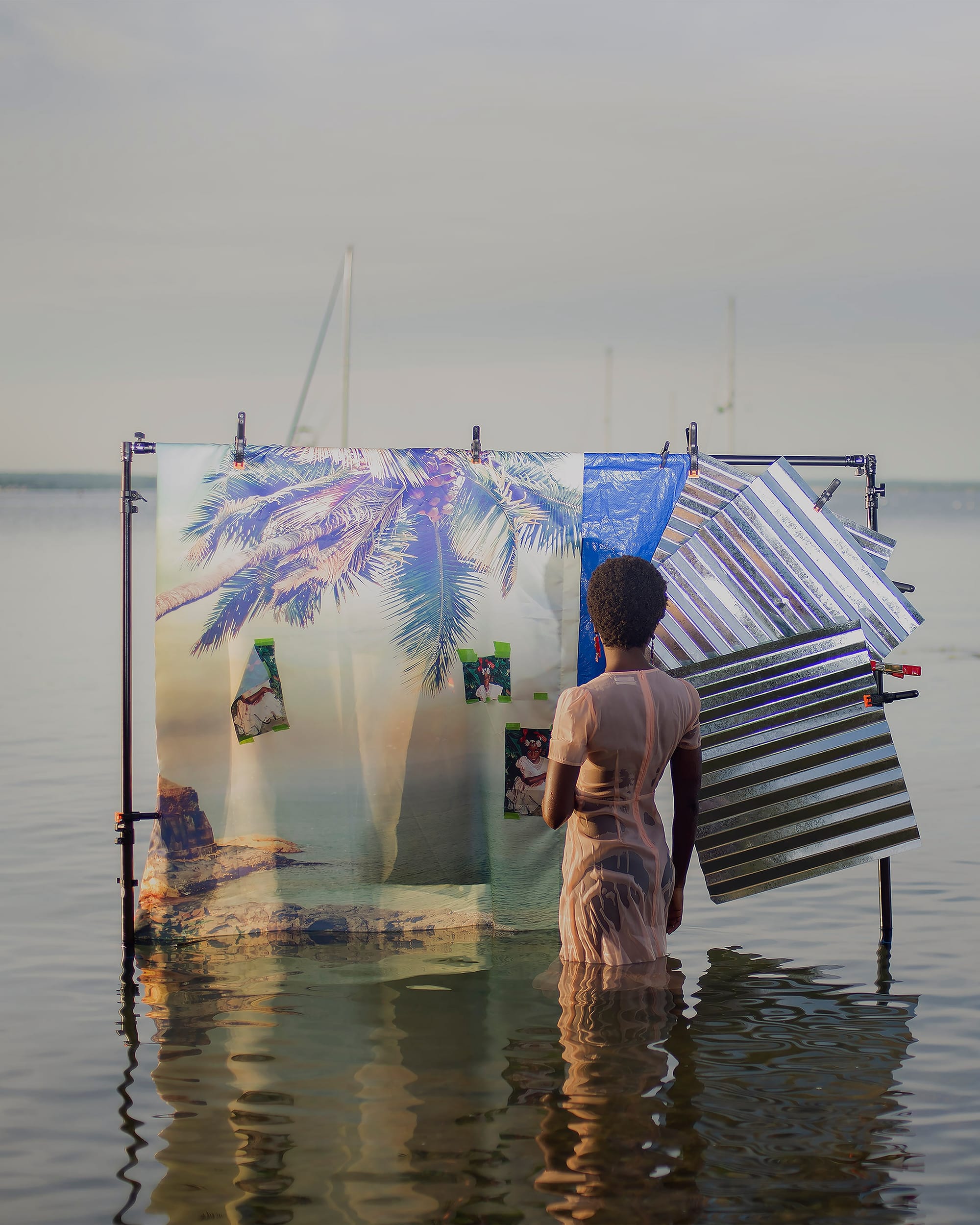
MILWAUKEE — Handmade ceramic lizards with tails that morph into flowers cling to the walls of photographer Widline Cadet’s exhibition at the Milwaukee Art Museum. These little creatures crouch low or grip onto the corners of the ceiling as if silently accompanying us through the artist’s first solo institutional show in the United States, marking a territory of displacement and adaptation.
Cadet, who grew up in Haiti and now lives in Los Angeles, immigrated to New York City at age 10 to reunite with her mother, who had arrived years earlier. Because immigration is a fraught, violent issue in the US, every museum exhibition that humanizes these stories feels urgent. Cadet explores concepts of separation and memory using a full range of photo-based processes that also speak to the way that various media, from dusty analog photo albums to cell phone videos, store and shape personal histories.
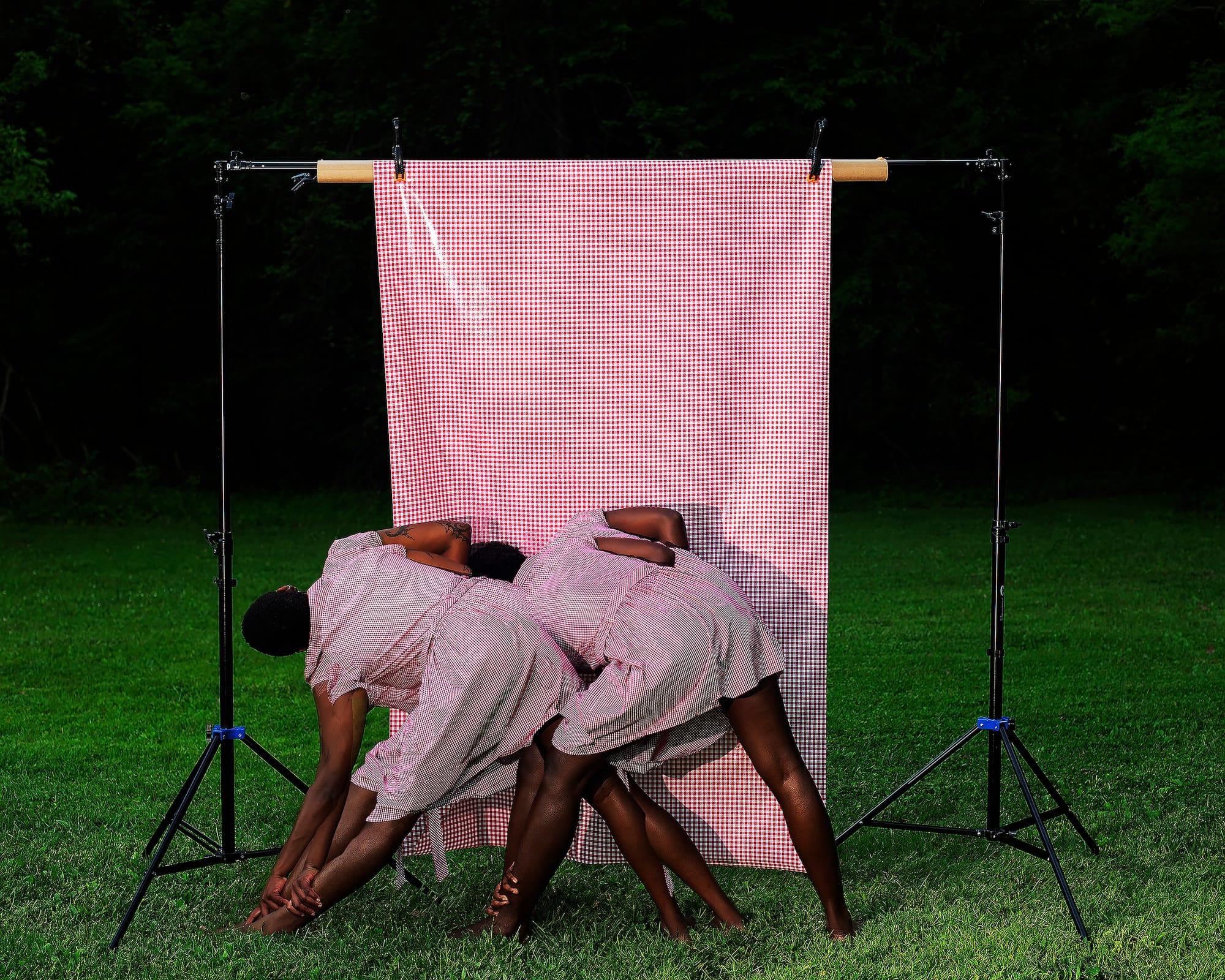
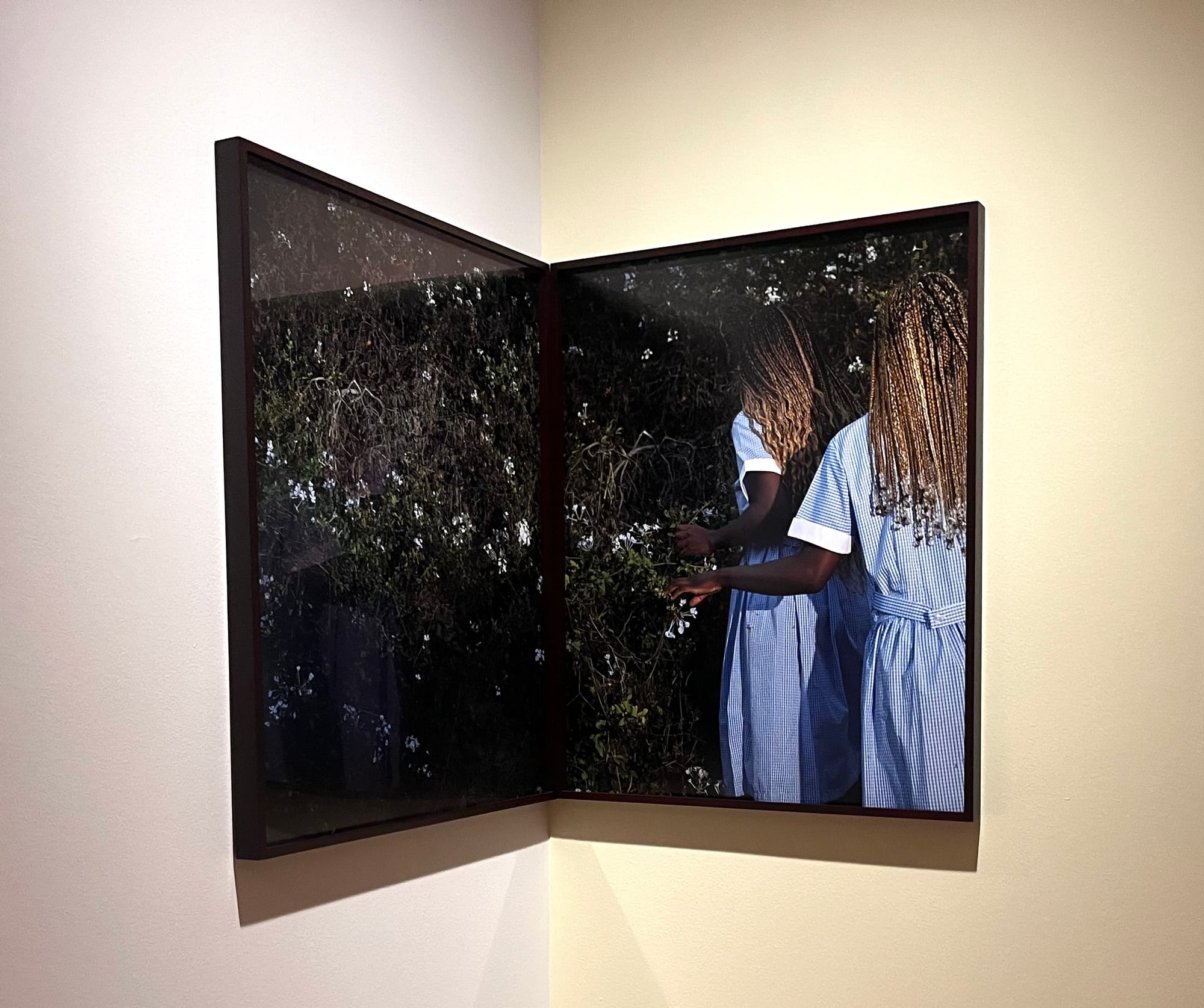
Juxtapositions abound. Conventionally presented photographs may contain small, implanted videos, while other images are framed like memory shards, taking the shape of an arched window or grated door. It feels as if Cadet is sharing her examination of each partial memory, turning it over or on its side, pairing it with adjacent recollections, and creating a path of mutual discovery for the viewer.
Time and distance become palpable. Titles, in both Haitian Creole and English, anchor expansive geographies. Recurring motifs, such as flowers, twinned figures, or snatches of wallpaper pattern, appear in photographs across rooms. Ghostly figures wander through spiritually infused Haitian nights. Mourners dance through grief and ecstatic relief at Cadet’s grandmother’s funeral. The remnants of parties speak of tattered remains.
In a private walkthrough at the museum, Cadet told me that she felt further displaced when she arrived as a visiting professor at the University of California, Los Angeles, after earning her MFA at Syracuse University. She began to gaze at other Black women on the streets, realizing that some looked like her. This identification led her to ask strangers if she could photograph them. Many became her good friends.
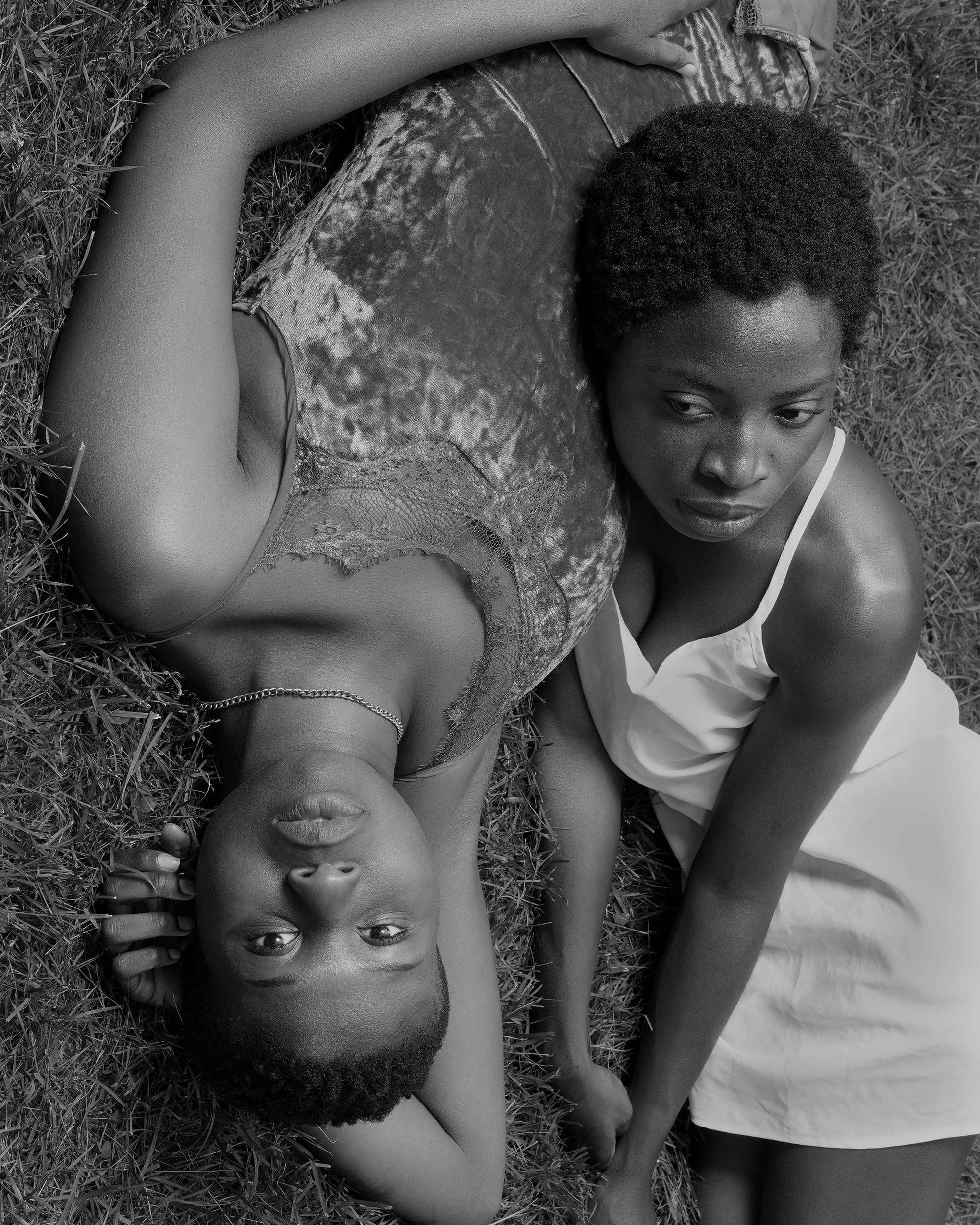
“Yon etranje ki pa sanble youn #3 (A Stranger Who Doesn’t Look Like One)” (2019) is an example of just that. Two women, newfound chosen sisters, recline on the ground, one looking at the camera, the other’s eyes averted. Cadet uses this doubling motif throughout the show, seeking out comfort and sisterhood amid alienation.
In “Nan Letènite (In Eternity)” (2021), two girls wear gingham dresses reminiscent of one of Widline’s few memories of grade school in Haiti. They lie on a green lawn on a bed of red rose petals. Elbows, legs, and gingham tangle on the plinth-like mound of flowers — ceremonious and sacred. The image implies that every immigrant’s challenge is to maintain one’s heritage while morphing or being shaped by a new place, not unlike the artist’s handmade lizards.
With 52 images and videos, the structure of the show relies on two installations to act as bookends. The exhibition opens with one of the installations, “Altar #1” (2021), a diorama with a wall-sized enlargement of a vintage snapshot of Cadet’s mother holding her as an infant. Actual hand-crafted ceramic aloe plants rise from constructed planters. Two small, crescent-shaped photographs are mounted above the image, one of a swimmer and one a detail of a red couch with a pillow — something fluid, something fixed.
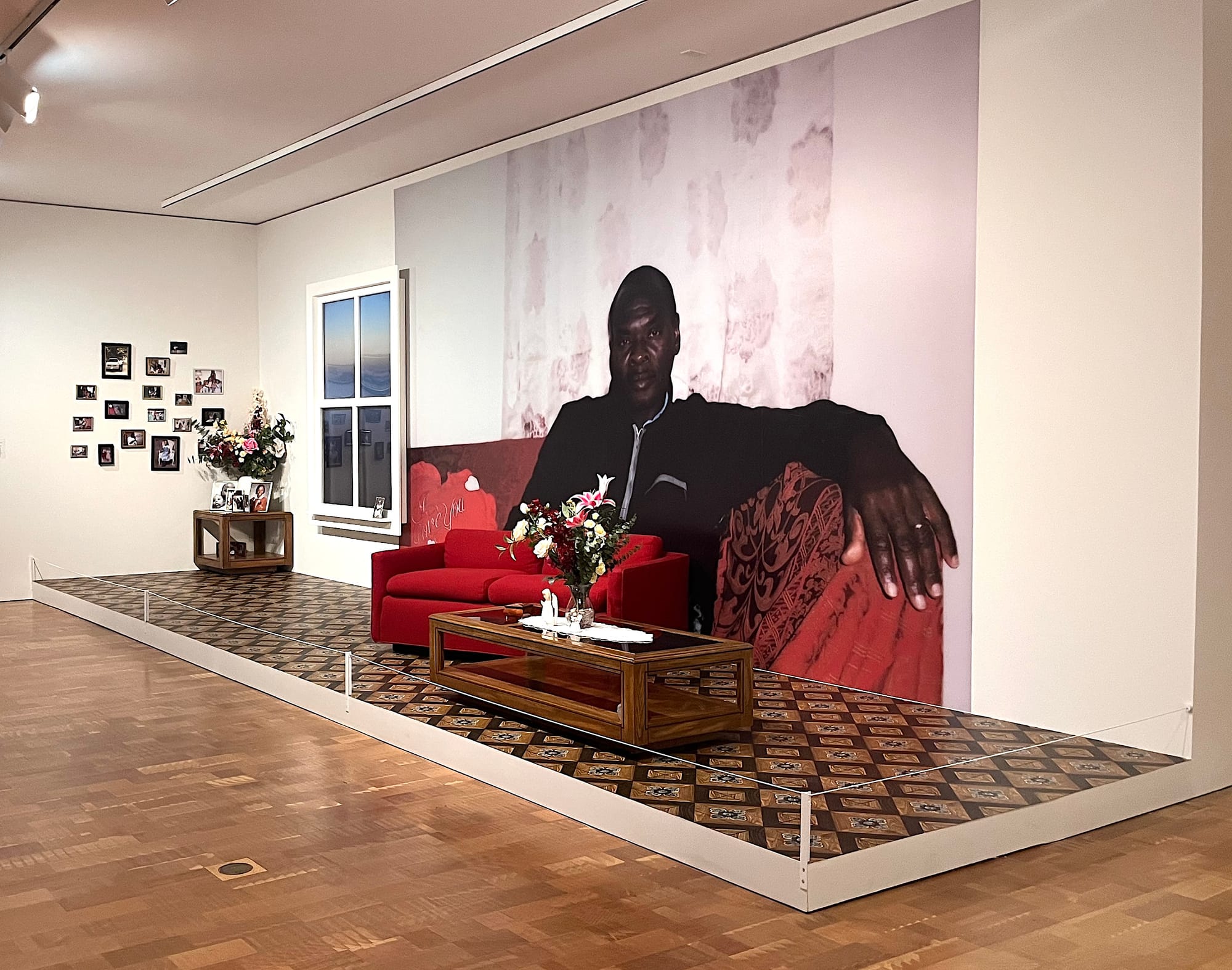
The exhibition space itself is large, divided by walls that create thoughtful sightlines. From her mother’s “Altar #1” we can glimpse, two rooms over, “Altar #2” (2026), a wall-sized snapshot of her father within a domestic tableau. The distance established physically in the gallery mirrors the geographic and psychological landscapes of immigration: a mother and sister in Florida, a father who only recently left Haiti. The viewer must turn back and forth to glimpse both images but cannot see them simultaneously.
Cadet also manipulates distances by fusing them. One riveting inversion appears in a photograph of her parents’ wedding, with a small video screen inserted that shows her grandmother’s wake. Nearby, “An Echo of Gratitude” (2023) shows four arms holding a bouquet of flowers against a floral background, quite literally holding a vivid present against a fading past.
The exhibition concludes with an 11-minute video, “Views from Home” (2023–24). This sweeping blend of mostly iPhone clips splices family events with a recurring image of an American ritual: Santa Claus’s visits to Cadet’s nephew in Florida. The journey, from the scarcities of Haiti to a man in a velour suit offering the world, feels surreal. There is no logic to immigrant experiences, only high and low notes navigated through tentative bonds of distanced families.
If you wander upstairs at the Milwaukee Art Museum, you will discover one of the country’s largest collections of historic Haitian art. There, Rigaud Benoit’s “Recall of the Dead (Rele Mò)” (1973) stands as a visual echo of Cadet’s exhibition. In the painting, bodies float through water as they transition to the spirit world, while mourners gather on the shore with endless offerings. The rhythm of arrivals and departures never abates.
Currents 40: Widline Cadet continues at the Milwaukee Art Museum (700 North Art Museum Drive, Milwaukee, Wisconsin) through August 9. The exhibition was organized by Kristen Gaylord, Herzfeld curator of Photography and Media Arts.