Some performance sedans are slowing down. Is the end near?
At one point, the four-door sedan was the undisputed king of the road. It’s the form that many marques’ best-known nameplates took as they ascended to sales royalty over the years. For example, the Toyota Corolla or Chevy Impala. Unsurprisingly, making sedans go fast was a logical evolution, and while the concept can be traced back to the 1930s, the segment really came into its own in the 1960s and 1970s. Specifically, models from BMW, Alfa Romeo, and others established that the number of doors was no measure of athleticism. As time went on, the formula was honed even further — largely propped up by efforts from automakers and specialty tuning companies, including Audi, Jaguar, AMG, and, of course, BMW M.
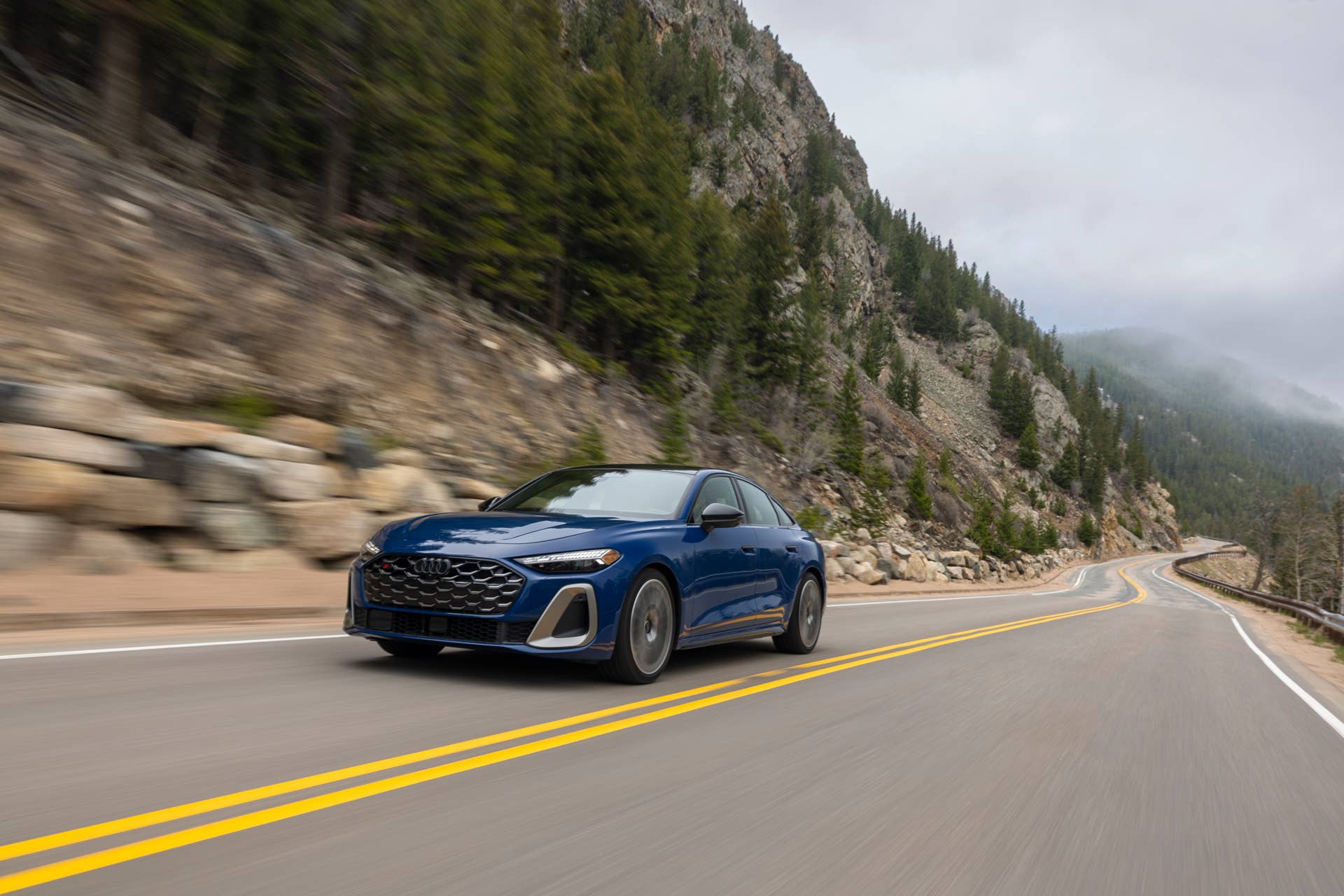
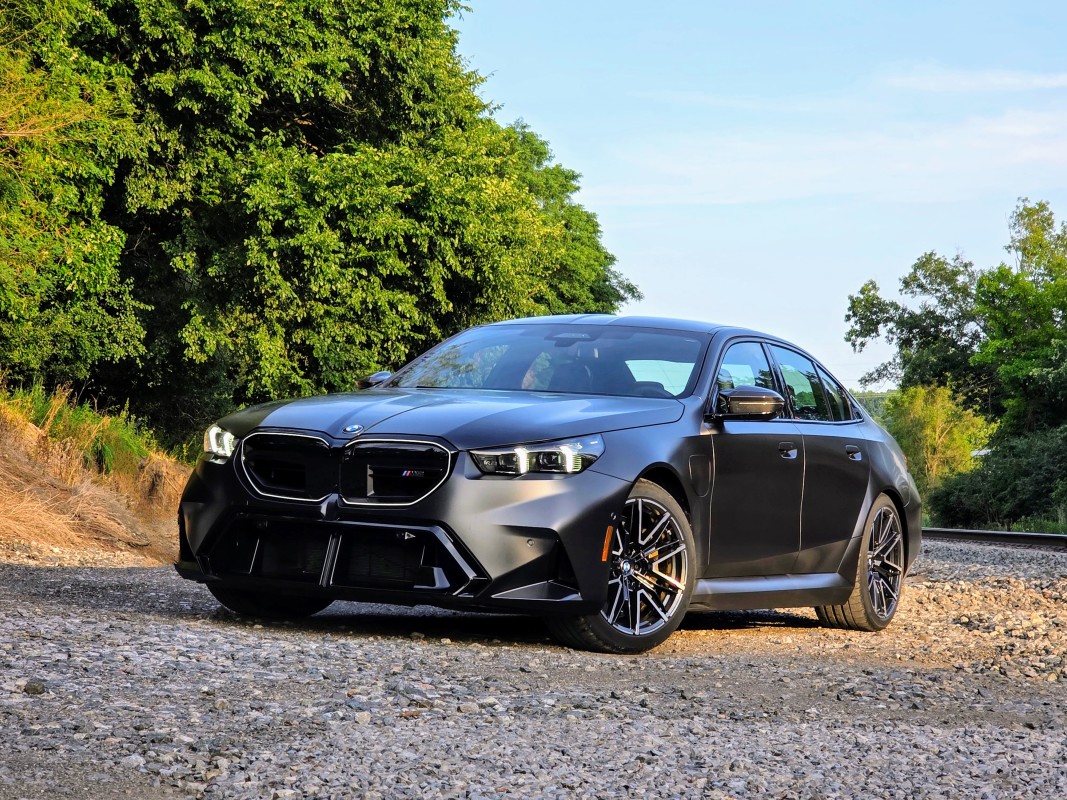
But that was a long time ago. In fact, there’s a case to be made that the peak performance sedan has come and gone. Want evidence? Consider the newest BMW M5, a name once synonymous with what all sport sedans aspired to be. Today, it’s a 5,000-pound hybridized caricature of the original E28 M5 from forty years ago. Instrumented tests from sources as reputable as Car and Driver indicate a loss in measurable performance compared to the last model. More recently and less subtly, the testers over at Edmunds confidently proclaim that the new Audi S5 is “worse than it was five years ago.” Similarly, it too underperformed relative to its predecessor. (Note: the S6 they tested last year suffered similar regression.) Is it the end of the performance sedan upon us?
Audi
Increasing complexity and weight make fast four-doors an even tougher sell
As you might’ve suspected, much of the performance flatlining comes from what should be considered auto enthusiasm killjoy-in-chief: weight. The M5 and S5 are not alone in putting on substantial weight in pursuit of modernization; need we remind you of the current AMG C63, which subtracted one eight-cylinder engine to add a four-cylinder hybrid powertrain and around 800 pounds? (In fairness: at least that car actually got quicker.) Granted, it’s not the only reason sport sedans are getting softer. Cost-cutting is everywhere these days, and one of the easiest places to cut costs is by parts sharing. The S5’s powertrain is almost completely unchanged from the last generation product, despite its weight gain. Over at BMW, interior quality has become a sticking point throughout the entire lineup, with flimsier switchgear than ever before and a renewed love for piano black.
Of course, to be completely fair to automakers, it’s hard — and expensive — to fight weight gain, especially in a segment falling out of favor. According to Experian, sedans made up less than 20% of all new retail registrations in the U.S. in Q4 last year, while SUVs accounted for nearly 60% of the market share. Perhaps tellingly, most automakers don’t break down sales figures of independent models (i.e., the M3 vs. the larger BMW 3 Series, or Cadillac’s CT5 vs. Blackwing variants), so we don’t have any real insight into how many “performance sedans” really get sold each year. But we’re certain it isn’t a lot.
Kyle Edward
There’s hope: some performance sedans go above and beyond
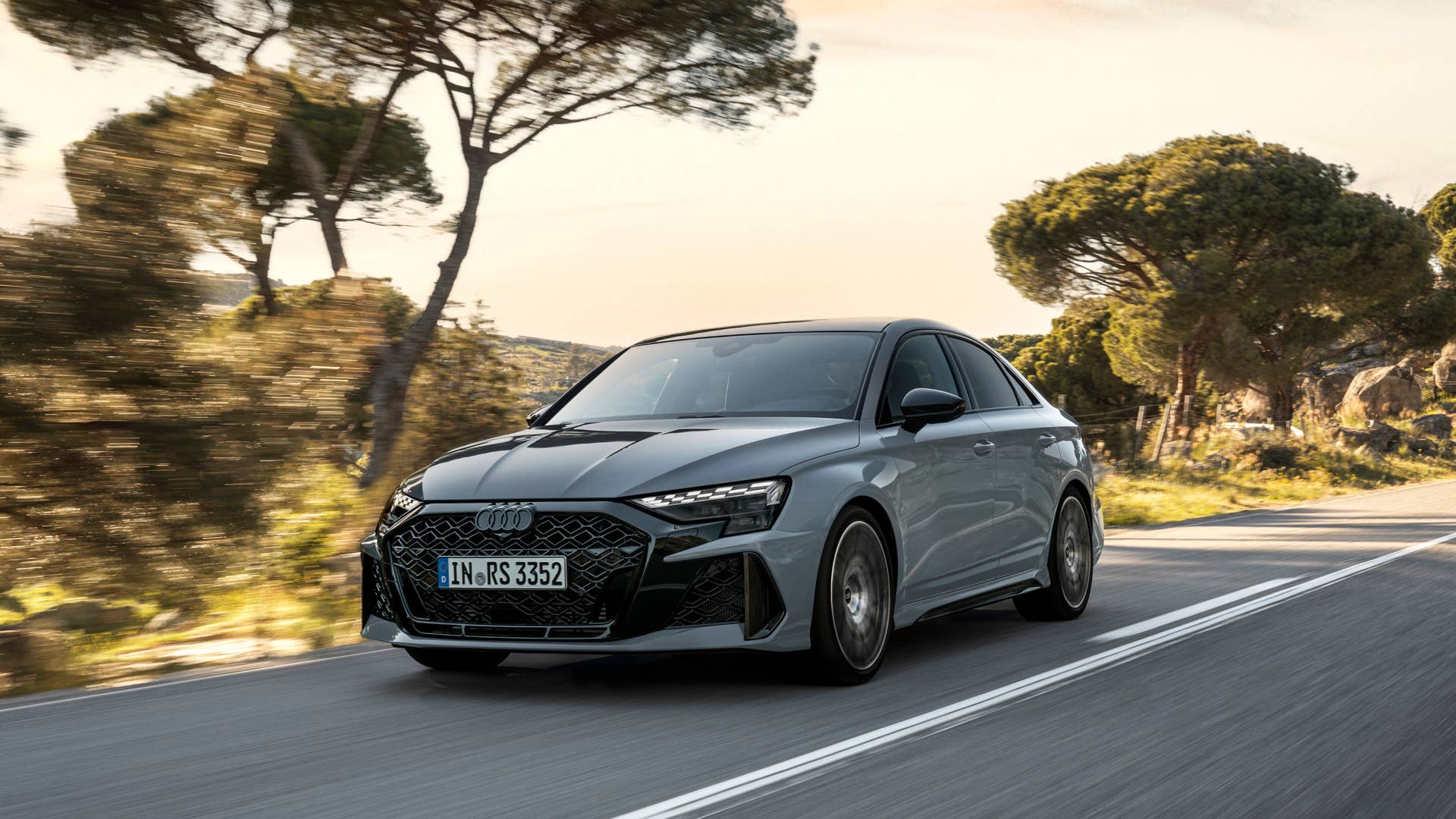
We aren’t so cynical as to say the segment’s best days have already come and gone. Notably, BMW still makes the M3, which by all accounts is a wonderful car from the driver’s seat and, notably, improves on the last generation in almost every metric. Cadillac’s Blackwing-badged CT4 and CT5 duo, too, are evidence of a segment that’s thriving rather than “just surviving.” Even though Audi’s latest S cars might leave a little to be desired, the excellent RS3 is still alive and well. All of these performance sedans are, arguably, better than they’ve ever been. Or at least faithfully channel the performance sedan ethos.
We’d also be remiss to ignore EV offerings. Like it or not, some of the best and most attainable performance sedans come by way of full electrification. Lucid is doing great, albeit expensive, things with the Air, and BMW’s current i4 models paint an optimistic picture of what an electric M3 might look like. The Model 3 Performance, similarly, offers accessible and potent performance, as long as you’re willing to trade valves and pistons for electrons and a different kind of Supercharging. Full electrification also cuts down on complexity and can deliver more than enough performance to offset the (still egregious) weight gain.
Final thoughts
We don’t know what the future will bring. What we do know is that performance sedan options are slimmer than ever, and the future isn’t bright. The next M3 will offer hybridization, along with likely sizable weight gain and cheap-feeling switchgear permeating the rest of the modern lineup. The current RS3’s sweet five-cylinder engine isn’t Euro 7 emissions-compliant and will likely cease production after 2027. Cadillac’s CT4 and CT5 leave us in 2026. Electrification, then, might be the performance sedan’s savior. Assuming, of course, that cost-cutting and weight gain don’t kill the segment in the interim.