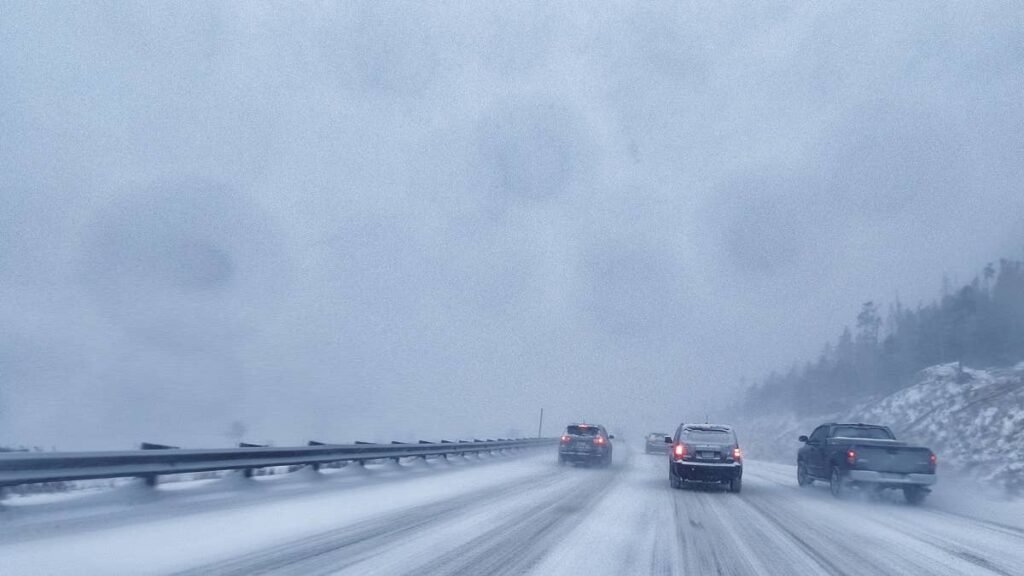
The National Weather Service has formalized what its Weather Prediction Center has been signaling for two days. At 1:15 a.m. MDT Thursday, May 21, NWS Billings issued two bulletins covering high mountain ranges of NW Wyoming and S Montana, with both running through Thursday evening. The warning was anticipated in our coverage of the Weather Prediction Center’s outlook earlier this week.
Where It’s Hitting Today
|
Zone |
Highway / Location |
Snow |
Wind |
NWS Bulletin Through |
WPC Signal Through |
|
Absaroka/ |
Cooke City, Beartooth Pass |
8–15″ |
30 mph |
6 PM Thu |
6 AM Fri |
|
Pryor/ |
Story, Burgess Jct (MT) |
5–10″ |
30 mph |
9 PM Thu |
6 AM Fri |
|
Northeast Bighorns (Advisory) |
US 14 through Burgess Jct (WY) |
5–10″ |
30 mph |
9 PM Thu |
6 AM Fri |
NWS Billings on the Bighorns advisory: “Expect wintry travel conditions on US-14 through Burgess Junction. Recreation in the high country will be impacted by heavy accumulating snow.” The full national list of active Winter Storm Warnings is updated continuously by the NWS.
Beartooth Highway Is the Story
US 212, the Beartooth Highway between Red Lodge, Montana and the northeast entrance of Yellowstone, is the second-highest paved road in the United States at 10,947 feet. It closes every winter and typically reopens for the season around Memorial Day weekend. NWS Billings explicitly flagged the threat in Thursday’s bulletin: “Several inches of snow are expected over Beartooth Pass, which may impact the opening of the highway at the end of the week.” The Weather Prediction Center’s latest probability guidance holds the heavy-snow signal across NW Wyoming and S Montana through 6 a.m. MDT Friday, meaning fresh accumulation could continue right up until the Beartooth opening window. For drivers with Memorial Day plans into Yellowstone via the Beartooth, this is now the route to check before committing. Live status at Montana DOT’s 511 system.
US 14 Through Burgess Junction
In Wyoming, the named highway is US 14 over the Bighorns between Sheridan and Cody. Burgess Junction sits at 8,300 feet, and the road climbs higher on either side. Five to ten inches of fresh snow with 30 mph north winds will produce blowing and drifting conditions on what is normally a busy late-spring tourist route. US 14A through Lovell is in the same advisory zone.

What Drivers Should Do
- Check road conditions before committing to a route. WYDOT and Montana DOT 511 update continuously.
- Avoid US 14 over Burgess Junction Thursday unless travel is necessary. Five to ten inches of snow with 30 mph winds means reduced visibility and drifting.
- Do not assume Beartooth Highway opens Friday. Montana DOT will confirm or postpone based on Thursday’s accumulation at the summit.
- Three-Peak Mountain Snowflake (3PMSF) tires are the industry standard for late-season mountain conditions above 8,000 feet. Summer tires are not adequate for fresh snow in the Bighorns or on Beartooth Pass.
- Cold-soak tire pressure drop is real. A vehicle leaving Cody or Sheridan at 60°F can sit several PSI light at Burgess Junction (8,300 ft) or Beartooth Pass (10,947 ft). Check pressures before climbing.
- Cell coverage above 8,000 feet is limited across both ranges. A stranded vehicle in a late-May storm at altitude is the same survival problem as in February.
- High-profile vehicles, RVs, and trailers should delay Bighorn crossings until Friday afternoon when winds typically subside.
- Prepare before you climb. Five inches of fresh snow at 8,000 feet handles differently than five inches at sea level, and the techniques that work on the Front Range may not be enough on a mountain pass. Our guide on best practices for driving in snow, ice, and rain is worth reading before you leave the driveway.
We will update this story as the Beartooth Highway opening status is confirmed and as NWS Billings posts further bulletins.