The National Weather Service warns that driving over the highest passes could become impossible from Monday into early Thursday, with the heaviest snow above 2,500 feet. Gusts of 35 to 40 mph could blow the new snow into drifts across exposed stretches of road.
Where The Warning Applies
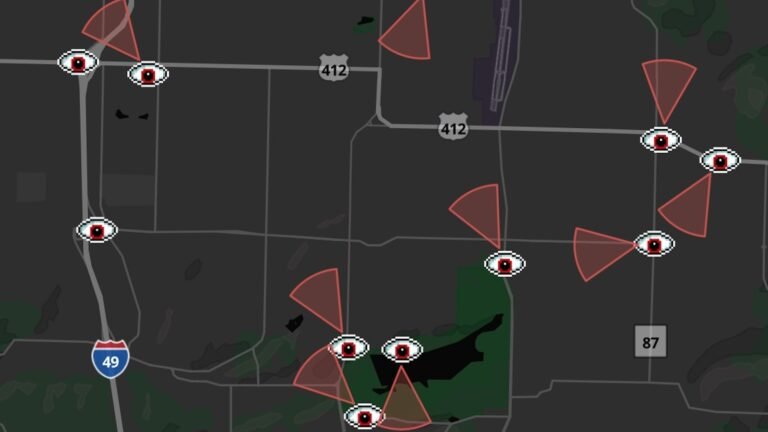
The deepest snow in the NWS Fairbanks winter storm warning is forecast for the eastern Alaska Range. On the Richardson Highway from Mile Post 202 to 259, through Trims Camp, Donnelly Dome and Black Rapids, the office expects 24 to 36 inches above 2,500 feet and more above pass level, with snow falling faster than an inch an hour at times. Lower sections could see 12 to 24 inches, with gusts to 40 mph, under a warning that is already in effect and runs until 8 a.m. ET Thursday.
From 2 a.m. ET Tuesday to 8 p.m. ET Wednesday, the warning stretches east along the Alaska Highway past Delta Junction and Tok, up the Tok Cutoff north of Mile Post 105 and over the Taylor Highway through Chicken to Eagle. Most of that area could see 6 to 12 inches, but totals swing widely, from 12 to 16 inches between Tanacross and Dot Lake to 1 to 3 inches from Northway to the Canadian border, where rain may mix with the snow.
The Yukon Flats, which forecasters added to the watch only on Sunday morning, now fall under the same warning as the Steese and Elliott highways and the first 38 miles of the Dalton. That takes in Circle, Central, Fort Yukon and the Steese north of Mile Post 124, with 5 to 10 inches expected from 2 p.m. ET Tuesday to 8 p.m. ET Wednesday. NWS describes a narrow band, heaviest southeast of Fort Yukon, while Livengood and Beaver could end up closer to 2 to 4 inches or less. Northwest gusts to 35 mph could cut visibility below half a mile at times on the higher terrain.
The warning now also reaches closer to Fairbanks. Eielson AFB, Salcha, Harding Lake and Two Rivers, along with the Richardson Highway from Mile Post 295 to 346 and Chena Hot Springs Road from Mile Post 12 to 34, are covered from 2 p.m. ET Tuesday to 8 p.m. ET Wednesday, with 5 to 10 inches expected. NWS expects a very sharp line between light and heavy snow there, so totals will depend on where it sets up.
Beyond this storm, the Climate Prediction Center’s 6 to 10 day outlook favors above-normal temperatures and precipitation across mainland Alaska from Oct. 24 to 28, with forecasters pointing to “an active surface low track across the Bering Sea and Gulf of Alaska.”
Related: Honda Odyssey Has a Snow Mode, but Can It Really Replace AWD?
Ground Clearance In Deep Snow
A Subaru Outback or Forester rides 8.7 inches off the ground, and even the compact SUVs sold as trail-ready, such as the Forester Wilderness, sit only about 9.3 inches up. Forecast snowfall around Delta Junction and Tok can exceed those vehicles’ ground clearance, while totals along the Richardson Highway are higher still.
Trouble usually starts off the plowed lane, at a berm across a pullout, on an unplowed side road or in a drift the wind has pushed across the highway, which can stand deeper than the forecast totals. When snow builds up under the body, the car can become high-centered, with too little weight on the tires for them to find traction.
Our advice if the car settles onto the snow, along with how one of our writers freed three stuck cars in deep snow:
- Stop spinning the wheels and clear the tailpipe. More throttle digs the car deeper, and a blocked exhaust can push carbon monoxide into the cabin while idling.
- Dig under the floor, not just around the tires. Clearing snow from beneath the vehicle lets the tires regain contact with the ground.
- Straighten the wheels and add traction. Once the floor is clear, put sand, kitty litter or traction mats under the driven wheels.
- Check the manual about traction control. Some manufacturers suggest switching it off to free a stuck car, since the system can cut power when a little wheelspin would help, but the guidance varies by vehicle.
- Stay with the car if it will not move. NWS Fairbanks recommends keeping emergency supplies in the vehicle, and a stuck car is easier for rescuers to find than a driver on foot.