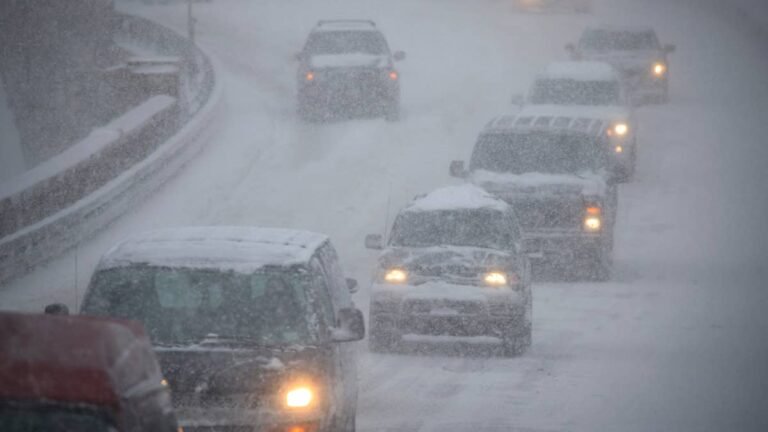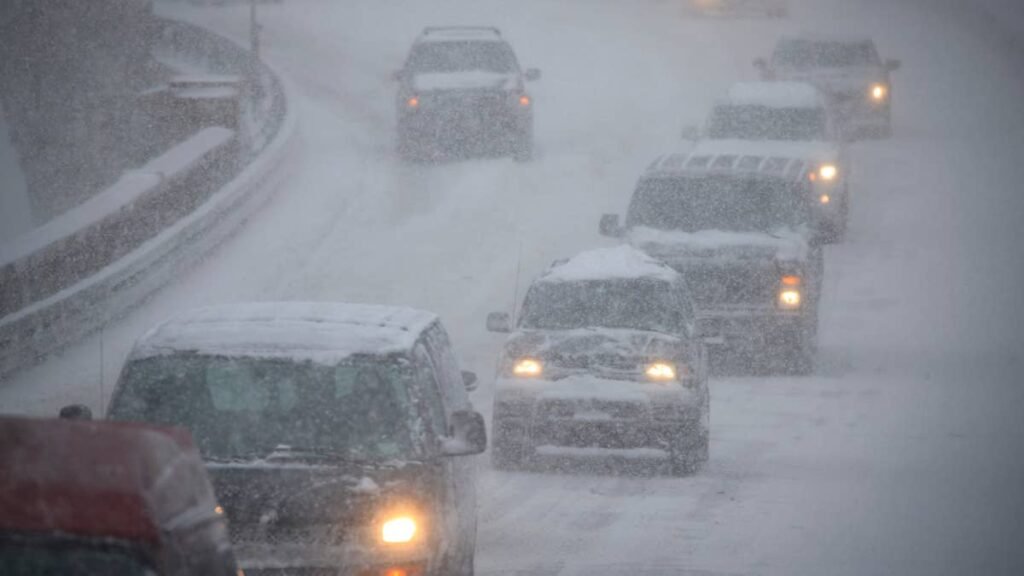
Snow is heading for several major high passes after an unseasonably warm, dry start to fall. The National Weather Service has issued new winter weather advisories that run from early Wednesday into Thursday morning, with up to 12 inches of snow forecast at higher elevations and the impacts focused on travel. On the main mountain corridor, tire requirements have been in force since the start of September.
The Advisories
NWS Denver issued its winter weather advisory at 2:16 p.m. ET Tuesday for Colorado’s mountains above 9,000 feet, from Jackson and Grand counties south through Summit and Park counties. It calls for 6 to 12 inches between 2 p.m. ET Wednesday and 8 a.m. ET Thursday and warns that snow-covered roads “will make travel hazardous, especially through mountain passes.”
NWS Pueblo followed at 2:19 p.m. ET with two more advisories. The Eastern San Juan Mountains above 10,000 feet are forecast to receive 4 to 9 inches between 2 a.m. and 8 p.m. ET Wednesday. Above 11,000 feet in the Eastern Sawatch Mountains and the Western Mosquito Range, the forecast is 5 to 10 inches with gusts up to 35 mph between 8 a.m. ET Wednesday and 2 a.m. ET Thursday, heaviest on the terrain north of Cottonwood Pass.
NWS Grand Junction added two advisories at 3:09 p.m. ET for western and central Colorado, each calling for 4 to 8 inches with gusts as high as 35 mph. Terrain above 9,500 feet from the Flat Tops south to the West Elk and Sawatch Mountains is covered from 8 a.m. ET Wednesday to 8 a.m. ET Thursday, while the San Juan Mountains above 10,000 feet are covered from 8 a.m. to 8 p.m. ET Wednesday.
The Passes
The Denver advisory names Berthoud, Cameron, Willow Creek and Rabbit Ears passes along with the Eisenhower Tunnel, which puts I-70 at its highest point inside the advisory zone. To the south, Pueblo lists Wolf Creek Pass and Cumbres Pass and tells drivers to plan on slippery roads.
The Grand Junction advisories add a second I-70 crossing in Vail Pass, along with Monarch and McClure passes in the central mountains and Red Mountain, Molas, Coal Bank and Lizard Head passes in the San Juans. Both warn of “slushy and icy road conditions on mountain passes” that could affect the Wednesday morning and evening commutes.
Ben Castellani of BoulderCAST expects 6 to 10 inches above timberline and over a foot locally on the highest peaks, with snow levels falling from around 9,500 feet on Wednesday to as low as 7,000 feet by Thursday morning. His timeline for that overnight period carries a short note: “Slick travel on Mountain passes.”
Timing
The eastern San Juan advisory starts first, at 2 a.m. ET Wednesday, and the San Juan advisories from Pueblo and Grand Junction both end at 8 p.m. ET. The Denver advisory does not begin until 2 p.m. ET Wednesday and runs through the night, ending at 8 a.m. ET Thursday along with the Grand Junction advisory for the central mountains. OpenSnow meteorologist Alan Smith describes Wednesday as the day when “a more significant blast of colder air will arrive.”
NWS meteorologist David Barjenbruch told Colorado Public Radio that mountain highs this weekend “will probably be in the 40s so that snow is likely to melt off.”
The Traction Law
Colorado’s Passenger Vehicle Traction Law has applied on I-70 between Dotsero and Morrison since September 1. As Teton Gravity Research summarizes the rules, every vehicle needs at least 3/16 inch of tread when the law is activated. All-wheel and four-wheel drive vehicles comply with M+S, all-weather or winter tires at that depth, while two-wheel drive cars need chains or an approved alternative traction device on at least two drive tires, regardless of what tires they run on.
Fines start at $50 plus a $17 surcharge, but a car that gets stuck and blocks the road on inadequate equipment can cost its driver up to $1,000 plus a $157 surcharge. In a severe storm, the Chain Law can also be activated, which requires chains or an alternative device even on all-wheel and four-wheel drive vehicles. CDOT can activate either law on any state highway, not only I-70.
Road Conditions
COtrip lists current closures and whether the Traction Law or Chain Law is active on a given route, and the Denver advisory points drivers there directly. Statewide road reports are also available by calling 511.