The Chinese illustrator’s personal series highlights how being alone is never as simple as it looks.
Humans are social animals, and so in our cultural imagination, we tend to bracket solitude with loneliness. Viewed from a different perspective, though, it can be quite beautiful. And that’s a theme that comes out clearly in the work of Wu Xinlin.
At the same time, the Chinese illustrator, who’s based in Wuhan, never oversentimentalises being alone, or paints an unrealistic picture of perfect quiet and contentment. Instead, her latest series, Being with Myself, evokes all the chaos, mess, humour and tenderness that it actually involves in practice.
“The project grew from my interest in solitude as an active relationship with oneself, rather than simply a state of peace or isolation,” she explains. “Through visual metaphors, symbolic objects and surreal transformations of familiar domestic and natural settings, the illustrations explore self-awareness, emotional growth and the quiet rituals through which we tend to our inner lives.”
Tension and tenderness
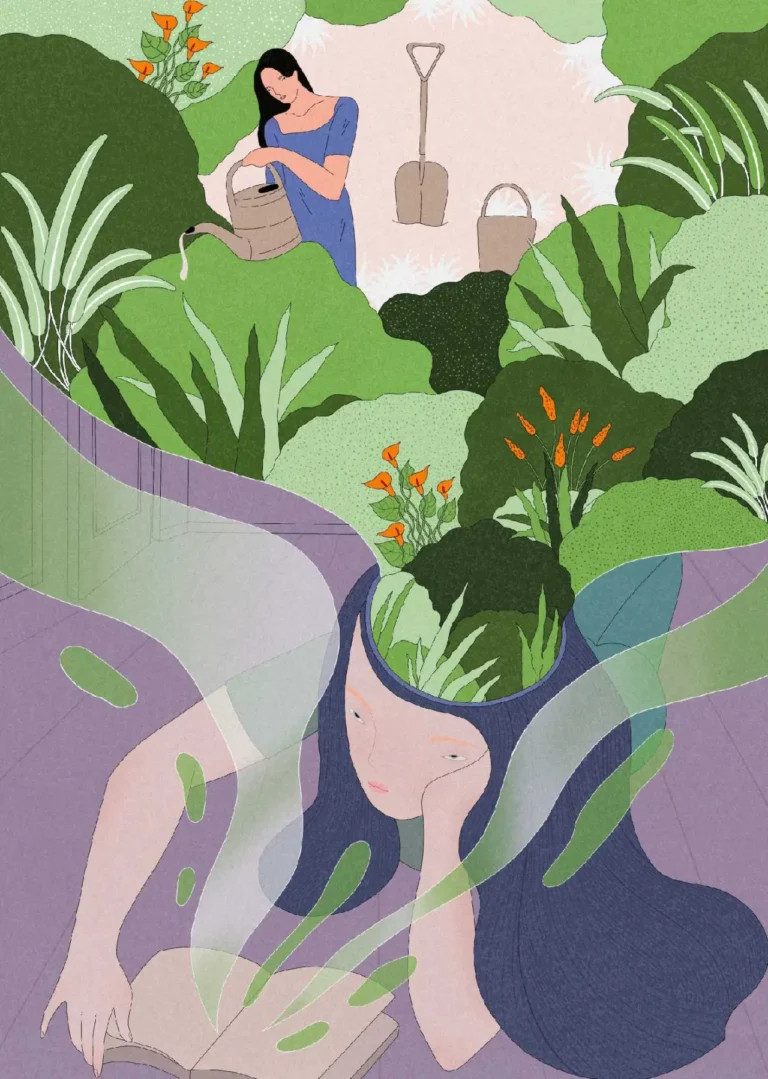
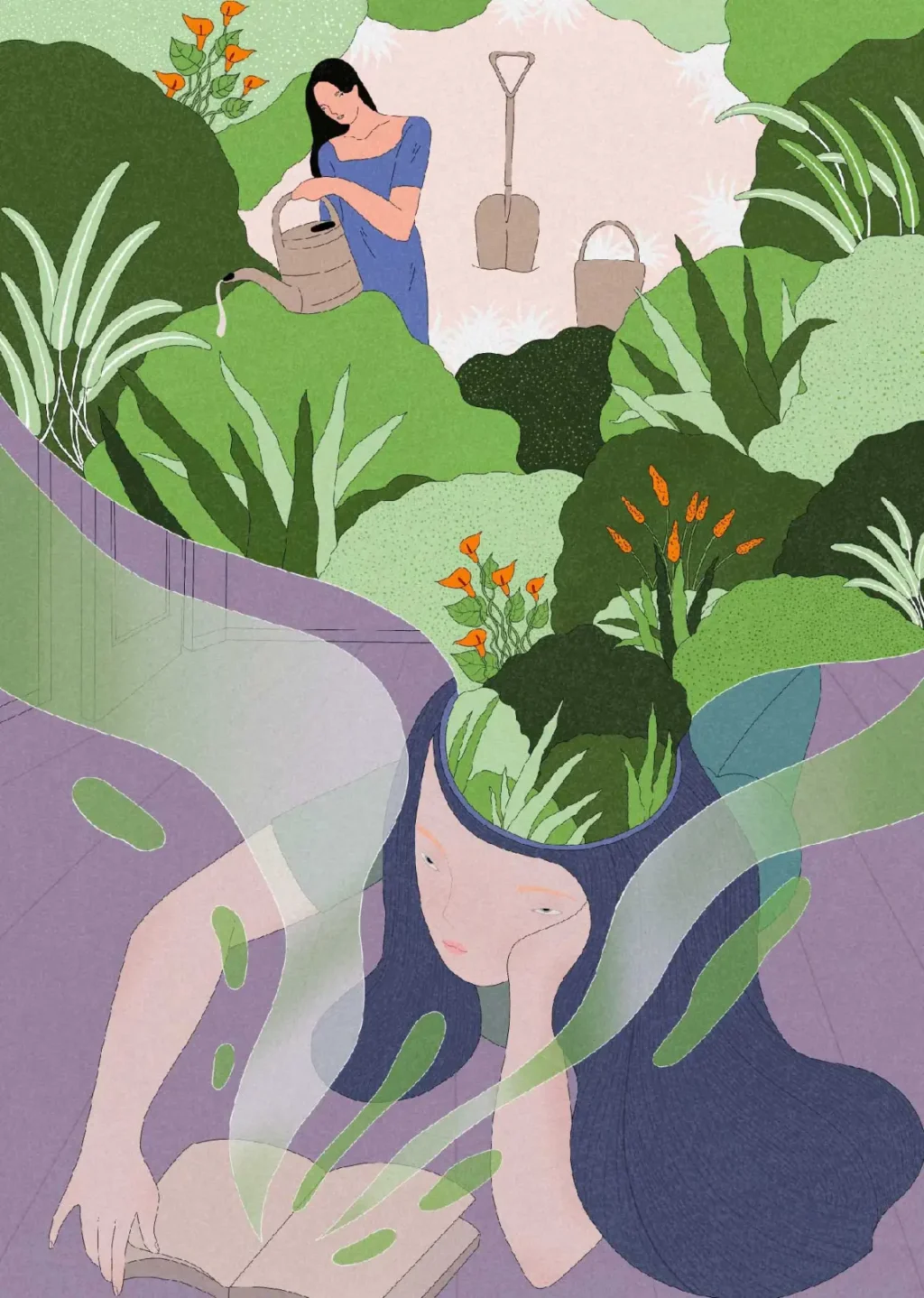
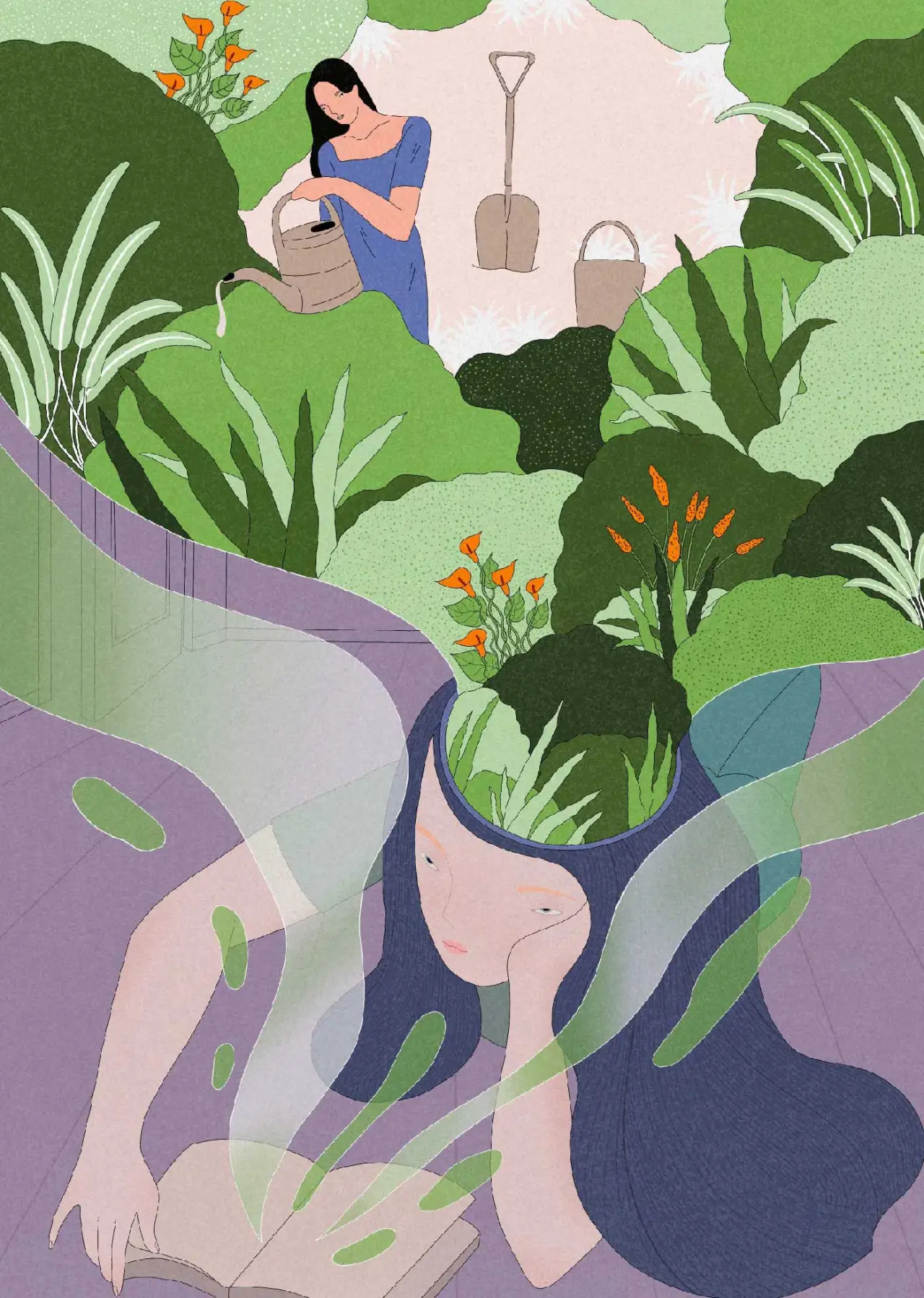
In one image, a woman waters the garden growing from her own head; in another, two versions of the same person become entangled on a pair of swings. Other works use looping dominoes, planetary objects and imagined interior landscapes to express the humour, tenderness, unease and tension that can exist within self-companionship. It’s about as far away from a silent void as you can get: awkward, intimate and often very funny.
If you’ve ever had a design brief that asks for something like “solitude” or “interior monologue”, you’ll know that putting such an enquiry into a stock illustration search or generative AI engine usually returns something bland and insipid. Wu’s work is a useful reminder of what happens when you actually pay a human to create something.
Solitude, from her perspective, isn’t a spa advert. It’s a woman turning away from her reflection in the mirror and imagining spikes protruding from her spine.
Making strangeness legible
Wu holds an MA in illustration from Kingston University, and has over ten years of experience in visual design and brand communication. That commercial background shows: her images are conceptually tight and narratively legible even at their strangest, which is exactly what makes them work as editorial.
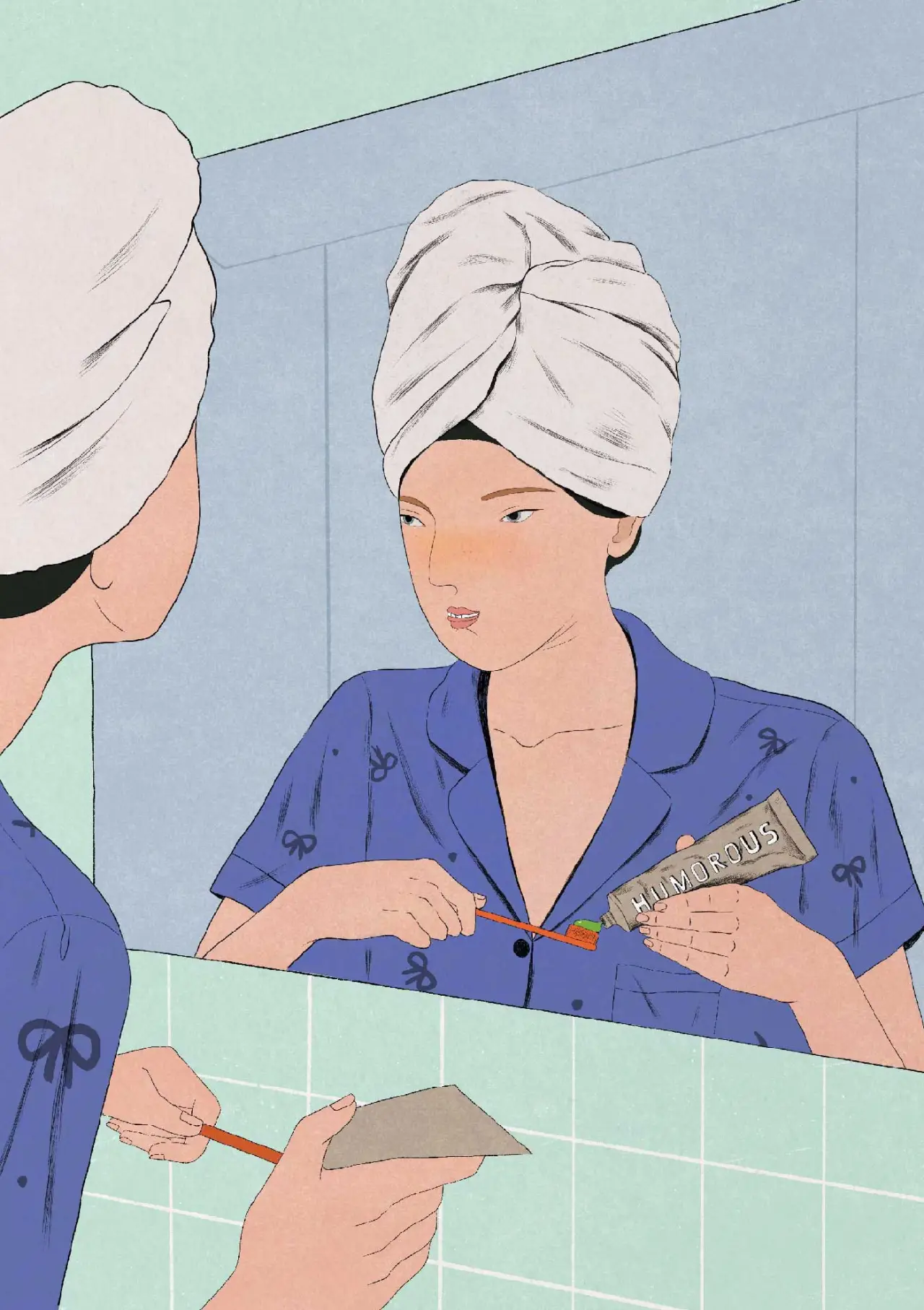
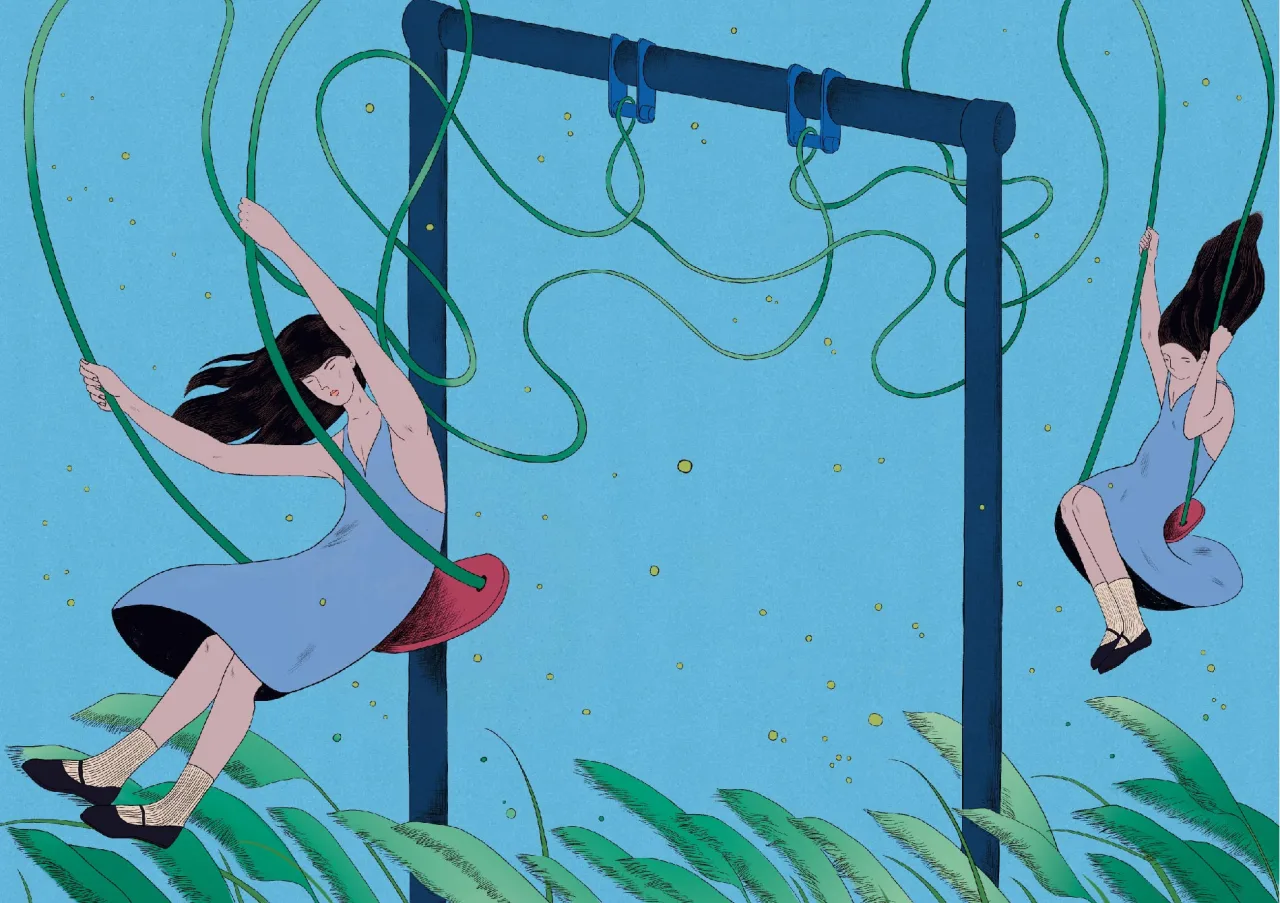
What raises her work to further heights is her refusal to settle on one tone. Being with Myself, for example, ranges from grounded comedy to a sense of unease, sometimes within the same picture.
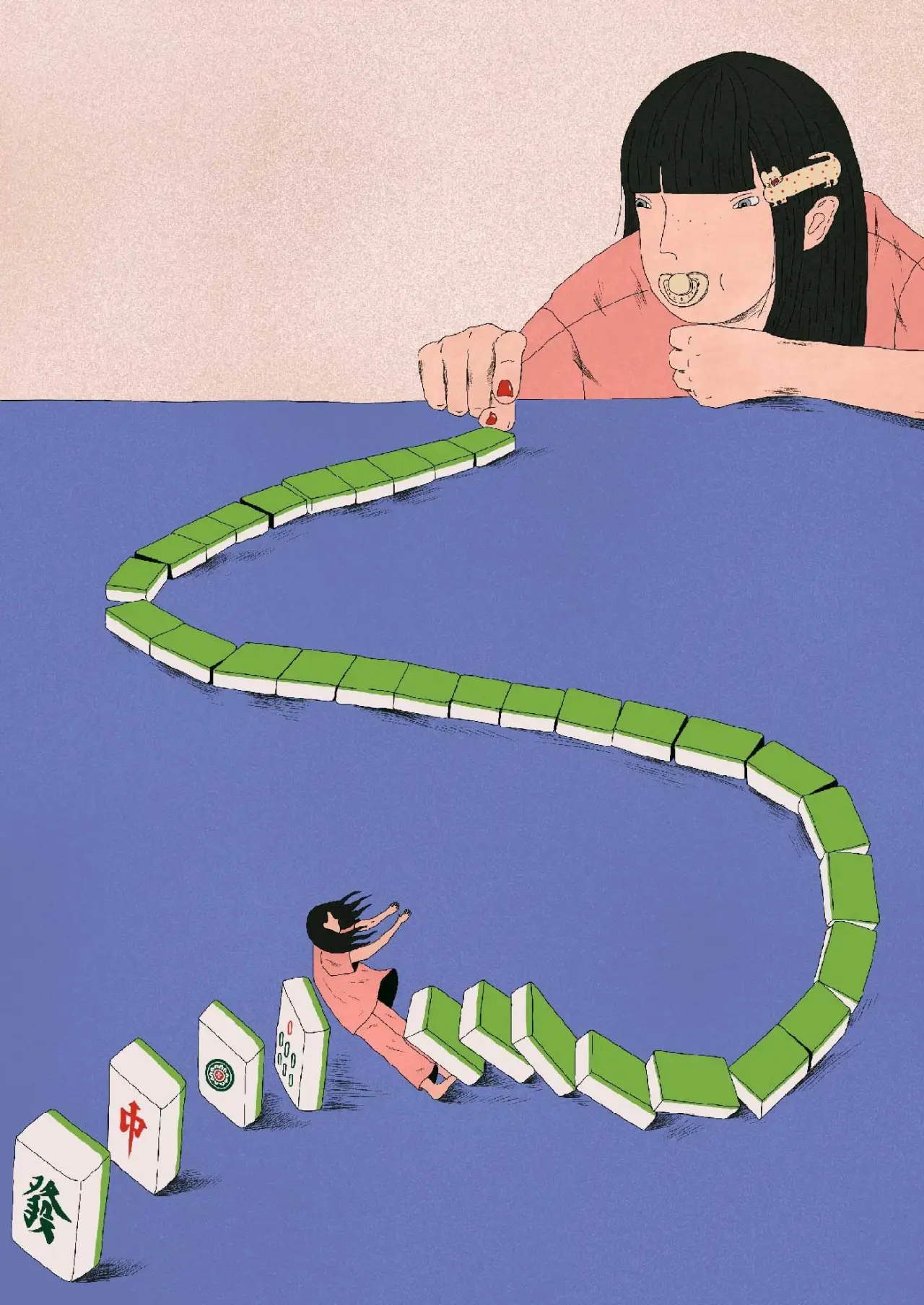
A toddler version of a woman knocks over a winding chain of mahjong tiles, oblivious to the small figure of her adult self tumbling among them. It’s a very human moment that also brings to mind the broader fragility of our social norms. In another illustration, two identical women share a set of swings, their ropes braided into impossible loops, eyes closed in what could be interpreted as either an inner sense of peace or trying to shut out the chaos: it’s entirely for the viewer to decide.
Common threads
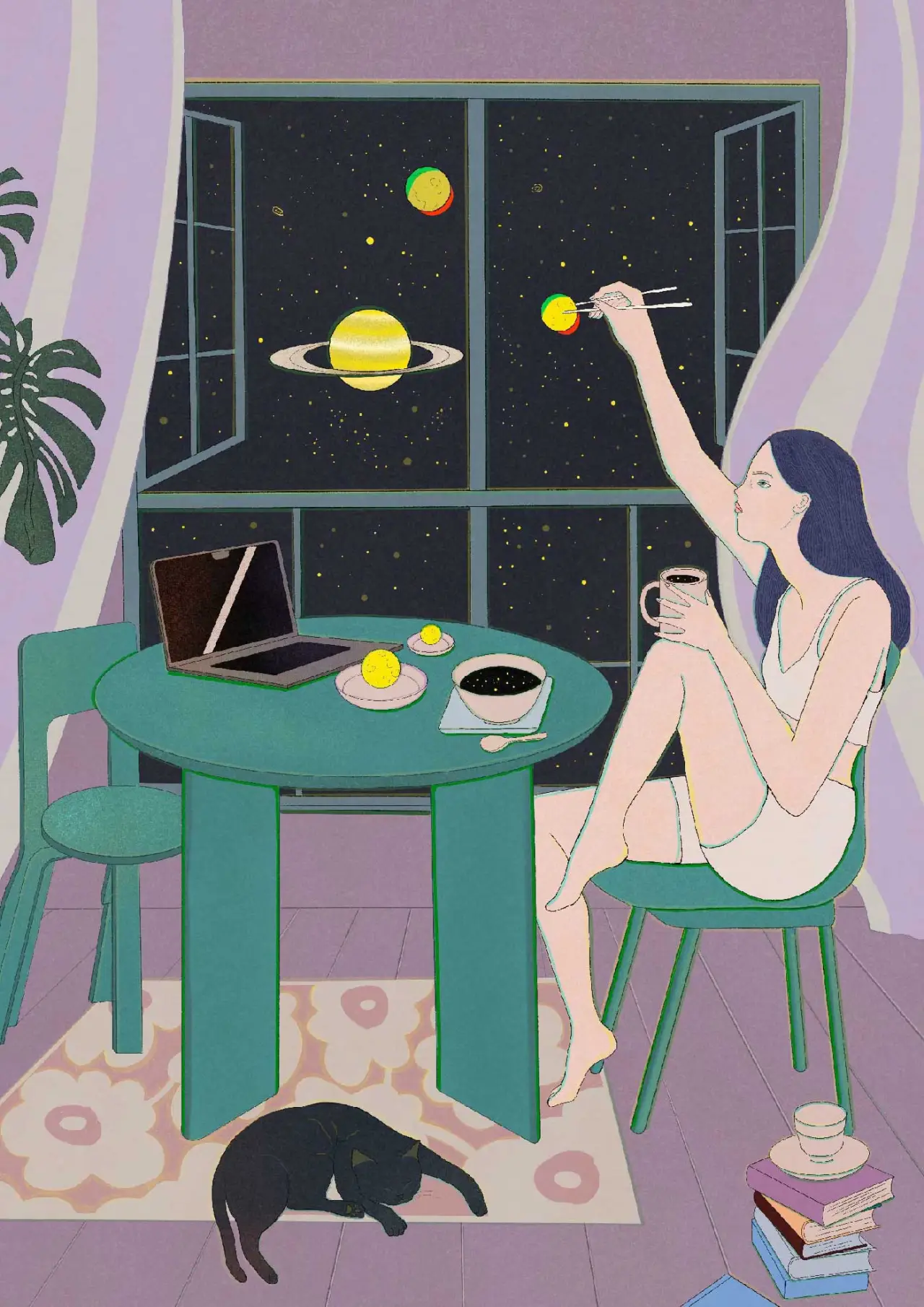
Yet while there’s a huge amount of variety here, there are visual threads that run through the whole series, making each artwork distinctively hers. Women and girls, rendered with a cool sense of restraint. Detailed, sometimes claustrophobic interiors. Moody blues, greens and lilacs. Planets and stars that balance out the domestic with the cosmic.
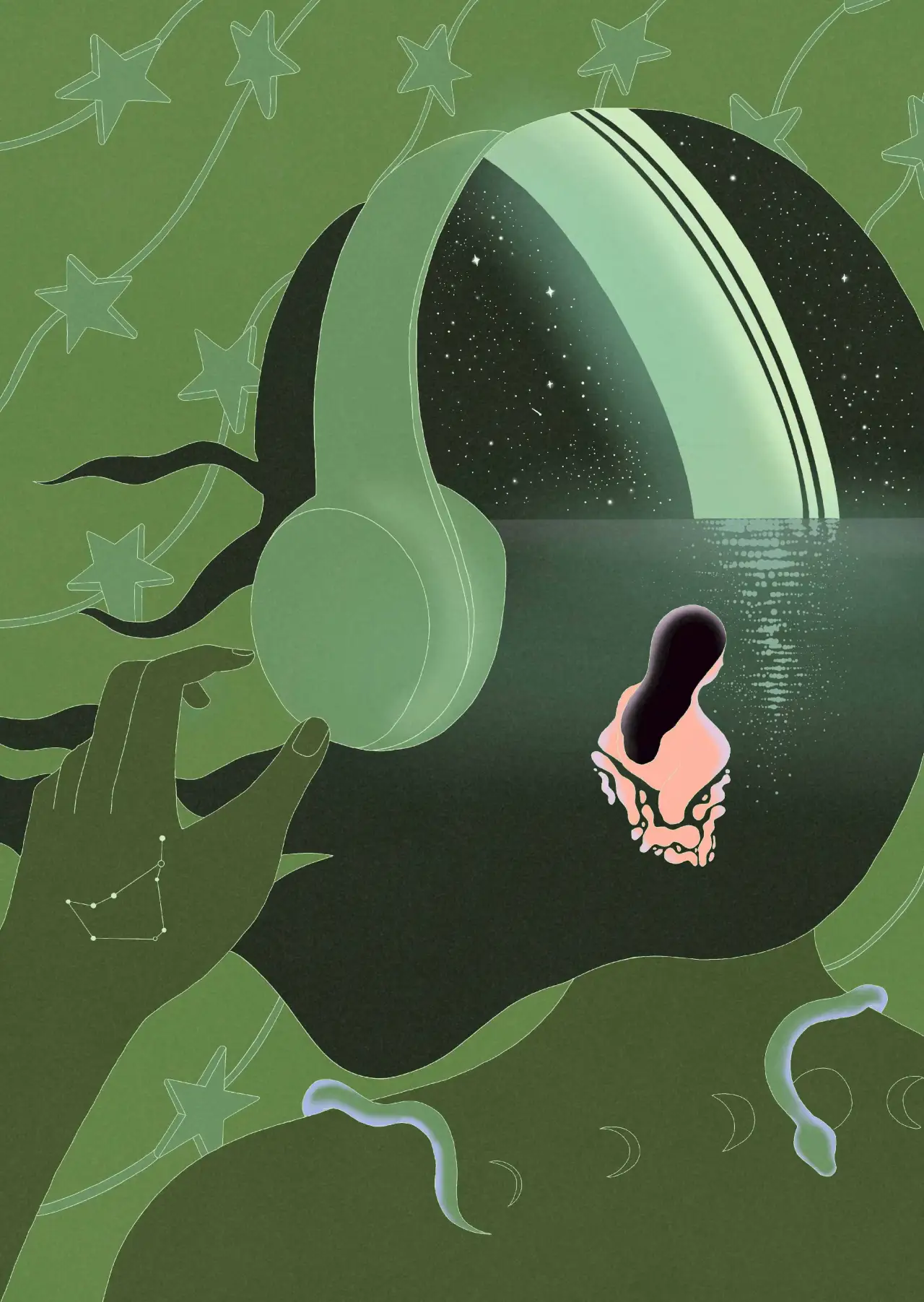
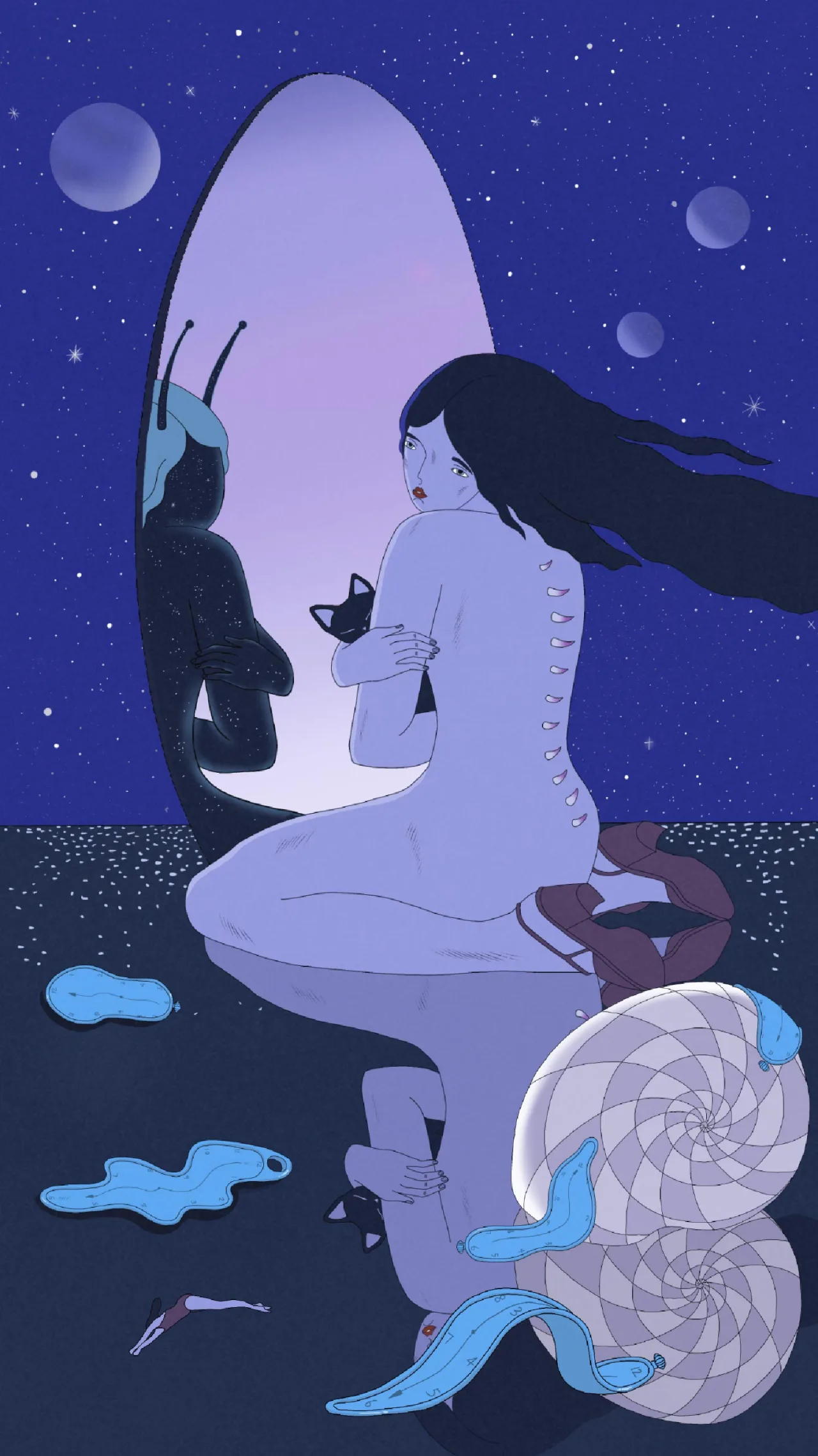
Technically, it’s also accomplished. The flat colour blocking, fine linework and grainy paper-like texture read cleanly whether reproduced at poster size or shrunk to a magazine spread. No surprise then, that three of these pieces earned merit awards in the 3×3 International Illustration Annual and were featured by 3×3 Magazine, while another was licensed by Australian magazine frankie for an A3 pull-out poster.
Being with Myself, then, is doing what personal work needs to do: giving editors and art directors a clear sense of what she’d bring to an editorial brief. Illustrators are typically told to develop a “voice”. Wu has done just that, and it’s one that’s speaking loud and clear.