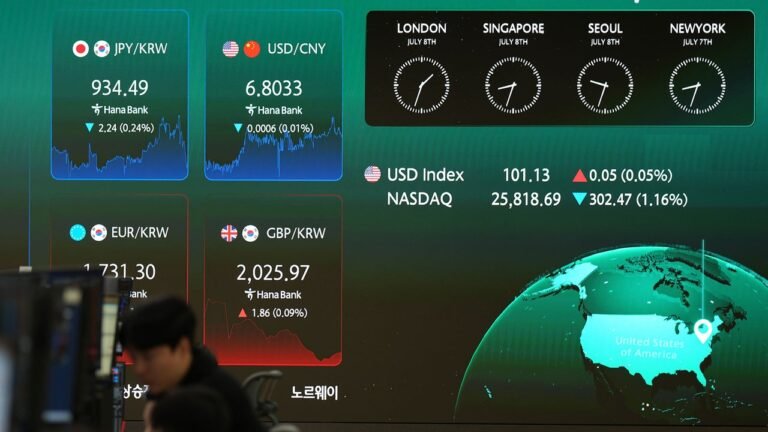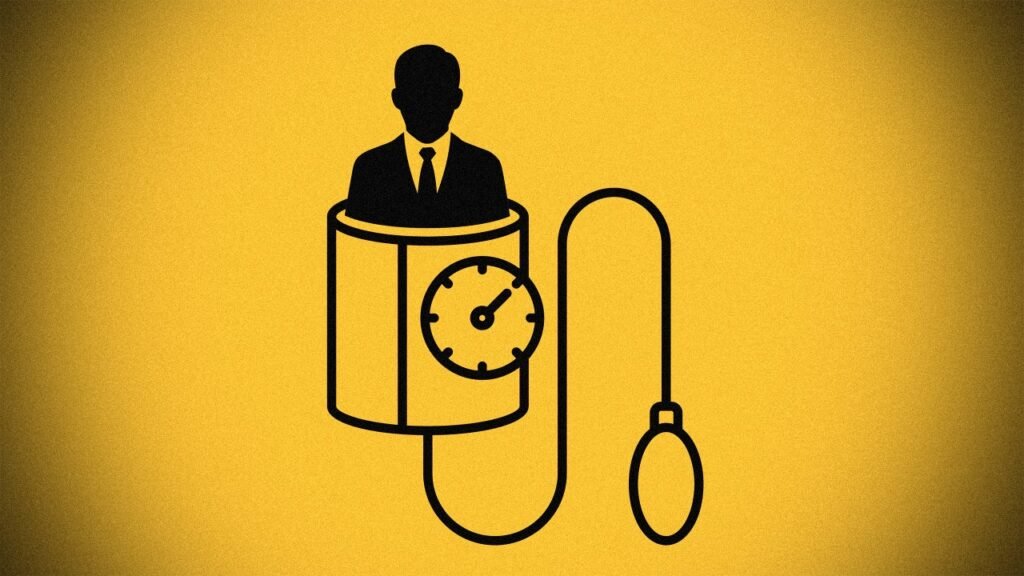
A good doctor doesn’t start with a scan. She starts with a conversation. What hurts, since when, does it get worse at night, has anything like this happened before, have other family members experienced something similar. This conversation has a name in medicine: anamnesis, from the Greek for “remembering” (the patient’s own account of their history and symptoms). Only once she has that story does she order tests. And only with that story in hand can she read the results correctly. A blood pressure reading of 130/85 might be nothing for one patient and a red flag for another, depending on their age, their history, and what they were doing an hour before the appointment. Numbers may be said to be “objective” but they don’t actually speak for themselves. Context is what makes them legible.
I know this mostly from the other side, as a patient who didn’t get enough conversations. After Covid, when medical centers were flooded with patients and consultation slots shrank to a few rushed minutes, I went through a stretch of appointments with my children where I felt like nobody was actually listening. I’d describe symptoms, describe a pattern I’d been watching for weeks, and get a reflex answer clearly aimed at moving me out the door so the next patient could come in. Tests were ordered that didn’t seem connected to what I’d described. I experienced a similar lack of listening several times in my adult life. I carry some real resentment toward parts of the medical profession over this. Most doctors do their best inside a system stretched past capacity but the absence of listening gets waved off as normal, as if the conversation was some kind of luxury reserved to rich patients even though it’s what the entire diagnostic process depends on. A rushed doctor who doesn’t listen is only practising guesswork, skipping the anamnesis and going straight to the scan.
Most companies have built the same guesswork into how they manage people. They run the engagement survey, pull the attrition dashboard, feed everything into an AI tool that promises to “surface insights,” and treat whatever comes out as the diagnosis. Nobody sat down first and asked what’s actually going on in this team, during this quarter, with these people. The test gets ordered before the interview happens. Sometimes it replaces the interview altogether.
I call it data hubris, i.e. the belief that having more numbers, and faster ways to crunch them, automatically produces better decisions. It doesn’t. It produces the illusion of certainty. It removes your awareness that you need to go after context for better decisions.
Take attrition, for example
It is probably the most-watched HR metric there is. A team’s attrition rate climbs. Alarm bells go off. But a rising attrition number can mean different things which call for opposite responses. It can mean people are being pushed out by a toxic manager, in which case the fix may be to lose the manager, or at least make sure they change their behavior.
It can mean pay has fallen behind the market, in which case the fix is a compensation review. Or it can mean the opposite of a crisis: a team with strong internal mobility, where people move on after two or three years because they’ve grown as much as the role allows and the company actively encourages them to take that growth elsewhere in the business, or even outside it, which means the talent engine is working as designed.
A dashboard cannot tell you which one you’re looking at. Only someone who has talked to the people who left, and the people who stayed, can. This is the part that often gets skipped. Organizations default to the metric and build a response to it, which means that sometimes they aim to solve a problem that doesn’t exist while missing one that does.
Wellbeing programs have the same problem. A lot of them are assembled from a checklist: the same “Great Place to Work” criteria, the same apps or anonymous pulse survey, rolled out identically across every team, regardless of what that specific group of people is dealing with.
In my own, fairly limited experience as an employee, I didn’t get much genuine listening from management. What I got more often was infantilization, and occasionally something closer to gaslighting, i.e. being told my read of a situation was wrong, or not really what had happened, when I knew exactly what had happened. I can count on one hand the managers I’ve worked for who actually knew how to listen. My experience constitutes too limited a sample, but it does line up with what I hear constantly from the people I talk to for my own work: competent listening is the exception in most management relationships.
What it actually takes to listen
Listening sounds simple and is mostly undervalued. Real listening is anything but simple. Too many people have never been trained to do it. It requires enough safety in the relationship that the other person believes telling the truth won’t cost them something. You can’t extract honest listening when the underlying relationships have taught people that honesty gets punished, ignored, or explained away. An employee who’s been gaslit stops raising the issue.
Listening is underrated because it doesn’t look like work. It doesn’t visibly “produce” anything. If it happens IRL, it’s not recorded anywhere. Sometimes there’s no digital trace of it. Everything about how organizations measure contribution rewards visible output, and the output of listening is often invisible until much later (or remains invisible forever). By the time the payoff arrives, nobody connects it back to the conversation that produced it.
Most leadership development programs don’t teach how to ask a follow-up question and then sit with an uncomfortable silence. Listening gets treated as a personality trait some managers happen to have. Women are often credited with being “natural” listeners, although I doubt there’s anything “natural” about it, more likely, it’s a skill many women were simply forced to practice more, out of social expectation, until it looked innate. It is a discipline that can be built deliberately, by anyone, and that determines whether every other piece of data means anything.
The journalist Kate Murphy wrote a full book about this blind spot at the start of the decade, You’re Not Listening: What You’re Missing and Why It Matters. Her argument was that despite living in an age of constant digital contact, most people had gotten worse at listening to each other, at work and everywhere else, and that the cost shows up as loneliness, poorer relationships, and weaker decisions. The book came out in January 2020, just before the pandemic scattered teams across screens, before generative AI put a synthetic conversational partner in everyone’s pocket, and before every meeting started outsourcing its note-taking to a transcription bot instead of a human paying attention. If anything, the argument lands harder now than it did then: we’ve spent five years adding new, faster ways to simulate being heard without adding a single one that involves someone doing the listening.
Ask before you test
None of this is an argument against measurement. Doctors run tests for good reason; so should companies. But ask first. Understand the specific history and context of this team, this manager, this moment. Do the anamnesis. Then look at the data with a story to interpret them against.
The more AI-generated dashboards and sentiment scores flood into HR, the more people will be tempted to skip this step. That’s exactly backwards. In fact, the faster and more abundant the data gets, the more valuable the interview becomes, because it’s the only thing that tells you what they mean. Good management shouldn’t confuse a lab result for a diagnosis.