The growing opposition to data centers tends to stem from concerns about the environmental toll of these massive, resource-intensive facilities. Their high use of land, energy, and water has turned some communities and elected officials against the projects, and noise pollution has led to lawsuits.
Meanwhile, It’s expected that the power demands of data centers will continue to rise, more than doubling from 2025 to 2027.
To try to soften some of the negative impacts, Microsoft is designing its new data center projects to give a little back to the environment. The company is making landscape design part of every data center it builds in the U.S., along with select international projects.
“We are taking a nature-forward, nature-positive approach to how we steward the land where our data centers sit,” says Kaitlin Chuzi, director of global land strategy at Microsoft.
More than 20 of Microsoft’s current data center projects include ecosystem creation and restoration efforts around the sites, adding native plants, animal habitat, and natural areas for use by people in their surrounding communities.
In some cases this effort is creating dozens of acres’ worth of new habitat, miles-long hiking trails, and restored waterways. It’s an attempt to shift the public image of data centers from cacophonous energy and water hogs to something more bucolic.
Even large-scale ecosystem improvements are unlikely to mitigate the full environmental costs of the data centers being built today. But Microsoft’s effort is at least a sign that the companies behind the AI boom are beginning to think about how they can reduce their negative impact and better integrate them into their surroundings.
“Really what this program is about is blurring the line between nature and technology, and how important it is to get data centers not just fitting into their surroundings but learning how to belong and contribute back so that landscapes and communities can be better than how we found them when we arrived,” Chuzi says.
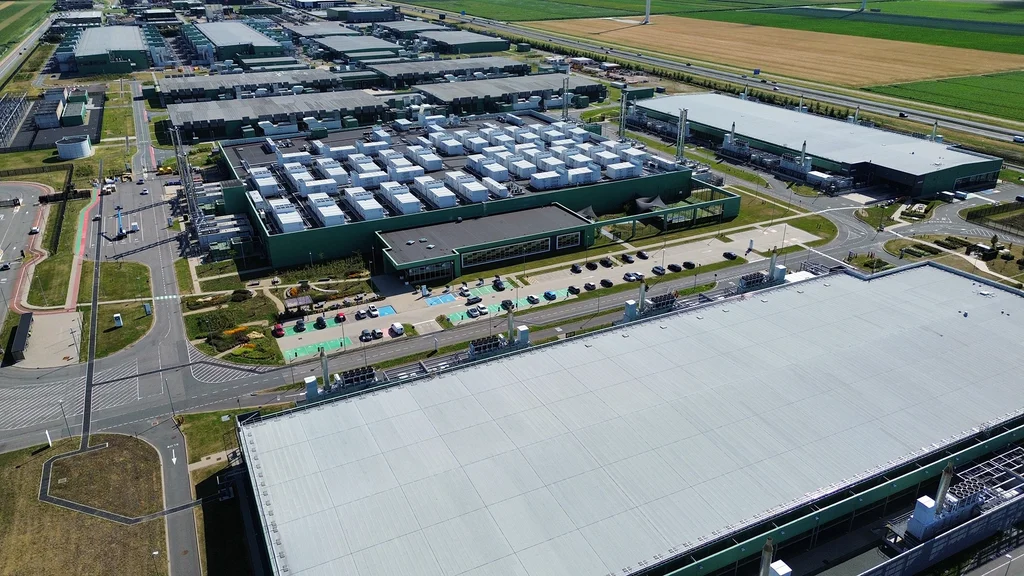
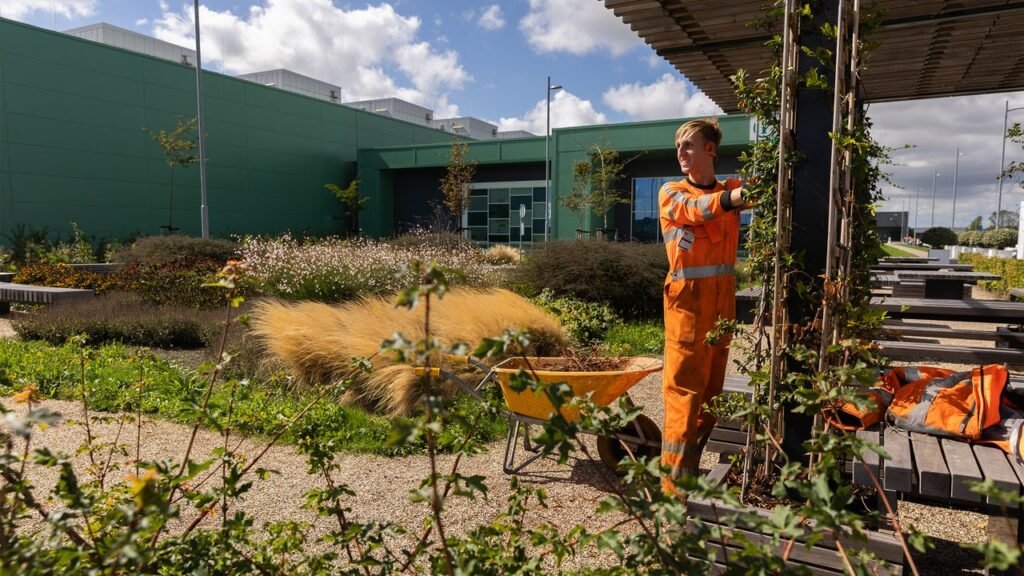
The effort is based on what Microsoft learned during a pilot project it undertook in 2022 around a data center near Amsterdam, where the company worked with local landscape architects to plant 150 native trees and a half acre of shrubs and grasses. The trees visually buffer the data center amid the flat landscape of the Netherlands, while the planting adds more habitat for local fauna, as well as an outdoor space for employees surrounded by a garden.
Microsoft is now applying that approach to more locations. The company has developed a set of ecosystem design playbooks based on ecological research for each major biome where it builds data centers, with input from the community and local partners.
“I think the size and scale of our data centers really can be an advantage,” Chuzi says. “If you can do good on 1 acre of land, there is so much more that you can do as you multiply that up to bigger scales.”
For one project in Mount Pleasant, Wisconsin, part of the ecological intervention involved creating a conservation easement for a local creek running through the site, which was restored and gifted back to the community for recreational use.
A data center under construction in East Point, Georgia, includes an adjacent three-quarter-acre nature area with a walking trail and both young and mature tree plantings to help the facility blend into the surrounding woodlands while also forming a buffer to block some of the nonstop noise data centers create.
“We can do interventions that have more visual impact, more noise abatement impact, and actually help with the hydrology in the watershed more than it would if they were simply an acre in size,” Chuzi says.
These types of environmental interventions are becoming a familiar playbook for big companies hoping to offset some of the negative impacts of their projects. Amazon, for example, recently built a pilot delivery center in Indiana to test more than 40 different sustainable design efforts—from mass timber to low-carbon concrete—that it intends to roll out to other projects.
For Microsoft’s data centers, the work starts by researching local ecological conditions, including identifying the biome and understanding the habitat of the area.
Using a quantification platform called Ecosystem Intelligence, Chuzi’s team can calculate the benefits of different kinds of interventions, from adding pollinator gardens to restoring wetlands.
“The framework and the approach that we use globally is the same,” she says. “How does nature operate here? How can we support that nature? And what’s most important to the community? And then that gets customized at every data center.”
This approach will also include some monitoring for effectiveness. A Microsoft spokesperson says the company will “work with local partners who know the regional ecology to guide how we adapt the work and confirm results.”
Compared to the size and number of data enters being built around the world, Microsoft’s ecosystem interventions may have only a modest impact. But amid a feverish race to build data centers to support the development of AI, even modest efforts are better than nothing.